Quake essentially "popularized several major advances in the 3D game genre: it uses 3-dimensional models for players and monsters instead of 2-dimensional sprites." ScrewAttack takes a look back at this title after the break.
Some previous 3D games, such as Duke Nukem 3D, Doom and Wolfenstein 3D (sometimes called 2.5D games) used a restricted-view mathematical trick when rendering their 3-dimensional view. This allowed a true 3D first-person viewpoint, but only when looking straight-ahead
Continue Reading
In Mickey Mania, "the player takes the role of Mickey and progresses through each level, defeating enemies in the way and solving the occasional puzzle." ScrewAttack takes a look back at this title after the break.
Most enemies can be defeated by jumping on them or throwing marbles at them. Frequently, the player must jump from platform to platform to advance, sometimes with a time limit (such as escaping a collapsing tower)
Continue Reading
In Batman Forever: The Arcade Game, "players will punch, kick, and use special combination attacks to defeat the waves of enemies that attack." ScrewAttack takes a look back at this title after the break.
The special combinations applied to enemies can add up to a possible 150+ hits on a single villain. Special weapons such as Batarangs can be found throughout the levels
Continue Reading
Cruis'n USA is basically a "1994 arcade game developed by Williams under license from Nintendo -- the first in the Cruis'n series." ScrewAttack takes a look back at this title after the break.
Although Cruis'n USA was advertised as running on Ultra 64 hardware (based on the Nintendo 64's hardware), it was actually implemented on the Midway Games reality engine - a TMS320c31-based hardware board designed by Midway engineers with a specially designed ASIC that was completely unrelated to the Ultra 64 hardware
Continue Reading
In Arkanoid, "the player controls the "Vaus", a space vessel that acts as the game's "paddle" which prevents a ball from falling from the playing field, attempting to bounce it against a number of bricks." ScrewAttack takes a look back at this title after the jump.
The ball striking a brick causes the brick to disappear. When all the bricks are gone, the player goes to the next level, where another pattern of bricks appear. There are a number of variations (bricks that have to be hit multiple times, flying enemy ships, etc.) and power-up capsules to enhance the Vaus, but the gameplay remains the same
Continue Reading
The Fulton surface-to-air recovery system basically "involves using an overall-type harness and a self-inflating balloon which carries an attached lift line." Video after the break.
An MC-130E engages the line with its V-shaped yoke and the individual is reeled on board. Red flags on the lift line guide the pilot during daylight recoveries; lights on the lift line are used for night recoveries. Recovery kits were designed for one and two-man recoveries
[via Gizmodo]
Continue Reading
In Mortal Kombat II -- released in 1993, the characters "have a less digitized and more hand-drawn look to them than in the first game." ScrewAttack takes a look back at this title after the break.
One of the greatest fighters of all time was good on the home consoles but there's nothing like playing it in the arcades... with a mod chip
Continue Reading
In X-Men Children of the Atom, "the player selects from members of the X-Men (Cyclops, Psylocke, Wolverine, Storm, Colossus and Iceman), who have set up a fighting tournament to determine who is strong enough to challenge Magneto in battle." ScrewAttack takes a look back at this title after the break.
Take all your favorite X-Men characters and throw them in a game where they beat the piss out of each other and what do you get? Greatness
Continue Reading
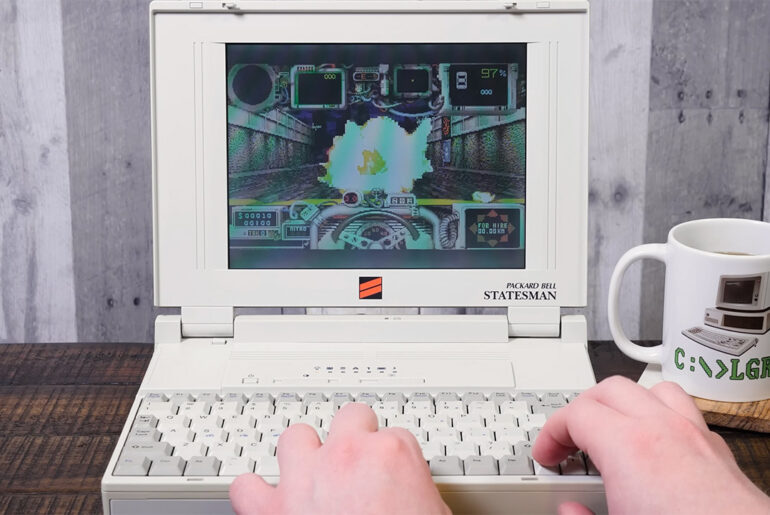
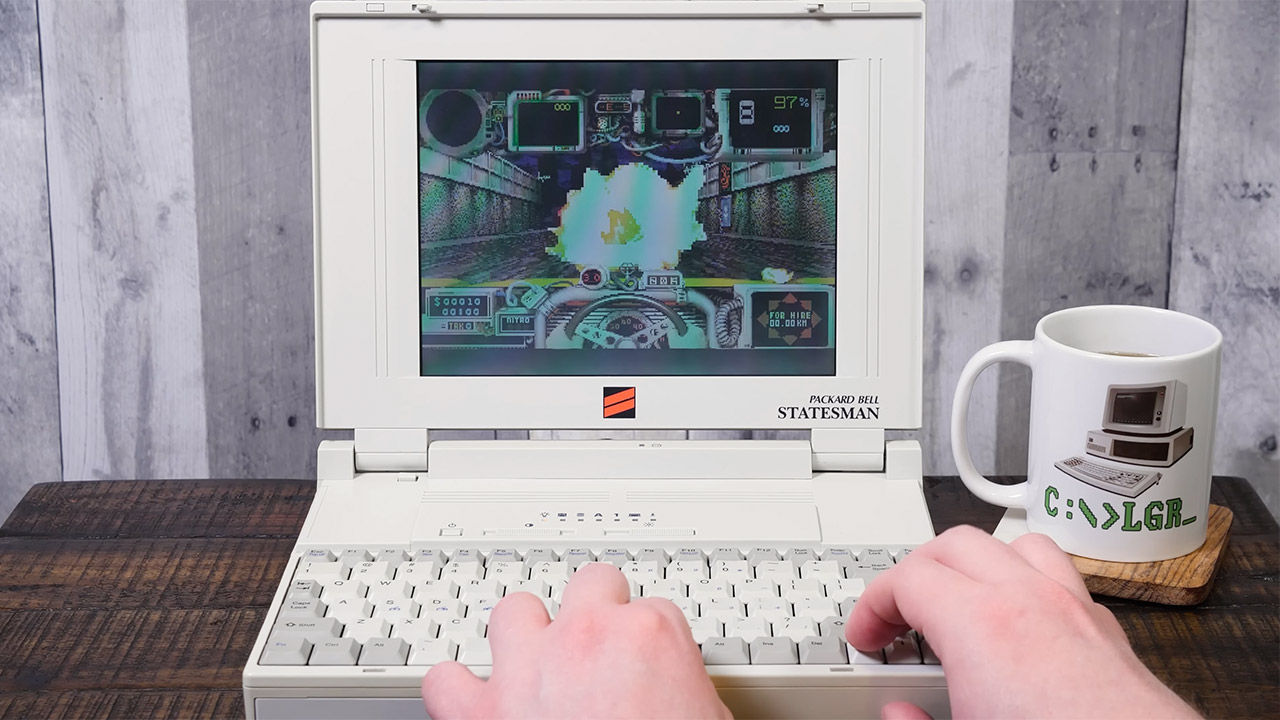
In Off-World Interceptor Extreme, players choose vehicles and "blow up rivals." ScrewAttack takes a look back at this game after the break.
You want to know how make an awesome racing game? Throw "Extreme" at the end of it. Oh wait... that never works
Continue Reading