
Scientists recently observed two lifeforms merging in a rare primary endosymbiosis event. More specifically, the first known nitrogen-fixing organelle merged with a eukaryotic cell, the fourth example in history of primary endosymbiosis.
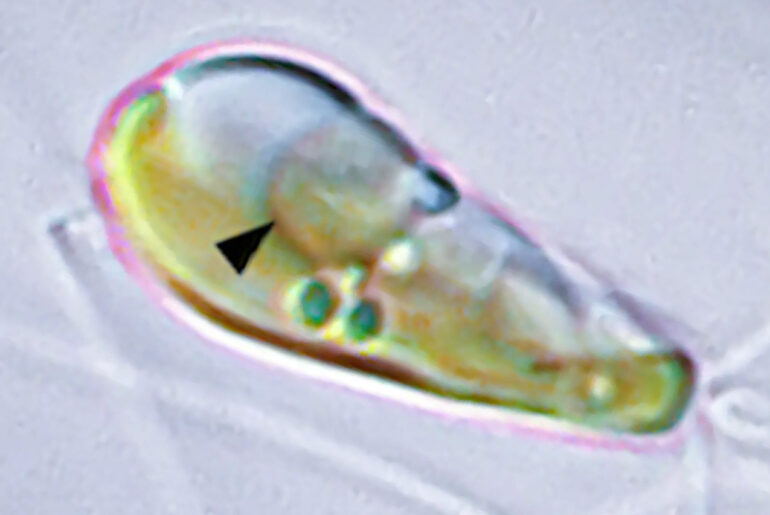

Scientists recently observed two lifeforms merging in a rare primary endosymbiosis event. More specifically, the first known nitrogen-fixing organelle merged with a eukaryotic cell, the fourth example in history of primary endosymbiosis.

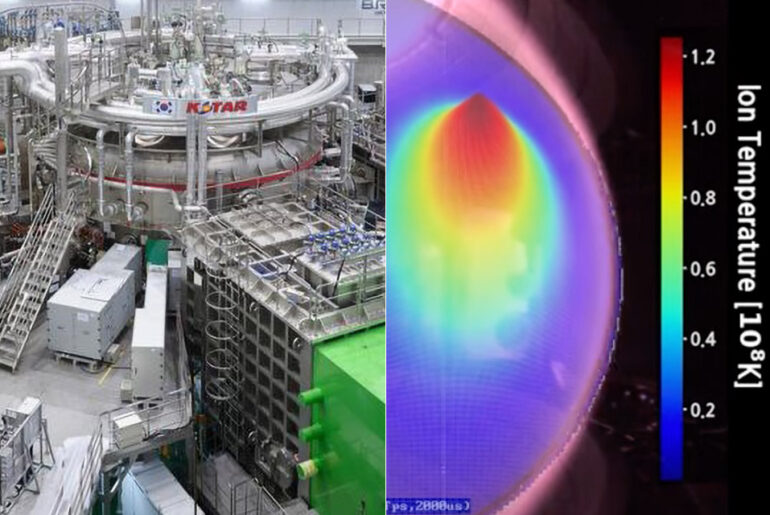


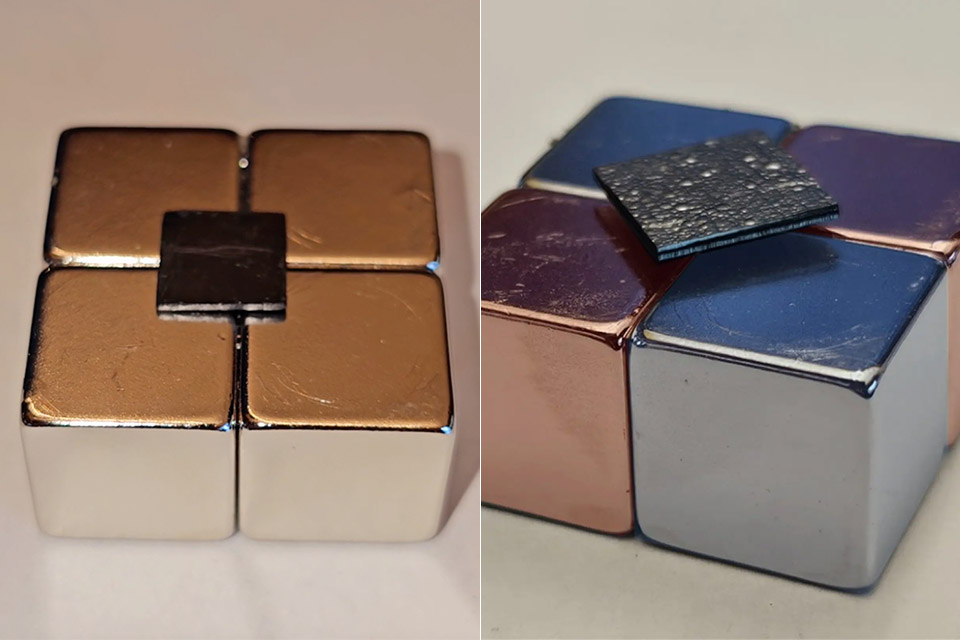
Scientists from the Okinawa Institute of Science and Technology (OIST) have created a floating platform within a vacuum using graphite and magnets that requires no external power source. Should that platform encounter an external magnetic field, these materials generate a magnetic field in the opposite direction, resulting in a repulsive force.


Engineer Fabricio H. Franzoli of Franzoli Electronics used four tesla coils to play an interesting cover of Michael Jackson’s Billie Jean. These musical tesla coils basically produce sound by switching on / off a certain number of times per second, thus causing air molecules around it to heat up and vibrate.


Viewing the April 8, 2024 solar eclipse on a flight is one thing, the footage you’re about to see was shot on May 28, 1900 by a famous magician, Nevil Maskelyne, on an expedition to North Carolina. What makes this even more special is that Maskelyne successfully traveled to India in 1898 to photograph an eclipse, but the film can was stolen on his return journey home.
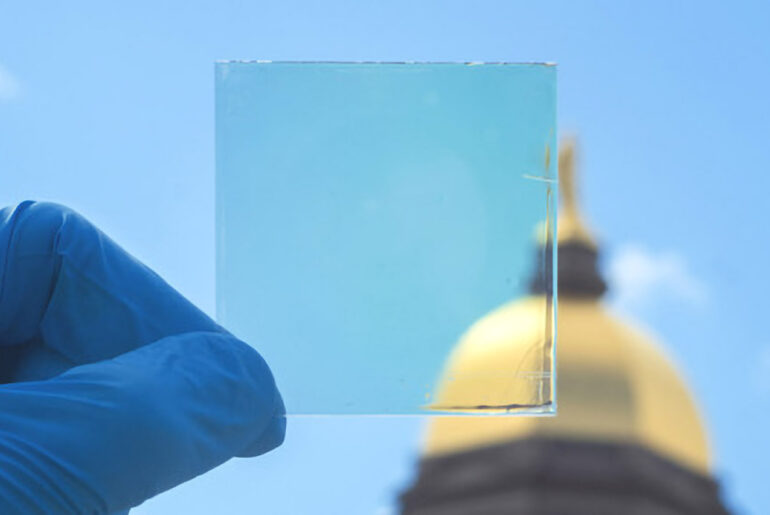

There’s the LiquidView virtual window, and then this innovative window coating designed to reduce temperatures by up to 45° Fahrenheit. How so? It essentially blocks heat-generating ultraviolet and infrared light while still letting through visible light, regardless of the sun’s angle.


This new image of Sagittarius A* (Sgr A*) captured by the Event Horizon Telescope (EHT) reveals strong and organized magnetic fields spiraling from its edge. The magnetic field structure is eerily similar to that of the black hole at the center of the M87 galaxy, suggesting that strong magnetic fields may be common to all black holes.


