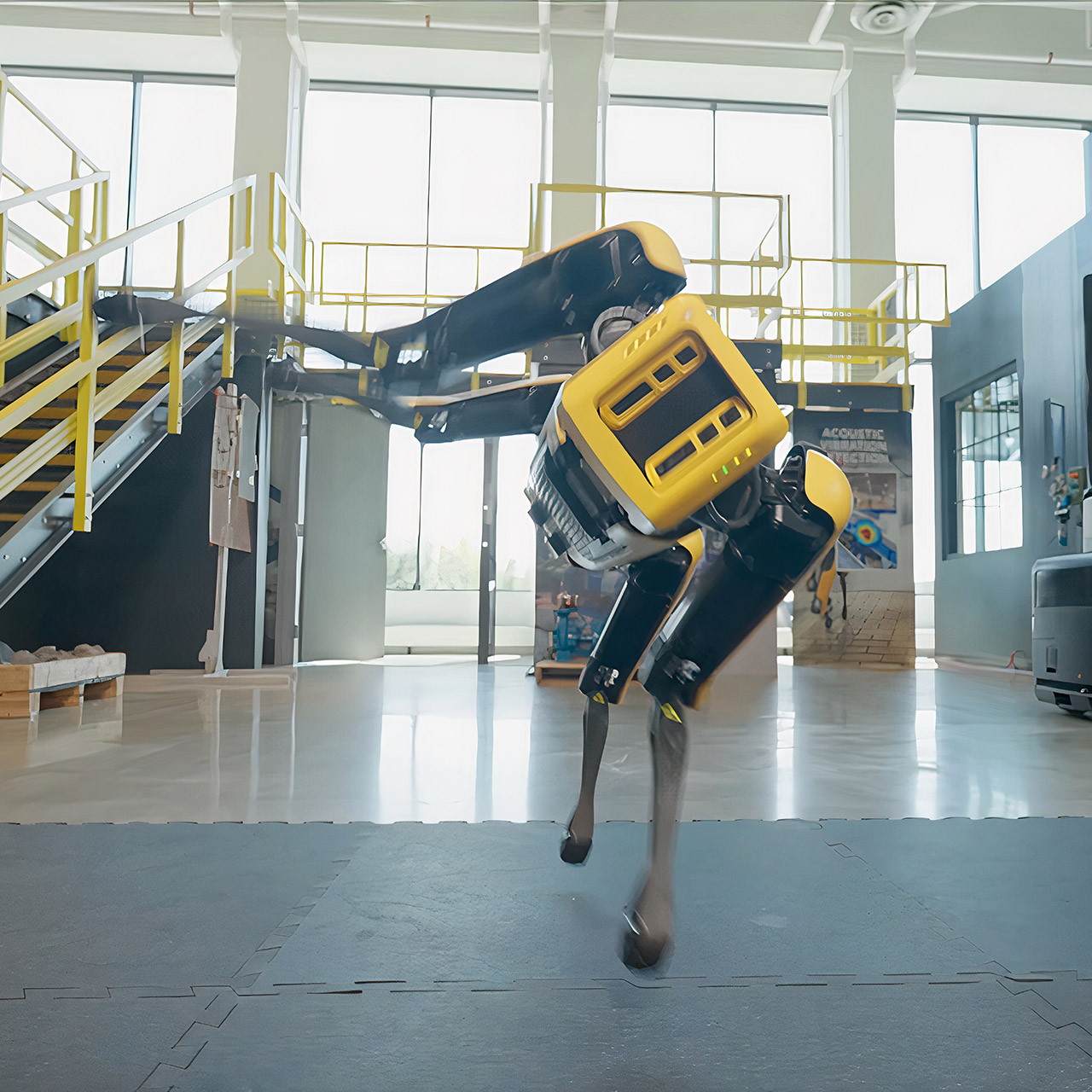
Boston Dynamics’ Spot, the four-legged robot dog that roams factory floors, has learned a new trick: it can jump into the air and flip and twist like an acrobat.
Arun Kumar, a robotics engineer on Boston Dynamics’ Spot behavior team, calls teaching Spot to backflip a battle against hardware limits. Backflips are unnecessary for robots like Spot, which are designed to climb stairs or take pictures of gauges from 50 yards away. But Kumar’s team, in collaboration with the Robotics and AI Institute, wanted to make Spot do exactly that. Not just for the viral video, though Spot’s flips are cool, but to test the robot’s motors and power systems. By learning these extreme movements, Spot can recover from slips and falls in the real world, like navigating a crowded factory or a debris-strewn construction site.

- 【Regarding Returns】Please note that our custom-made products are NON-RETURNABLE and NON-EXCHANGEABLE!!! We highly recommend that you fully...
- 【Meet the Go2 Robot Dog】The wounderful toy for beginners and experienced robot enthusiasts alike! With basic gaits like walking and running, the...
- 【Intelligent Obstacle Avoidance】Go2 is equipped with Unitree's self-developed 4D LiDAR sensor L1, which has a 360x90° hemispherical...
Reinforcement learning, the approach behind Spot’s new airborne skill, is like training a dog with treats, except instead of biscuits, it’s all about digital incentives. In a simulated environment, Spot’s software acts like an agent, adjusting leg placements and motor speeds. Each action is scored based on how well it fits the expected outcome, like a backflip animation. Over time, neural networks improve these movements to optimize the score, so Spot can do complex moves. Kumar says this allows Spot to work at the limits of its hardware, whereas traditional programming can’t keep up with the chaotic dynamics of a flipping robot.
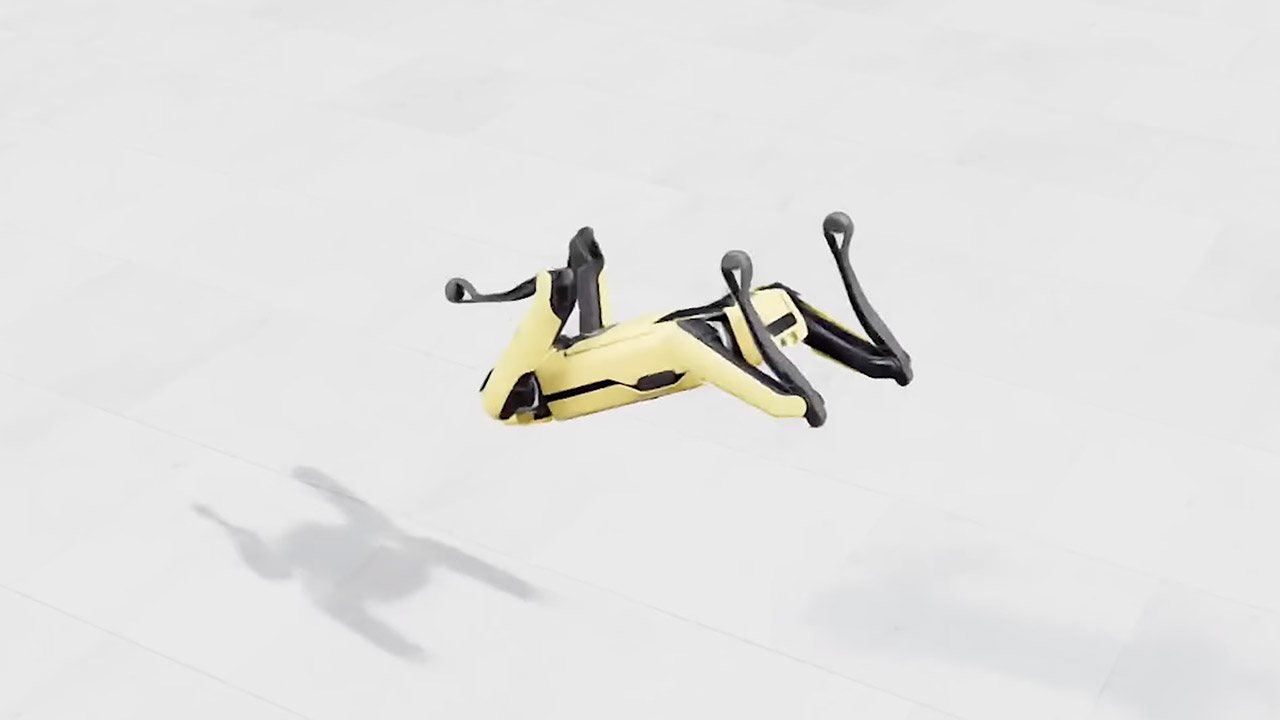
To make Spot’s flips work in the real world, the simulation has to be as real as possible. Kumar’s team does this by testing on physical hardware regularly, documenting each failure and adjusting the simulation to match. This cycle of failing, debugging and refining means Spot’s flips aren’t just lucky.
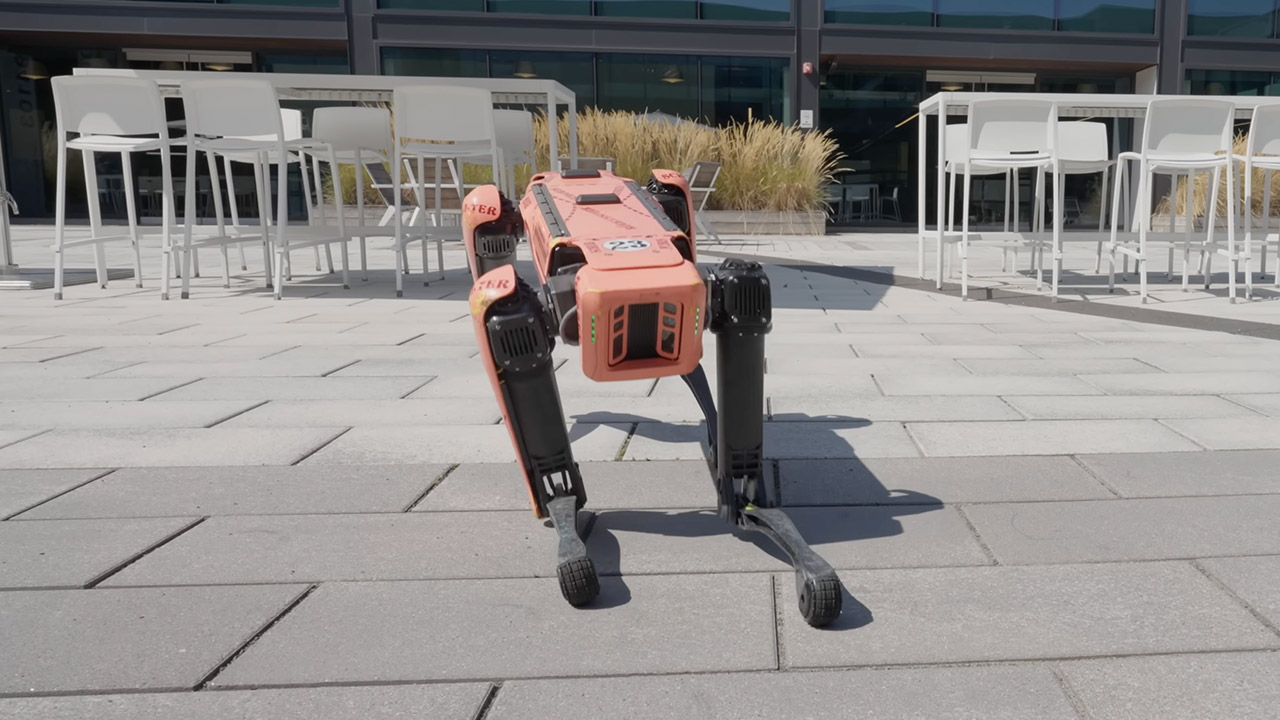
Spot’s ability to recover from real world problems improves as he learns to handle intense movements. The same reinforcement learning that lets Spot do a septuple backflip also lets him recover from a fall down the stairs or a slip on a factory floor.
Working with the Robotics and AI Institute has really accelerated Spot’s development. The institute’s Reinforcement Learning Research Kit, released in 2024, gives researchers joint-level control of Spot’s legs, a high-performance NVIDIA Jetson AGX Orin computer and a simulation environment powered by NVIDIA Isaac Lab.