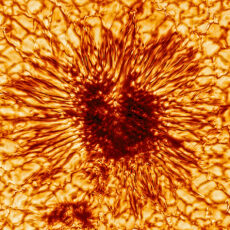
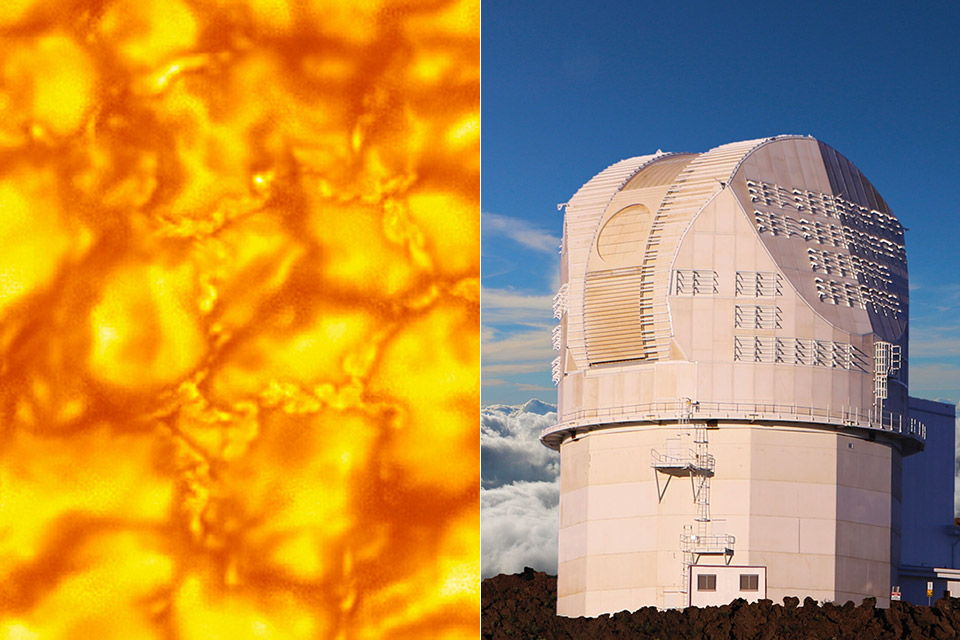
New images of the Sun captured by the National Science Foundation’s (NSF) Daniel K. Inouye Solar Telescope are mesmerizing toe say the least. The sunspots that you see are dark and cool regions on the Sun’s “surface”, called the photosphere, where strong magnetic fields persist. They can vary in size, but many are often Earth-sized, if not larger.


Unlike the dark and cool areas, the quiet regions of the Sun show convection cells in the photosphere displaying a bright pattern of hot, upward-flowing plasma (granules) surrounded by darker lanes of cooler, down-flowing solar plasma. In the atmospheric layer above the photosphere, known as the chromosphere, you can see dark, elongated fibrils originating from locations of small-scale magnetic field accumulations.

- BRIGHT, SHARP VIEWS ANYWHERE: Unlike many beginner telescopes, this quality refractor features fully coated glass lenses and a 70mm aperture for...
- PERFECT FIRST TELESCOPE FOR BEGINNERS: Designed for adults and kids to enjoy together, this beginner-friendly telescope sets up in minutes and...
- EASY NO-TOOL SETUP: No complicated assembly or tools needed. The full-height tripod and telescope tube set up in seconds and pack neatly into the...


As the Inouye Solar Telescope continues to explore the Sun, we expect more new and exciting results from the scientific community – including spectacular views of our solar system’s most influential celestial body,” said Evan Pascual, National Solar Observatory Communications Officer.