The first Aptera solar electric vehicle has finally rolled off the validation assembly line in Carlsbad, California, after years of experimenting with prototypes, redesigning, and working hard to get something different on the road. Aptera Motors produced this vehicle on a small-scale production line with 14 stations dedicated to its unique method. Each one is painstakingly assembled in a step-by-step process, with a focus on smoothing out any wrinkles to ensure that the entire production process runs smoothly and efficiently as feasible.

The ORCA Transporter is a serious rethinking of what a huge van can deliver without requiring a trucker’s license or frequent fuel stops to complete the job. Reiter Engineering, a German business with over 25 years of motorsport experience, created this monstrosity on a stretched Mercedes-Benz Sprinter cab chassis. Those ingenious engineers chose carbon fiber for the rear body structure because it reduces overall weight by hundreds of kilograms while keeping the frame sturdy enough to heavy loads.

BYD just revealed the second generation of their Blade Battery, and the specifications alone are impressive. This lithium iron phosphate battery can charge from 10% to 70% in under five minutes using a suitable charging station. If you push it a little farther, it will reach 10 percent and then 97 percent in nine minutes under typical conditions. Even after resting at -30 degrees Celsius for a full day, the battery can charge from 20 percent to 97 percent in 12 minutes.

BMW’s latest i3 prototype has been spied in a teaser video, being tested on icy lakes and winter roads near the Arctic Circle in Arjeplog, Sweden. As the sedan receives final dynamic changes ahead of its big unveiling on March 18th, 2026, the clip reveals a car that is completely at home on ice. It accelerates quickly, carves through corners with finesse, and comes to a stop with no drama.

The Xiaomi Vision GT is a visually stunning electric hypercar concept that was officially unveiled at the 2026 MWC in Barcelona. You may be familiar with Xiaomi from their phones and kitchen appliances, but this is a bit more unique in that it was designed by a company not known for producing high-performance vehicles, but it is now competing with brands such as Ferrari and Porsche, thanks to its inclusion in the Gran Turismo racing game series.

A UK maker has transformed a collection of discarded disposable vapes into a functional car. Chris Doel, the man behind a number of projects that recycle vape batteries, has recently installed his 500-cell lithium pack in a small electric vehicle and driven it on public roads.

Nokian Tyres has been working on perfecting their winter tires for a long time, and what comes next is a real game changer for drivers dealing with unpredictable road conditions: the Hakkapeliitta 01 is the first studded tire that can adjust its studs on its own, all without the need for buttons or electronics, just a clever bit of material science that responds to temperature changes.

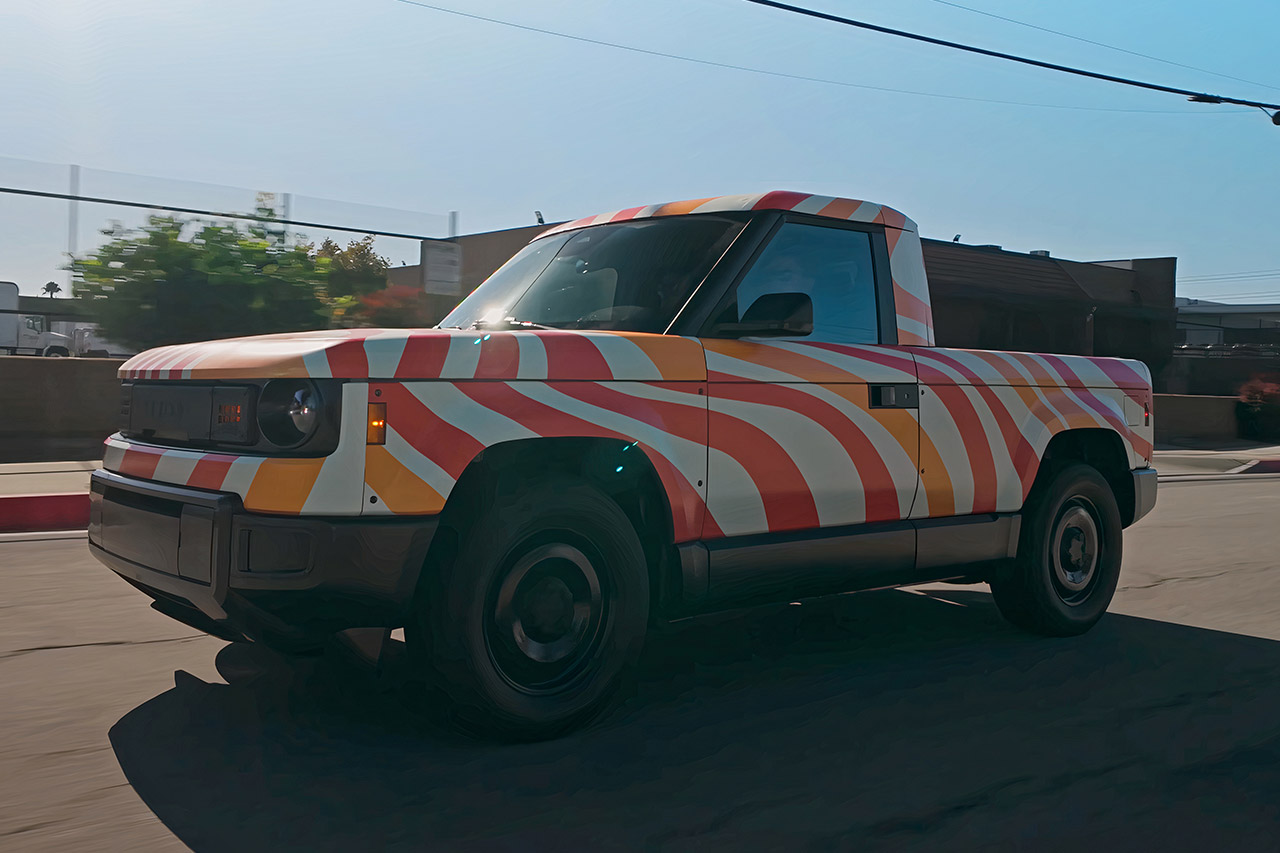
For decades, Caterpillar has been developing heavy machinery capable of moving large amounts of earth and changing the appearance of cities. Now they’re focusing on something smaller but still massive: a pickup truck. At the CONEXPO-CON/AGG 2026 exhibition in Las Vegas, the company debuted a Cat Truck prototype, a one-of-a-kind custom designed to answer all of the years of rumors and speculation about a Caterpillar pickup, but it came out in a shape that most people were unlikely to predict.

Donut Lab, a Finnish company, recently released some impressive test data demonstrating how their solid-state battery handles extreme temperatures that conventional lithium-ion cells would struggle to deal with. The test results come from a series of measurements conducted by the VTT Technical Research Centre of Finland, a respected, government-backed research organization. They needed to figure out precisely how high the heat could reach before this Donut Lab cell, rated at 3.6 volts and 26 amp-hours, blew up in smoke (or some other way), so they decided to put it through its paces.

Chevrolet pushed the Corvette C8 mid-engine architecture to its limit with the ZR1X. Engineers basically plugged in the ZR1’s 1,064 horsepower twin-turbo 5.5-liter V8 and added a front-axle electric motor modified from the E-Ray but customized here. That motor adds 186 horsepower and 145 pound-feet, for a total of 1,250 horsepower, which is sent to all four wheels via an eight-speed dual-clutch transmission and a compact 1.9-kWh battery pack situated right in the center of the car. The front motor remains active all the way up to 160 mph, which is useful for dragging the strip from a stop, as only rear-drive takes over beyond that.