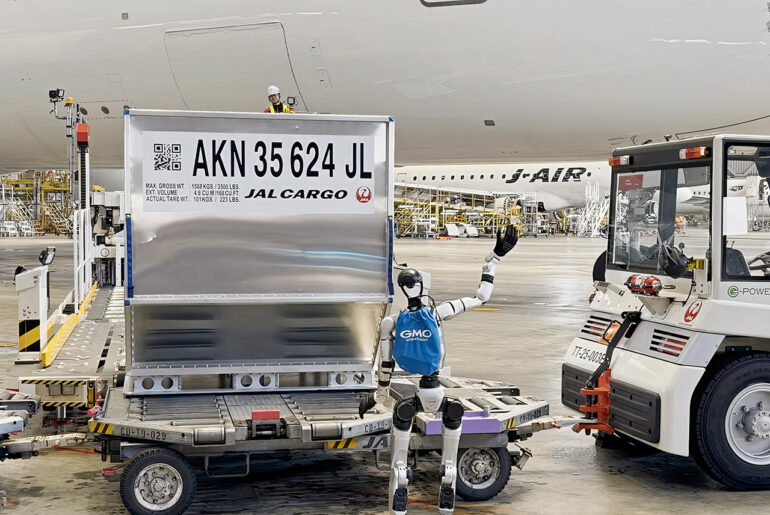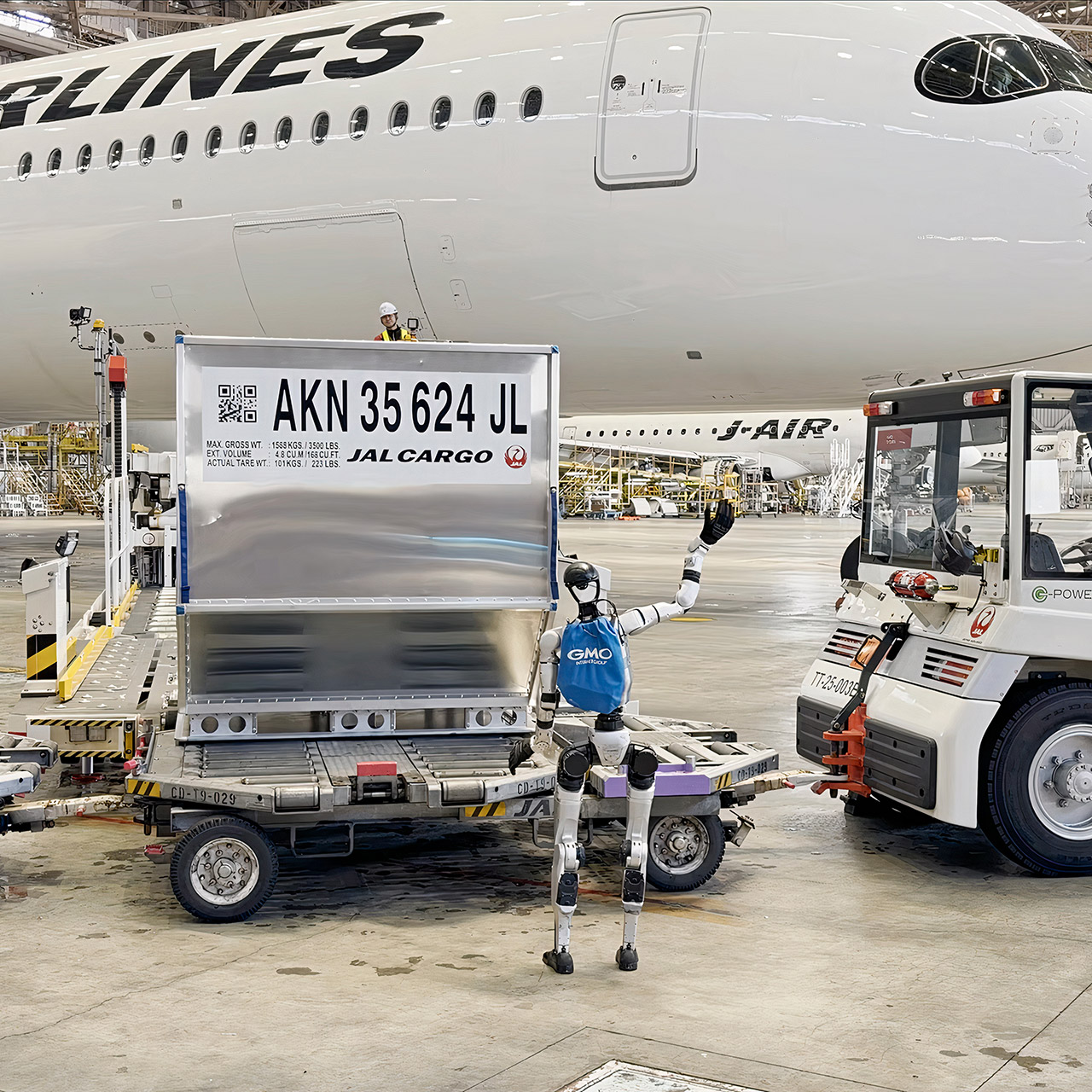
Japan Airlines is testing humanoid robots for baggage and cargo jobs at Tokyo’s Haneda Airport this month, with a small group of them working alongside ground crew for the first time. Unitree builds the machines under the name G1, and they’re modest, standing around four feet tall and weighing little over seventy pounds. They can reach speeds of 4.4 miles per hour, but they can only run for two hours before needing to be recharged. They’re also small enough to fit into tight spaces around planes that larger machines cannot reach.

Casio built its name with watches and calculators, but it has now released a standalone sampler that fits neatly in one hand and encourages musicians of all skill levels to get started right away. Weighing just 315 grams without batteries, the SXC-1 feels robust and comfortable in the hand.

The just released Godzilla Minus Zero teaser contains a nice surprise near the end. There’s Godzilla, looking massive and standing tall next to the Statue of Liberty, his frame nicely set against the New York skyline as he prepares to delve deeper into the city. The story begins in 1949, two years after the events in the previous film.

Years of steady usage and exposure to the elements have taken a toll on Japanese railway stations, making replacement a headache. Finding competent contractors is difficult, and construction wages are high. Serendix collaborated with ABB to help JR West restore a historic wooden shelter from 1948 at a station in Wakayama Prefecture. This site, a true relic, was only frequented by around 270 visitors every day in a tiny coastal village near Arida that few people had ever heard of.

The Casio S100X Japanese Lacquer Edition is covered in layers of traditional Japanese lacquer from top to bottom, right down to the borders. The end result is a deep, glossy black surface with a hint of red tones peeking out along the edges. This shining finish is created by meticulously collecting sap from lacquer trees and applying it with a centuries-old technique that has been perfected.

Photo credit: Onocom
O House, finished in late 2025 within Kurihara, Miyagi Prefecture, is a 50-square-meter, 3D-printed two-story home. The 31-square-meter ground floor holds a master bedroom and bathroom, while the 19-square-meter upper level hosts the kitchen, dining, and living areas. Curved walls rise 7 meters, stacked like bricks and set half a meter below ground for stability, while skylights let natural light pour into every corner.

Japan introduces Buddharoid, a humanoid robot that physically embodies Buddhist teachings, at a time when temples are having to cope with a monk shortage. Kyoto University researchers collaborated with tech companies Teraverse and X NOVA to build the system around China’s capable Unitree G1 humanoid robot. It has been clad in a basic grey robe and kept faceless to avoid bringing attention to its mechanical nature, allowing its quiet movements and steady voice to speak for itself.

East Japan Railway Co. (JR East) introduces a revolutionary Shinkansen train that defies all norms. This new train features seven unadorned white carriages with no seats or passengers. What’s crazier is that it’s designed to transport fresh fish, vegetables, precision electronics, and other high-end items at speeds exceeding 300km/h.

Haneda Airport is one of the world’s busiest airports, and it welcomes a large number of travelers every year in the heart of Tokyo. Terminal 3, Japan’s international flight hub, has already demonstrated a strong respect for the country’s past with the Edo Koji zone, a strip of shops and walkways that truly captures the spirit of those tiny, atmospheric 17th century Edo side streets – you can almost imagine what it must have been like to stroll through those narrow alleys back in the day, complete with an authentic section of the Nihonbashi bridge as it appeared in bygone days.

Sharp’s latest creation, the meerkat-shaped robot Poketomo, turns daily conversations into something memorable. This little guy weighs 200g and is 12cm long so you can clip him onto your backpack or slide him into your pocket. He costs 39,600 yen ($270) but the real magic happens with a monthly plan that starts at 495 yen for 400 chats. Poketomo can even connect to cloud services via Wi-Fi thanks to a Qualcomm Snapdragon 662 CPU, 3GB of RAM and 32GB of storage.