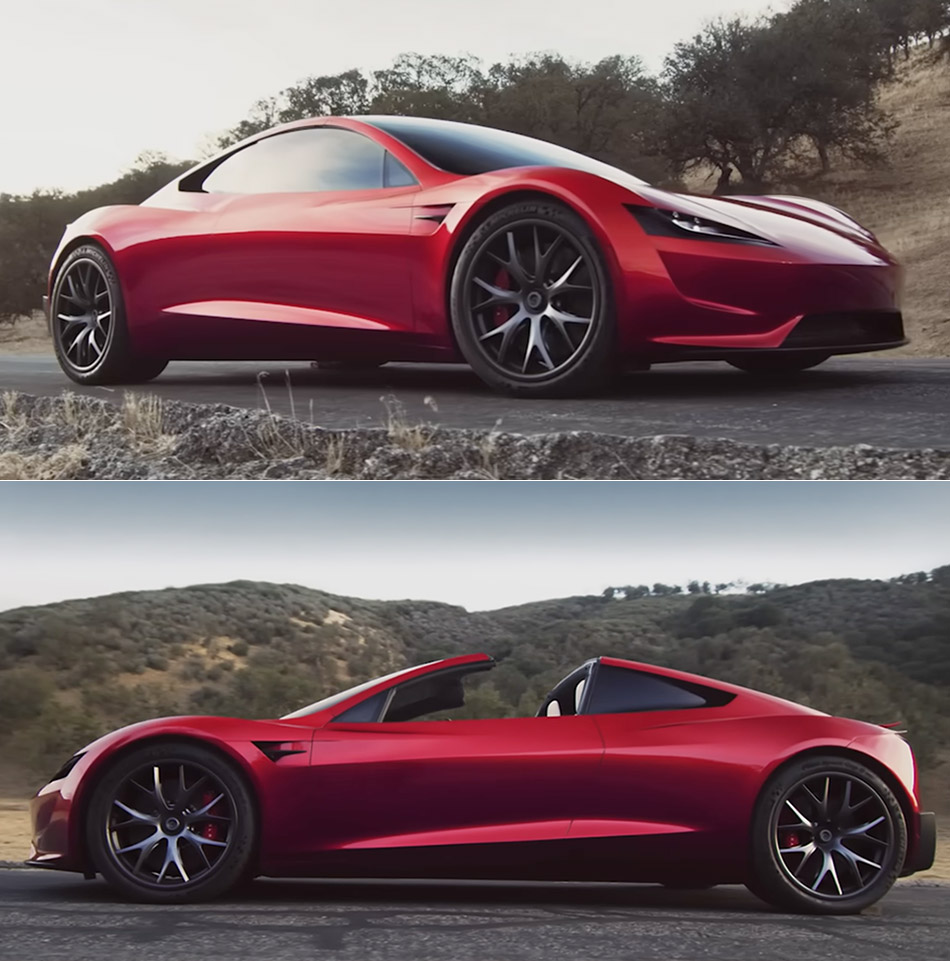
Tesla posted three words on X Saturday. “Go for launch.” A red sports car sat under hard vertical light, the kind used on a pad before a rocket leaves the ground. The date 10.01 ran across the bottom of the frame. A countdown on the company’s Roadster page now points at the same Thursday. Invites followed within hours.
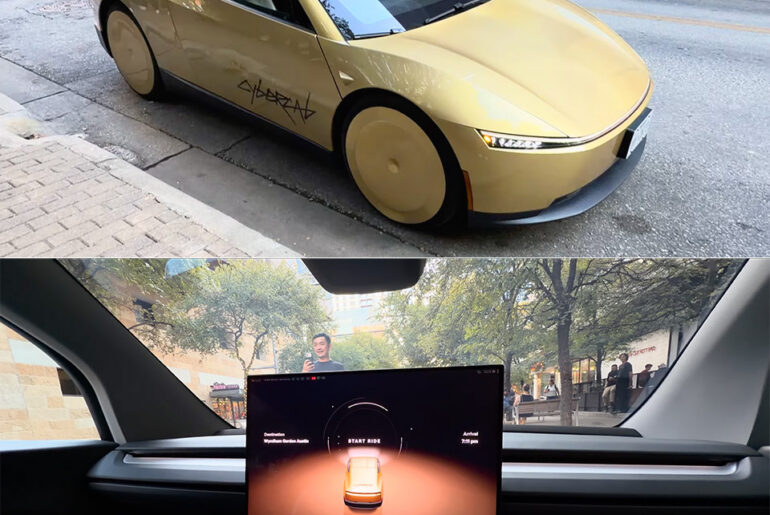
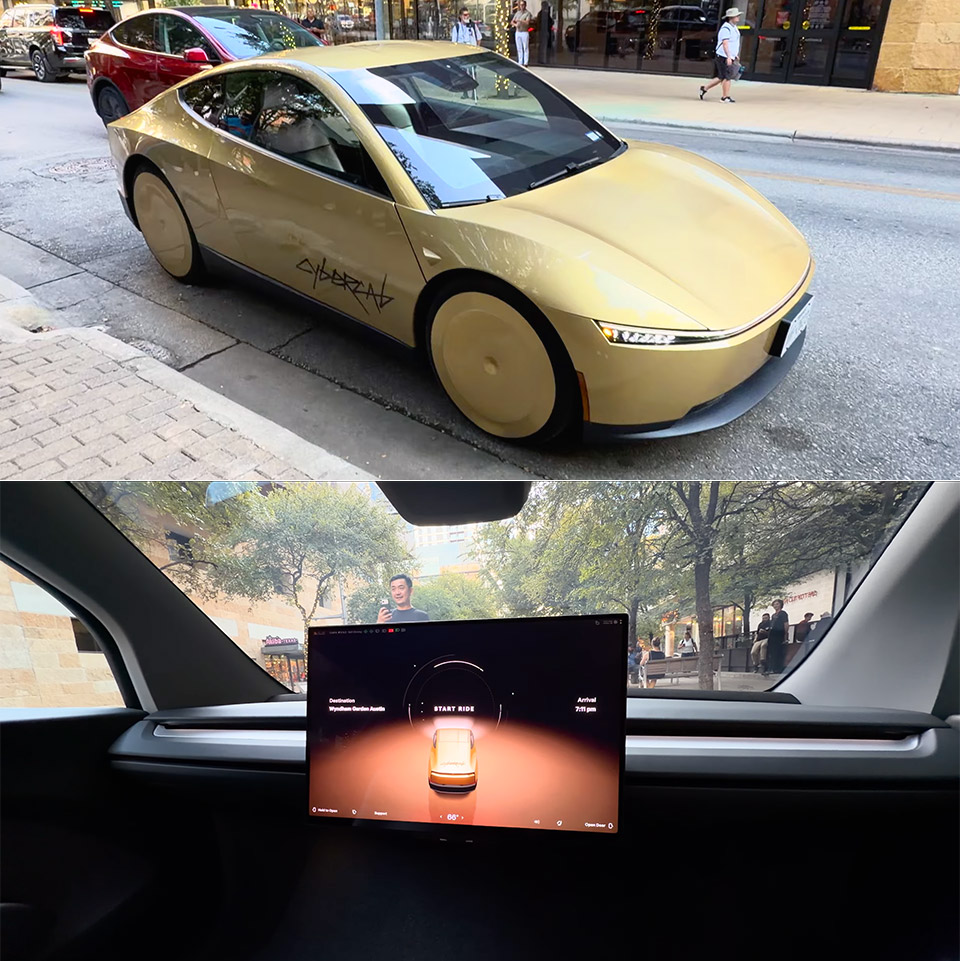
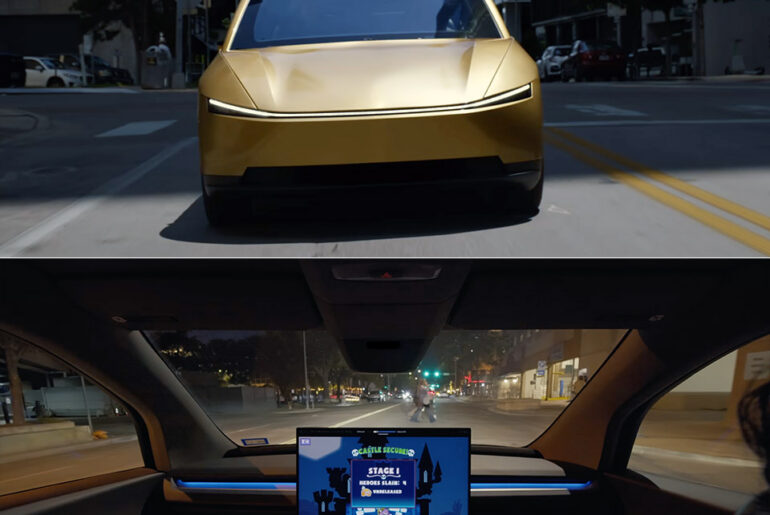
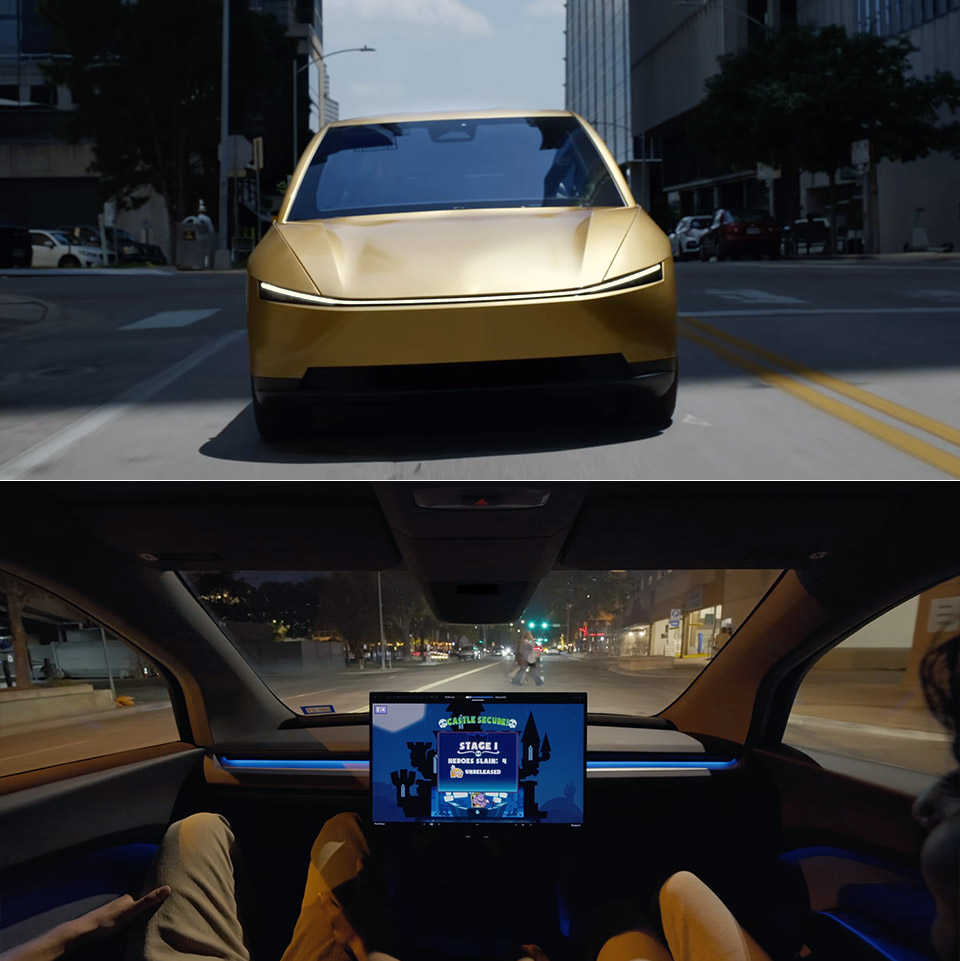
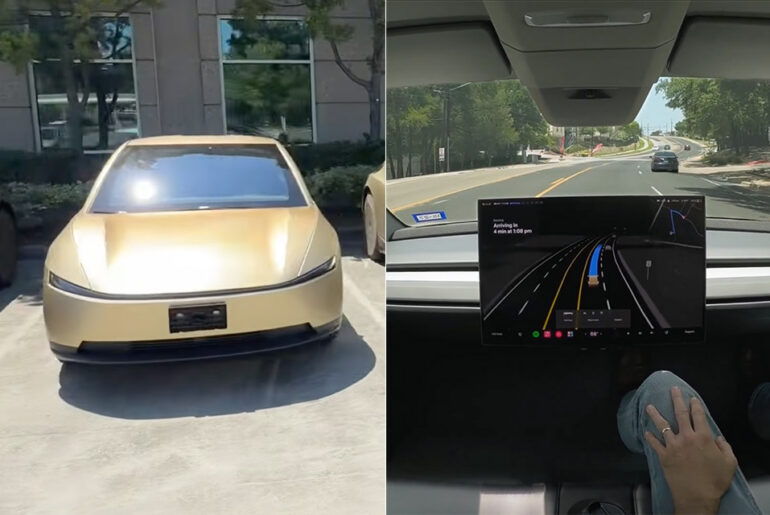
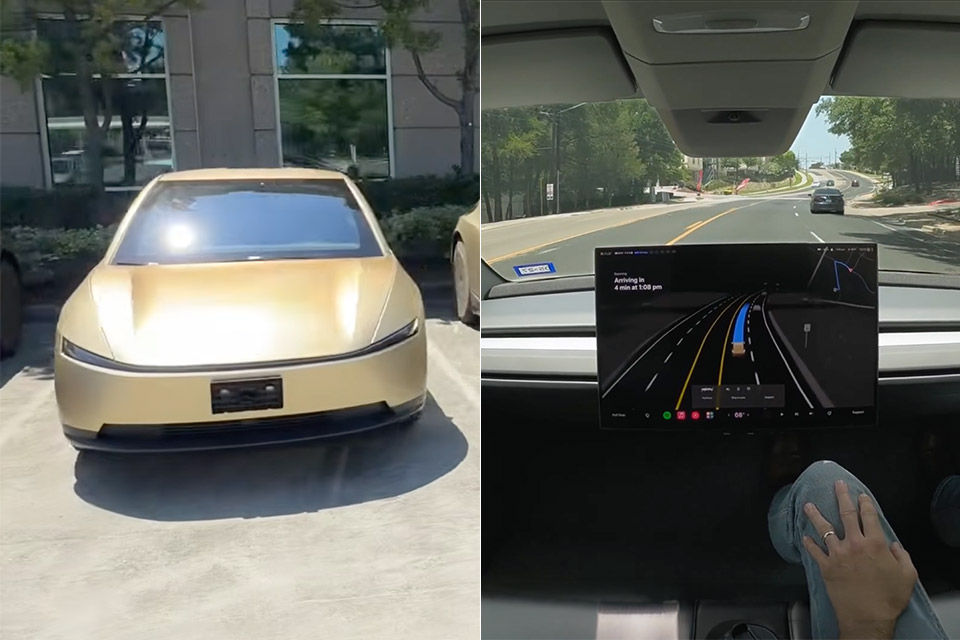
Gold two-seaters started carrying passengers through Austin this week after a quiet Thursday event and a Friday opening on Tesla’s Robotaxi app. Early riders who managed to snag one described a ride so uneventful it felt almost ordinary, which is the whole point of a taxi that never asks you to drive. Cybercab is a purpose-built two-door electric coupe with butterfly doors, no steering wheel, no pedals, and no side mirrors. Tesla designed it only for unsupervised robotaxi work. You book it the same way you book a Model Y robotaxi, then walk up to a car that opens itself when you are close enough. Doors also close on their own once both people are seated. A tap on Start Ride on the big center screen sends it rolling.

Gold two-seaters with butterfly doors rolled through downtown Austin on Thursday, September 3, and none of them had a steering wheel. Tesla used an invite-only gathering at ACL Live to put its purpose-built Cybercab into the same Robotaxi app that has already been carrying paying riders in Model Y SUVs since June 2025. Guests got the first spins Thursday evening. Broader public hails in a limited Austin zone were set to open Friday.

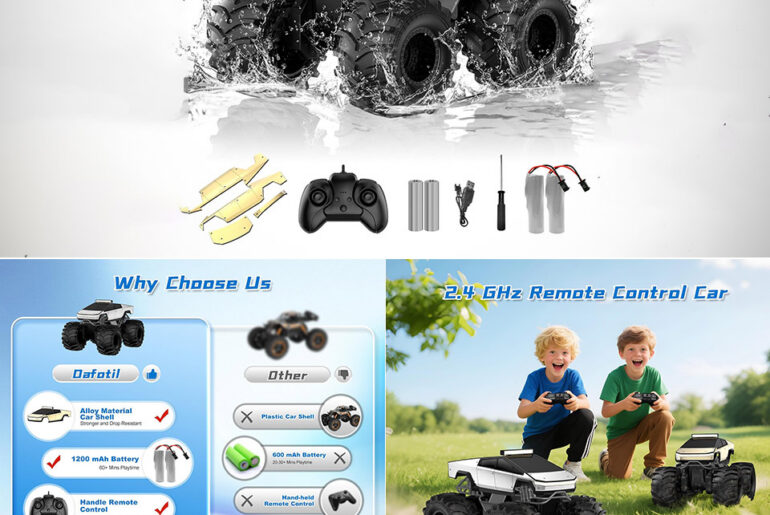
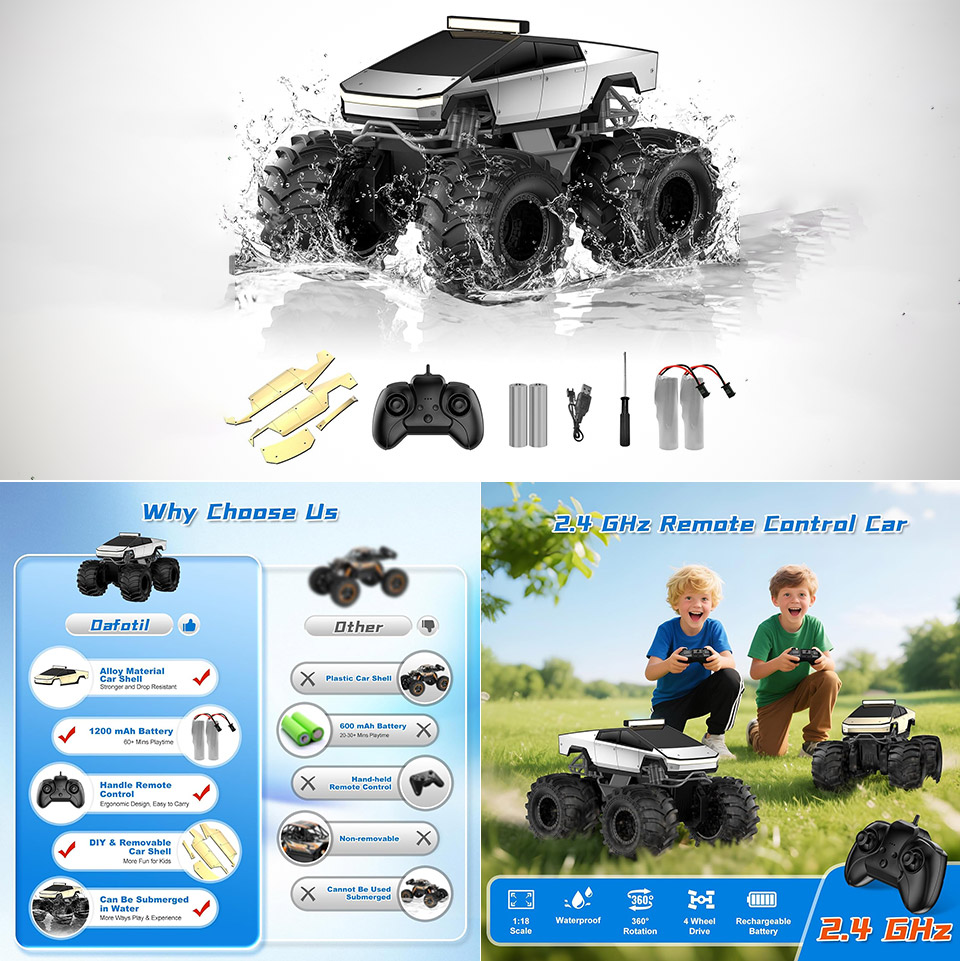
Official remote-control Cybertrucks have shown up for years, most of them licensed, most of them expensive, and almost none of them built to float. Dafotil KT912A, priced at $30.59 (was $36), skipped the licensing fee and the premium price, then gave the angular stainless look a pair of fat tires and a sealed body that actually works in water.

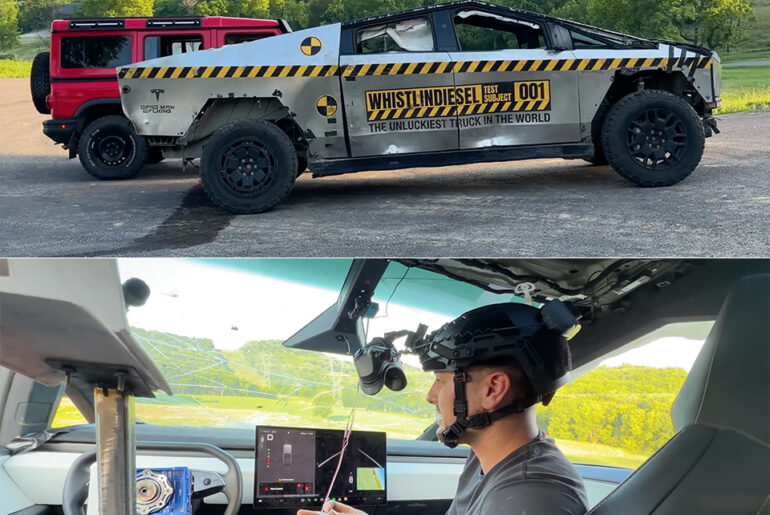
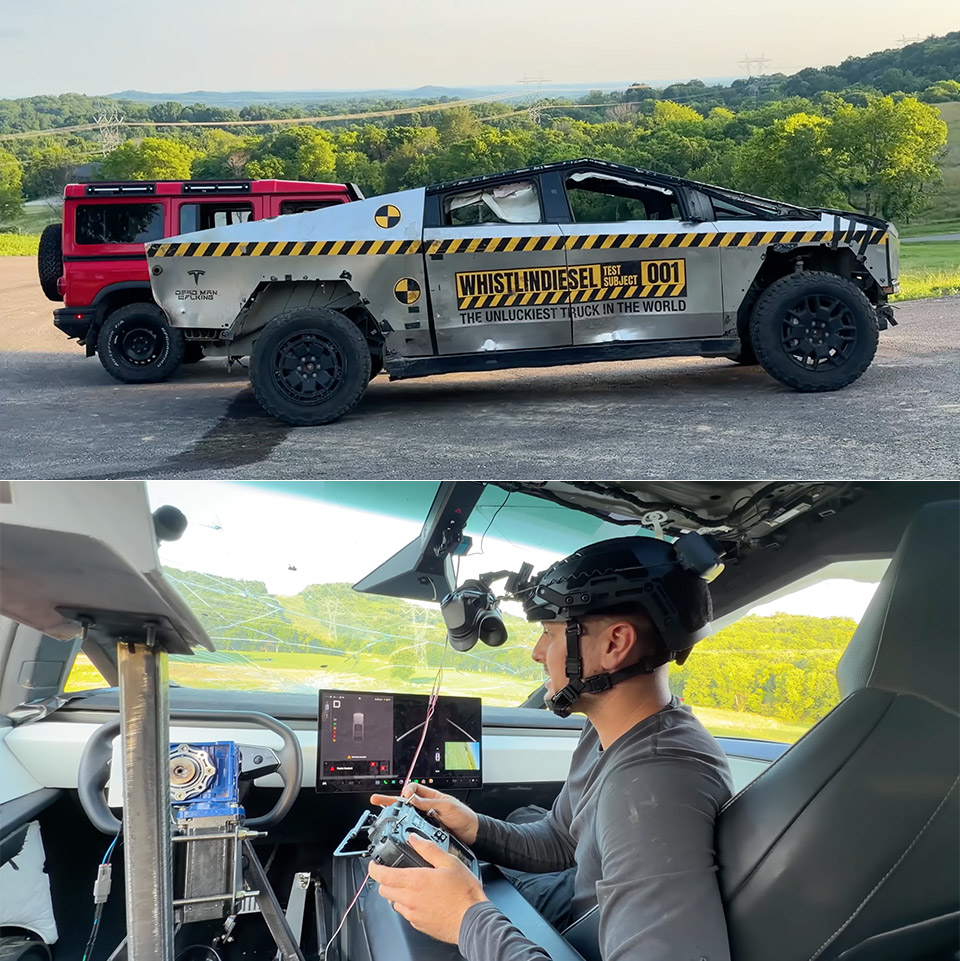
Prop Department set a simple goal for a recent build: take a full-size Tesla Cybertruck and turn it into something anyone could drive from a distance. There is no driver in the seat, and there are no complex software overrides of the truck’s own systems. Instead, there are motors, linkages, and painstaking wiring that allow someone outside the vehicle to handle the steering, throttle, transmission, and brakes. The project belonged to WhistlinDiesel, whose videos often end with expensive machinery in pieces, so the finished truck needed to work well enough for a high-speed run that might not go gently.

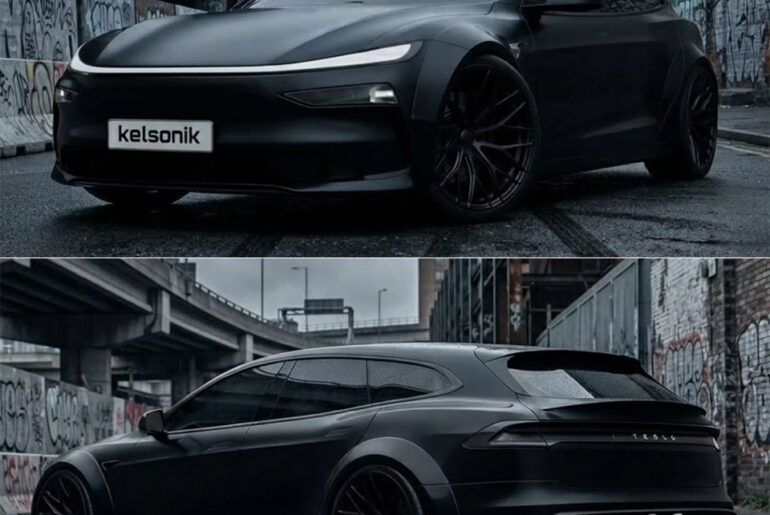
Photo credit: Kelsonik
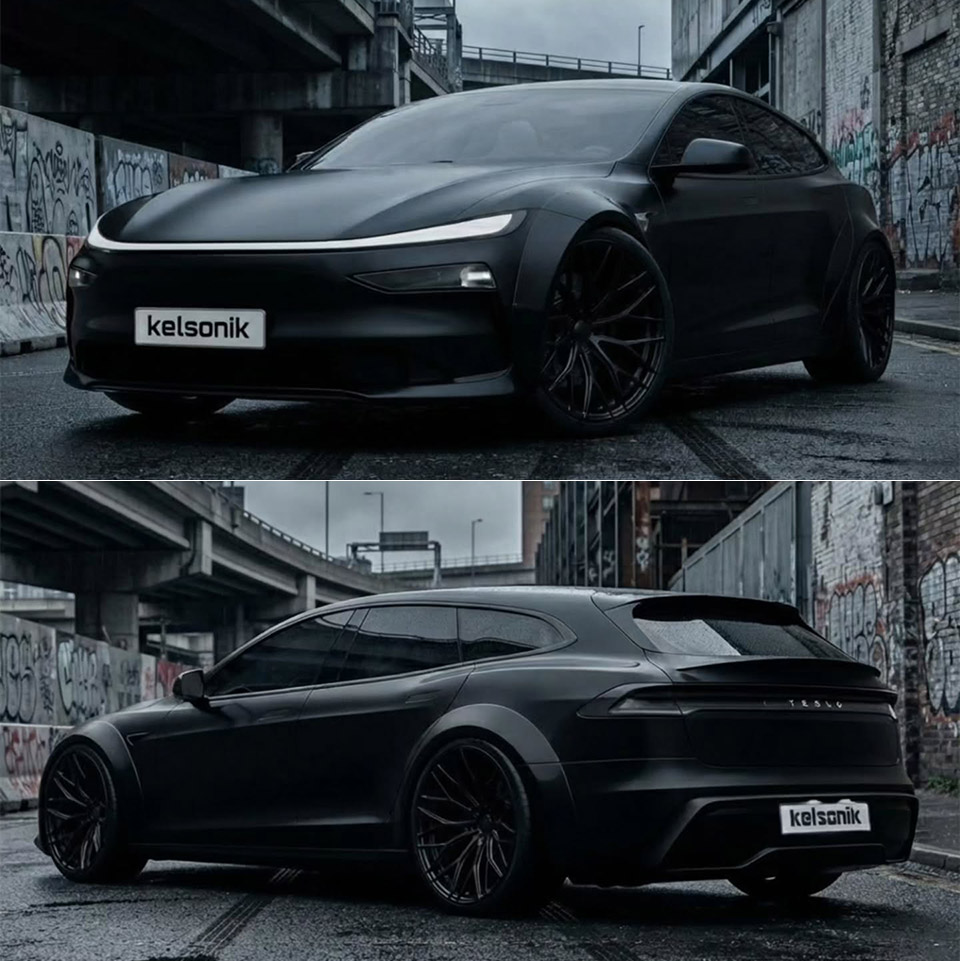
Nikita Chuicko works under the name kelsonik and spends his time turning existing cars into the versions manufacturers never quite got around to building. His latest set of renderings takes the Tesla Model S and stretches it into a shooting brake while adding a full widebody kit. Everything is finished in solid black, the stance is dropped, and the proportions feel deliberate rather than forced.

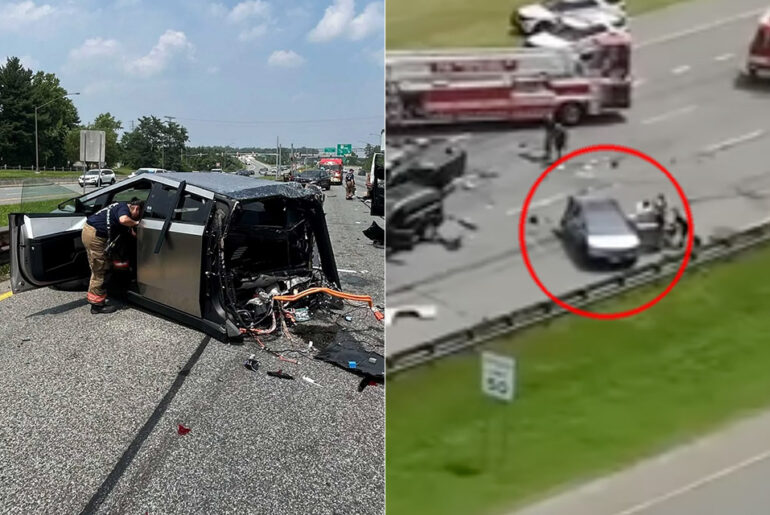
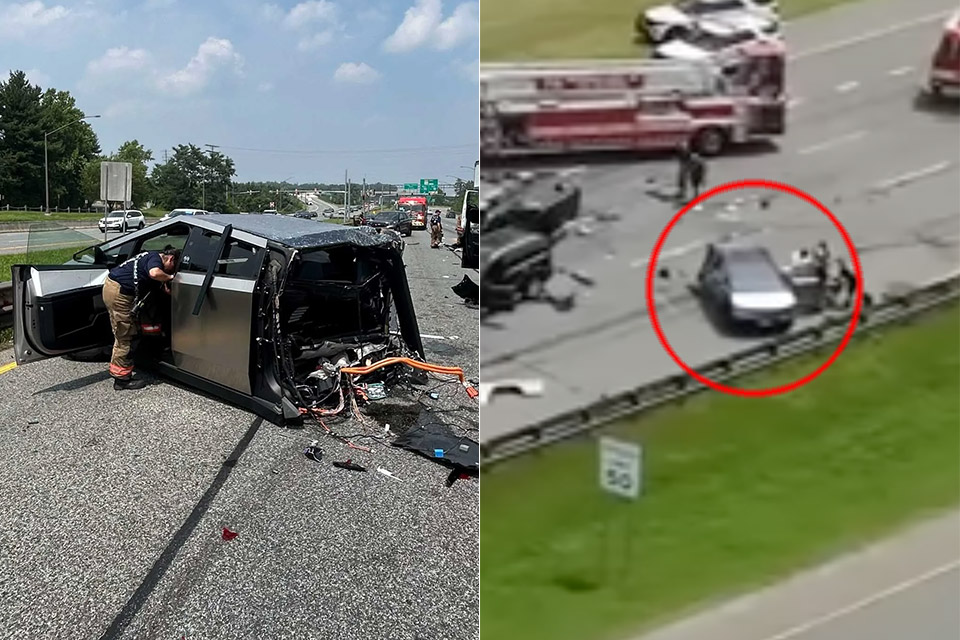
Saturday afternoon traffic on Columbia Pike near Fairland Road in Silver Spring, Maryland, turned nasty in an instant. At 1:43 p.m. on July 18, Nation Capital Movers’ moving truck lost control and collided with a line of vehicles. The accident set off a chain reaction crash that involved at least ten cars and trucks. Among the ruins was a Tesla Cybertruck that no longer seemed like a complete vehicle to say the least.

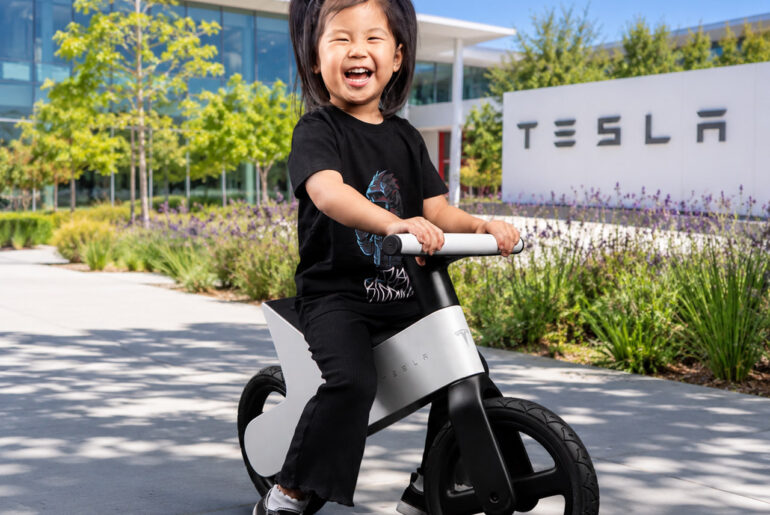
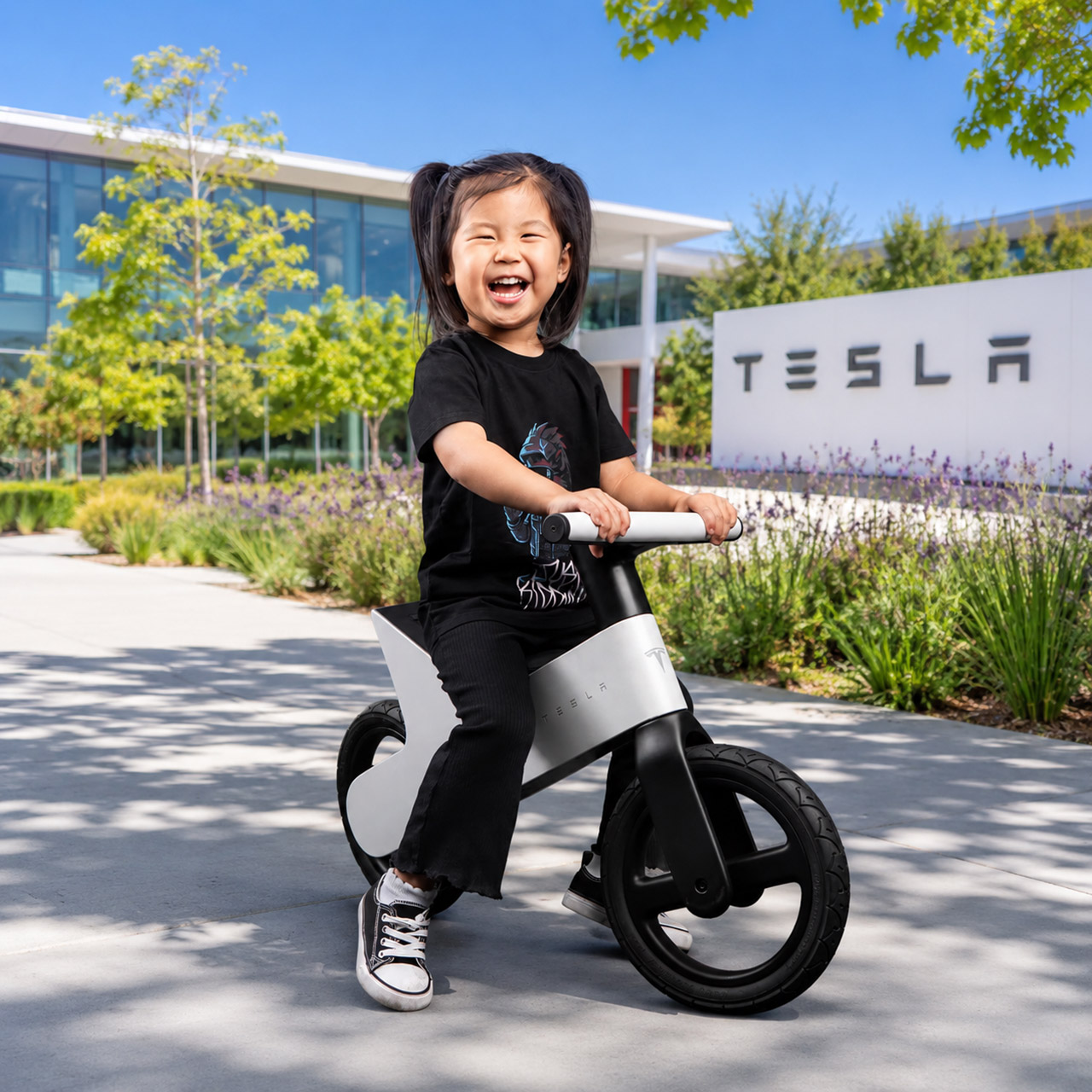
Tesla surprised owners and enthusiasts this morning when it added a new item to its online store. A balance bike designed for children aged two to five debuted unexpectedly. There is no battery, motor, or pedals, just a lightweight frame and two wheels intended to teach young riders the most important skill on two wheels.

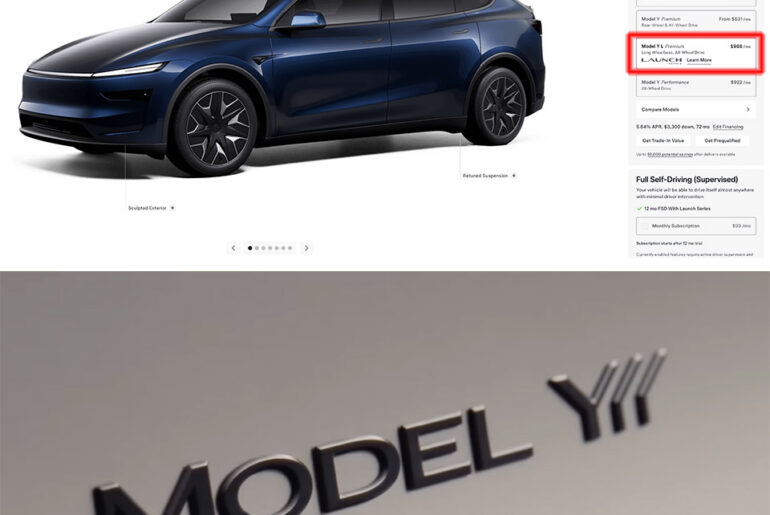
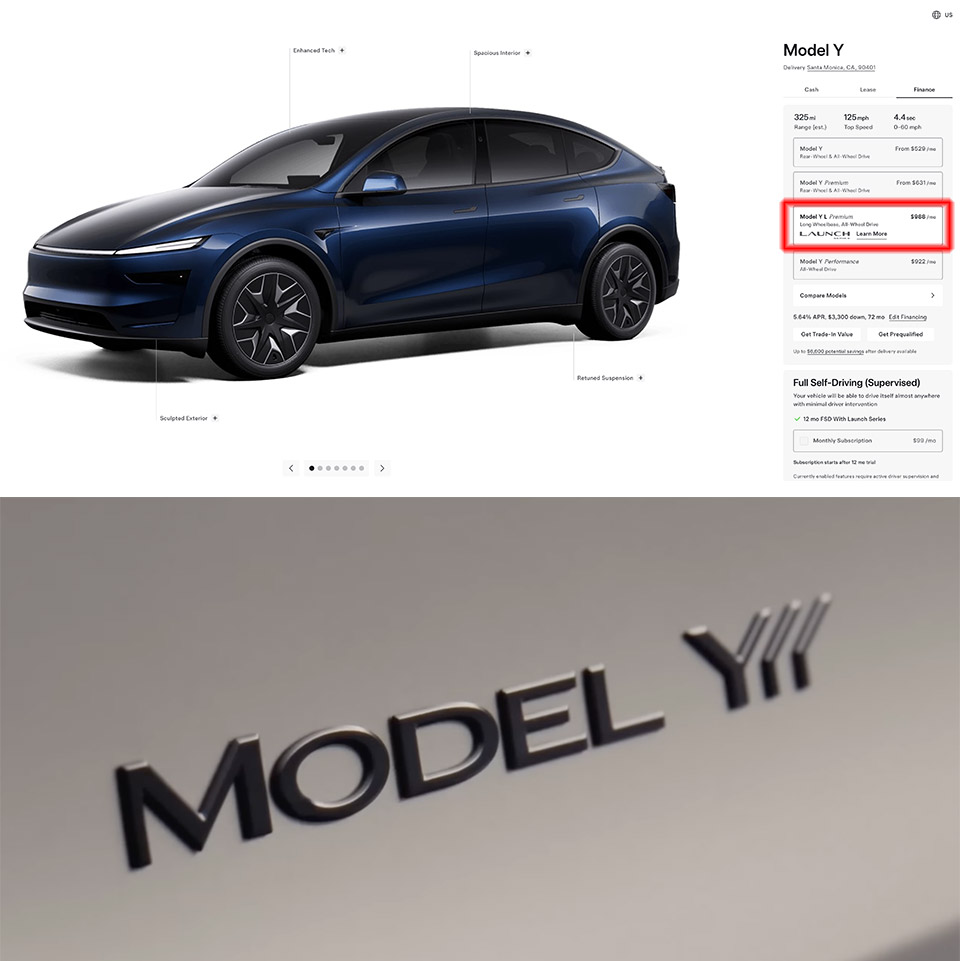
Tesla opened orders for the Model Y L across the United States on July 2. The new variant stretches the popular crossover to deliver a genuine six-passenger layout with a usable third row for the first time in this lineup. Engineers added six inches to the wheelbase and seven inches to overall length. They also increased height by roughly two inches compared with the standard Model Y. These changes turn the third row from an occasional squeeze into space that works for adults on longer drives or for carpool duty with kids and gear.

Austin streets now host something that looks ordinary at first glance but represents a sharp break from everything that came before. Production Cybercab units have started engineering tests on public roads, and these vehicles carry no steering wheel and no pedals. Tesla just posted video of the tests on June 30. The footage and supporting details show the first examples built for actual use rather than pure development. Earlier cars sometimes carried temporary controls. These do not.