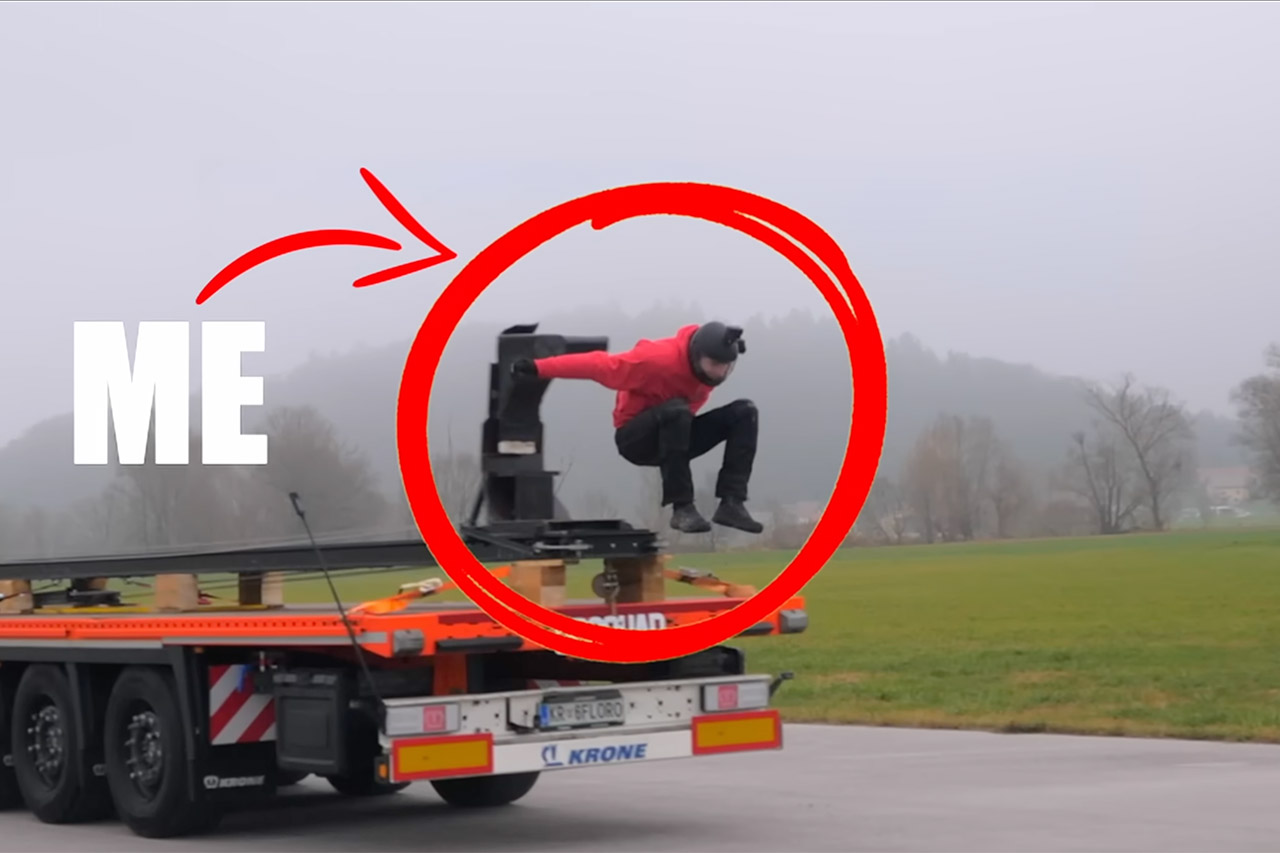
DD Squad decided to put a classic physics demonstration to the test in the real world. They built a catapult on the back of a flatbed truck and used it to launch one of their team members in the opposite direction of the truck, which was traveling at around 50 miles per hour (81 kilometers per hour). What transpired appeared to be inconceivable, as the guy appeared to float in mid-air for a brief while before the truck sped away into the distance.
DD Squad began with a notion straight out of a physics textbook, as velocity simply adds up dependent on direction. The vehicle is traveling at 50 mph, thus if you launch something rearward at the same speed, the two will cancel each other out, leaving you with a net speed of zero relative to the road. Because of inertia, all objects dropped from a moving vehicle remain with the vehicle; however, in this situation, the team essentially reversed that notion.

- Truck toy set for LEGO fans – Delight your little builder with the LEGO City Yellow Delivery Truck playset for ages 8 and up
- What’s in the box? – This fun toy building set includes everything kids need to create the LEGO City Yellow Delivery Truck, toy forklift and hot...
- A toy vehicle for LEGO enthusiasts – Kids can open the side panels of the LEGO truck’s trailer and use the forklift to load the pallets of toy...
They created a rail system with a seat that could slide backwards down a track. The athlete sat in a moulded chair that provided some protection, while wearing full motorbike gear and a skydiving helmet just in case. A quick-release mechanism would then blow the seat backwards with the appropriate amount of force. To ensure that the matching velocities were correct, the team did dozens of practice tests.
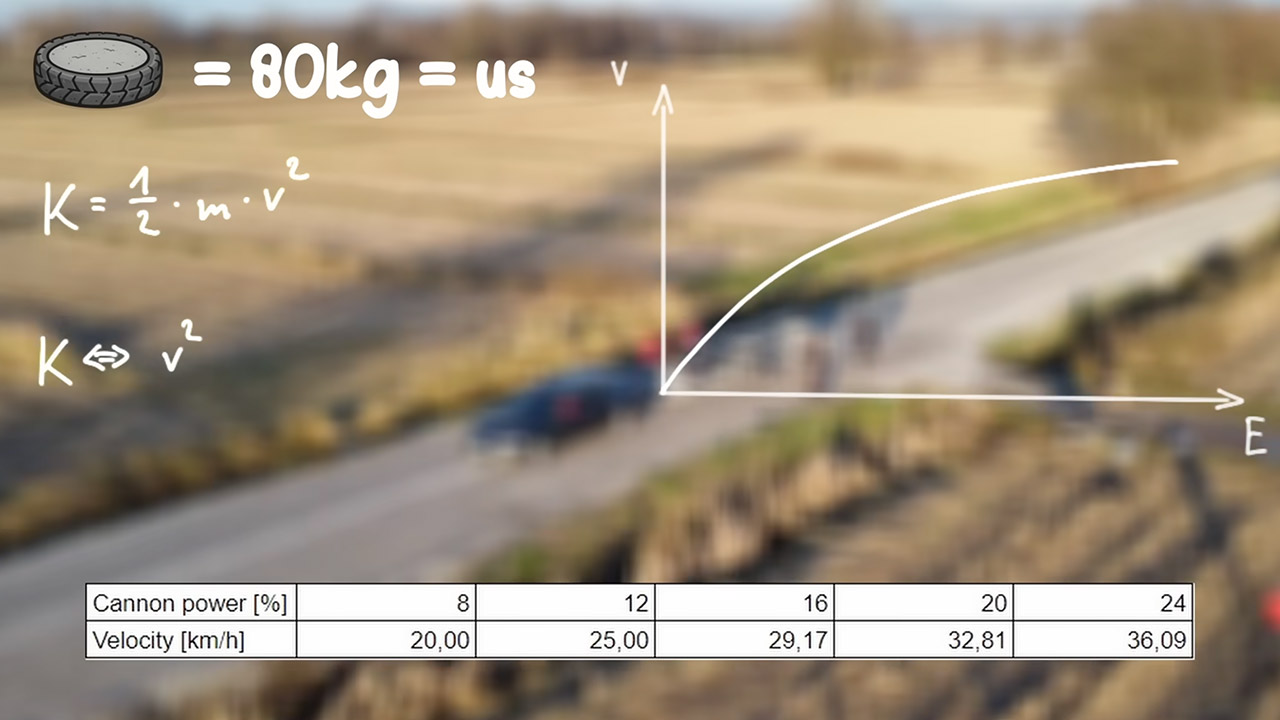
The initial few tests employed a large 80-kilo tire instead of a real person, sliding over the rail from a motionless start to speeds ranging from 15 to 25 km/h. Each test determined where the tyre ended up, how hard the landing was, and whether the release mechanism was functioning properly. After that, they made changes: a longer rail to increase speed, greater cushioning to make landings softer, and timing to ensure the launch occurred just when the truck reached the appropriate speed.
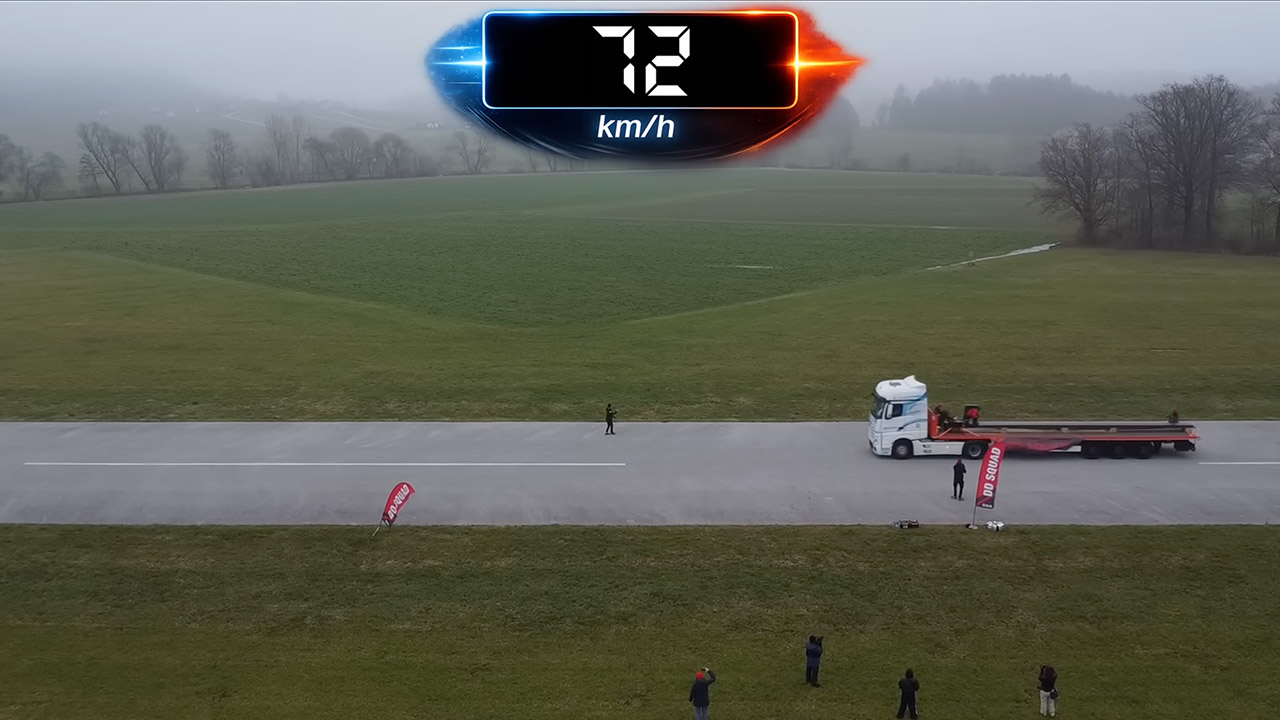
The speeds gradually increased, and by the time they reached 40 km/h, the tire test appeared to be a little slow, but it was pretty much as planned. Human launches followed, and the subjects all reported that it was quite soft, similar to stepping off a low platform, but as the speeds increased to 57 and 72 km/h, things were much harsher. So they went back and installed a longer rail to handle the increased force without jarring the person. The problem is that kinetic energy increases with the square of speed, thus even a tiny increase in speed makes a significant difference, necessitating careful scaling of the system.
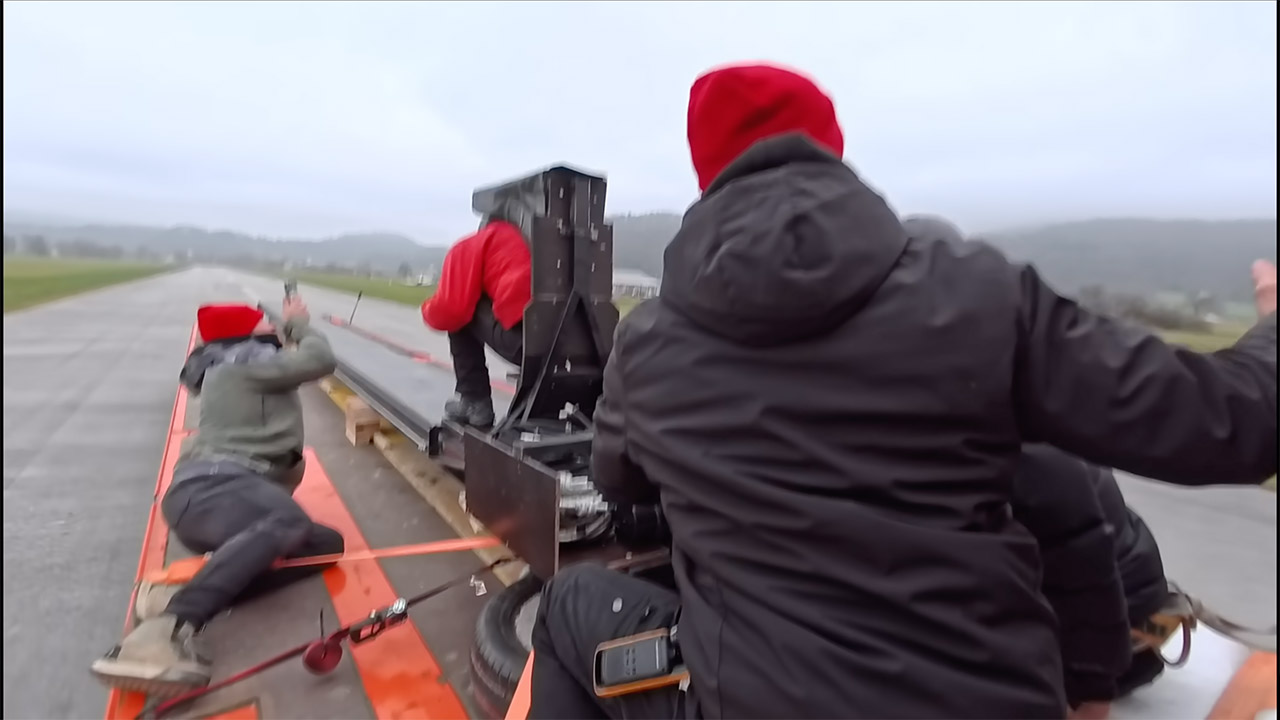
The speeds progressively climbed, and by the time they reached 40 km/h, the tire test appeared to be a touch slow, but it went mostly as anticipated. Human launches followed, and the participants all claimed that it was quite smooth, similar to stepping off a low platform, but as speeds increased to 57 and 72 km/h, things were considerably harsher. So the engineers went back and added a longer rail to accommodate the greater force without disturbing the athlete. The problem is that kinetic energy increases with speed squared, thus even a small increase in speed makes a big difference, demanding careful system scaling.
[Source]