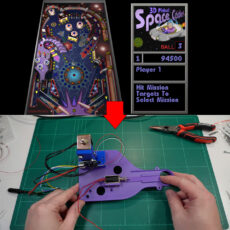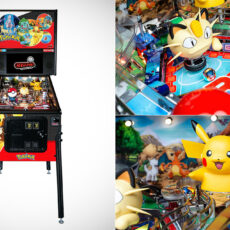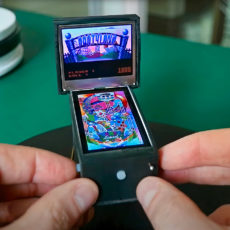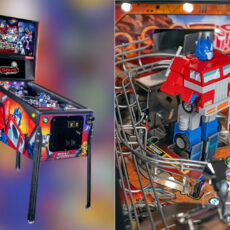
Steven at 3D Printer Academy spent close to a year tearing up his own desktop pinball machine and starting over. The first one, sold as file packs after a spring Kickstarter that drew about 1,500 backers and roughly $120,000, already proved a strange point. A playable pinball table can come off a normal home printer, run with no wires, and live on a desk. Version 2.0, shown in his latest build video and lined up for a new Kickstarter, treats that first machine as a draft with real limits.
Version 1 was available in only two fixed sizes: a conventional cabinet and a somewhat larger one, with no parts shared between the two. Attachments were mounted from underneath, although the printed threads tended to come loose after a while. The screws were printed standing upright, with the layer lines coming together to form a weak point that would snap under some impact. Steven maintained the parts that worked, such as the side buttons that operate the flippers, a mechanical counter for maintaining score, the heavy steel ball bearings (the only ones he purchased), and a path that allows lucky shots to bounce back to the plunger. Everything else was recreated from scratch.

- A1 mini + LED Lamp Kit for Creative Light Projects: Bring your ideas to life with the included LED Lamp Kit. Simply print compatible lamp models and...
- The Perfect 3D Printer for Beginners: A1 mini 3D Printer is designed to make 3D printing easy from day one with automatic calibration, simple setup...
- Experience the Bambu Lab Ecosystem: Access MakerWorld’s huge library of ready-to-print models, manage prints through the Bambu Handy app, and enjoy...
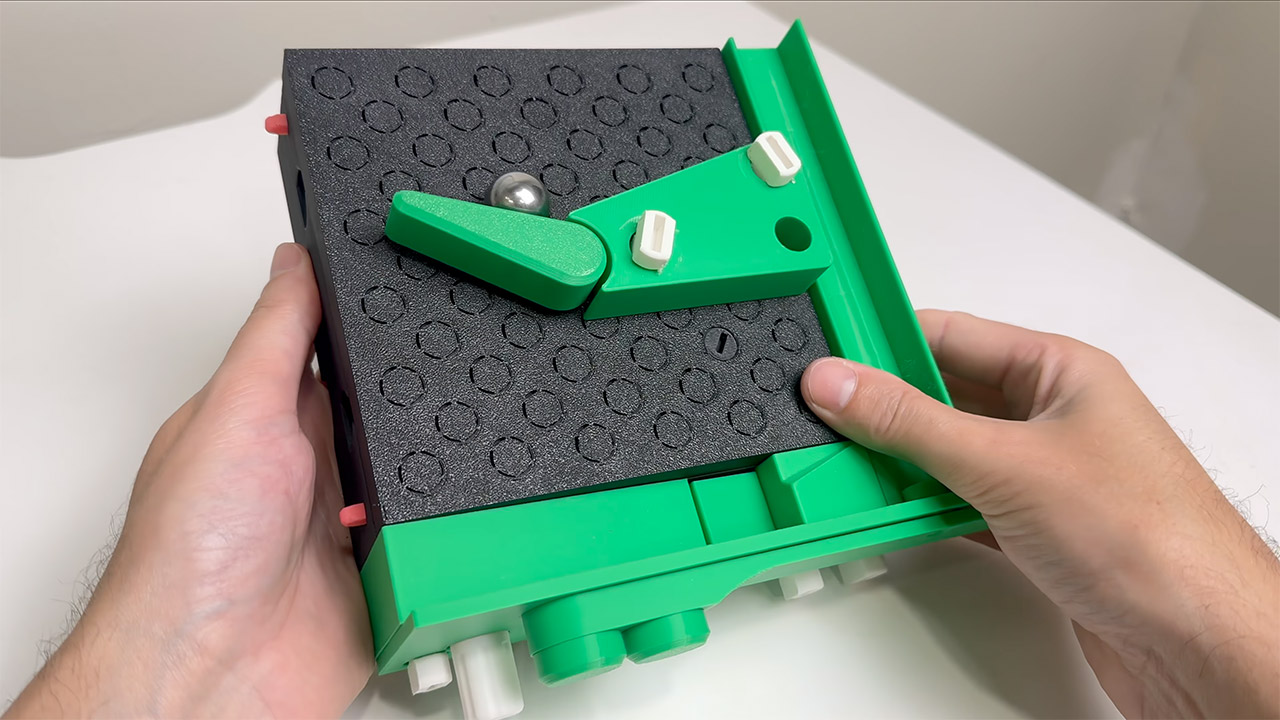
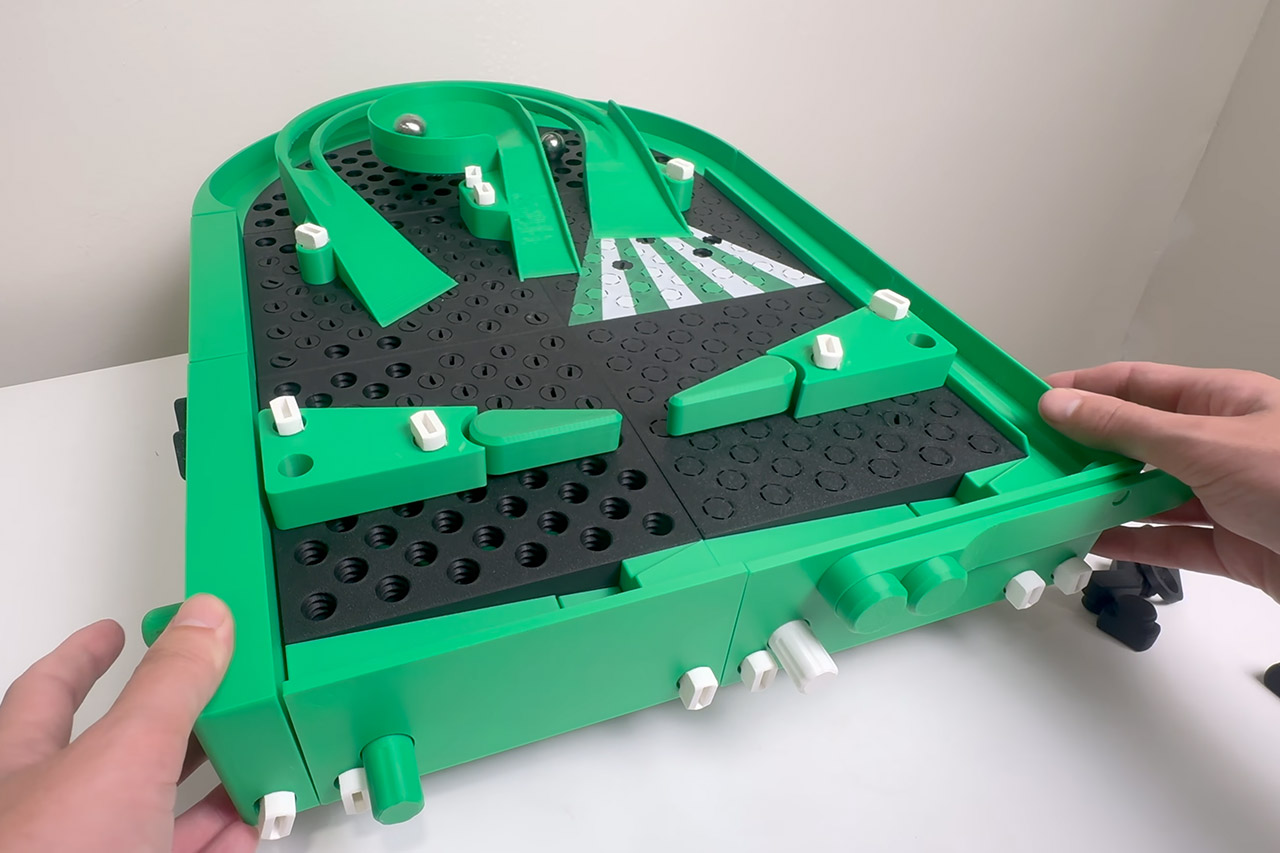
Pinball Machine 2.0 features a grid of similar square tiles. You print one, then another, and secure them together with threaded caps and dowels. A brief succession of tiles creates a compact table; extra columns make it larger, and extra rows make it deeper. The ball can move from one module to the next without catching on any seams. The holes in the tile also keep the ball on track, even when the table is at an angle. If a hole is not being utilized, a screw cover can be inserted to create a smooth playing surface. The artwork on the squares is completely optional and has no effect on the ball’s route.
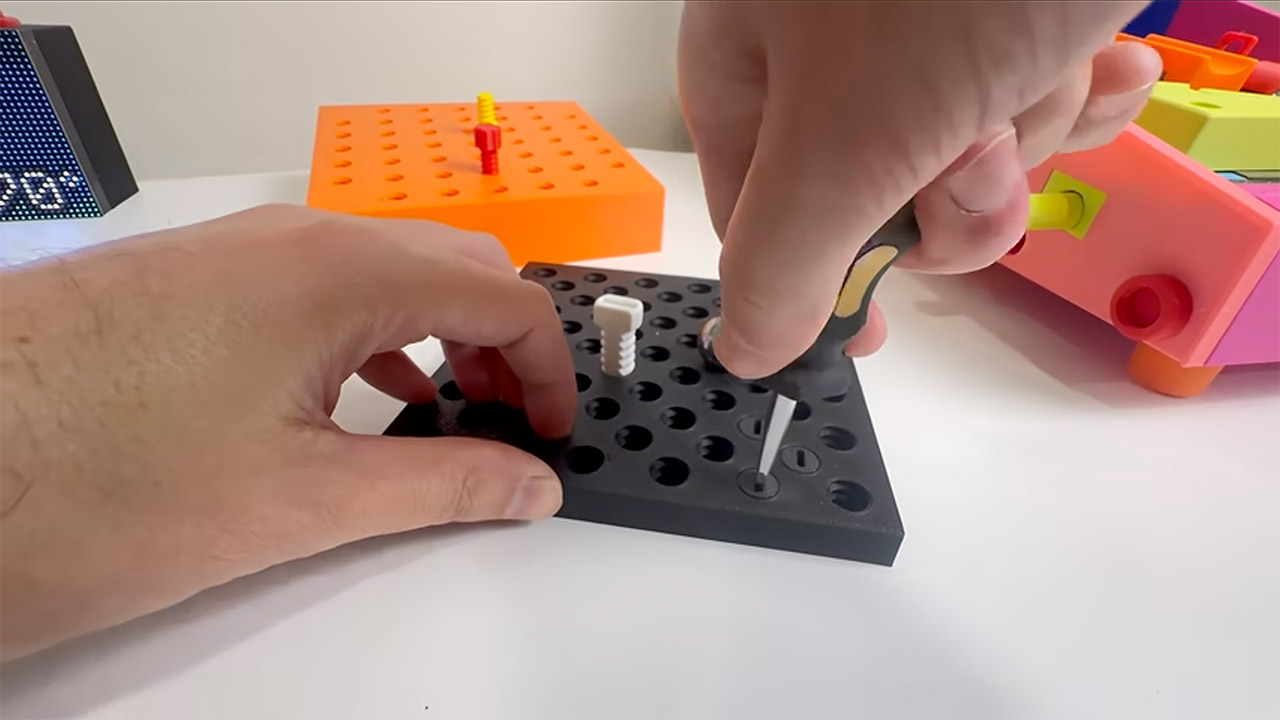
Attachments are no longer buried beneath the table. There are punch-out tabs for mounting points, and a threaded peg slides in and screws down tightly from the top. The holes taper as you turn the screw, allowing a wrench to finish the job. The screws now print lying down, which prevents the layer lines from aligning with the load. You can also tilt curved rails in various ways. Funnels are space-saving while still providing a great drop for the ball. Ramps and chutes can move from one tile to the next. In addition to a spinner and a unique backglass, the set has a release tower that dumps held balls when a shot hits it. Flippers install in the same threaded holes but are powered by a double leaf spring, so pressing the side button still propels them through their arc without the use of a motor.
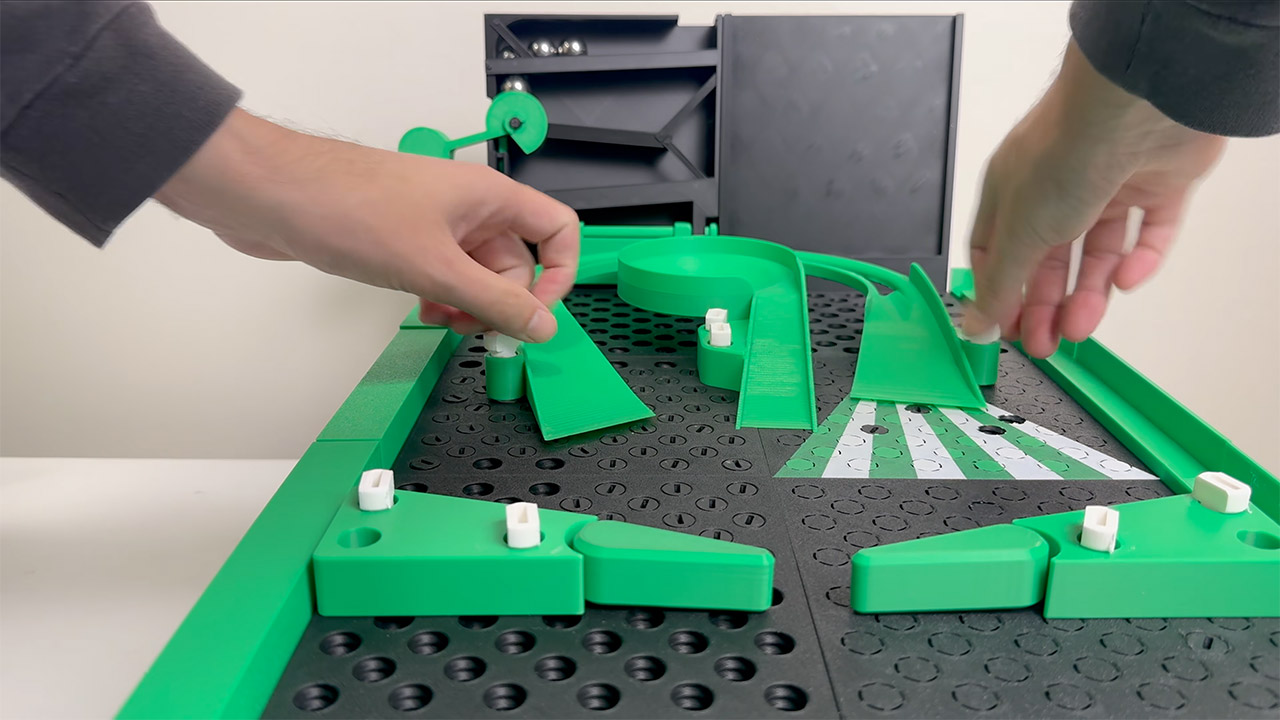
The designs are being sent to Kickstarter under the name 3D Printer Academy, and a notification page has already been set up for anyone interested in the launch discount. Steven describes the remake as the new standard for printed pinball tables. That allegation is largely based on one fact: the game is no longer a solitary cabinet that you finish and leave alone. It’s now a stack of tiles that you can remove, add to, or rearrange whenever the existing layout no longer presents a challenge.