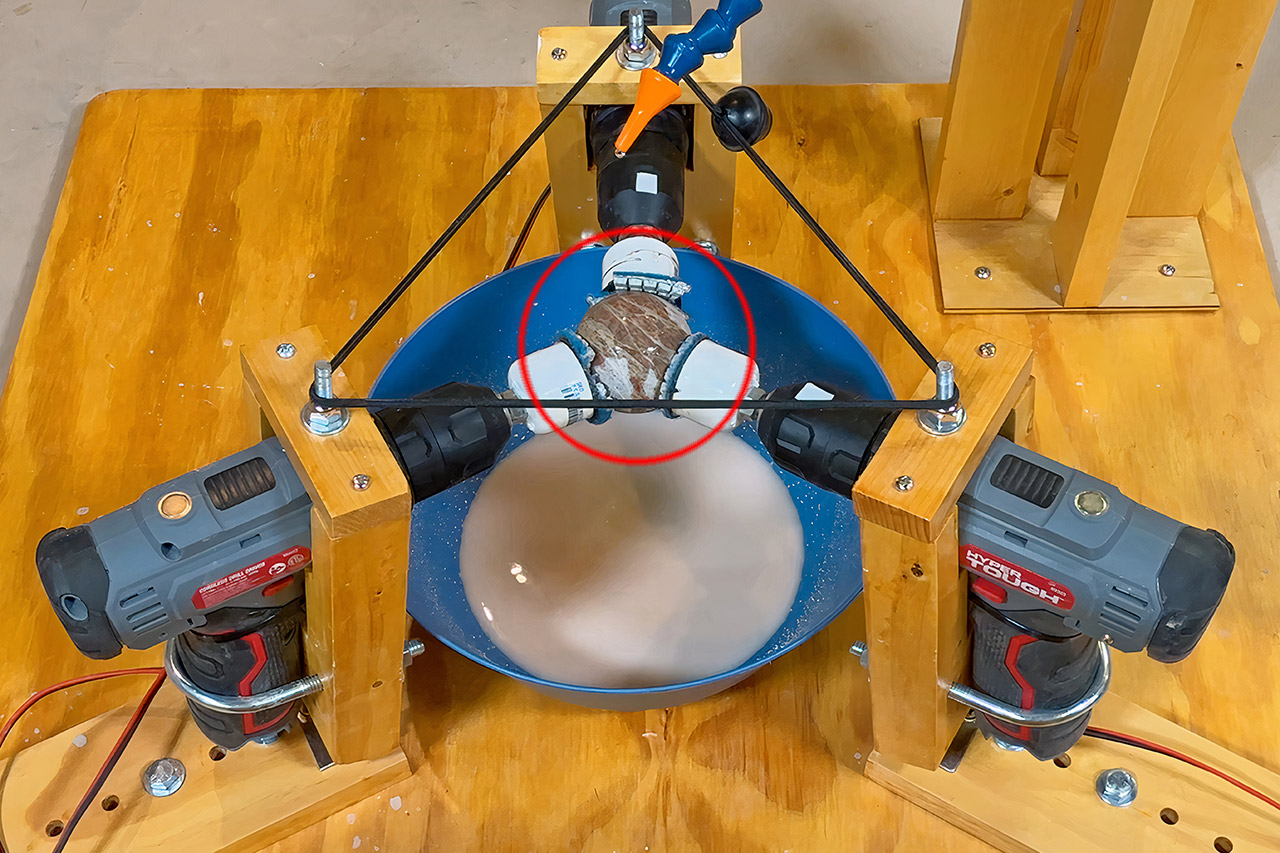
A homemade device spins in a small workshop, transforming rough beach stones into shiny, perfect spheres. Rob from Michigan Rocks built the spherical machine himself, and the results are almost too precise to be a DIY project. He first got the idea from an older design uploaded on YouTube by James Muchmore approximately 7 years ago, and he set out to develop something much more accessible because commercial sphere machines are a significant financial investment.
At the heart of this machine are three regular battery-powered drills Rob purchased new for around $12 each. He figured why waste money on batteries and wire when you can connect them straight to a DC power supply and have consistent, safe power even when working with water. Each drill is equipped with a diamond-tipped hole saw or core bit that simply presses against the rock. A bit of twine and homemade bungee cords, carefully knotted, pull the drills inwards towards the center, exerting equal pressure on the rock from three distinct angles. Adjustable stainless steel hinges from your local hardware store allow you to tilt the drills forward, making it much easier to set up and replace the rocks.

- DISCOVER CRYSTAL TREASURE - Break open these rocks to reveal amazing crystals inside! Geology doesn’t get more exciting than breaking open rocks and...
- COLORFUL VARIETY – Geodes can form with a wide variety of crystals inside. These geodes have been hand-selected to bring you the best variety...
- 100% NATURAL GEODES – These real specimens may be as big as a tennis ball, or as small as a ping-pong ball. Kids will love the thrill of cracking...
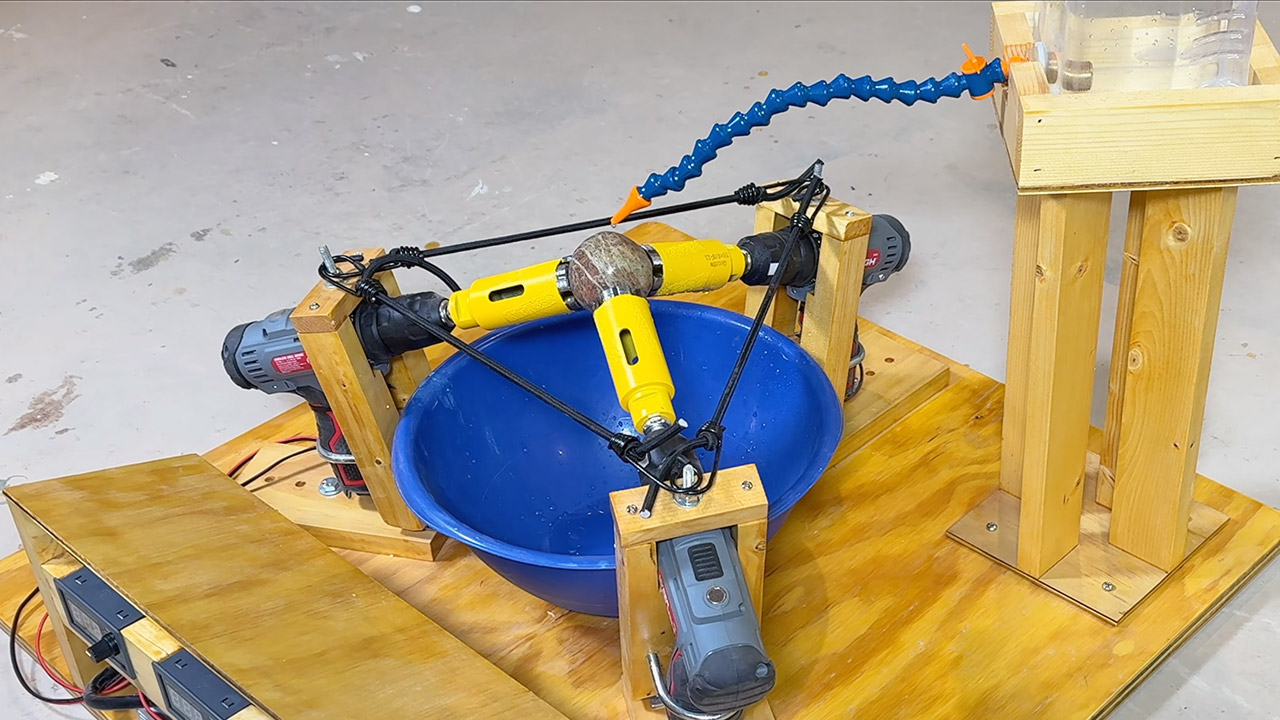
Water flows steadily from an above container via a rudimentary valve, doing its best to keep the stone cool and flushing away all grinding debris. That’s all contained in this makeshift enclosure made from a few pieces of cabinet slide, which keeps things neat. Rob uses a tachometer and reflective tape to acquire an accurate readout of roughly 100 RPM for the initial rough grinding and up to 200 for the finer phases.
The entire process begins with rocks you’ve collected off the coast, and then the three grinding bits, gently pressed in a cup shape around the rock, begin to turn, causing the rock to slowly tumble in place as they grind away the bits that protrude too far. After roughly two hours, the lumpy shape starts to resemble a sphere. Originally, the item would just pop loose in one piece, so Rob had to make some changes, like shortening the bits, increasing the tension, and swapping the bits from old to new, until everything made sense.
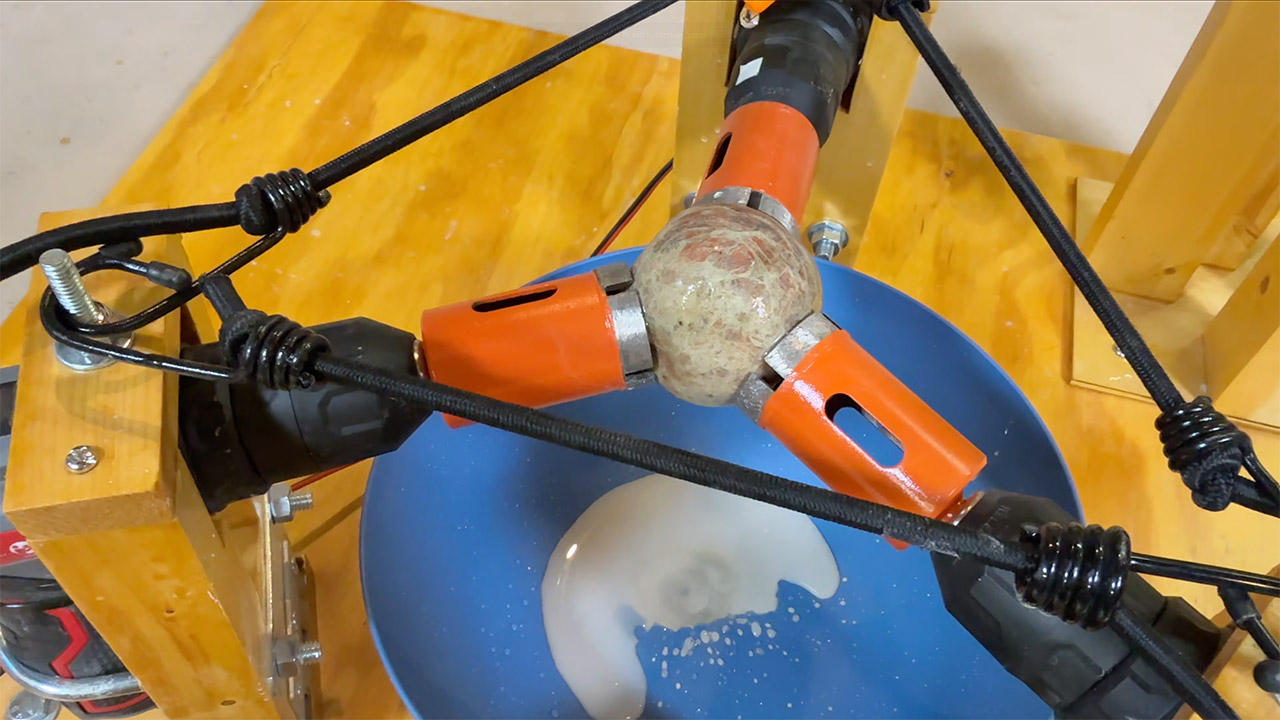
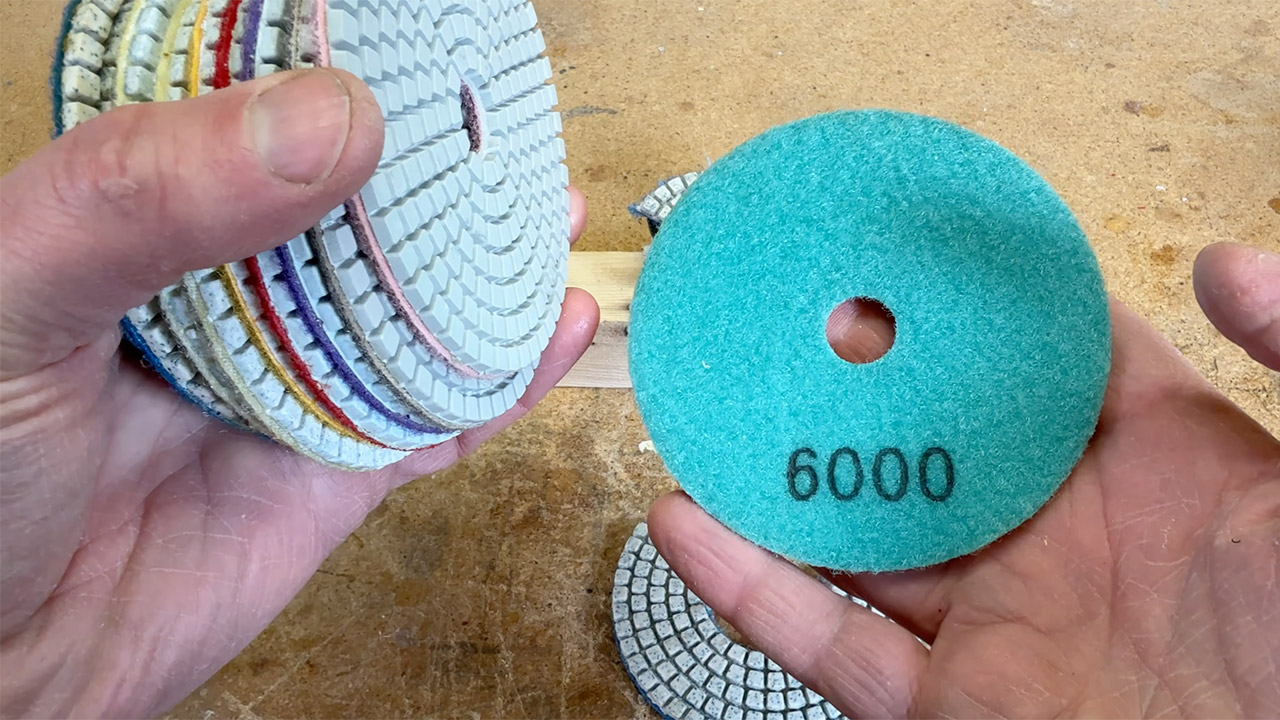
Once the rough edge has been worn down, the grinding bits are replaced with polishing pads. Rob manufactures these polishing pads himself from diamond impregnated pads; the roughest is fifty grit, and you work your way up to six thousand grit; they’re all curved shapes cut out with a coping saw. Then he has to create holders for each of them out of PVC end caps, bolts, epoxy, Velcro, and styrofoam to achieve the right shape for the spherical. Simply keep increasing to the next grit level until the surface is so smooth it resembles glass. It takes around 20 minutes each grit, but it’s a trip, as it begins dull and flat and eventually transforms into this sparkling sphere that catches light from every angle.
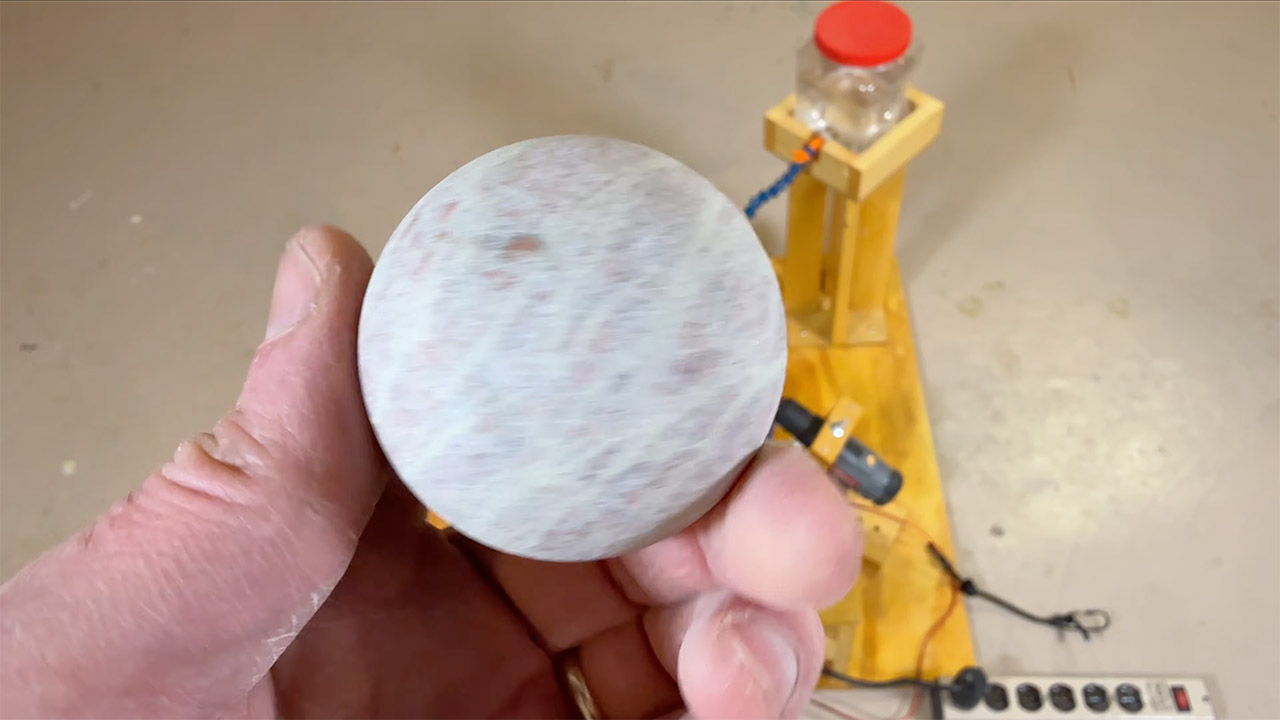
That’s when you start to see patterns, such as the warm green and pink specks in unakite, the speckled appearance of limestone, or the depth that an agate’s flawless roundness provides. The final sphere feels so solid in your hand that it’s difficult to think it began out as some lumpy old rock, and it’s as dry as a bone after the whole shebang, a gleaming orb that can’t be believed to have started out as stone.
[Source]