Think of NGC 6397, a dazzling globular cluster, as a galactic beehive, or at least that is what this Hubble Space Telescope image makes it seem like. It’s located 8,200 light-years away in the constellation Ara and one of the closest globular clusters to Earth.
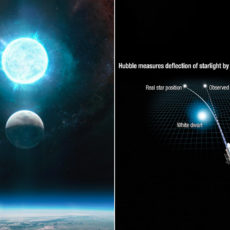
The globular cluster contains approximately 400,000 stars, and can be seen without a telescope under good conditions. NGC 6397 is just one of at least 20 globular clusters located in the Milky Way Galaxy that have undergone a core collapse. In other words, the core has contracted to a very dense stellar agglomeration. Data collected by Hubble and Gaia confirmed in 2022 that the cluster has hundreds of massive white dwarfs, but essentially no black holes.

Celestron NexStar 8SE Computerized Telescope – 8-Inch Schmidt-Cassegrain Optical Tube – Fully...
- ADVANCED TECH MEETS ICONIC DESIGN: The NexStar 8SE pairs Celestron’s legendary orange tube with a fully computerized GoTo system—ideal for those...
- 8-INCH SCHMIDT-CASSEGRAIN OPTICS: The large 8" aperture gathers enough light to reveal fine lunar details, cloud bands on Jupiter, and deep-sky...
- FULLY AUTOMATED GoTo MOUNT WITH NEXSTAR+ HAND CONTROL: Use the NexStar+ hand control to select from a 40,000+ object database. The computerized mount...

[Source]