
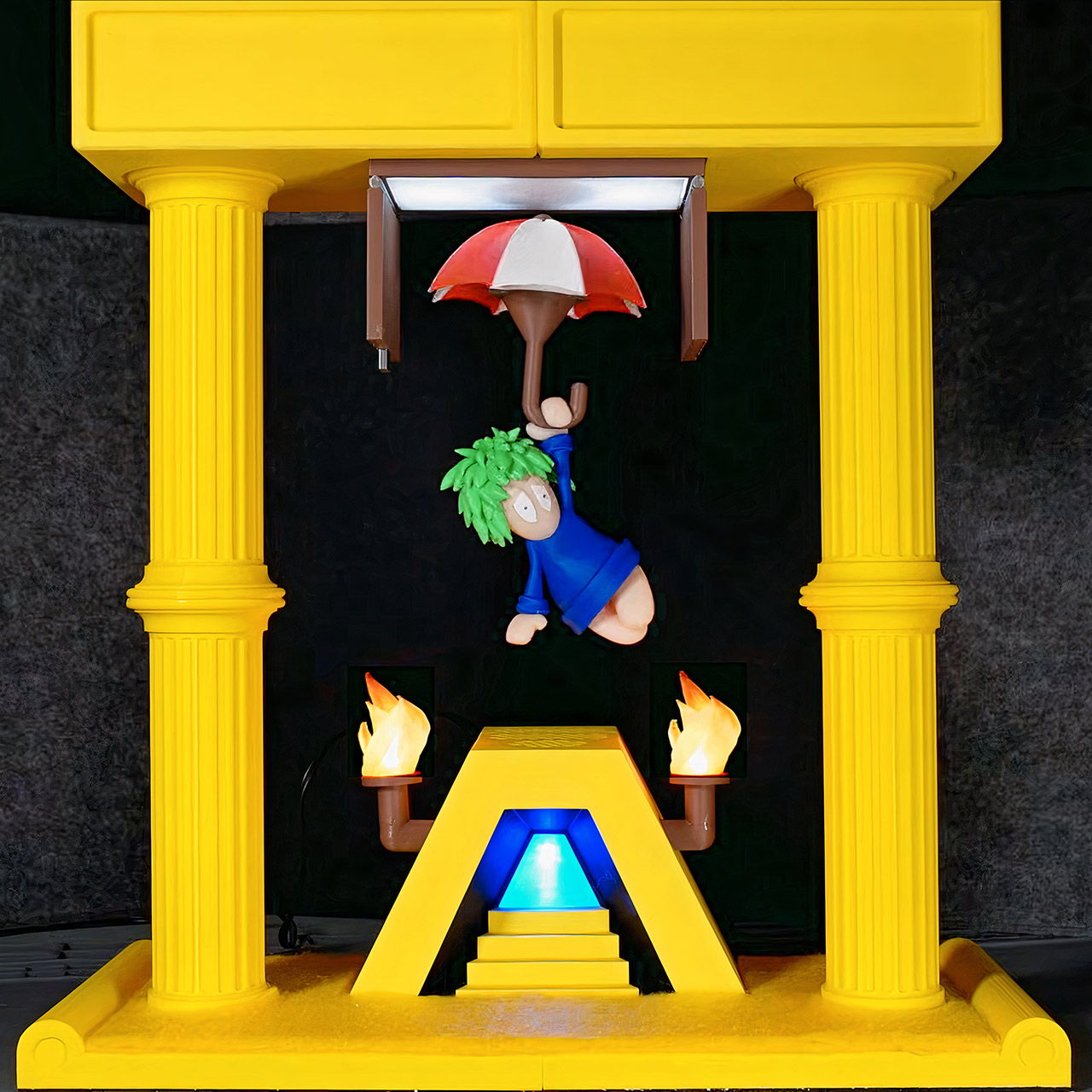
Rob Smith looked at the calendar last month, noting that February 14th marks 35 years since Lemmings dumped players into ludicrous puzzles on the Amiga. Green-haired creatures marched forward, oblivious to the dangers ahead unless you assigned them tasks such as building bridges or popping parachutes. Smith only wanted to produce an homage that caught one specific moment: the floater. That’s the little lemming that pops an umbrella and glides to safety in one piece. He created one that truly floats, supported by magnets that pull upwards from above.
Smith initially attempted to accomplish this using off-the-shelf kits, ordering two magnetic levitation setups from AliExpress, one a more basic configuration in a neat box and the other a more hefty affair with a massive coil and a serious power supply. Assembly required patience and a soldering iron. He pieced together the electronics, playing with potentiometers and attempting to attract little magnets into the air. The larger kit was supposed to be capable of lifting up to 200 grams, but stability proved challenging as the magnets wobbled and crashed, and the sensors cracked on impact. Both of them were too unstable for his 3D-printed lemming, so he tossed them.

- High-Speed Precision: Experience unparalleled speed and precision with the Bambu Lab A1 3D Printer. With an impressive acceleration of 10,000 mm/s...
- Multi-Color Printing with AMS lite: Unlock your creativity with vibrant and multi-colored 3D prints. The Bambu Lab A1 3D printers make multi-color...
- Full-Auto Calibration: Say goodbye to manual calibration hassles. The A1 3D printer takes care of all the calibration processes automatically...
Smith then moved on to custom work, starting with a sketch of a circuit based on an Arduino Nano and creating it from scratch. A MOSFET switched power to the coil, a Hall effect sensor tracked the location of the lemming’s magnet, and RGB LEDs provided some glow. He had also added a DFPlayer Mini module to play game sounds and an 80-degree thermostat to prevent the coil from overheating. He sent the design off to PCBWay to get some boards made up, and when they arrived, it was just a matter of soldering them all together. Soldering took up the better part of an afternoon, but he did at least get to stick some foam around the sensor to cushion it against any rogue crashes during testing.
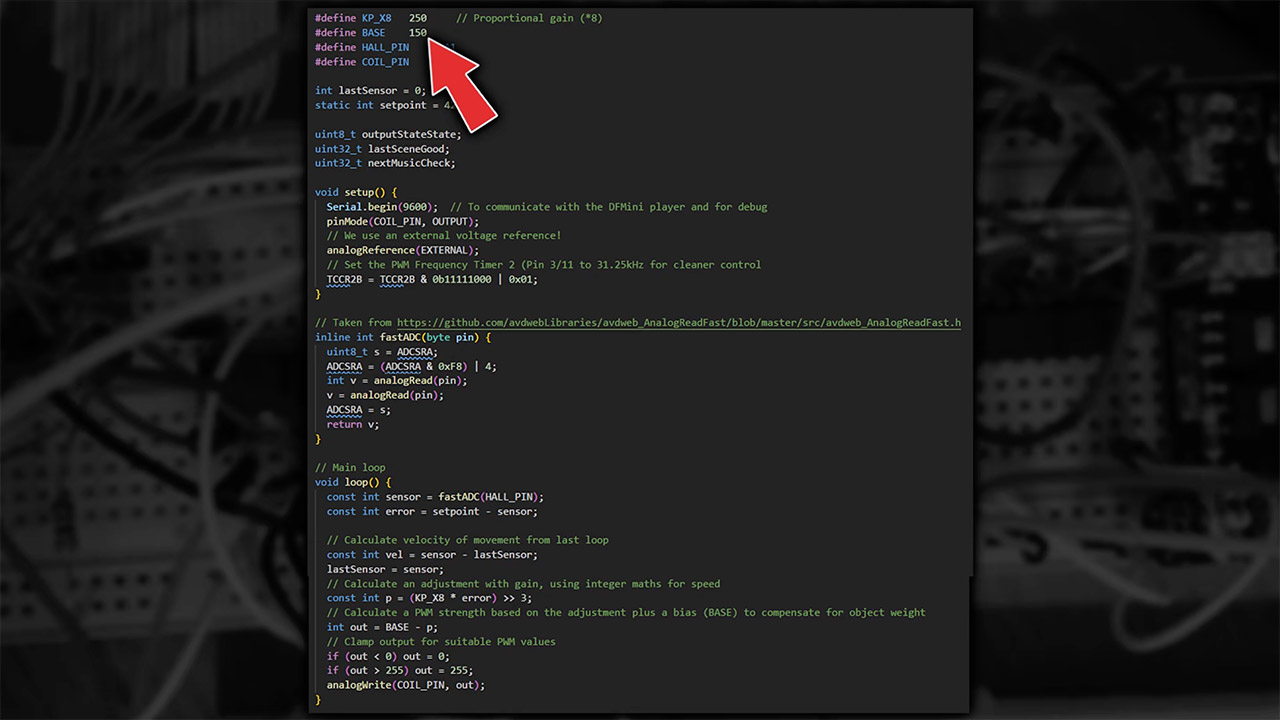
Then came the code, and things really began to come together. Pulse-width modulation gave the coil a slight pull, the sensor provided data on the magnet’s position, and a feedback loop ensured that everything remained steady. Gain accelerated the response time, the midpoint regulated the hover height, and a base offset counteracted gravity.He also added a 2.5-volt reference to improve the results. Upload the code, make a few changes, and repeat the process. Eventually, the test weights were hovering nicely at 40 milliamps, and he was able to add some audio triggers: “Let’s Go!” when the lemming leaped into action, a soundtrack when it detected the umbrella, a splash when it dropped, and a scream when it slammed the ground.
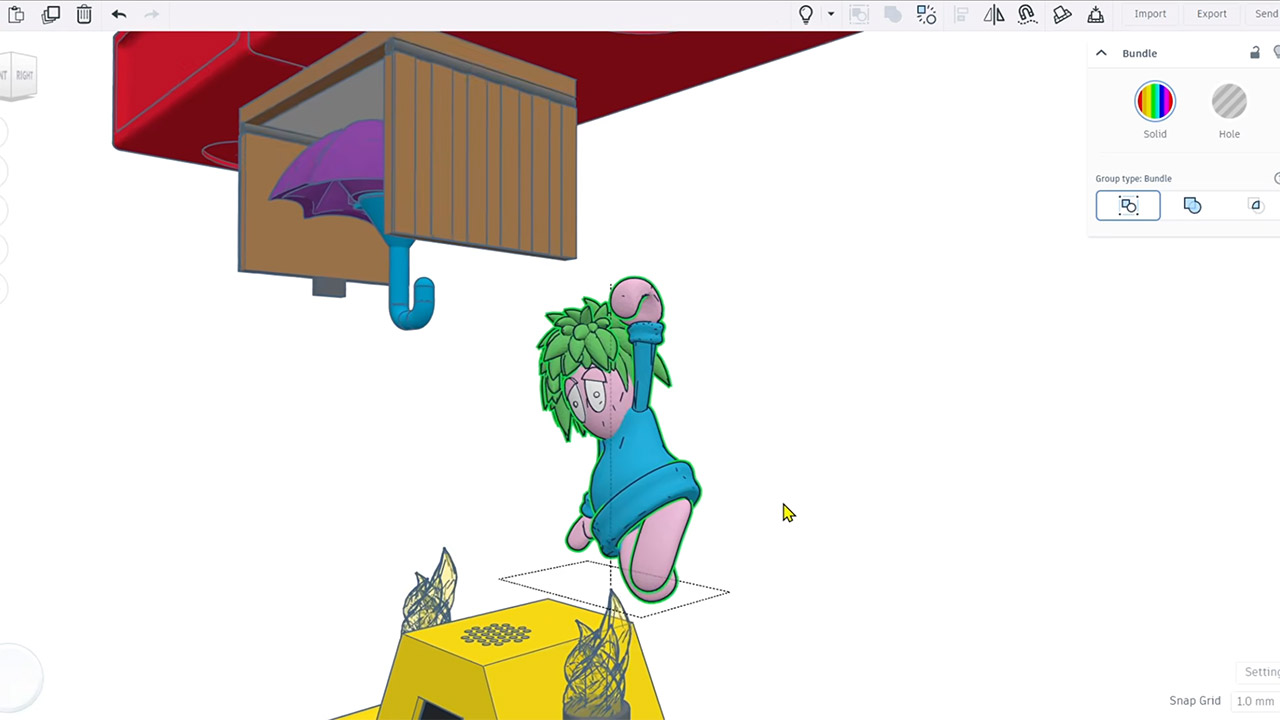
The next step was to design the scenario, with Blender handling the columns, trapdoor, and exit sign. Ifu Sharuwan had provided the lemming model, which Smith disassembled into individual sections for simple painting: hair, legs, body, and head. Seven neodymium magnets packed in the umbrella were critical, since he needed to get the polarity just right. The tiny ones inside the trapdoor were intended to force the lemming to face forward. He also managed to hide the cords with wire channels and soften the exit lights using a diffuser. Prints took a long time because he was changing colors row by row, but once completed, a touch of glue held the components together and a layer of felt on the base served to cushion the landings.
[Source