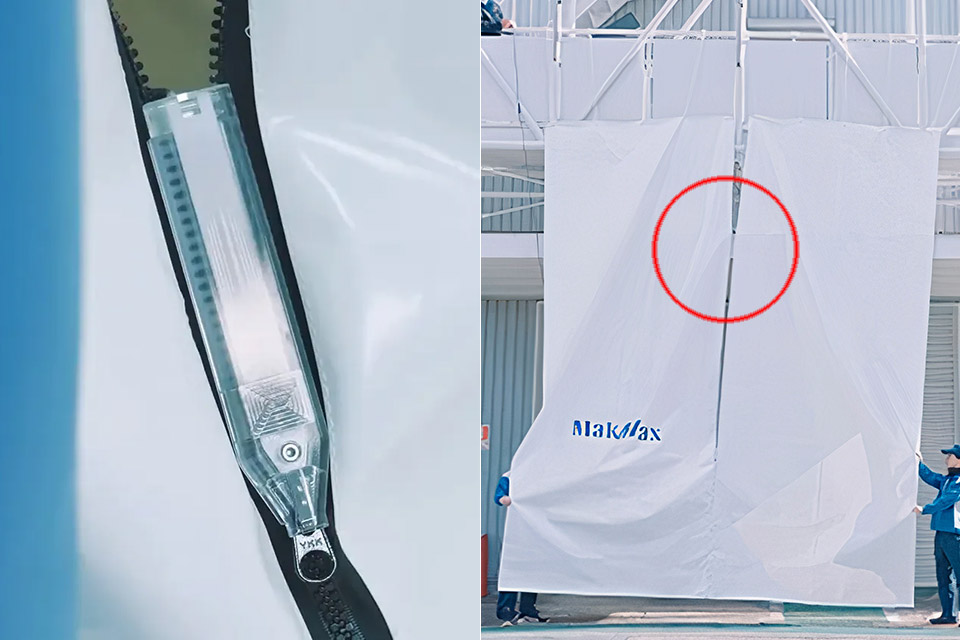
Space exploration is about to crash-land in your living room, as NASA and Netflix are teaming up to bring NASA+’s live programming to the streaming giant’s platform starting this summer.




Kumiko, Japan’s centuries-old woodworking craft, interlaces meticulously cut wood into breathtaking geometric designs, all without nails. A maker who goes by [Paper View], was enchanted by kumiko’s elegance but lacked the years to perfect it. Their clever workaround? A 3D printer.


Nintendo’s puffiest mascot, Kirby, has landed in a collaboration that’s as surprising as it is delightful. Forget power-ups or new game levels—this time, Kirby’s teamed up with Heinz for a limited-edition ketchup campaign that’s turning heads and emptying wallets. This partnership slaps Kirby and his pal Waddle Dee onto Heinz’s iconic upside-down ketchup bottles, transforming a pantry staple into a collector’s dream.


Meet the Mibot, a single-seat electric vehicle from Japan’s KG Motors that’s tinier than a Kei car, cheaper than a fancy e-bike, and ready to shake up how we zip around cities. Priced at a jaw-dropping $6,900, this little EV is already stealing the show, with over 2,250 pre-orders snapped up before its factory east of Hiroshima even fires up in October 2025.


Photo credit: Infestor | CC BY-SA 4.0
The internet’s been chugging along, powering 4K streams, cloud gaming, and AI’s number-crunching frenzy, but its fiber optic backbone is starting to sweat under the load. Enter Japan’s National Institute of Information and Communications Technology (NICT), which just smashed records with a mind-boggling 1.02 petabits per second data transfer over 1,808 kilometers (NYC to Minneapolis or Berlin to Lisbon). That’s enough juice to download Netflix’s entire catalog in one second flat.


Bandai Namco’s Tamagotchi Paradise, hitting Japan on July 12, 2025, with a global rollout soon after, completely reimagines the virtual pet universe. Ditching the grayscale, egg-shaped buddies of the ‘90s, this new version rocks a bright color screen, a slick zoom dial, and gameplay that takes you from tiny cells to distant galaxies.


It’s not every day you spot a flying spider, but the SPIDAR (Sensing, Processing, and Intelligent Dynamics for Aerial-ground Robot) is something else. More specifically, the latter is a four-legged robot, made by researchers at the University of Tokyo’s JSK Lab, that can soar through the air and walk or crawl on the ground.


Here’s a close-up look at JAXA’s Int-Ball2, a free-flying, autonomous camera robot made to help astronauts on the International Space Station (ISS), especially in the Japanese Experiment Module (JEM), called “Kibo.” It’s basically an improved version of the original Int-Ball, with better features to lighten astronauts’ workloads and assist ground teams.