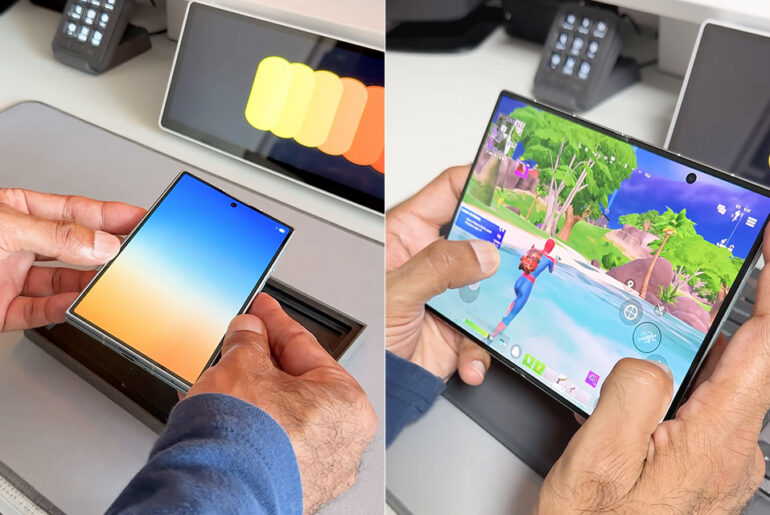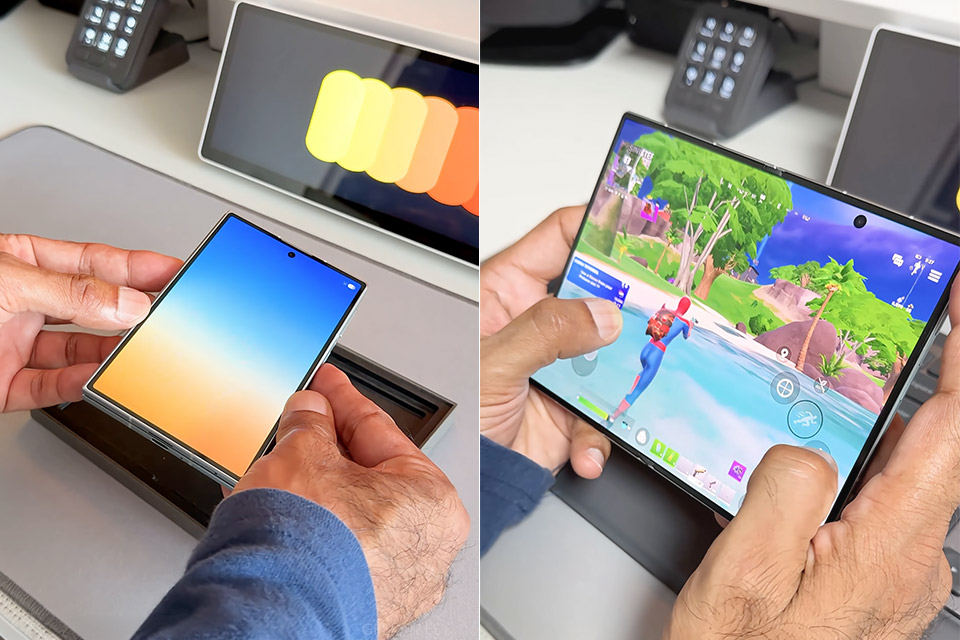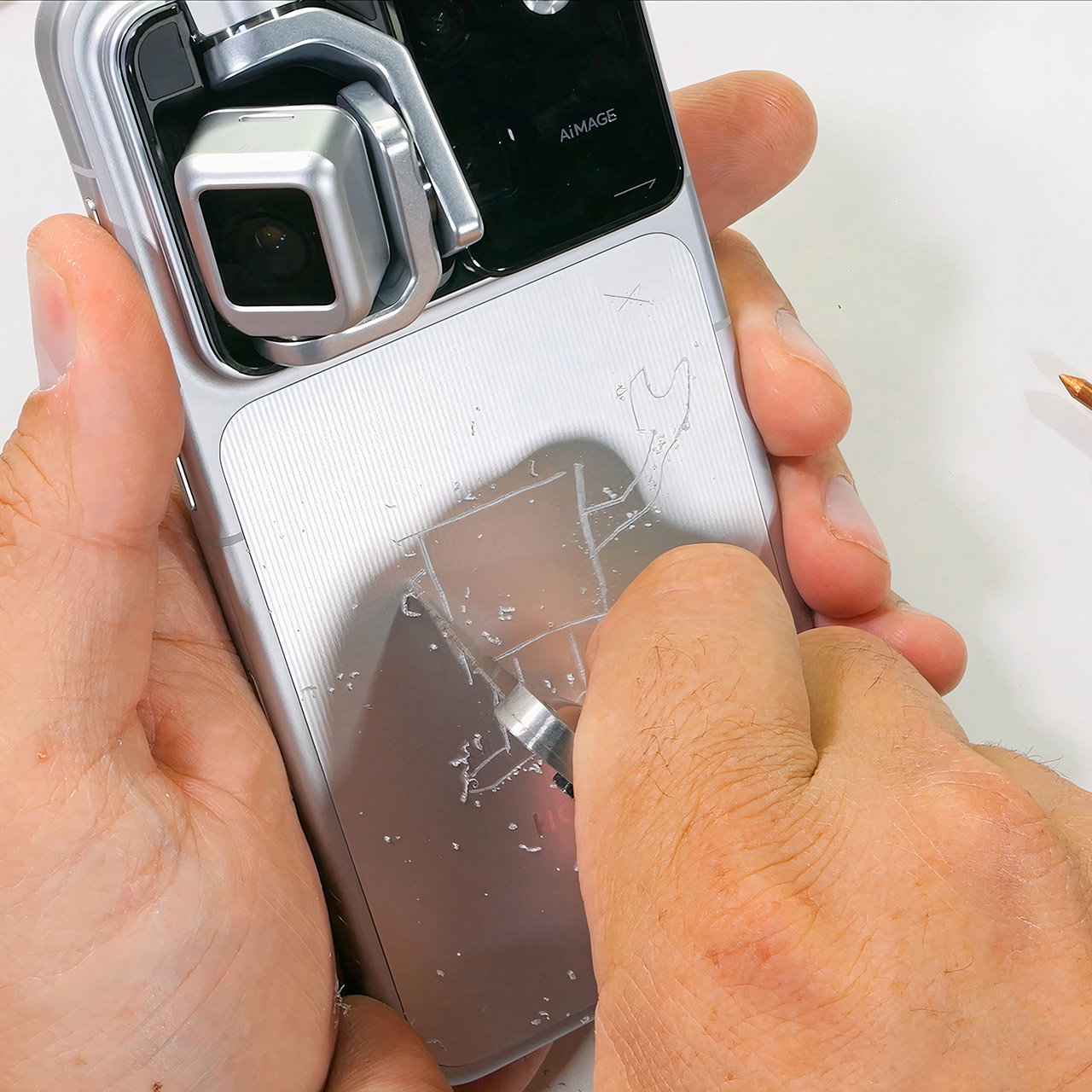
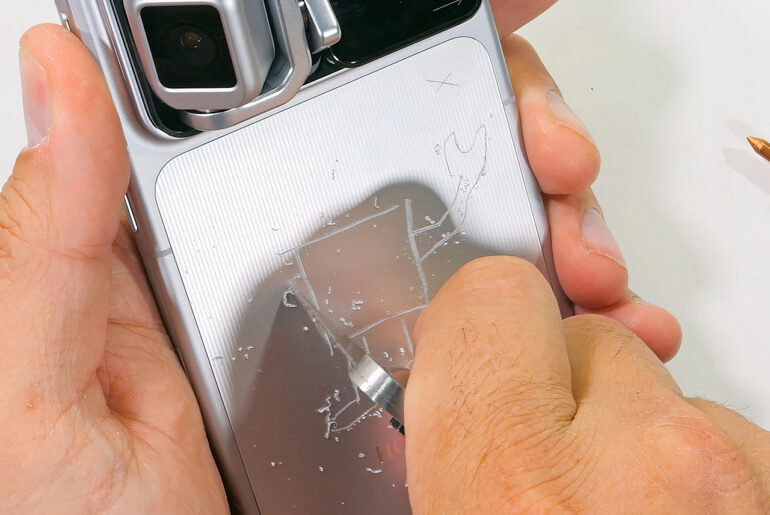
Honor just launched a $1,500 Android flagship with a folding titanium robot arm that holds its 200-megapixel main camera, and Zack Nelson of JerryRigEverything got one the same week Apple dominated every headline. He expected a concept that barely worked. What arrived instead was a finished phone whose three-axis gimbal hides behind a sliding plastic cover until you tell it to wake up.
Samsung spent countless hours stretching book-style foldables taller and slimmer. Galaxy Z Fold8, priced at $1,649.99 (was $1,900), goes the other direction, folding into a short, wide slab that sits in a pocket like a passport and opens into a 7.6-inch screen built for movies, books, and two apps at once. Folded, the phone measures 123.9 by 81.9 by 9.7 millimeters and weighs 201 grams, light enough that reviewers keep comparing it to a regular flagship rather than a hinge-and-glass experiment. Opened, the body thins to 4.5 millimeters. Armor aluminum, Gorilla Glass Victus Ceramic 3 on the cover, and an IP48 rating (dust over 1 millimeter, 1.5 meters of water for 30 minutes) keep the package from feeling fragile after a month of daily carry.

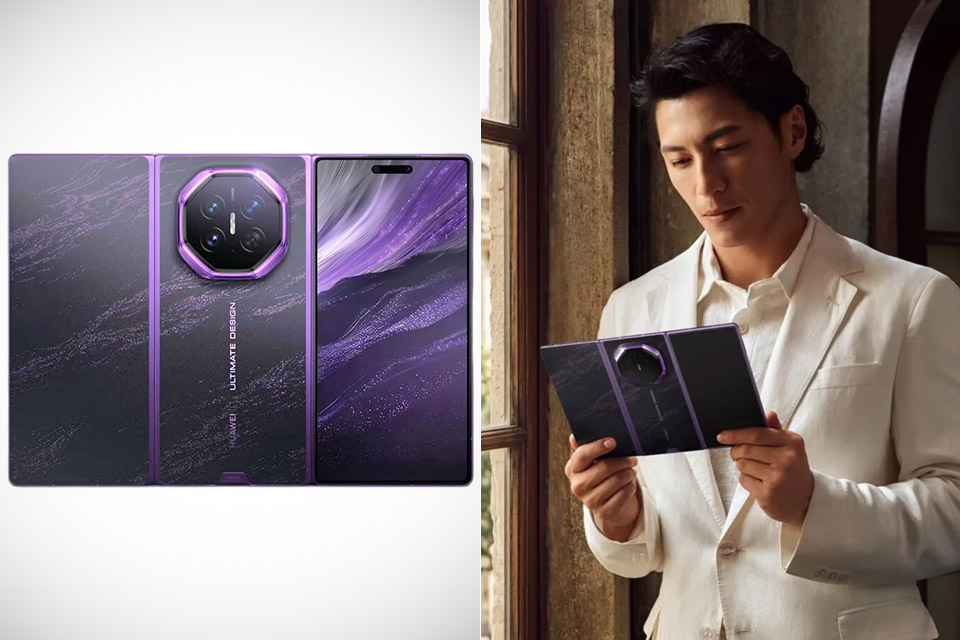
Huawei unveiled Mate XT 2 Ultimate Design in China today as its most expensive tri-fold yet, a phone that closes into a 6.5-inch slab and opens into a 10.2-inch tablet. Both wings now fold inward so the flexible panel sits fully protected when you snap it shut, a change from the mixed fold on the first Mate XT. Closed, the body measures 157.2 by 77 by 12.3 millimeters and weighs 299 grams. Fully spread, it stretches 219.2 millimeters wide and tapers to 3.5 millimeters at the thinnest stretch.

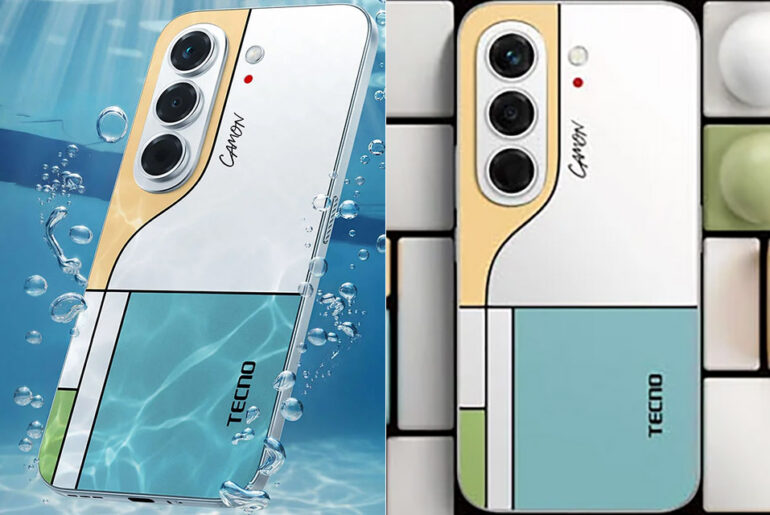
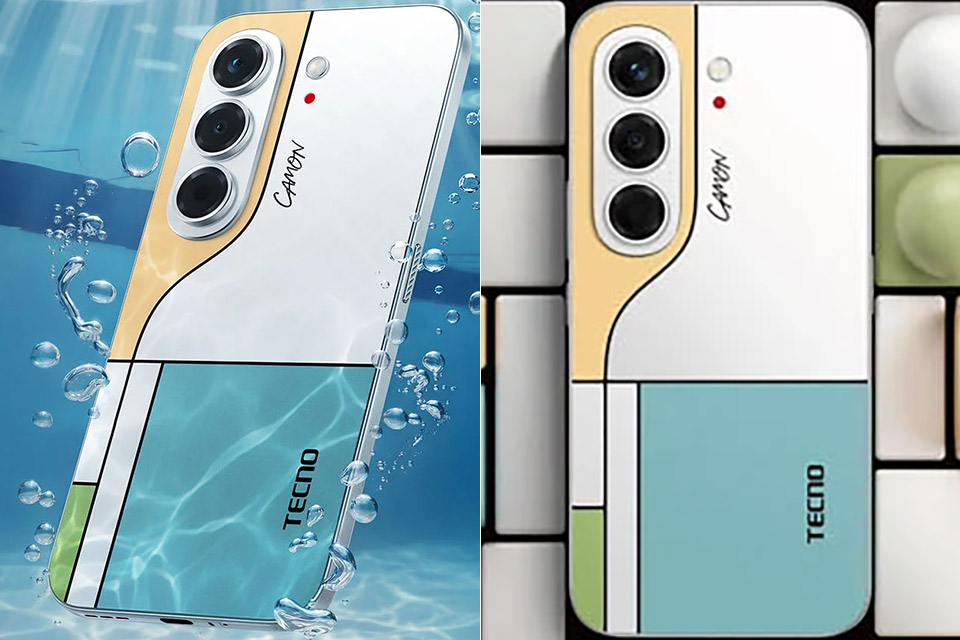
TECNO spent years treating phones like cameras that happen to make calls. CAMON Slim 5G doubles down on that idea and then flattens the whole package until it sits 6.39 millimeters thick, which is thin enough that a stack of two credit cards still looks bulky next to it. Official launch materials call the handset an art piece you hold in your palm, and the company is not being modest about the paint jobs. Five finishes arrived with the September 7, 2026 announcement: Burgundy Red in fiberglass with a matte velvet grain, Matisse Black with fluorescent green cut-out accents, Rebel Pink on a black body, Van Gogh Blue with a patterned gradient that tries to spin like the sky in The Starry Night, and Neo Mondrian, a photochromic white slab that only shows Piet Mondrian’s grid when ultraviolet light hits it.

Photo credit: GeekCulture
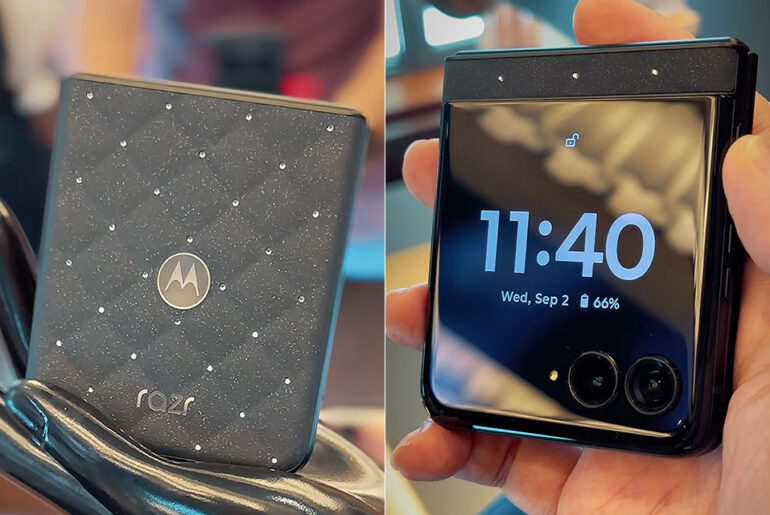
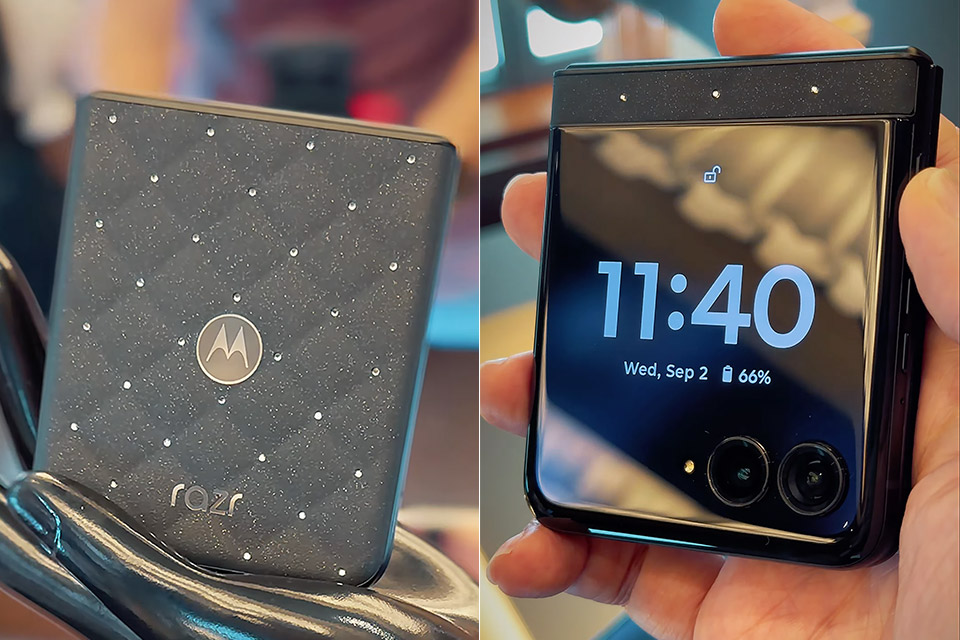
Motorola used IFA week in Berlin to turn its cheapest current flip phone into a small piece of evening jewelry. Officially named motorola razr with Crystals by Swarovski and sold as a Razr 70 in Europe (Razr 2026 in the United States), this Brilliant Collection edition keeps every chip, camera, and screen from the April handset and spends its budget on finish. PANTONE Meteorite is the color, a deep charcoal that sits still until light hits it. Across a quilted, leather-inspired back sit 35 hand-positioned Silver Night crystals, with one larger 32-facet stone set into the hinge so each open-and-close motion throws a flash.

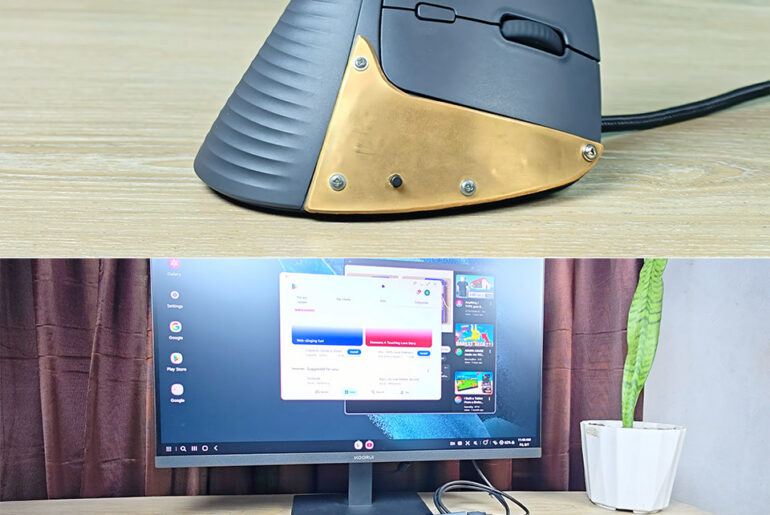
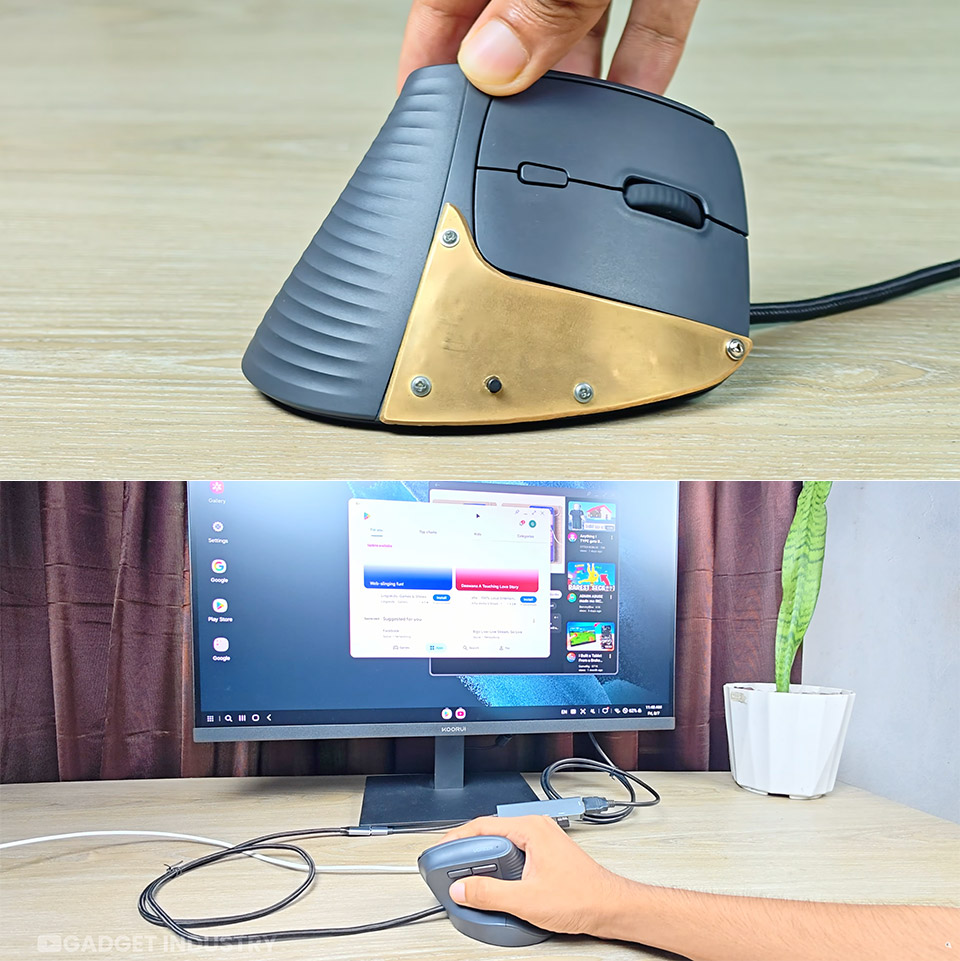
A regular-looking mouse sits on a desk, clicks as expected, and still moves a cursor. Same object also boots a desktop on a monitor and plays Minecraft. That collision of jobs is the whole point of YouTuber Gadget Industry’s latest build: a Samsung phone’s computer stuffed into a pointing device that never stopped being a pointing device.

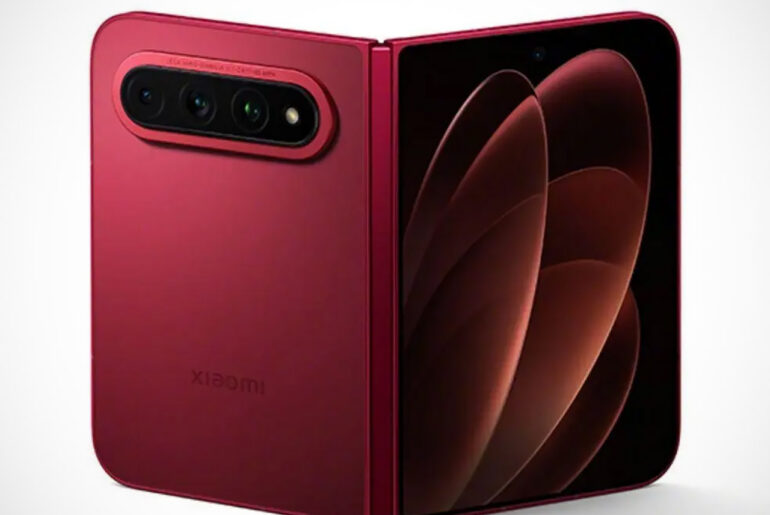
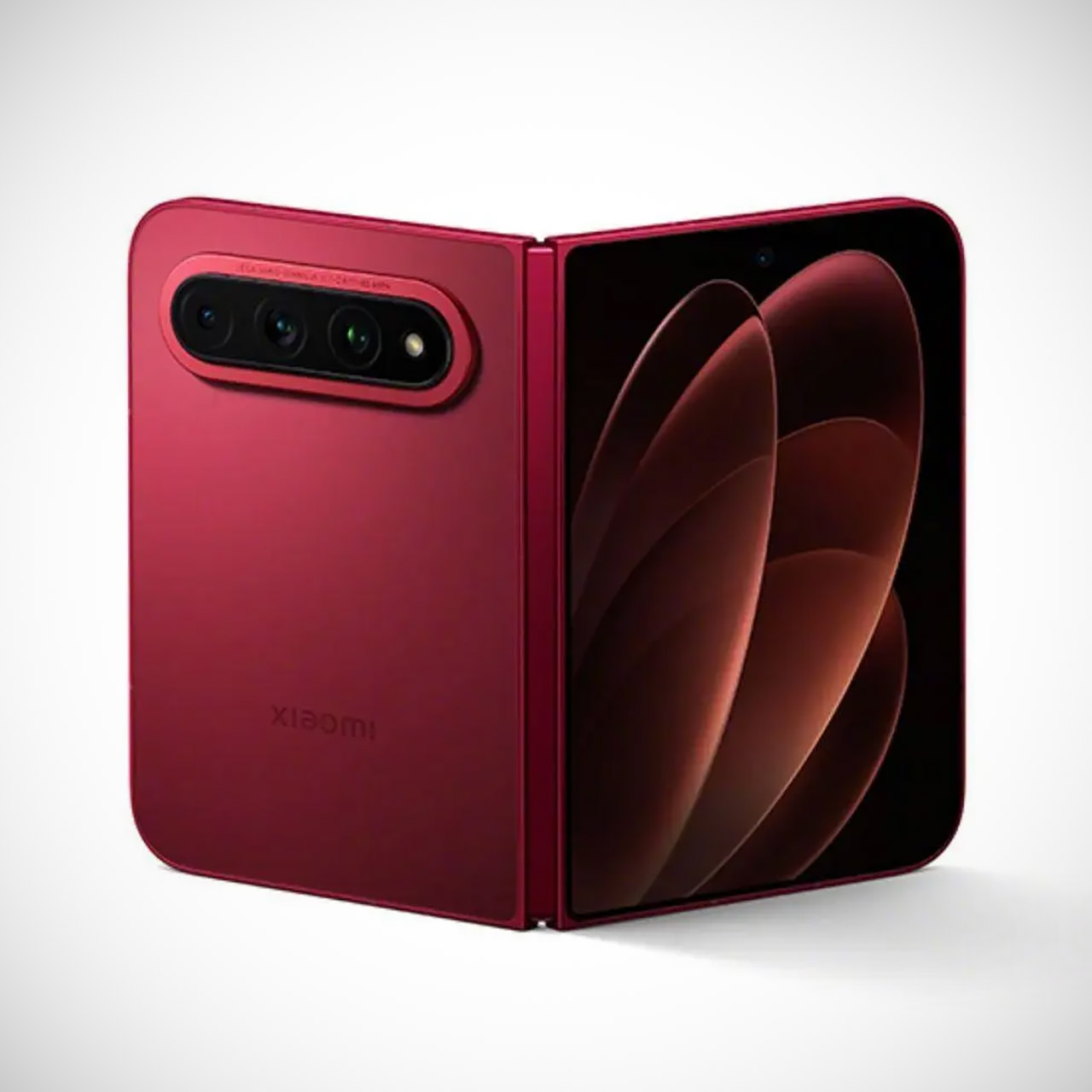
Xiaomi just gave its next foldable, the 18 Fold, a public face five days before the China launch, and the company is calling the shape a mid-fold. Official video and stills from Lu Weibing’s Weibo posts show a shorter, wider inward folder finished in Nishino Red, with large rounded corners, thin bezels, and a horizontal pill-shaped camera bar that holds three lenses plus an LED flash. Folded, Xiaomi says the body is about the size of a passport and light enough for one-handed use. Opened, a 7.58-inch inner panel takes over, cut to a wider aspect ratio meant for split apps and video rather than a stretched copy of last year’s tall Mix Fold layout

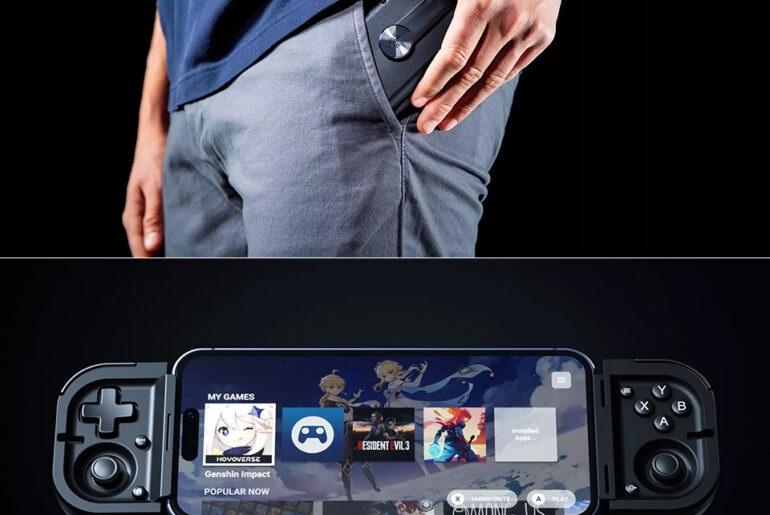
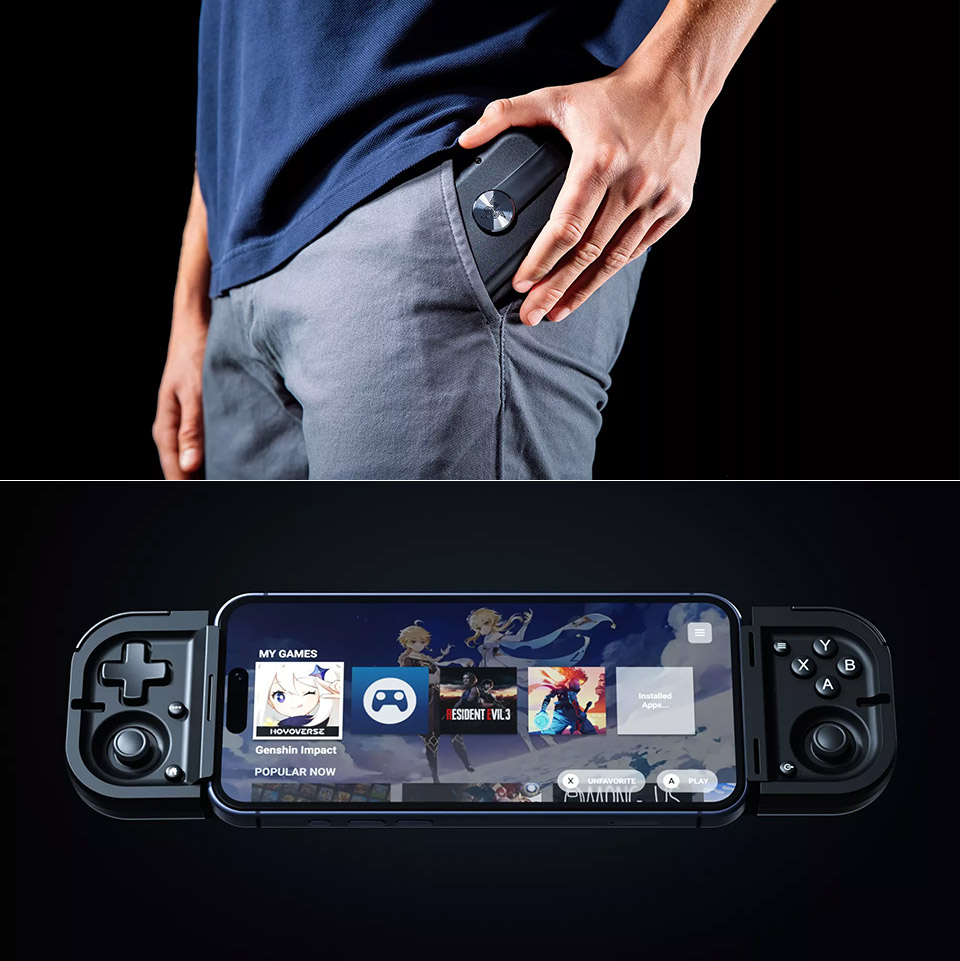
Razer spent years shipping clip-on phone pads that played well and still needed a tote. Prio is the first of a new ultra-portable line, a $99.99 USB-C controller that folds to 107 by 67 by 23 millimeters and 101 grams, roughly a credit card’s footprint and a bar of soap’s weight. One twist unlocks the two halves. They swing open around a silicone band, a phone up to seven inches seats in the gap, and the layout that was hiding inside becomes a pair of analog sticks, a real four-way D-pad, face buttons, bumpers, and triggers. iPhone 17 Pro Max and Galaxy S26 Ultra both fit. So do most slim and medium cases, helped by three rubber pads in the box and removable locking brackets.

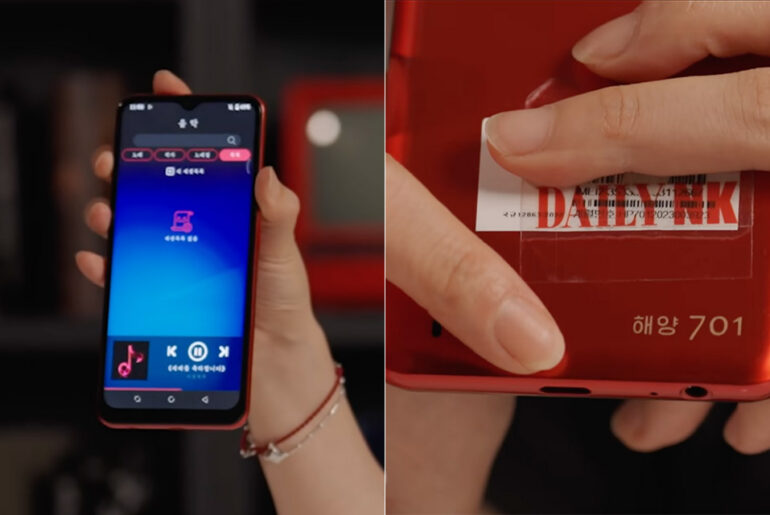
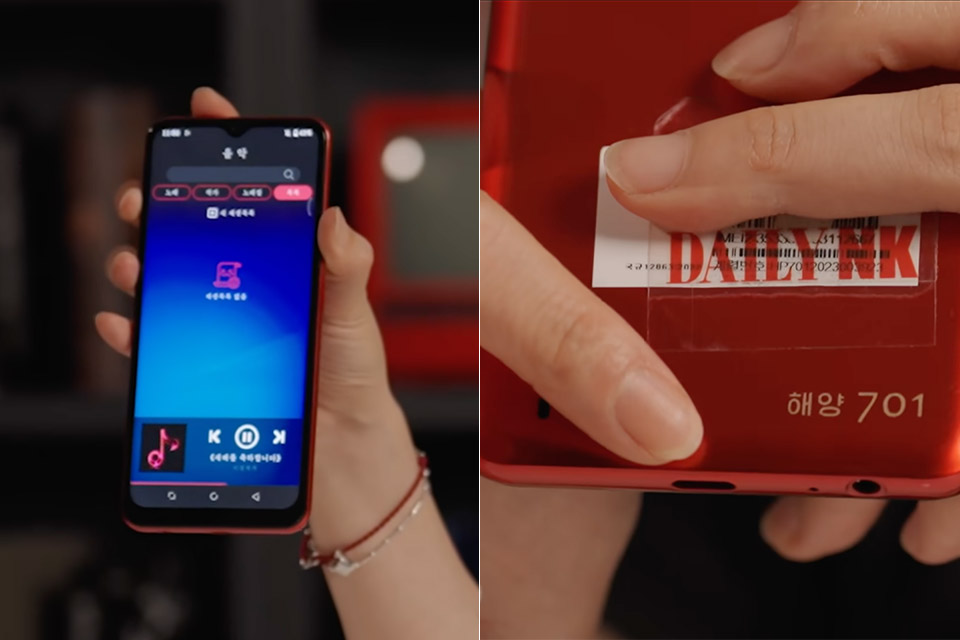
Daily NK, a Seoul newsroom that reports on the North, handed Wall Street Journal reporter Dasl Yoon a mid-tier smartphone carried out of the country in 2023. The device is a Hyang 701, built that same year, and it looks like any other Android phone until you start tapping. It handles voice calls, texts, and a full set of apps. It will not reach the open internet. Wi-Fi stays locked. The only network available is the state-run intranet.