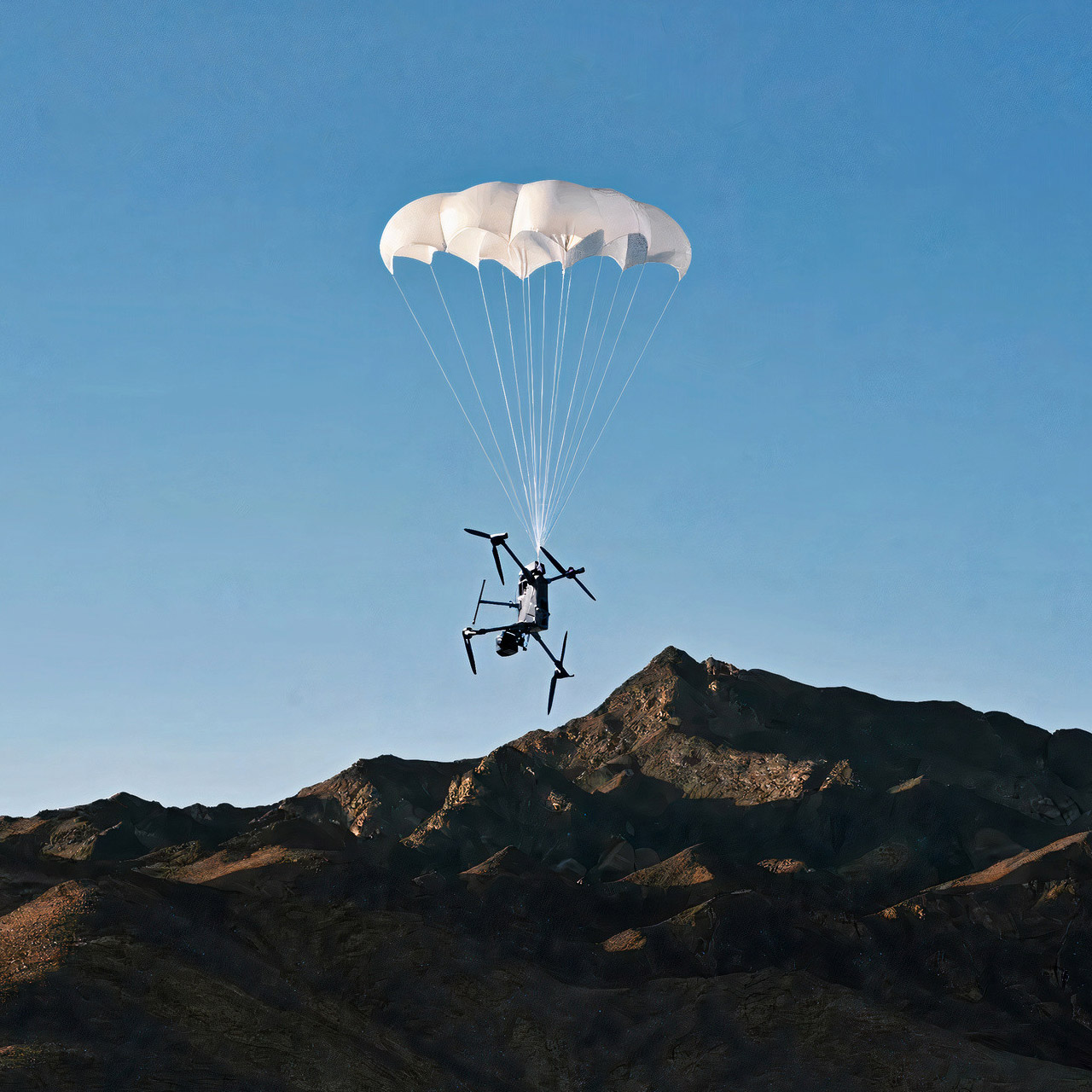
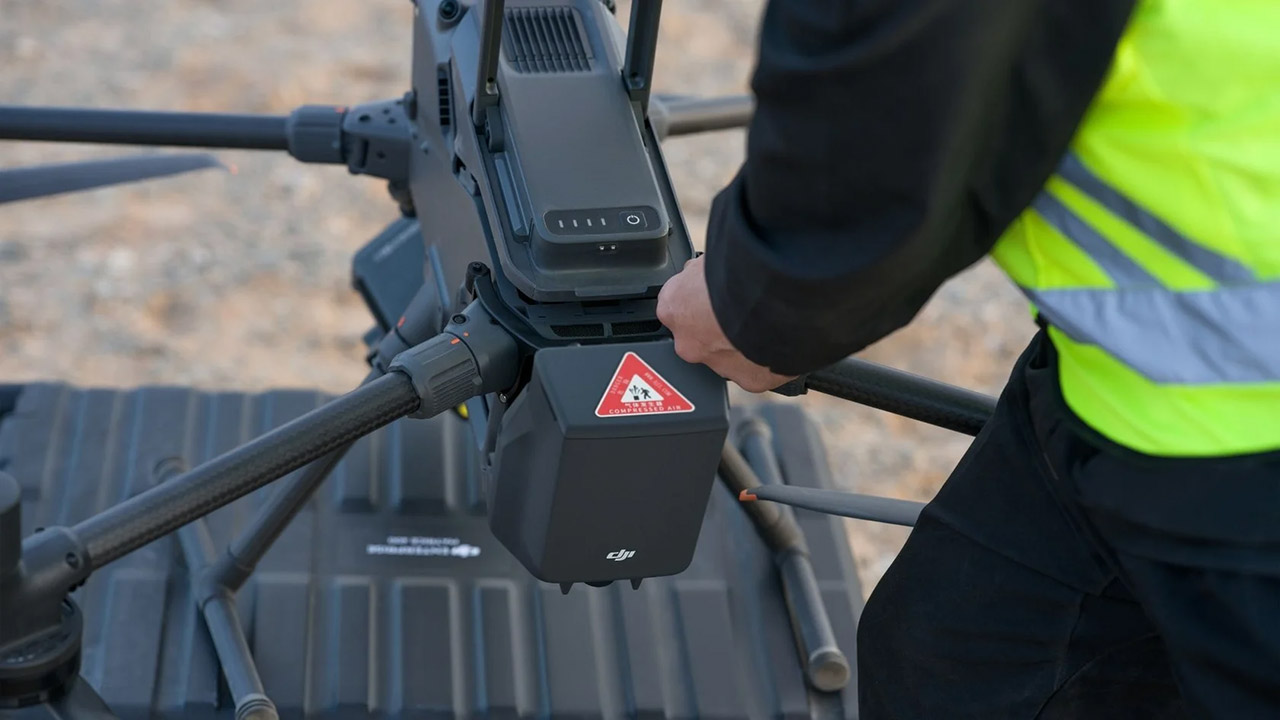
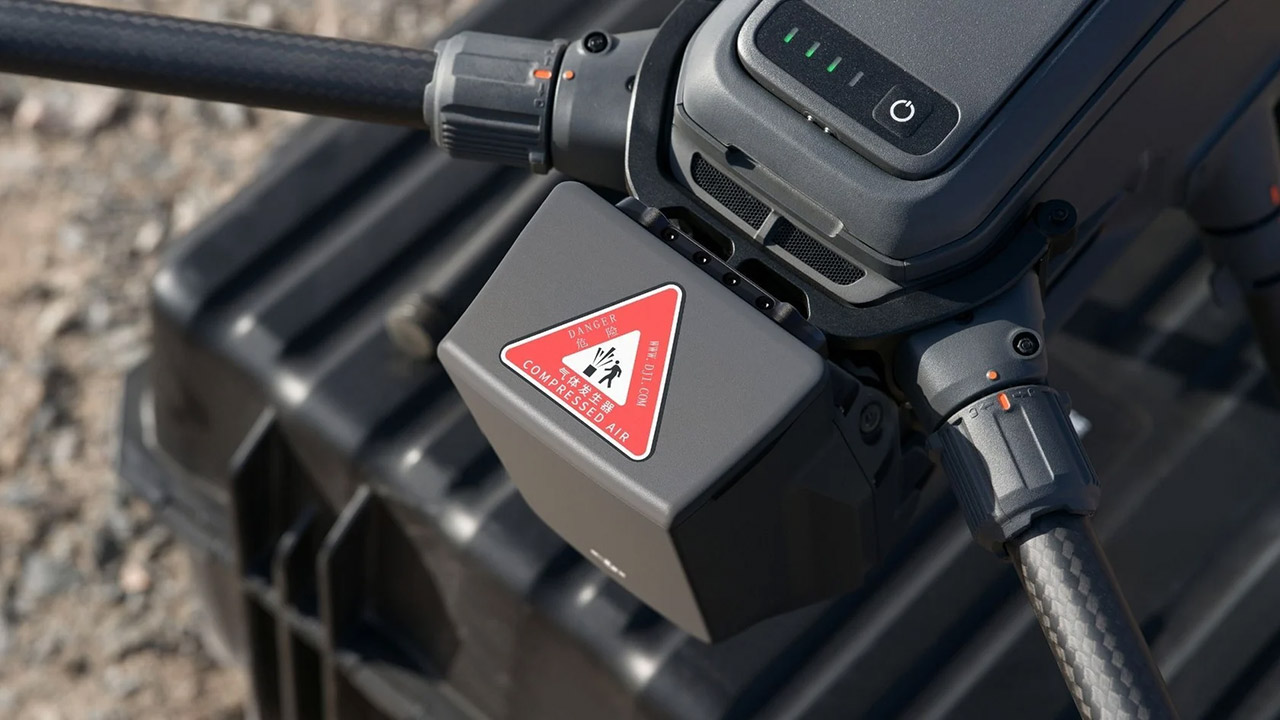
DJI just released the AP100 Parachute, and the system essentially mounts to the rear of the Matrice 400 enterprise drone and gives operators a reliable option when flight does not go as planned. Enterprise teams use the Matrice 400 for inspection, surveying, and public safety work. Those jobs sometimes take the aircraft over cities or stretch beyond visual range. A sudden power loss or link drop can turn a heavy drone into a fast-falling object. The AP100 changes that outcome by turning an uncontrolled fall into a slower, more predictable descent.
The AP100 module weighs little over 935 grams and comes with its own power supply. Dual capacitors provide a dependable source of power for up to an hour. That manner, the parachute can continue to monitor the situation and deploy even if the main aircraft batteries fail. To eliminate the possibility of a single point of failure, the module is totally isolated from the drone’s power system. The unit has an IP55 designation for dust and water protection and can operate in temperatures ranging from -20 to 50 degrees Celsius, which is exactly the same as the Matrice 400.

- Due to platform compatibility issue, the DJI Fly app has been removed from Google Play. DJI Neo must be activated in the DJI Fly App, to ensure a...
- Lightweight and Regulation Friendly - At just 135g, this drone with camera for adults 4K may be even lighter than your phone and does not require FAA...
- Palm Takeoff & Landing, Go Controller-Free [1] - Neo takes off from your hand with just a push of a button. The safe and easy operation of this drone...
Inside the module, there is an independent flight computer, an IMU, and some other sensors, all of which constantly cross-check each other. The algorithms compare the data received from the parachute and drone in real time. This arrangement was meant to avoid false alarms while still detecting true problems, such as a sudden tilt or speed shift. Pilots can check their health status using the Health Management System in the DJI Pilot 2 app. The system does daily self-checks on the gas generator and communication links, and if anything is out of whack, it sends an alert.
When the parachute eventually deploys, it follows a very methodical pattern. When the system decides it’s ready to fire, an independent Flight Termination System cuts power to the motors in under 600 milliseconds. That turns off the rotors before the parachute emerges from the container, preventing the canopy from becoming entangled with spinning blades. The parachute then deploys at altitudes more than 30 meters, and the descent rate remains modest, at less than 5 meters per second. At lower altitudes, the parachute still deploys, however you may not have enough time for full inflation and slowing before hitting the ground; however, the system will not deploy at all unless the aircraft is airborne.
Operators have a few options for getting the parachute to deploy. The Pilot 2 app includes a simple slider that allows you to do it manually whenever you want. In some countries, the system will also appear immediately if the drone violates a geofencing boundary you’ve defined within the app or if the sensors detect something visibly wrong. If you manage a fleet of drones, you can even give orders remotely using FlightHub 2 as long as you have a live connection via a cellular dongle. Near your home point, the system adds a few extra precautions to prevent things from getting messy on the ground and disables parachute deployment if the drone is in cleaning or standby mode.
Once the parachute is deployed, the module just continues to move. It will sound an ear-piercing siren and flash some extremely bright lights for around an hour. This warns people nearby and assists recovery personnel in identifying the aircraft later, after which the entire incident is over because deploying a single-use gadget necessitates the purchase of a new one. If the module remains packed and performs well, DJI expects it to last about three years before needing to be retired.