Old machines often end up sidelined once faster hardware arrives. Yet plenty of people still own working 386-era laptops and desktops that boot just fine. GentleOS steps in as a project built specifically for those systems. It delivers a graphical desktop experience without demanding modern resources or complex setup.
Luke 8086, the developer, worked on this operating system as a hobby. The goal is to provide hobbyists with a clean platform on which to work with vintage x86 hardware or run interactive graphical programs as near to the metal as possible. There is no online browser or app store, as the focus is on what the machine can accomplish directly in front of you. GentleOS/32, which targets 32-bit PCs starting with the i386 processor, was the first of two versions created. Depending on the boot image, you’ll need 2 to 4 MB of RAM, a mouse, and a VGA screen with a resolution of at least 640 by 480 and 16 colors, or higher VESA modes with 256 colors. Then there’s GentleOS/16, a more stripped-down version for actual 16-bit hardware such as 8086 or 80186 CPUs. That one uses less than 192 KB of RAM and rudimentary CGA graphics at 320 by 200 resolution in four colors.
- 【Mini Pc With Amd Ryzen R2544】ACEMAGIC mini computer is equipped with AMD Ryzen R2544 processor (4 cores/8 threads, base 3.35GHz, boost up to...
- 【Radeon Graphics For Entertainment & Business Office】The integrated upgraded AMD Radeon Graphics in the Ryzen R2544 (max 1300Mhz, graphics cores...
- 【8GB DDR4 RAM & 256GB SSD - Expandable Future Needs】This mini computer equipped with 8GB DDR4 memory and a 256GB M.2 SSD, the K1 Mini PC provides...
Both versions use the same design, with everything compiled down to a single binary that runs directly on the hardware, similar to microcontroller firmware rather than a standard operating system. The code is written in basic C with a little amount of assembly, allowing developers to easily follow the logic without becoming bogged down in layers of abstraction.
This approach lacks some of the capabilities that you would expect to see in newer systems. There is no virtual memory, no separate user and kernel zones, and no preemptive multitasking. Many modern systems provide file storage and networking capabilities, but this is not the case here. The entire system runs in memory and is single-threaded, with the main event loop managing graphics and dispatching actions to built-in programs.
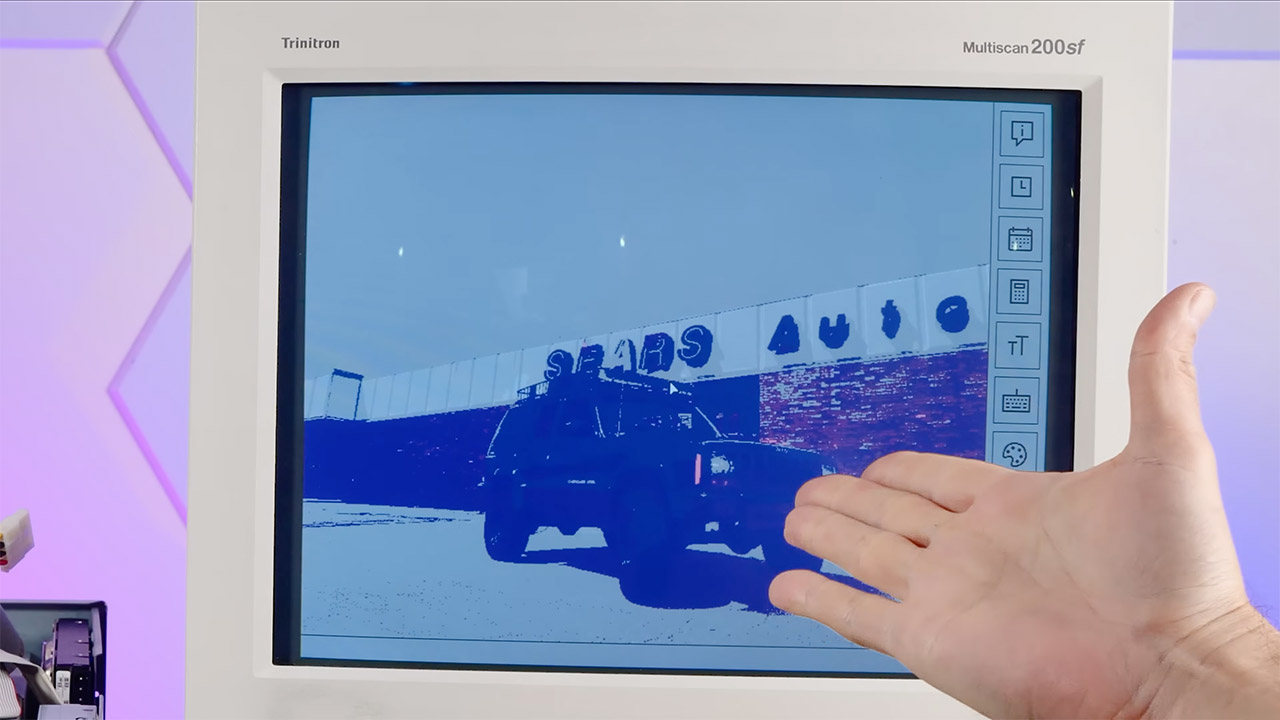
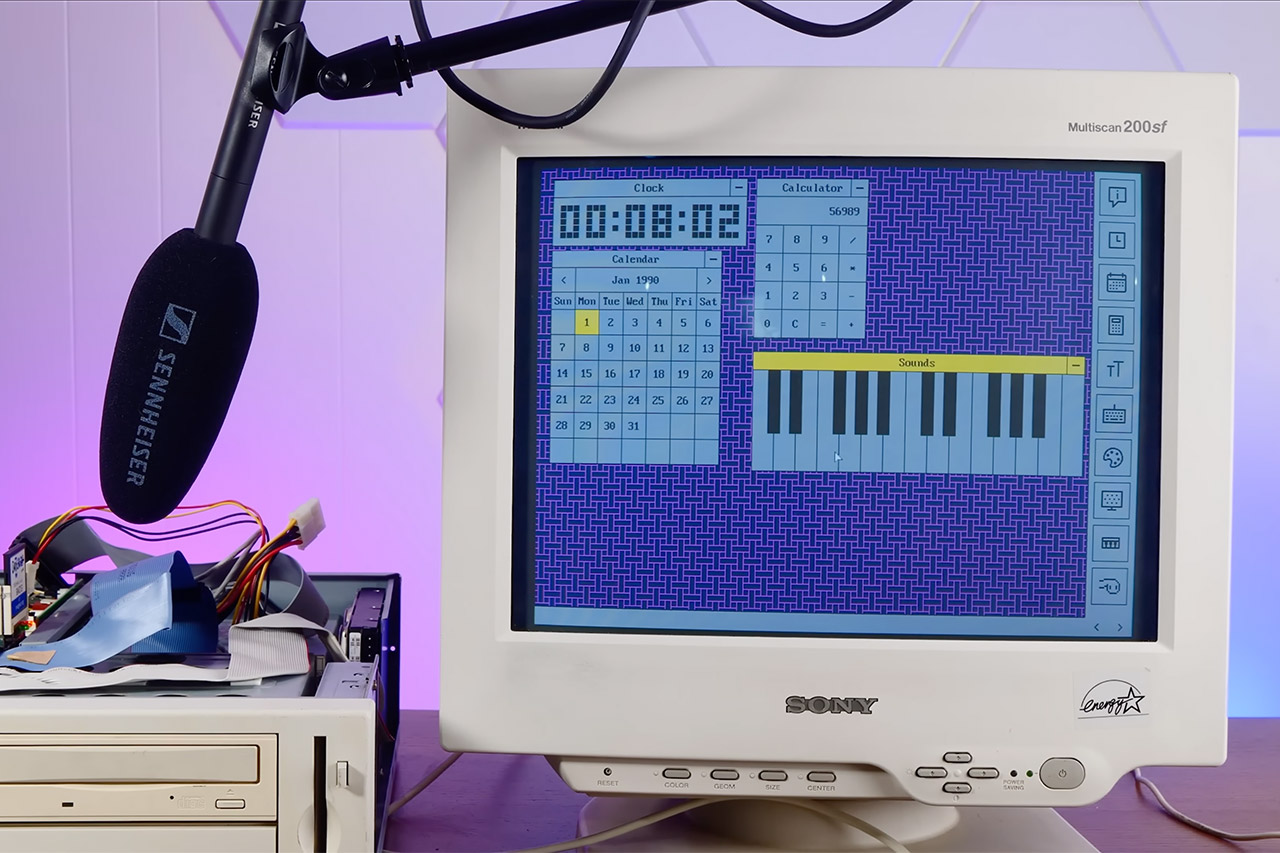
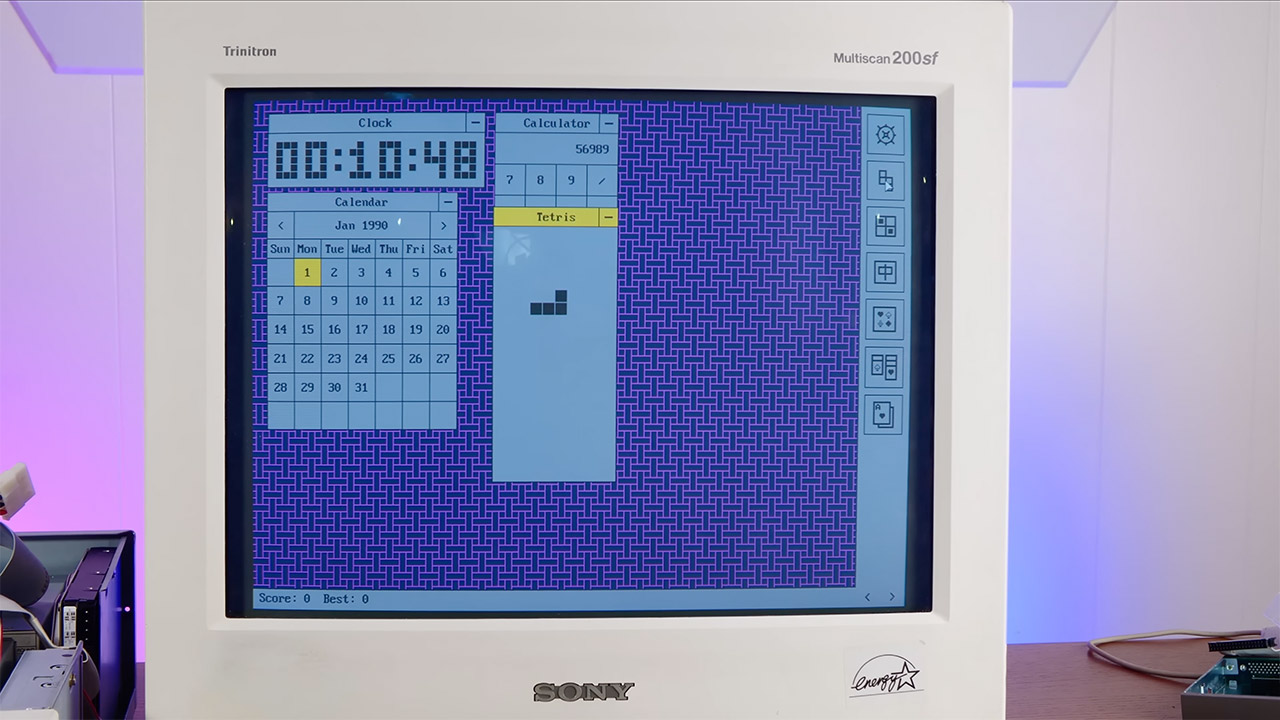
Nonetheless, the finished design appears familiar, with a retro-style desktop with movable windows, an icon sidebar for quick access, and a simple color scheme. You get a retro clock with massive, segmented digits that update in real time, Klondike solitaire for some classic card game fun, a color palette tool for some quick creative work, and a about box to see what’s going on behind the scenes. The same concept is also used in programs for calendar functions, basic mathematics, art, and certain light games.