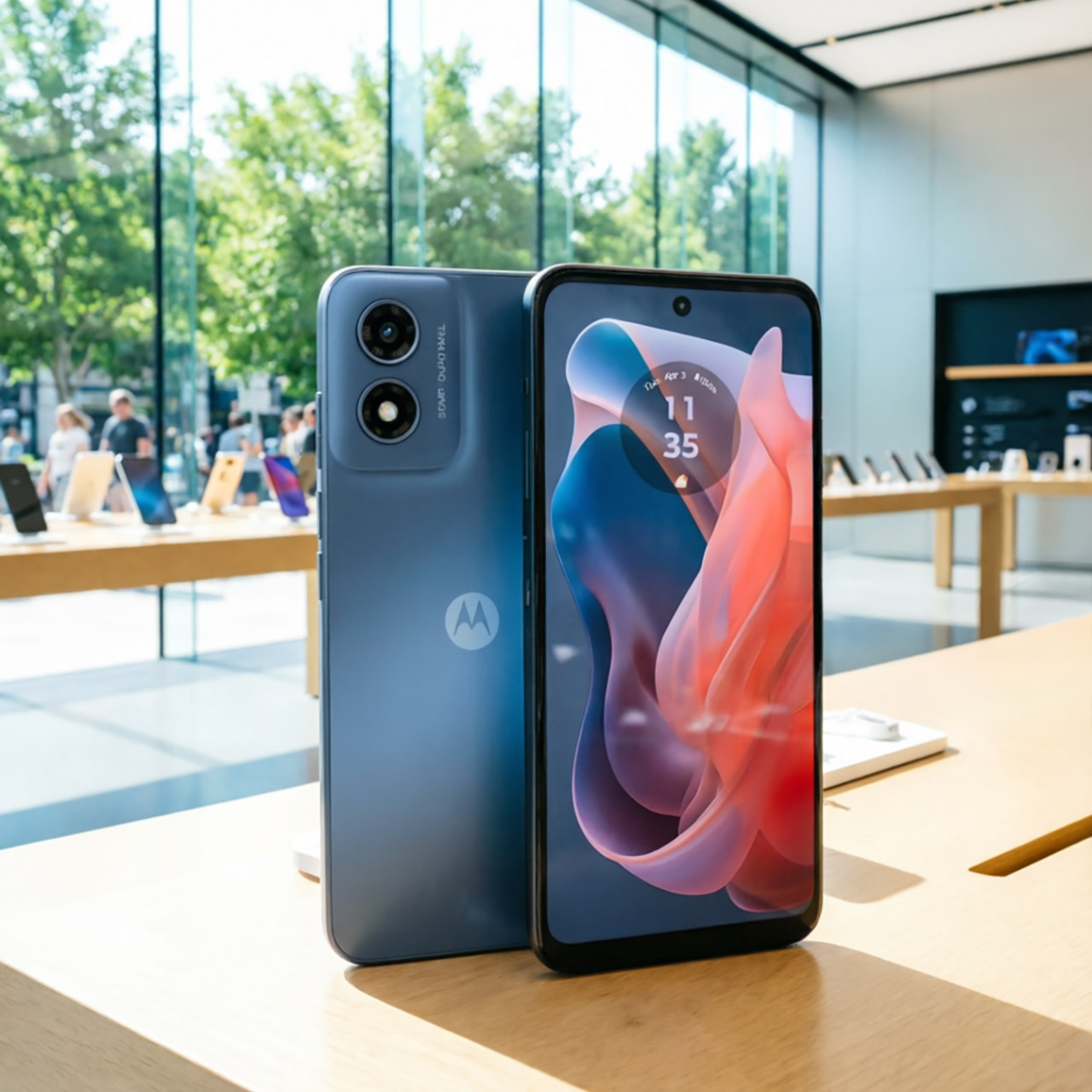
Some phones chase every new feature and leave most people behind. This one stays close to the ground and works through ordinary hours without complaint. Motorola built the Moto G Play (2024) around a clear idea: give people a large screen, a battery that lasts, and a camera that handles daylight without drama, all for $99.99 (was $150).
Sapphire Blue plastic wraps around the entire phone, and the edges bend just enough to fit comfortably in the palm of your hand. The matte texture effectively resists fingerprints, which are typically a major issue on lower-cost phones by lunchtime. The phone weighs 185 grams and is only 8.5mm thick, so it doesn’t seem fragile or heavy. If you’re caught in an unexpected deluge, a water-repellent coating will silently safeguard your phone from damage. The side-mounted fingerprint scanner lies nicely under the power button, and you’ll become used to unlocking the phone in a day or two because it’s so fast. A 3.5mm headphone port is prominently displayed on top, and the dual speakers perform admirably in terms of clarity, even at modest volumes.

- Blazing-fast Qualcomm performance. Get the speed you need for great entertainment with a Snapdragon 680 processor and 4GB**** of RAM.
- Fluid display + immersive stereo sound. Bring your entertainment to life with an ultrawide 6.5" 90Hz* HD+ display plus stereo speakers, Dolby Atmos...
- 50MP*** Quad Pixel camera. Capture sharper, more vibrant photos day or night with 4x the light sensitivity.
The large 6.5-inch LCD panel dominates the majority of the frontage, and with a resolution of 1600 by 720 pixels, text stays accessible for messaging, maps, and even viewing video on the go, all without requiring excessive power consumption. The 90 Hertz refresh rate also means that ordinary scrolling and light animation run smoothly, which is a nice feature at this price point. It’s not extremely bright, peaking at roughly 500 nits, which is adequate for indoor rooms and shaded outdoor areas. On a side note, the screen is covered by Gorilla Glass 3, which has proven its durability after months of being thrown around in pockets and bags.
The dependable Snapdragon 680 chip, along with 4GB of memory, is under the hood (a somewhat dated expression, but I hope you get the point). Everyday chores like as checking email, surfing social media, and playing casual games go smoothly and quickly. Standard storage is a fair 64GB, and there’s a dedicated microSD slot that can accommodate up to a 1TB card if you need more.
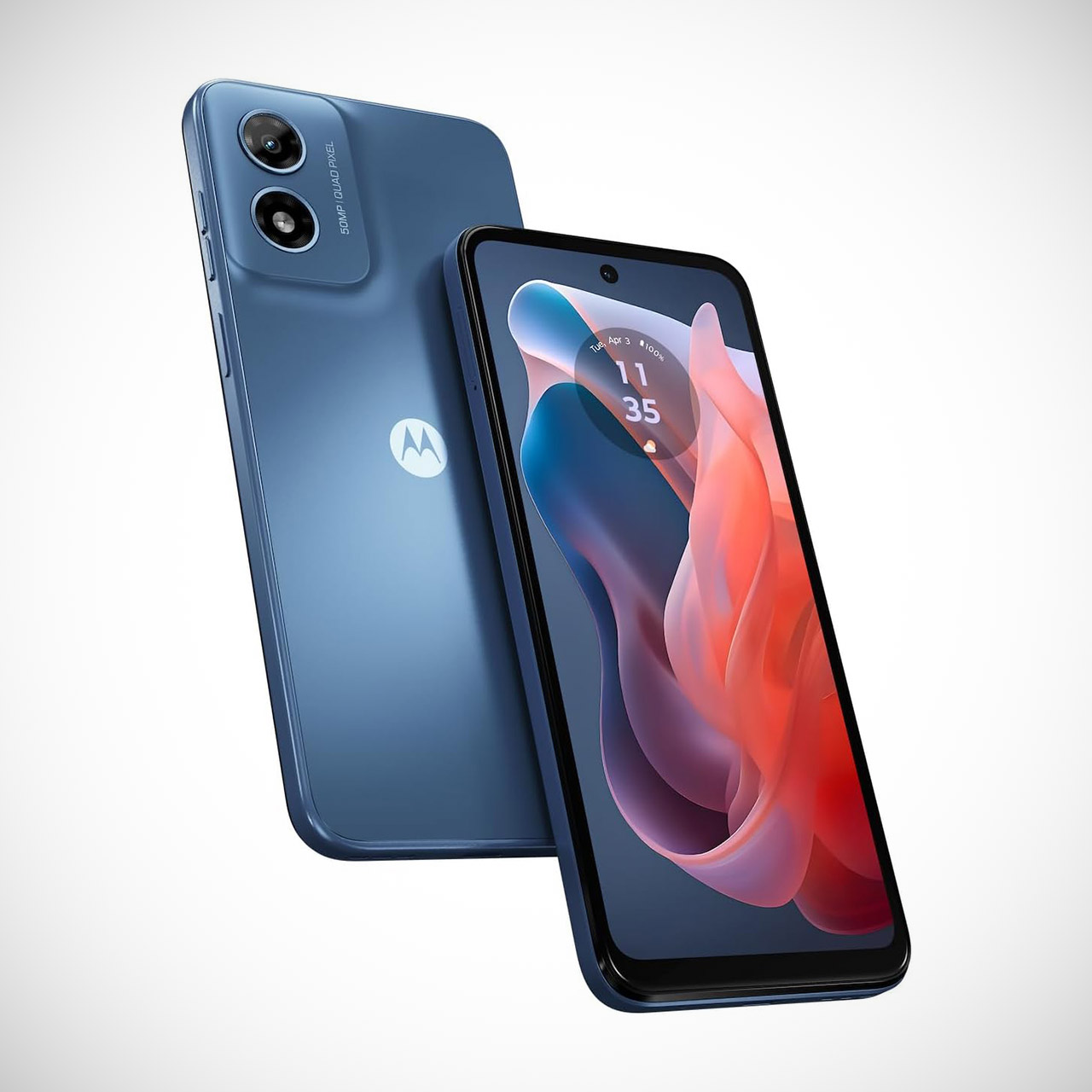
The single fifty-megapixel rear camera is combined with a respectable f/1.8 lens and phase-detect focus; in excellent light, the photographs are clear and colorful, with a reasonable amount of information. Pixel binning, which combines data to produce slightly more impressive 12-megapixel images by default, is also available. However, low light is a very different issue. As one might expect, detail fades and noise seeps in. To put it bluntly, the front eight megapixel camera is a bit of a compromise, but it does a good job of handling video calls and selfies as long as the subject keeps steady and the lighting is pretty even. For both cameras, the maximum video recording resolution is 1080p at 30 frames per second.
The battery life is quite excellent at 5000 milliamp-hours, which should last most people a full day with some charge remaining. Lighter users may even get a second day out of it. Fifteen watt charging is also present and accurate; with a compatible adapter, the battery will charge itself in a few hours. The phone comes with Android 13, and unless you’re on one of those low-cost carriers, you should expect at least one significant update to Android 14. Security patches will be available for a limited time after that, but Motorola has done its best to keep things neat and tidy, including some essential features like family space restrictions and basic privacy measures. Some carrier versions include a few extra apps that you can safely disable, but overall it’s a pleasant, clean experience.