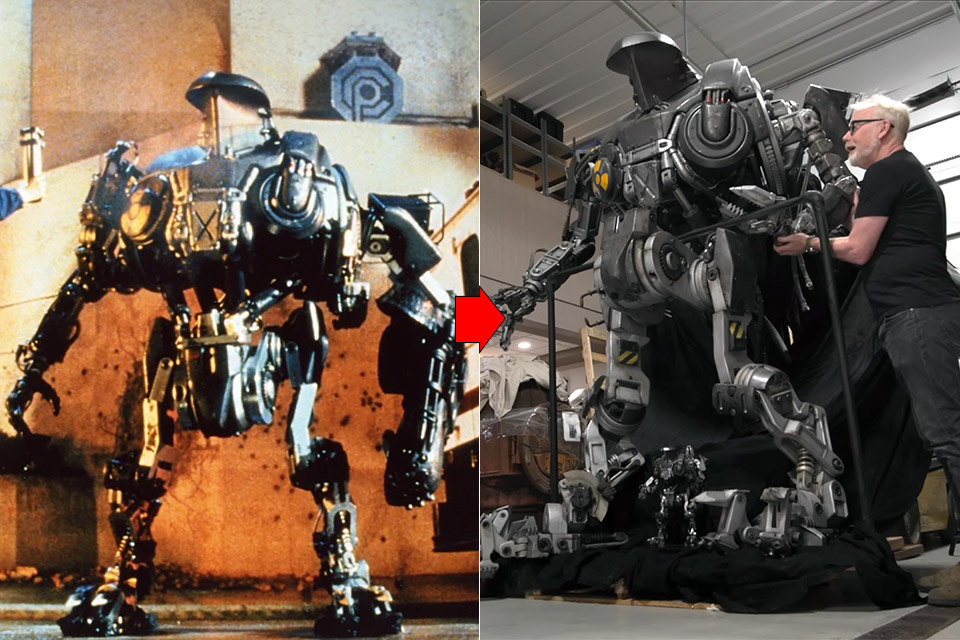
Adam Savage has spent years rebuilding his own version of Cain in his shop, machining aluminum pieces one by one to replace the original resin castings gifted by Phil Tippett. On a recent trip to the Cinema Relics archive, he finally stood in the same room as the real things.
Dan and Martin, who handle the collection, gave him a behind-the-scenes look at two of RoboCop 2’s main antagonists, Cain. One is a stop-motion puppet built by the geniuses at Tippett Studio, and the other is the full-size upper torso that generated all the excitement in the final fight sequence, now furnished with brand new legs. Savage has always admired Cain, calling it his favorite robot in any film he’s seen since RoboCop 2. He recalls the first time he saw it on screen: a blasted drug-addled beast with Tom Noonan’s face flickering over the chest displays, rampaging through the streets of Detroit like some monstrosity that shouldn’t have been allowed out of the lab. Walking alongside the actual props, he kept returning to the same location, because this design feels industrial in a way that most robot designs in movies do not.

- MODEL KIT FOR ADULTS – Relive 80s science fiction glory with the LEGO Icons Transformers: Soundwave (10358) building set for adults 18 years old and...
- AUTHENTIC TRANSFORMING ACTION – Build Soundwave with his rocket pod, laser blaster, and dart accessories, then transform him from robot and cassette...
- INTERACTIVE SOUND EFFECTS – Press Soundwave's play button to activate specially recorded voice and sound effects that capture the character's iconic...
The stop-motion puppet delves deeply into the details. Tippett’s team had to machine almost two hundred separate tiny parts for it, as well as a slew of nuts and bolts, all meticulously positioned so that the armature could still be seen. Craig Hayes and the others attempting to build it purposefully made it difficult to replicate, just because the ED-209 model kits had swamped the market following the first film.
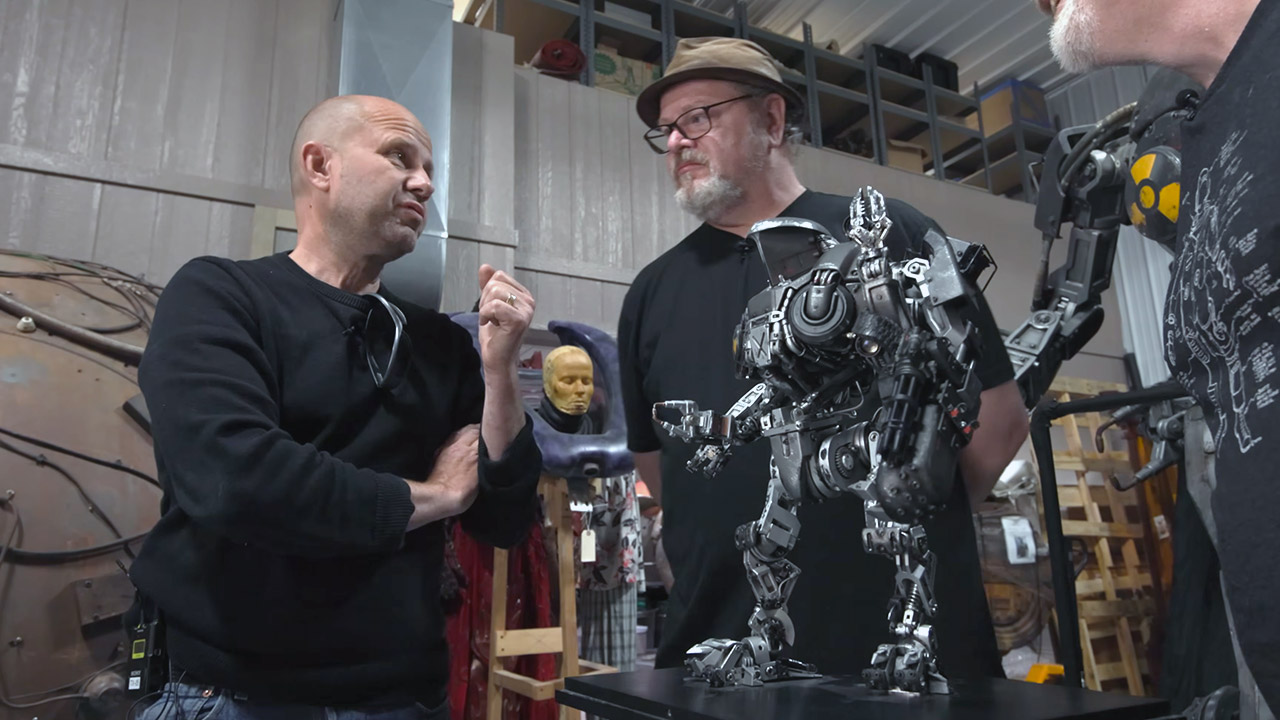
Anyway, it turns out that motorcycle culture had a significant impact on how the design team made their decisions, as they even used brake rotors for the ankle stops, which receive the most wear and tear during animation. To make it look more realistic, the animators (who didn’t even need them on screen) hooked up some shocks on the legs to move even while the figure is standing still. The entire thing is composed of vacuum-formed panels to keep it as light as possible, with a metal backbone supporting the load.
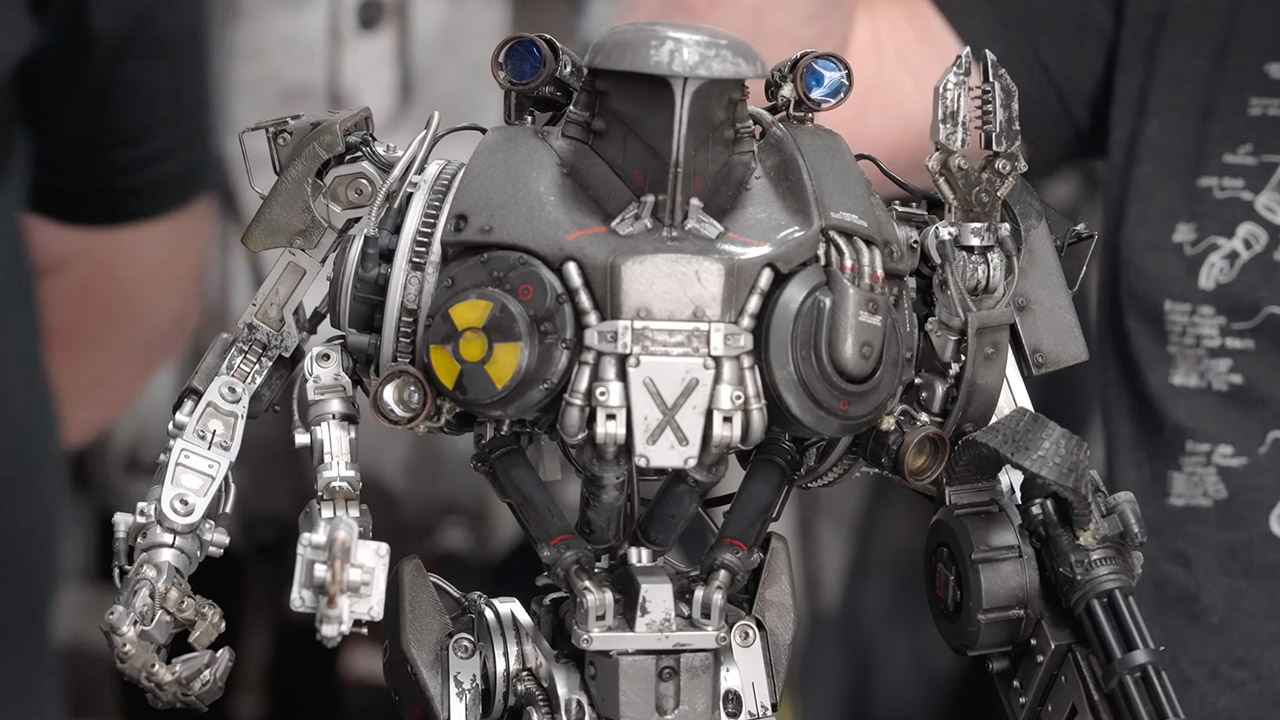
Savage pointed out that it is very different from the method they took on ED-209. All of ED’s inner workings are buried beneath a sleek surface. Cain has revealed everything, including the joints and cables. The way the force goes through the body literally reveals the thing’s skeleton. The same team that worked on Cain went on to work on The Nightmare Before Christmas and James and the Giant Peach, but the Cain puppets are still among the most intricate stop-motion figures ever created for a live-action movie. Animation requires a great deal of patience because each posture must account for weight and interlocking elements, and yet the results appear consistent and hefty on screen.
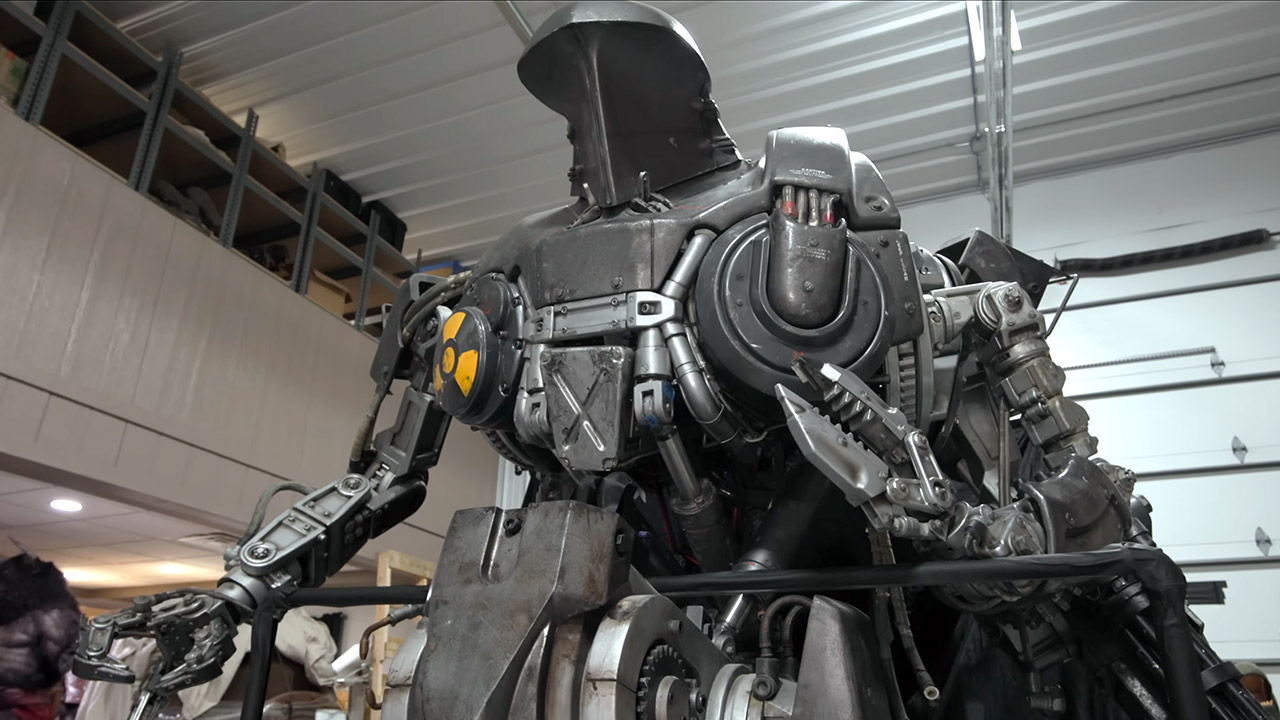
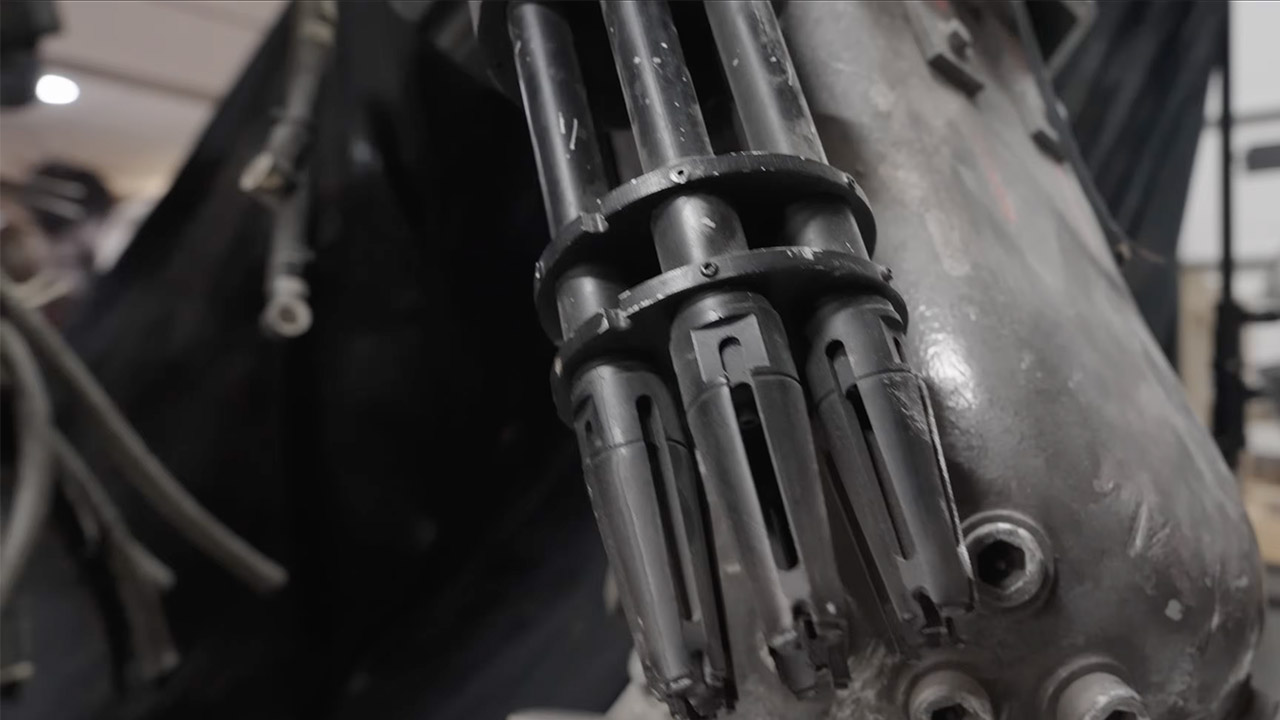
The full-size Cain arrived at Cinema Relics in bits and bobs, with only the upper body and a few twisted sections left over from the final day of filming. RoboCop removed the top section during the climactic action sequence, so all of the damage remains. There are a few noticeable gaps, such as one of the shoulder cannons missing and a backup unit positioned further back. The real magic happens in the chest, where there used to be a claw mechanism that deployed when the door was opened, and it still contains all of the cables and a lever that opens the fingers. The Gatling gun used to spin around in a sanding drum, held in position by a Dremel tool inserted into an angle bracket. Savage sounded amused by the little deception. In the film industry, whatever is left in place stays there.
Martin created the missing legs from scratch, based on Mark’s measurements and computer models. It all began with some rough fast prototypes, after which the edges were hand-sanded to fit the original puppet’s delicate curves. You see, almost every part has its own distinct shape, which meant that once you built one, you’d have to start over for the next one, as several molds were required. Ryan painted the finished castings, giving the aged effect from the upper body to the lower half. To keep everything upright, a hardwood base was required to conceal a small steel post that allows the entire thing to be disassembled when it is time to transport.