
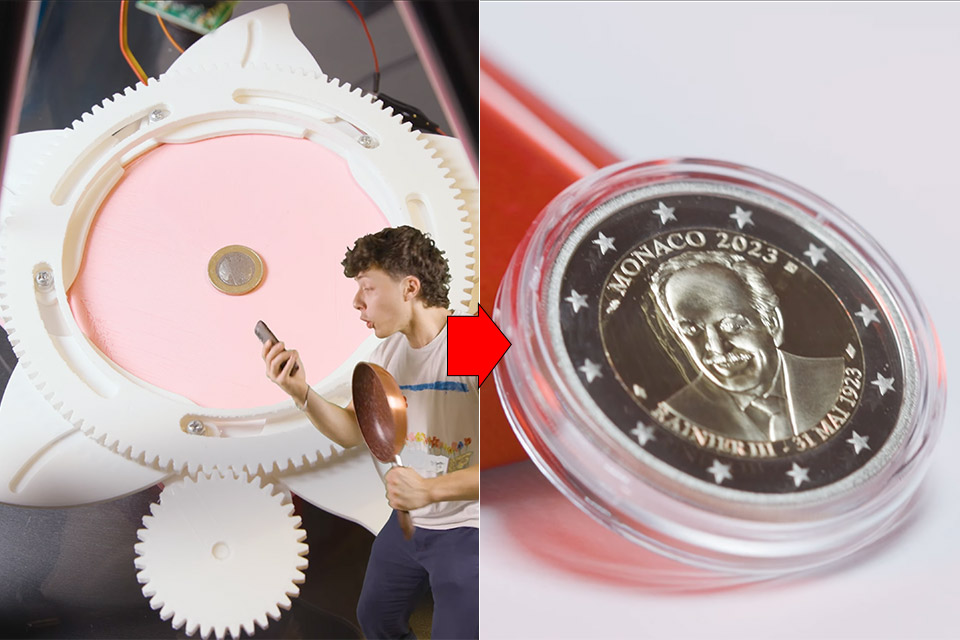
Makers are constantly coming up with innovative methods to transform everyday objects into automated displays, and Terence Grover has just added another to the list. His robot flips a rare €1000 Monaco commemorative coin repeatedly, with a live audience cheering and calling the shots the entire time. People watching his YouTube livestream give commands to choose when to flip the coin next, and the robot just does its job without troubling its inventor.
Grover began with a relatively bare-bones setup, utilizing only a bit of cardboard, a basic solenoid, and a 9v battery to get the ball going. He had created a rudimentary prototype that showed promise, but the coin kept landing off-center and refusing to play ball more than once or twice. He then upgraded to a proper design, producing a strong tray on a 3D printer and adding a set of blades placed similarly to a camera’s aperture. After each landing, the new servo motor closes those blades, nudging the coin back to the exact same area above the solenoid so the next flip may take place smoothly right away.

- BUILD, CODE & DRIVE YOUR OWN ROBOT CAR: Turn coding, electronics and engineering into a working programmable robot car you can assemble, program and...
- EXPLORE FPV, LINE TRACKING & OBSTACLE AVOIDANCE: Control the robot with the ELEGOO app or IR remote, view live FPV video through the onboard camera...
- BEGINNER-FRIENDLY BUILD WITH GUIDED WIRING: Keyed XH2.54 connectors help reduce wiring mistakes, while the illustrated tutorial and example programs...
The power comes from a 12V source, which delivers a fast burst to the solenoid, propelling the coin skyward in a crisp arc. Once it’s returned to the tray, a small security camera above captures a clear 2,000-pixel image. Grover chose this cheap Amazon camera since the original Raspberry Pi camera was too weak for long sessions in changing lighting conditions.
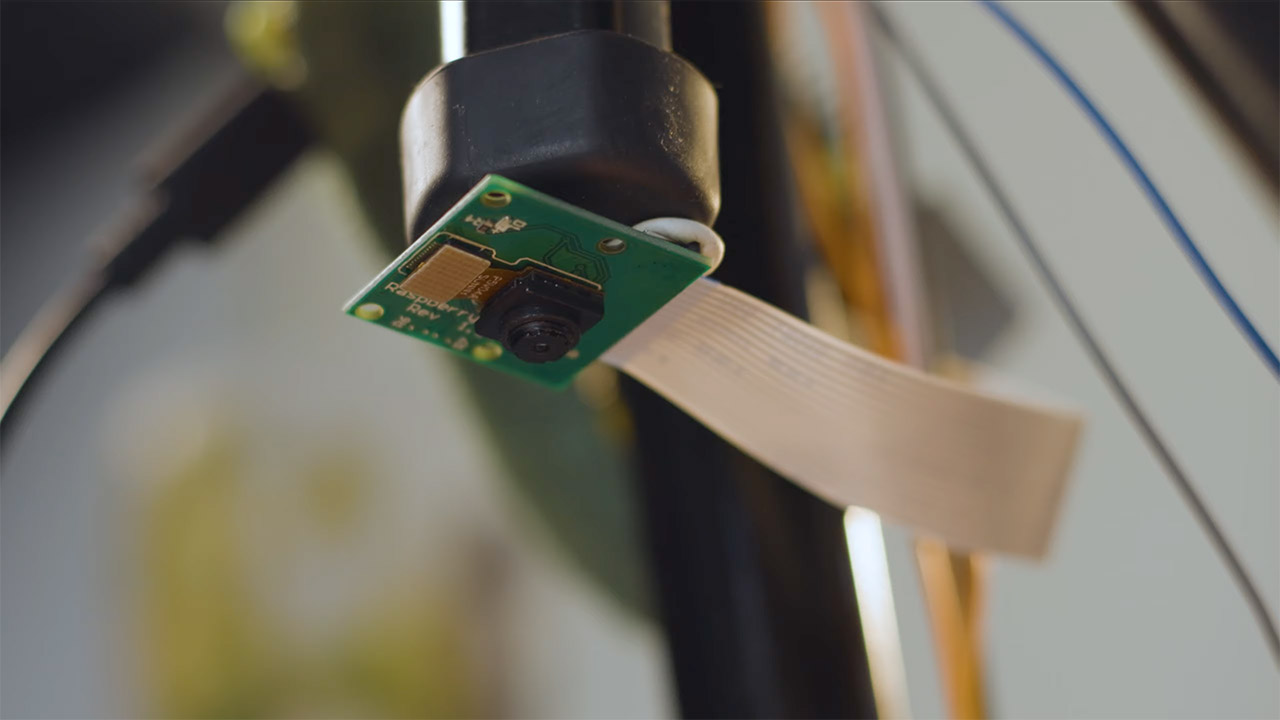
Inside the Raspberry Pi, a Python script is simply sitting there, waiting for that picture to appear. OpenCV converts the image to a grayscale snapshot to look for the coin’s contour, and then a machine learning model trained on over 400 photographs of the coin that Grover had personally labeled determines which side of the coin is visible, heads or tails. The model is performed locally using Tensorflow Lite, so the decision is returned to the stream in a flash, and the results are immediately visible to everyone on the livestream.

Grover set up a simple web server on the same Raspberry Pi so viewers could trigger flips through a neat and clear interface or even just talk to them on YouTube, as the relay board keeps the high-voltage solenoid safe by flipping it on command, preventing damage to the low-power electronics. Grover adjusted every timing variable, down to the fraction of a second, until everything felt absolutely smooth.
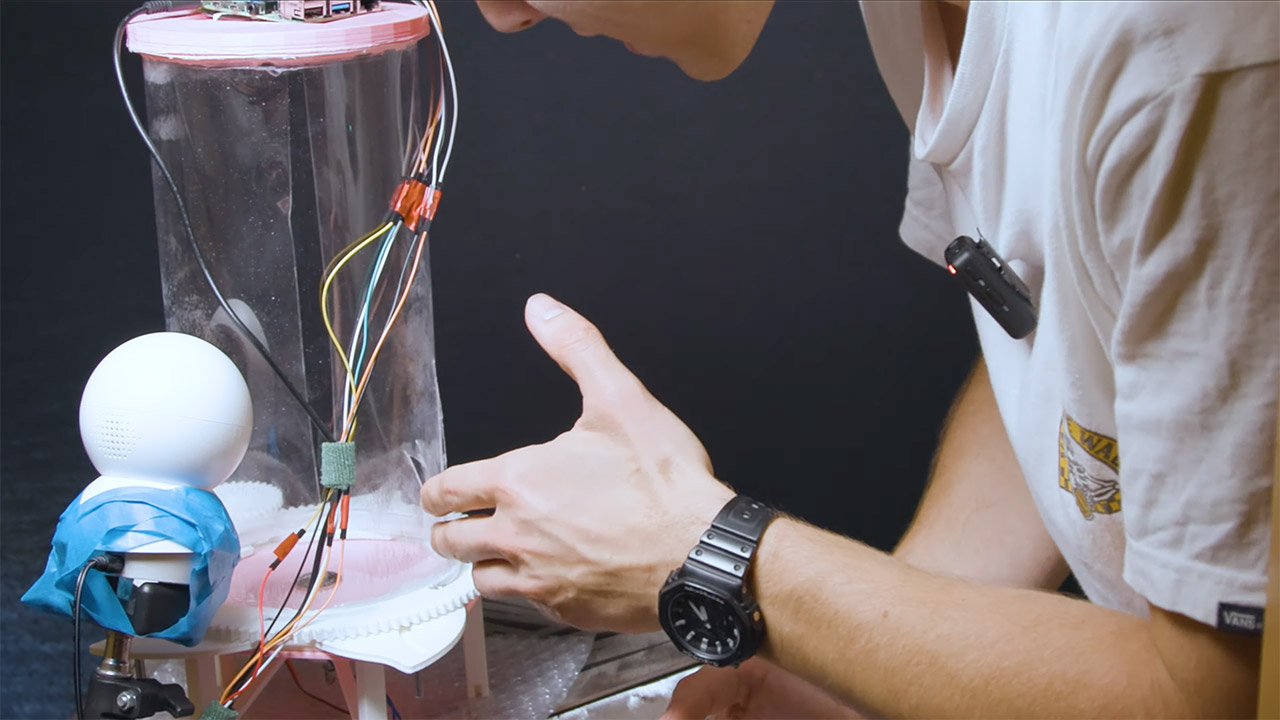
Grover was most concerned with getting the device to be reliable over time, since they’d experienced a couple jams early on when the coin landed on its edge or slid too far to one side. Every tiny adjustment to the tray and blade tension reduced the amount of times it would freeze up, eventually allowing it to continue for hours without requiring a human intervention. During a particularly long livestream session in July 2024, the machine managed to flip the coin 50,000 times in a row without requiring any user assistance.
[Source]


