
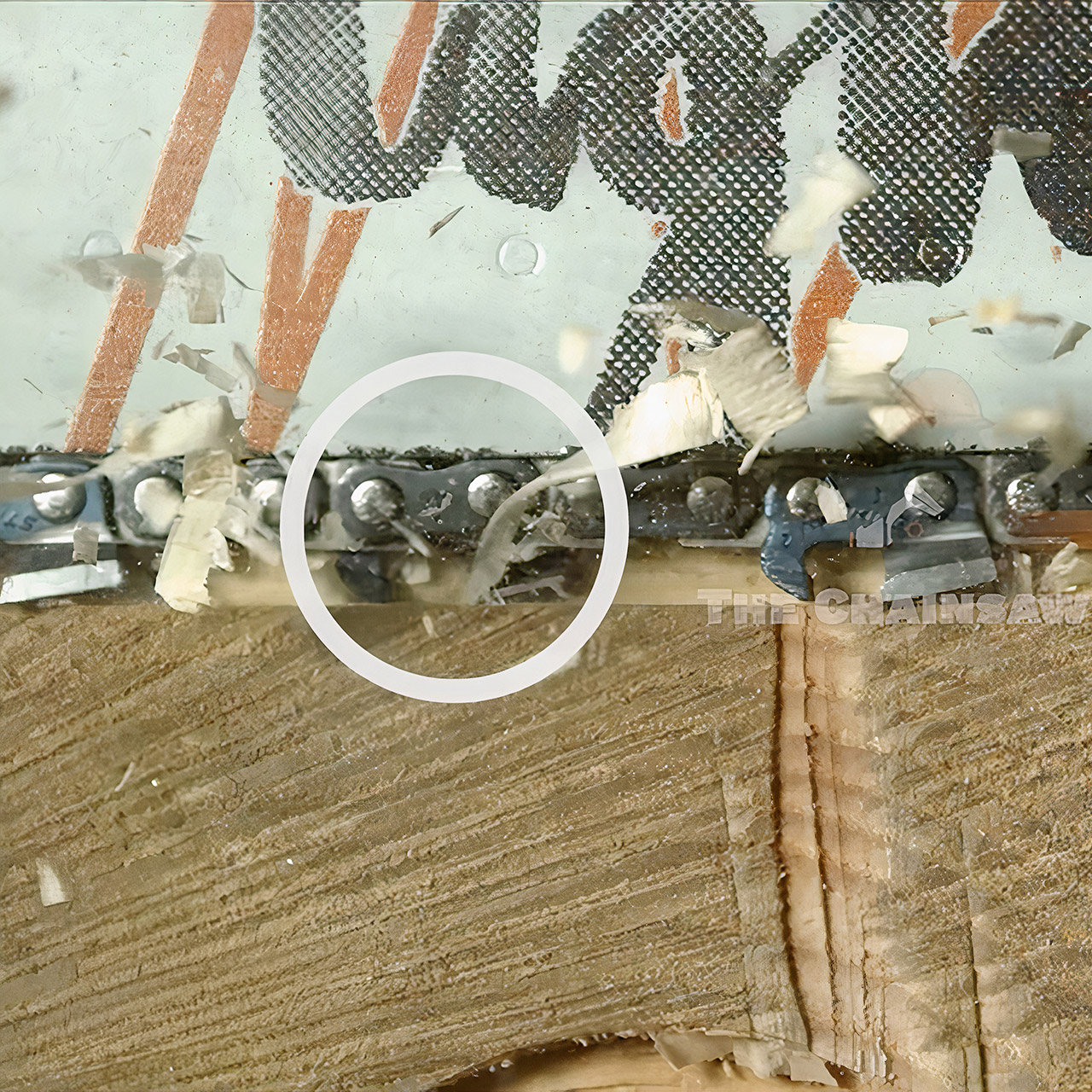
Chainsaws rip through forests and backyards alike, reducing thick logs to manageable bits with brute force, but few people consider the little dance that occurs when the chain strikes wood. A mind-blowing film taken at 20,000 frames per second slows down this crazy process, exposing details that would otherwise be imperceptible to the naked eye. The team behind The Chainsaw Manual caught this using a high-speed camera, revealing the delicate ballet of tiny parts working in perfect harmony to make wood cutting so efficient.
Watch as the chain zooms in on the wood surface, the individual links dancing by as each carries a sharp tooth, alternating left and right in perfect time around the loop. The depth gauge is a little accessory that sits ahead of each tooth. Don’t be fooled by its simple appearance; this small section plays an important role. As the chain moves ahead, the depth gauge hits the wood first. Its job is to limit the depth of the following tooth bite while also controlling how thick each chip is removed.

- Capture Urban Nightscapes - Osmo Action 5 Pro features a new 1/1.3″ sensor for stunning low-light. Great for nighttime biking adventures in dark...
- Enhanced Subject Tracking - 4nm Chip for fast, reliable framing. Keep fast-moving subjects centered. [7] The 4nm chip ensures smooth and fast framing...
- Action 5 Pro must be activated in the DJI Mimo App. Due to platform compatibility issue, the Mimo app has been removed from Google Play. To ensure a...
Even when slowed thousands of times, the depth gauge simply glides along the surface, prying up a thin layer of wood fibers. It sends them hurtling towards the sharp working corner of the tooth behind it, and in an instant, that razor-sharp corner split the wood neatly, slicing through the ties between the cells with astonishing precision.
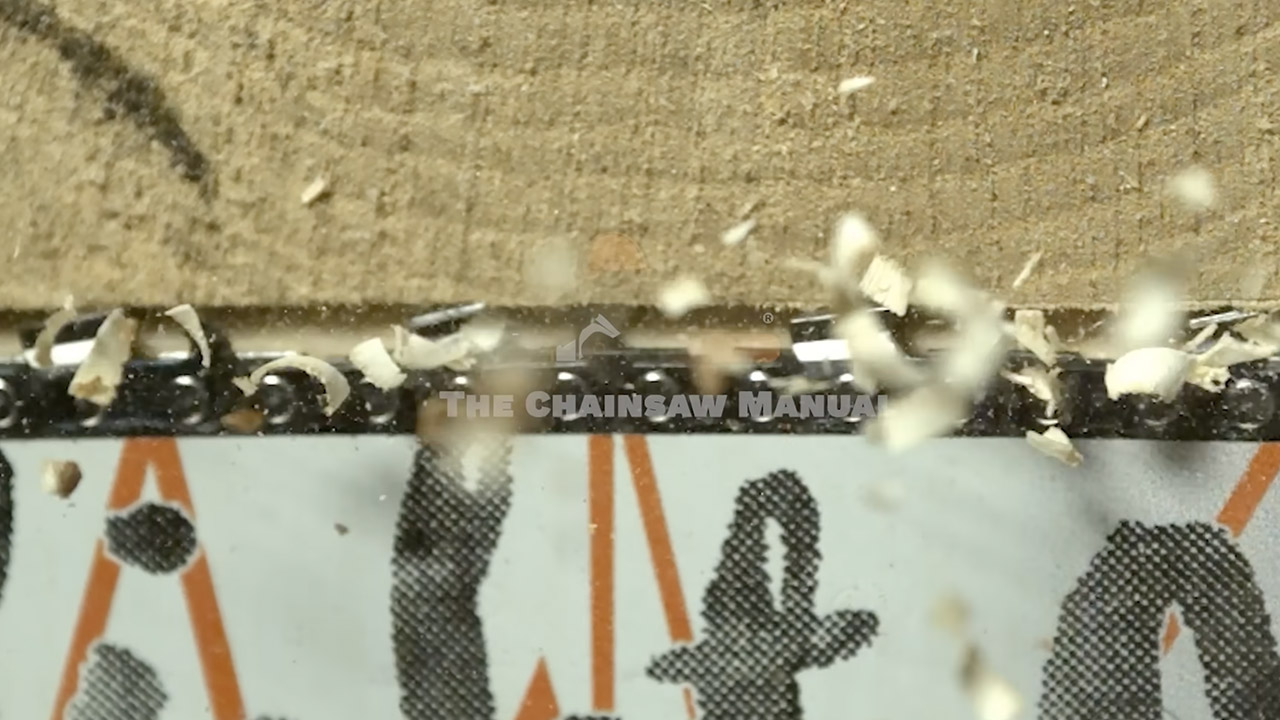
Once the wood has been separated, the real sculptural process begins. The tooth features a flat top and side plate that is inclined similarly to a chisel. These plates come into play next. The top plate slices over the top of the chip, while the side plate shears along the edge. Together, they shape the loose fibers into a tidy curl of wood shavings, almost like art. Each chip perfectly forms before the moving chain draws it down into the gullet, a small scooped-out region beneath the tooth.
From there, momentum propels the chip away from the cut path. Sawdust cascades forth in tidy tiny bursts, perfectly timed to each passing tooth. You’ll notice that only the second or third tooth is actively cutting away at the wood in a single pass; it all depends on how deep the chain bites. The rest sort of follow along, cleaning trash and preparing for the next tier.
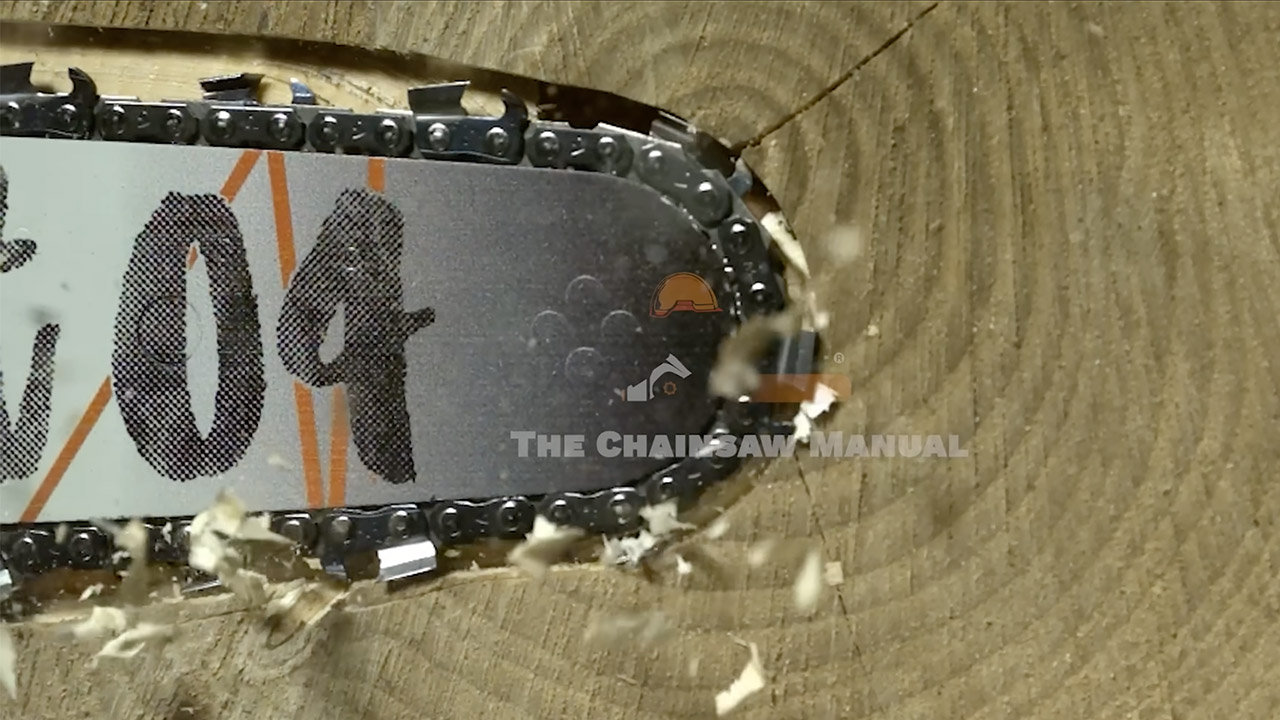
A closer inspection reveals that the chain is softly vibrating, which is actually a good thing since it provides the right amount of tension that allows the teeth to track straight and reduces friction against the guide bar. Too loose, and the chain wobbles all over the place; too tight, and the efficiency suffers. However, everything in this clip is perfect, which is why it cuts through the grain so smoothly and aggressively.
Wood fibers bend and crack in gentle waves, demonstrating how much resistance the wood is putting up. When the cut is made at a 90-degree angle to the grain, the chips look ragged, yet they’re fine along the grain. This is happening hundreds of times per second in real time, with the chipper chipping away at minuscule levels until a full kerf is visible.
[Source]