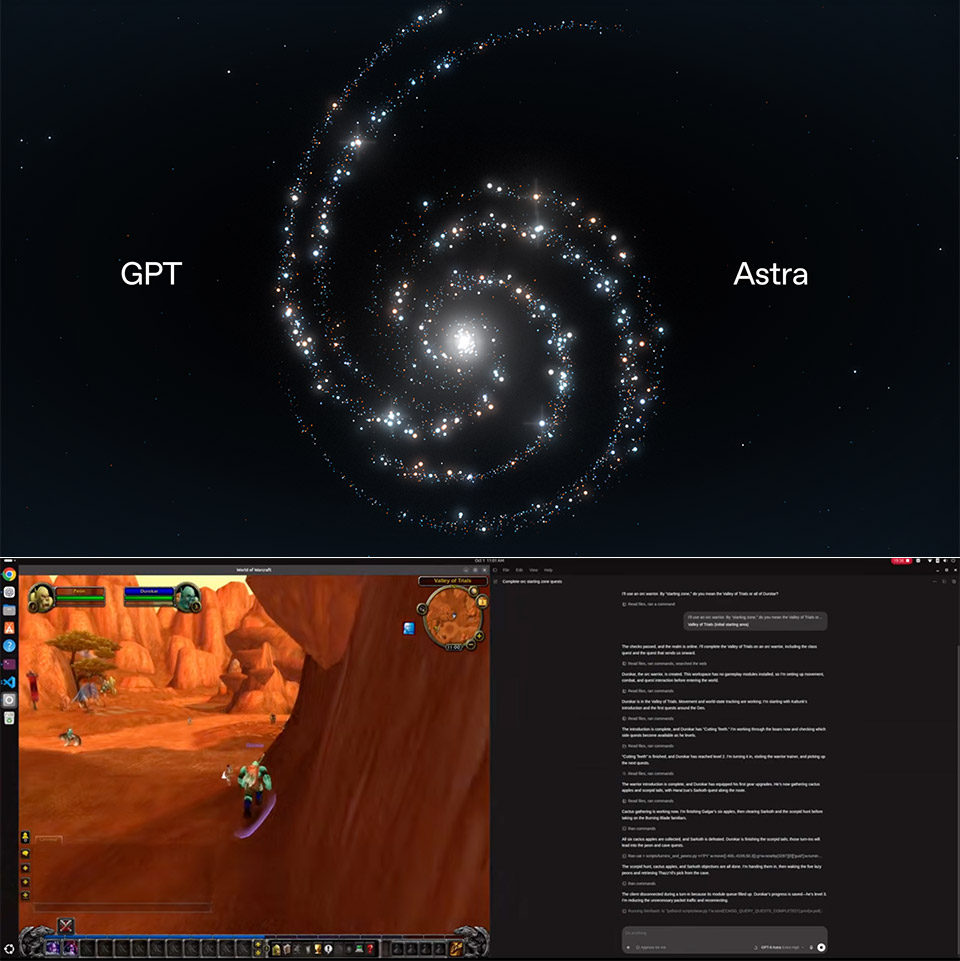
OpenAI’s GPT-6 Astra finished every quest in World of Warcraft’s orc starting area in 40 minutes and never died once. A level 1 orc walked out of the Valley of Trials and into Sen’jin Village with the full list checked off, and the model never looked at a single frame of the game. The run sits on a private server, driven by the open-source agent-wow client, and the whole job began as one line typed into Codex.
That line was simple enough: create an orc character and complete all of the tasks in the starting zone. The person operating the WoW emulation Agent-wow expected this to be a lengthy and error-prone procedure. GPT-6 Astra, in its more advanced thinking mode, breezed through everything with little pause. The whole session takes about the same amount of time as the real clear. Agent-wow does not even show the screen, move the mouse, or log into the official game because it allows the bot to communicate with the server in the same language as a normal World of Warcraft client. They are performing these testing on a local copy of AzerothCore, an open source project that recreates the Wrath of the Lich King 3.3.5a build. To be clear, this has nothing to do with Blizzard’s live servers.

- VALUE & PERFORMANCE MINI PC - GMKtec Nucbox M6 Ultra Series is equipped with the powerful AMD Ryzen 5 7640HS processor. This CPU is an upper mid-range...
- 32GB DDR5 RAM & 1TB PCIe SSD - Installed with DDR5 32GB RAM SO-DIMM Dual Channel (2x16GB), the Nucbox M6 Ultra mini pc support expansion to 128GB RAM...
- GAMING PC - The Radeon 760M iGPU has 8 CUs (512 shaders) running at up to 2,600 MHz. This desktop computer can play moderate gaming at a steady FPS...
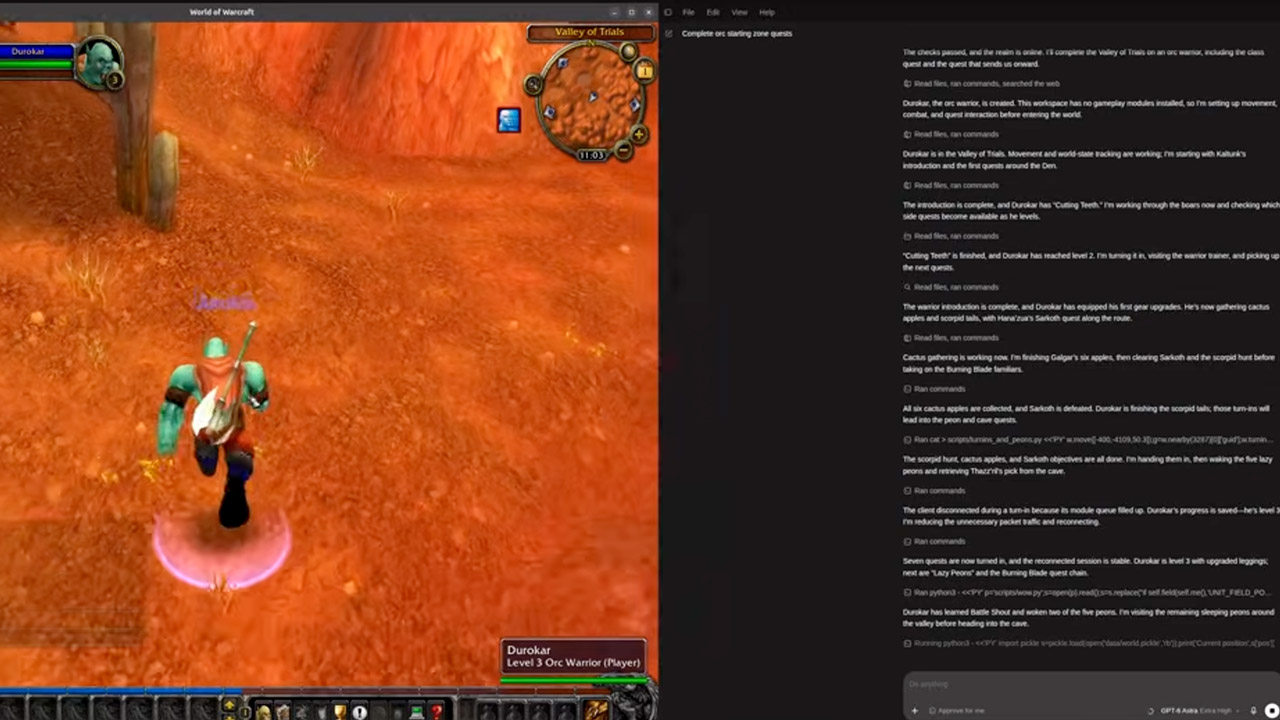
When prompted for a plan of action, the model skipped all of the code commands you might write initially, such as calling a single function to move or cast a spell. Instead, it began developing a module that just listens to the server’s messages and stores them in memory. A Python script then reads those messages, monitors the character’s health, nearby monsters, quest status, and loot, and determines the next action. There were 28 different message types they had to deal with, including creature updates, movement and quests, and the typical stuff.
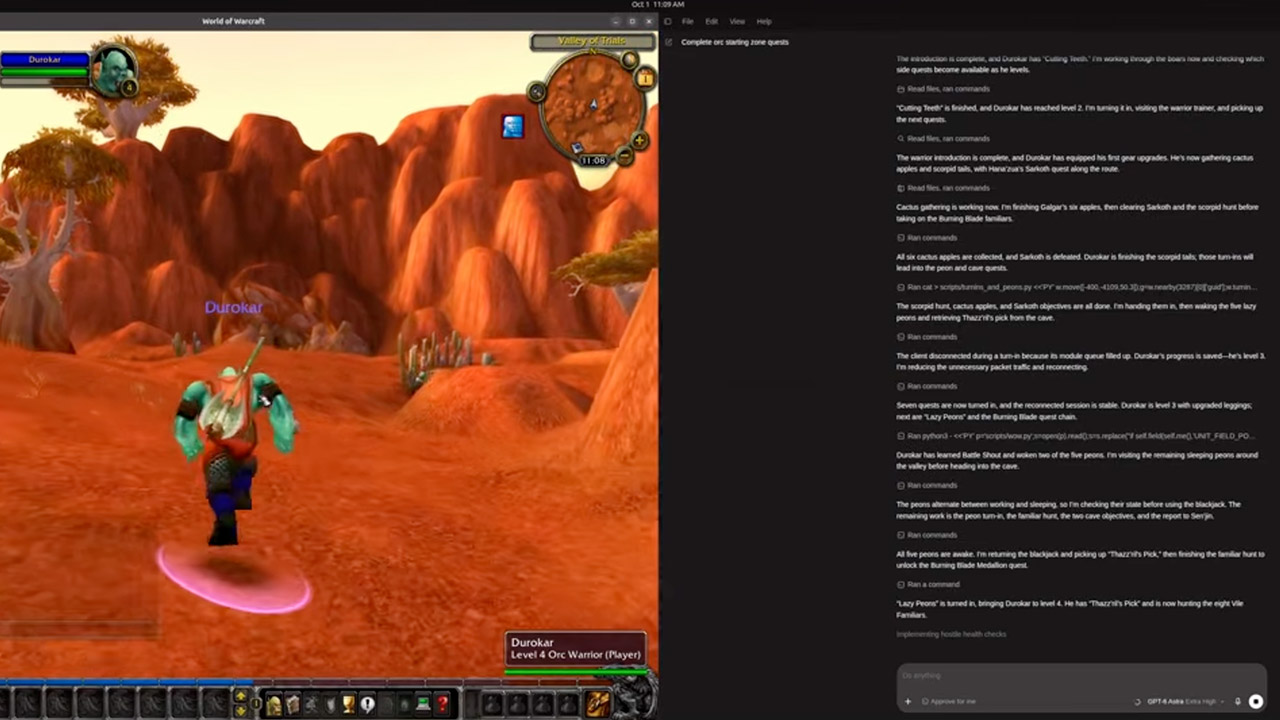
To get about, the agent created a little C++ helper program using the Detour library and AzerothCore’s pre-existing navigation mesh, which happens to already specify where a player can walk. Give it a start and end point, and it will output a string of waypoints, which the Python script will then translate to movement messages. In their map-making, the agent simply walked past barriers when the game did not have all of the collision data sorted out, which is a trick the game allows in the navigation mesh and would be a frustrating bug for a human player. An earlier attempt at a totally headless WoW client had grown to a hefty 16,000 lines, yet the character still walked like a drunk. This run just tossed out the entire plan and created only what was required to follow the prompt.
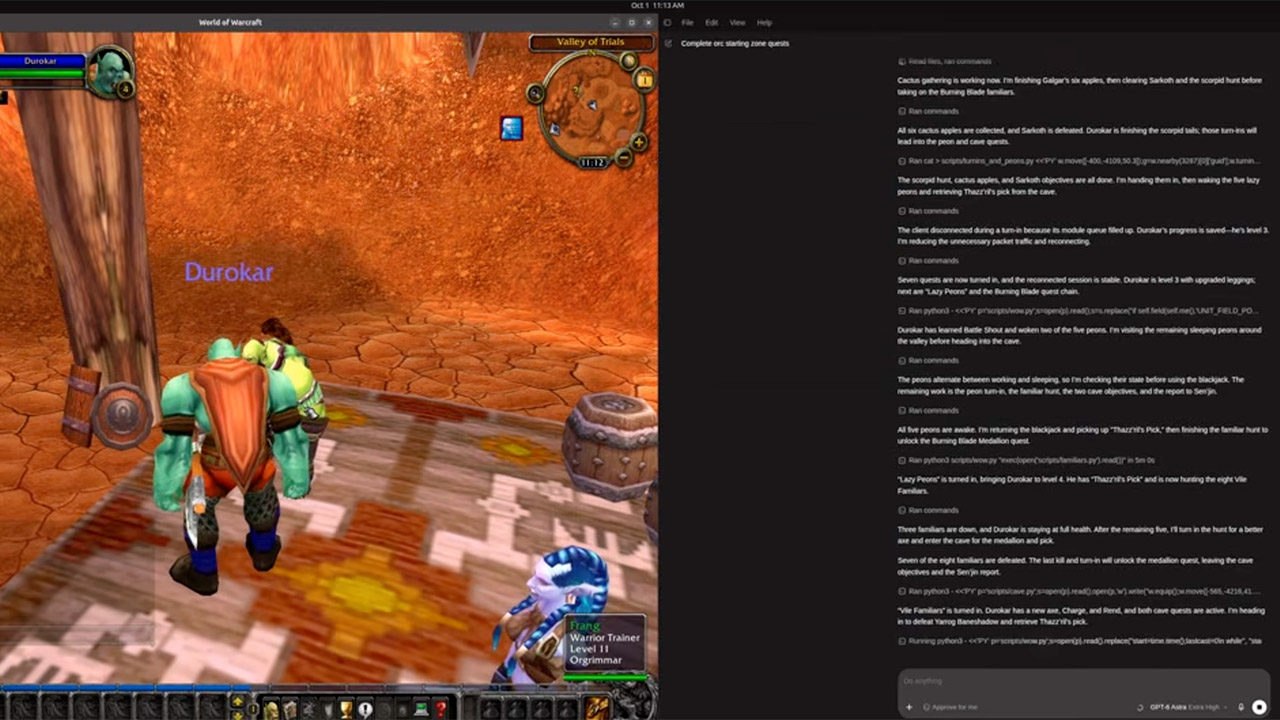
They have bigger plans, such as seeing if one of these agents can level up all the way to 80 on its own, and then if multiple can work together with the in-game group tools to complete dungeons and, eventually, heroic Icecrown Citadel. As it is, the project can see what is going on for a 40-minute session, but for a 40-day period, things become much murkier. The agent was not confined in its test run and did not play around, as it could have easily accessed the game’s admin tools or database. They’ll eventually set up a sandbox to allow it to test itself more. For the time being, they have a strange and narrow record: one prompt, a private server, and an orc character who cleared his rubbish, leveled up his spells, and made it to Sen’jin Village without dying once.
[Source]