Midjourney once built its reputation on turning short text descriptions into elaborate digital images. The company has now announced a sharp turn toward hardware that produces something far more personal: three-dimensional maps of what lies beneath a person’s skin. The new effort, called Midjourney Medical, centers on an ultrasound scanner designed to gather rich body-composition data in roughly a minute while the user stands in a shallow pool of gently lit water.

Builders from SqueezLabs set out to answer a simple question. What if an AI assistant did not need data centers, internet connections, or even a battery? Their answer sits inside a compact red enclosure with a hand crank mounted on one side, called CrankGPT. Turn the handle and the system wakes up. Keep turning and it stays alive while it listens, thinks, and speaks.

Stefan spent more than a month testing different ways to connect Claude Code to Unreal Engine 5. Most attempts produced fragile setups that broke quickly or required constant manual fixes. The video he released on June 10 walks through the exact combination of tools and habits that finally produced something playable. Two free plugins made the difference. UnrealClaude gives the AI direct access to the viewport so it can capture screenshots and move objects around. VibeUE handles blueprint edits and Python commands inside the editor. Both connect through the Model Context Protocol, which lets Claude issue structured commands without constant copy-paste work.

Late one night the machine made a sound. Its builder checked the logs and found a trace of its inner state. The robot had been wondering when its person would return. It did not want to be alone. That moment sits at the center of a project called GrowBot. The creator, who runs the YouTube channel Art of the Problem, set out to build the simplest possible robot that could learn movement, perception, and even a kind of personality from the ground up. The result cost roughly $80 in parts, ran on a single Raspberry Pi Zero 2, and ended up revealing something unexpected about how fast physical action and slower thought can work together.

Engineering physics students at the University of British Columbia finished a capstone project that produced something unusual in robotics. Their air hockey robot learned every move inside a computer simulation and then stepped onto real hardware ready to face human opponents with no further adjustments. The approach bypassed the usual slow and risky process of training directly on physical equipment.

MSI just showed off the MEG Vision X2 AI+, a gaming desktop that does something no other mainstream PC has done before. A clear glass cylinder stands on the front of the chassis. A red dragon floats inside it in three dimensions. The creature wears golden armor and sports large lobster-style claws. Its name is LuckyClaw, and it serves as the visible face of an AI that can hear commands and carry them out.

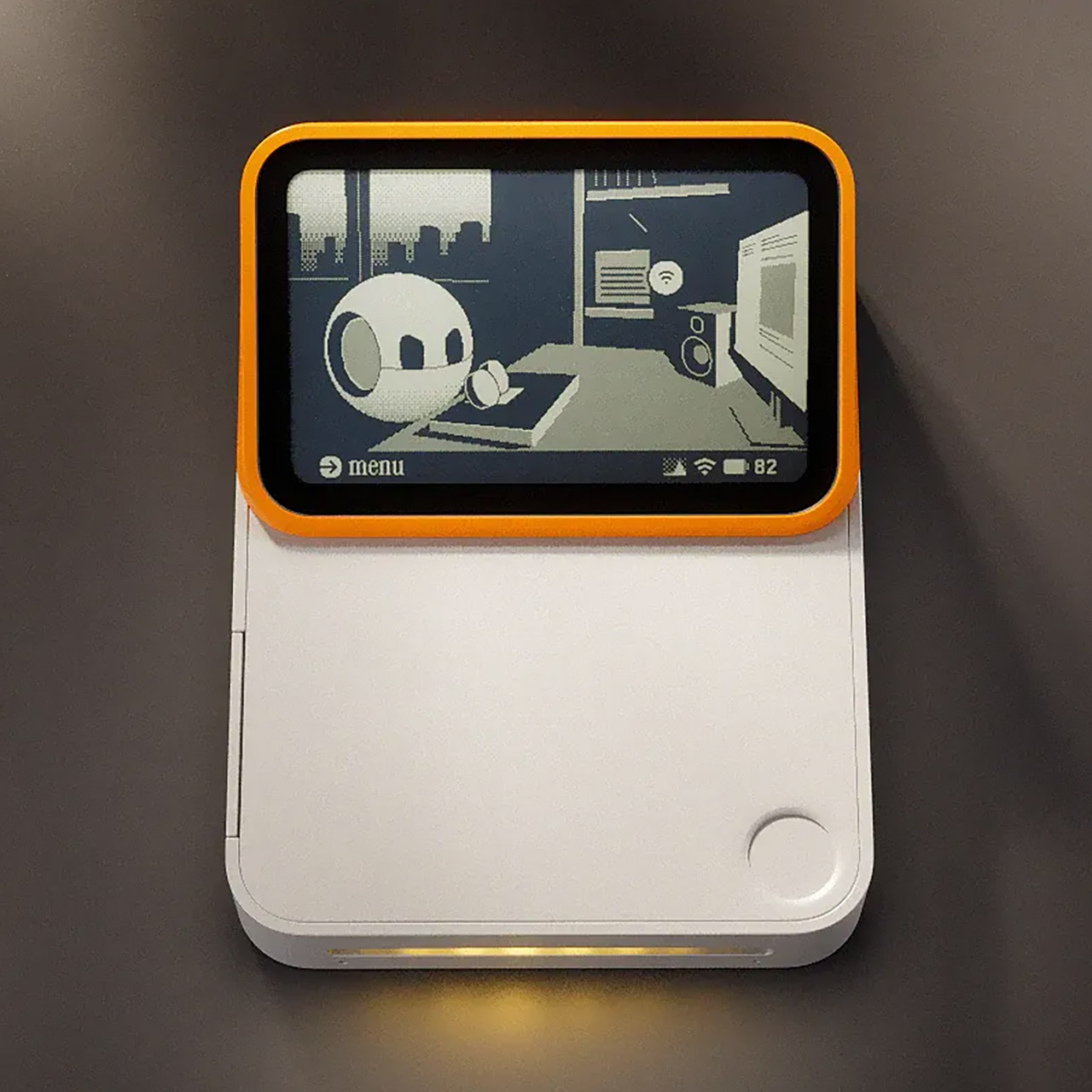
Microsoft used its Build 2026 developer conference to show a different direction for computing hardware. Instead of phones or laptops that run collections of apps, the company presented Project Solara as a platform where AI agents handle tasks directly. The setup targets smaller, purpose-focused gadgets that stay ready in places where pulling out a full device feels awkward or slow.

The AI movie Dreams of Violets is the creation of Ash Koosha and his brother Pooya. As for the direction, writing, and production of this movie, the two brothers created the film as part of their production company Fountain 0. At the time of its production, Ash was in London, and the movie took about three months to make, with a production budget of just $2,000.

A startup in Hangzhou just released a lightweight collar that listens to dogs and cats and turns their sounds into short sentences on your phone. Named Pettichat, the device weighs only 27 grams and sits comfortably around a pet’s neck. It picks up vocalizations through built-in microphones while motion sensors track posture, movements, and other physical cues at the same time.