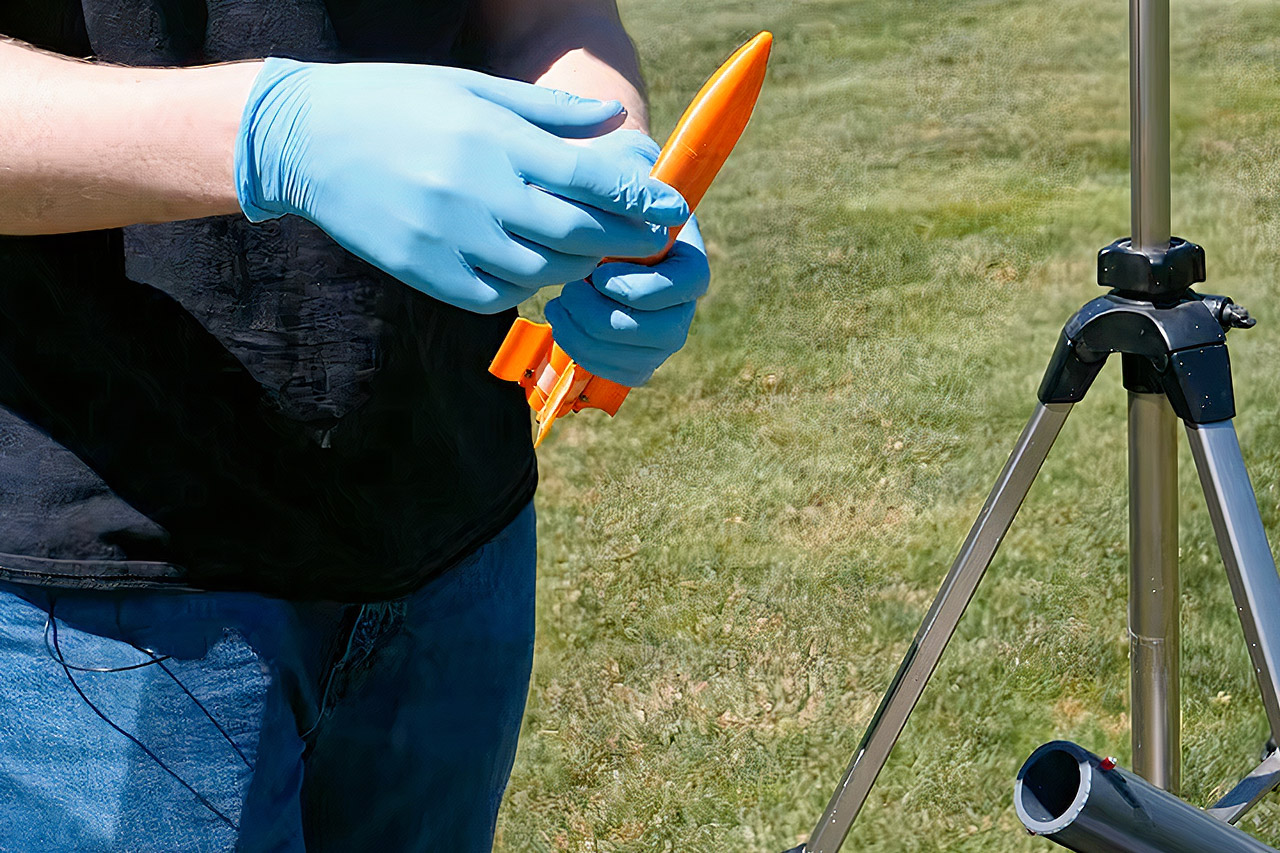
Con Hathy printed a stubby PETG rocket named Spark, loaded an Estes B4, and sent it up a launch rod. Jolly Logic Altimeter 2 data put the flight at 81 feet, 48 mph, and 6.4 G. He then wanted the same motor to do more work by firing it from a closed tube, the same idea that once helped the Arcas sounding rocket leave the pad faster than a rail ever allowed.
Atlantic Research built Arcas in the late 1950s as a low-cost way to deploy weather balloons. To get it moving, they inserted the 4.5-inch airframe into a closed-breech launch tube. The exhaust, which became trapped behind the rocket, acted like a piston, forcing it out of the tube – and quickly. The “Super Arcas” was equipped with an auxiliary gas generator and reached an altitude of 100 kilometers. The ordinary Arcas variants remained with the simple tube configuration and no additional propellant.

- A1 mini + LED Lamp Kit for Creative Light Projects: Bring your ideas to life with the included LED Lamp Kit. Simply print compatible lamp models and...
- The Perfect 3D Printer for Beginners: A1 mini 3D Printer is designed to make 3D printing easy from day one with automatic calibration, simple setup...
- Experience the Bambu Lab Ecosystem: Access MakerWorld’s huge library of ready-to-print models, manage prints through the Bambu Handy app, and enjoy...
Hathy wanted to see if this piston-thing worked on the scale of a model rocket. The first thing he did was fire up a rod for control, and that was it. He then created a clamshell sabot, printed it to lock the rocket within a larger tube, and tried again, but the results were the opposite of what he wanted. Altitude decreased by around 40%. Going even slower, accelerating even less. Later, a simulation helped figure out why, as the tube behind the rocket became empty quicker than the small B4 motor could fill it, sucking the pressure right out of it, resulting in the rocket pulling a vacuum on its own and decelerating.
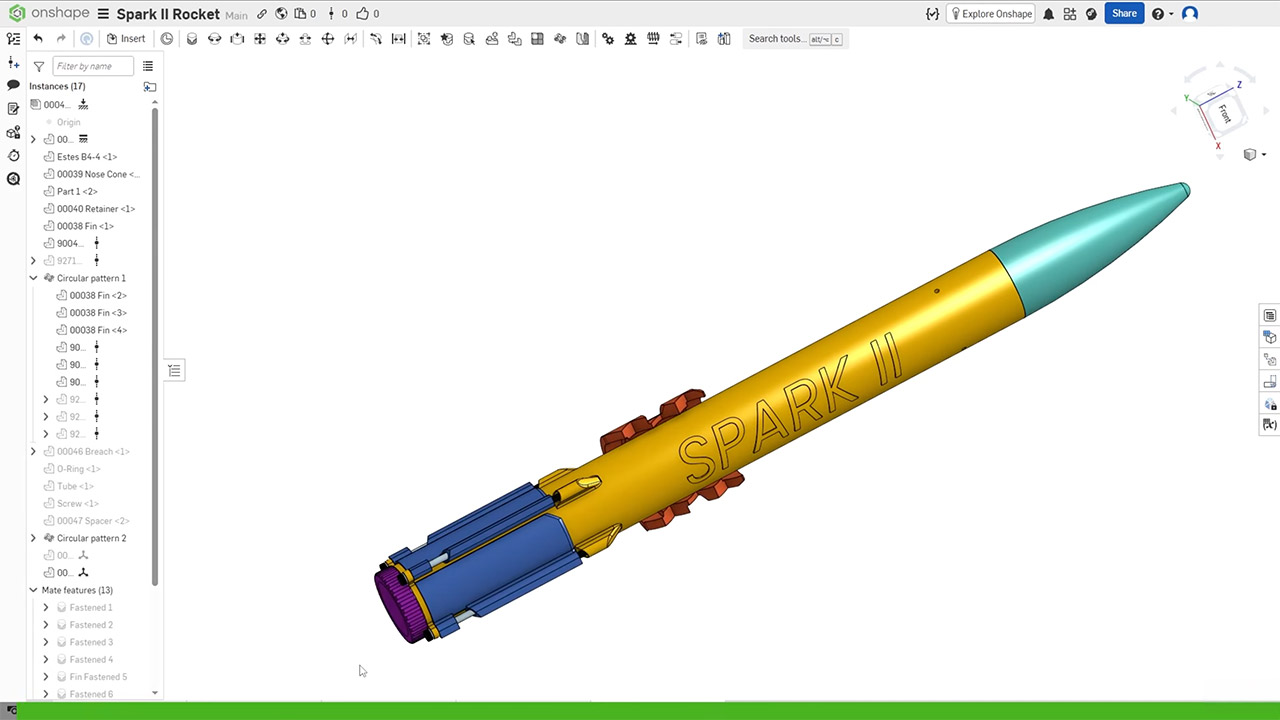
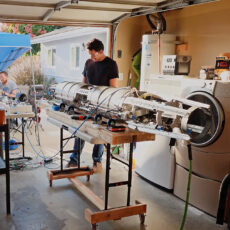
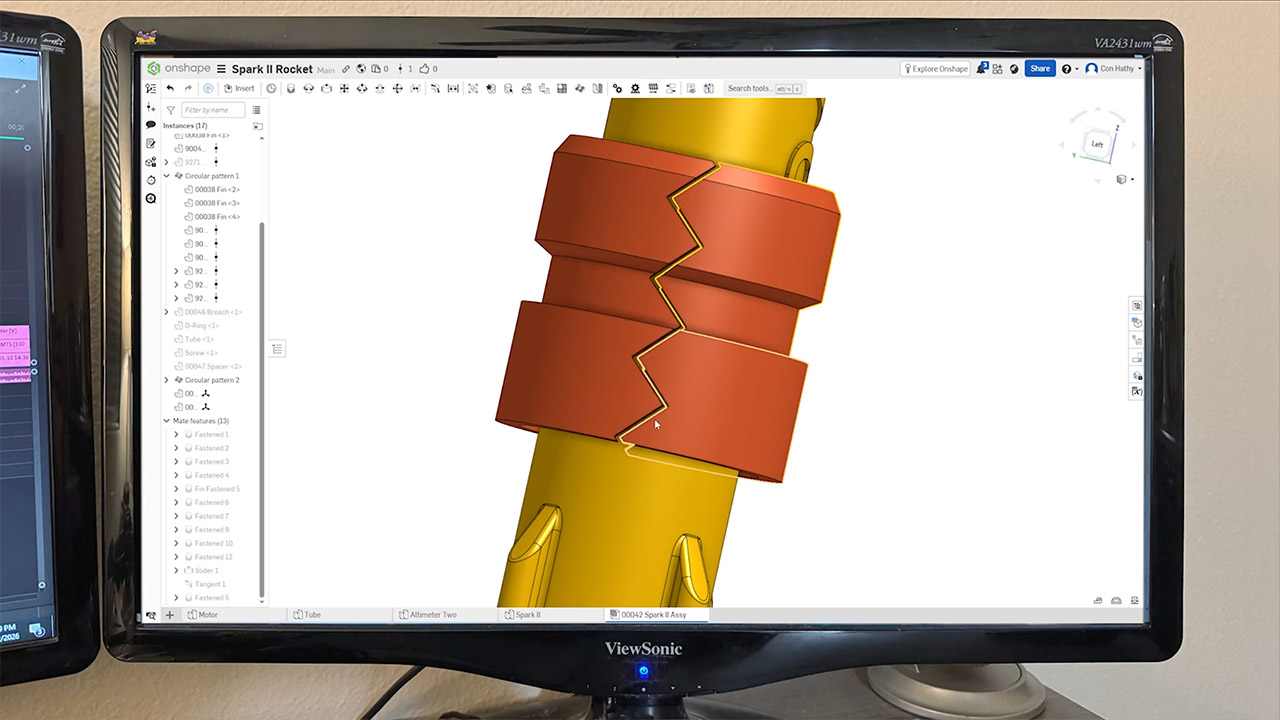
Hathy attempted to improve things by shrinking the tube significantly, down to a 1.5 inch internal diameter and trimming it back to five feet. To make the rocket fit, he had to modify the airframe as Spark II. Wrap-around fins that folded tightly against the body as the rocket traveled through the tube burst open on torsion springs as they reached the tube’s finish. He also worked on the sabot, employing a sawtooth lock and foam strips to create a tighter seal. To make things more interesting, he installed a pressure tap near the tube’s base, allowing him to measure friction with a kitchen scale prior to takeoff. The program predicted that if there were no leaks, he’d obtain an energy increase of about 80%. Just a little extra might assist the rocket arrive to its destination.
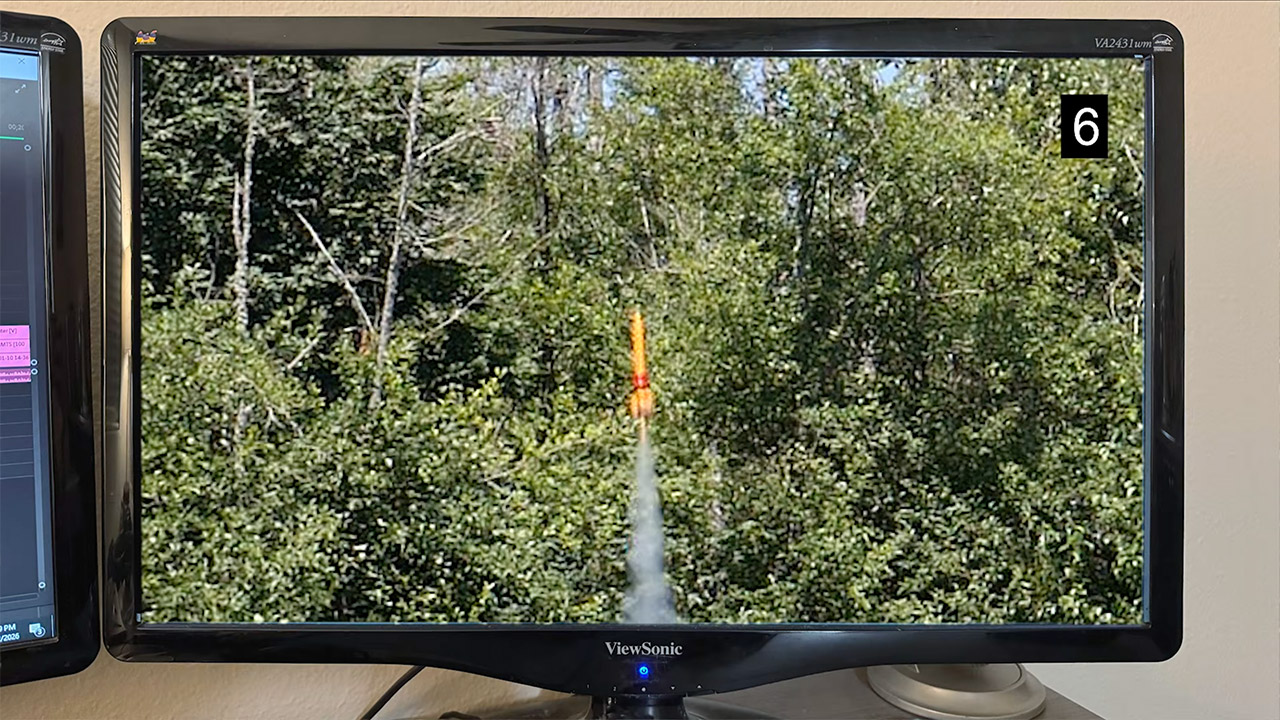
Spark II flew out of the five-foot tube on a B4, and the altimeter confirmed that it had reached 72 percent higher altitude than the initial rod. Not bad considering the sabot’s increased weight and the drag caused by the springs and fins when they folded out. Video indicated the item was moving roughly 12 meters per second when it left the tube, and the simple math said it hit around 5 Gs of acceleration as it was going through. Pressure readings remained positive until the rocket cleared the tube end, when it fell and began ringing at 75.5 Hz, as if it was complaining about being left behind. Those readings also suggested that there was still a lot of energy left behind, waiting to be used.
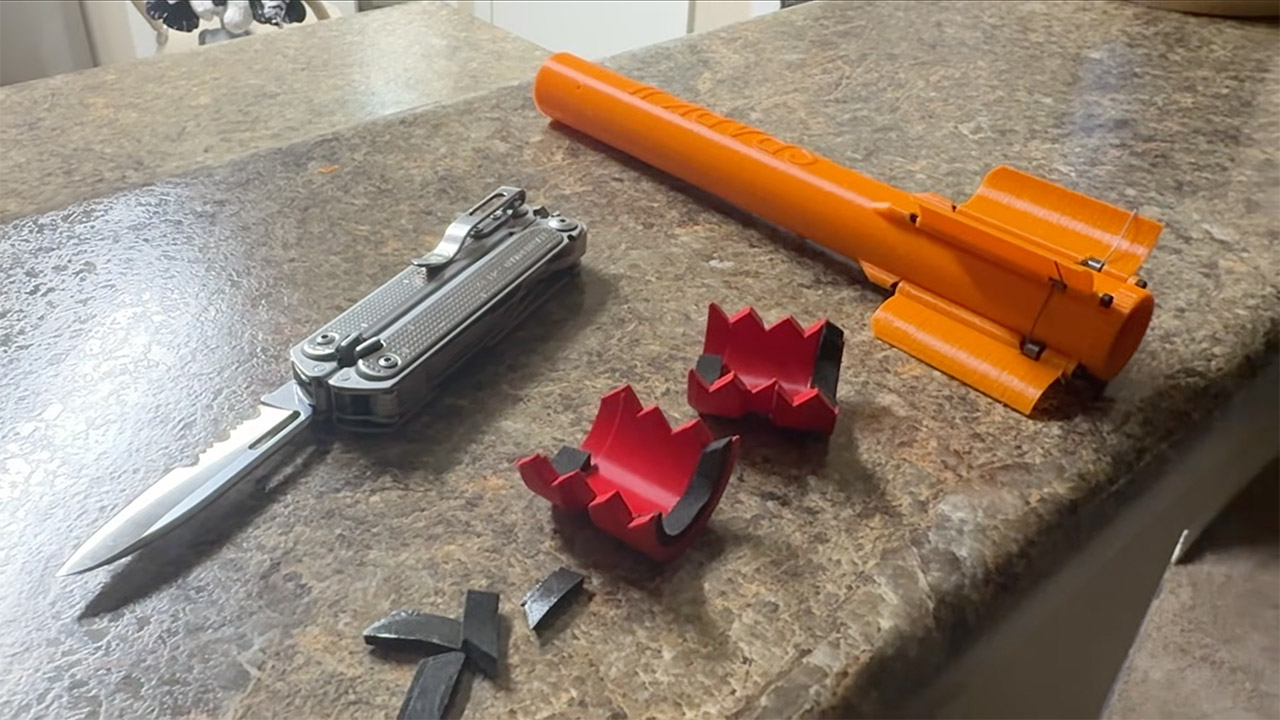
The sabot splits during ejection, and the recovery line melted a little from the heat, but that’s about it. The rocket flew straight and true, which is not awful. All of the increased weight and drag from the hardware appeared to be worthwhile in the end, and Hathy’s model rocket simulation slightly overestimated mass flow and a few other factors. However, the overall direction of the result was very clear, since the properly sized tube can convert waste gas into extra thrust, but the incorrectly sized tube can do the opposite, sucking the life right out of the rocket.
[Source]