A DIY metal 3D printer powered by a laser welder brings industrial-grade additive manufacturing far closer to the garage than anyone imagined. Maker Cranktown City acquired a 2000-watt fibre laser welder from Skyfire and installed it on an outdated 3D printer frame salvaged from a defunct insole-printing business. The ultimate result is solid metal items produced layer by layer with welding wire as the “ink,” demonstrating that very strong lasers often found in factories can now be used on projects at home.
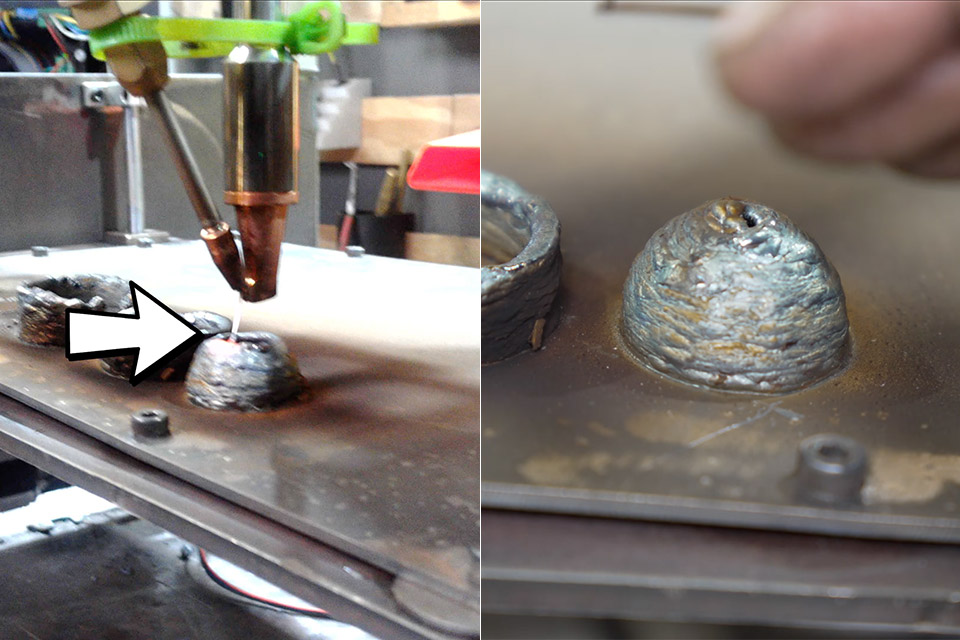
Cranktown City began with two outdated dual-head 3D printers that they purchased for cheap on Facebook Marketplace. One machine was broken in half to serve as the foundation for the motion system, and the original gantry was significantly upgraded with a new steel frame bolted together for added stability, since you want the thing to move smoothly. The laser welding torch replaced the standard print head and was secured with a bespoke plate and straps. The stepper motors and linear bearings handled the motion, while an ancient CNC computer running LinuxCNC was brought back to life to handle all the controls. They employed a CoreXY kinematics system to ensure that it was fast and precise along the X and Y axes.

- High-Speed Precision: Experience unparalleled speed and precision with the Bambu Lab A1 Mini 3D Printer. With an impressive acceleration of...
- Multi-Color Printing with AMS lite: Unlock your creativity with vibrant and multi-colored 3D prints. The Bambu Lab A1 Mini 3D printers make...
- Full-Auto Calibration: Say goodbye to manual calibration hassles. The A1 Mini 3D printer takes care of all the calibration processes automatically...
The laser melts tiny welding wire as it is fed continually into the torch, and the head draws out each layer. The 2000-watt fibre laser provides sufficient power to fuse the molten material to the previous layer or the construction plate. Initially, they used compressed air for shielding, but the results were poor and prone to cracking, so they switched to nitrogen, which helped but caused some safety concerns owing to oxygen displacement. In the end, Argon provided the cleanest and strongest outcomes with considerably fewer flaws.
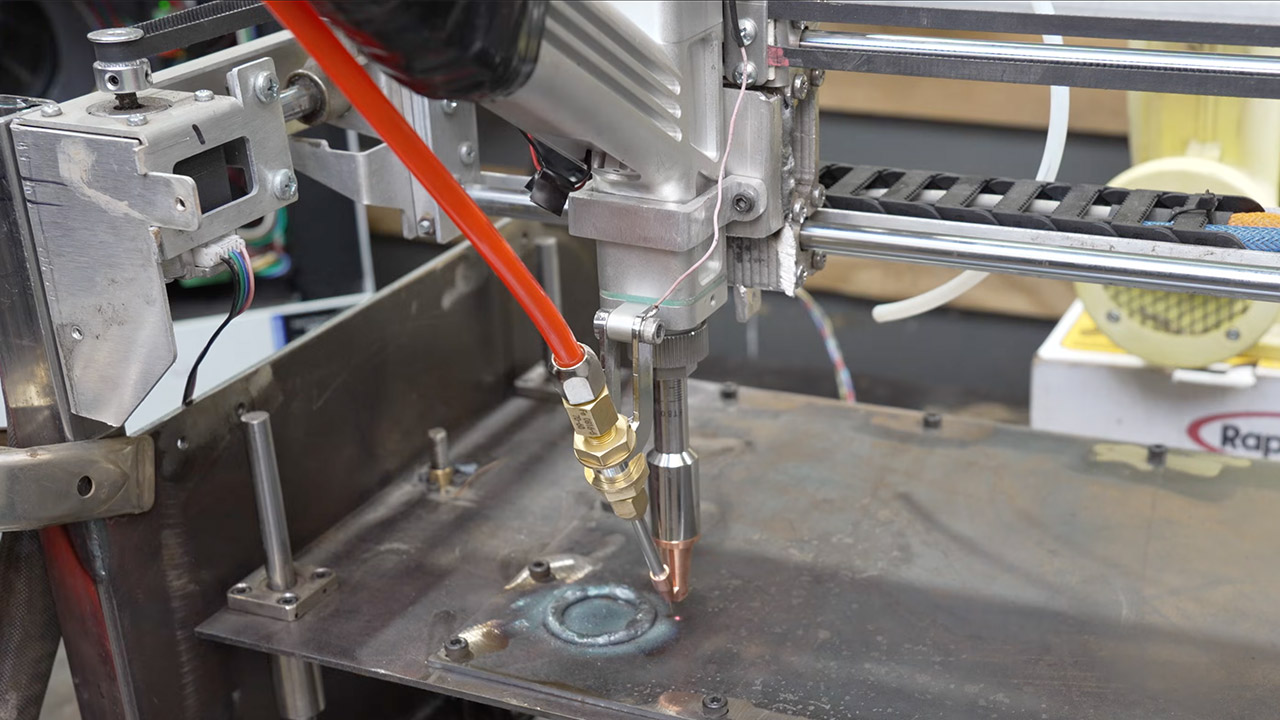
Heat management became a major issue because the powerful laser was heating the build plate so quickly that it was at risk of warping and binding to the Z-axis Gantry. A big cooling fan taken from an inflatable bouncy castle setup arrived on the scene to vent air between layers and keep temperatures in check. They replaced the previous construction plate with a thicker (3/16 inch) one that was securely fastened with machine screws and leveled using precision washer stacks. The wire feed caused the first serious issues; when the material began to stick to the nozzle or surface after deposition, they solved it by adding a short pause at layer ends, retracting the wire, and implementing Z-hop motions to lift the head cleanly.
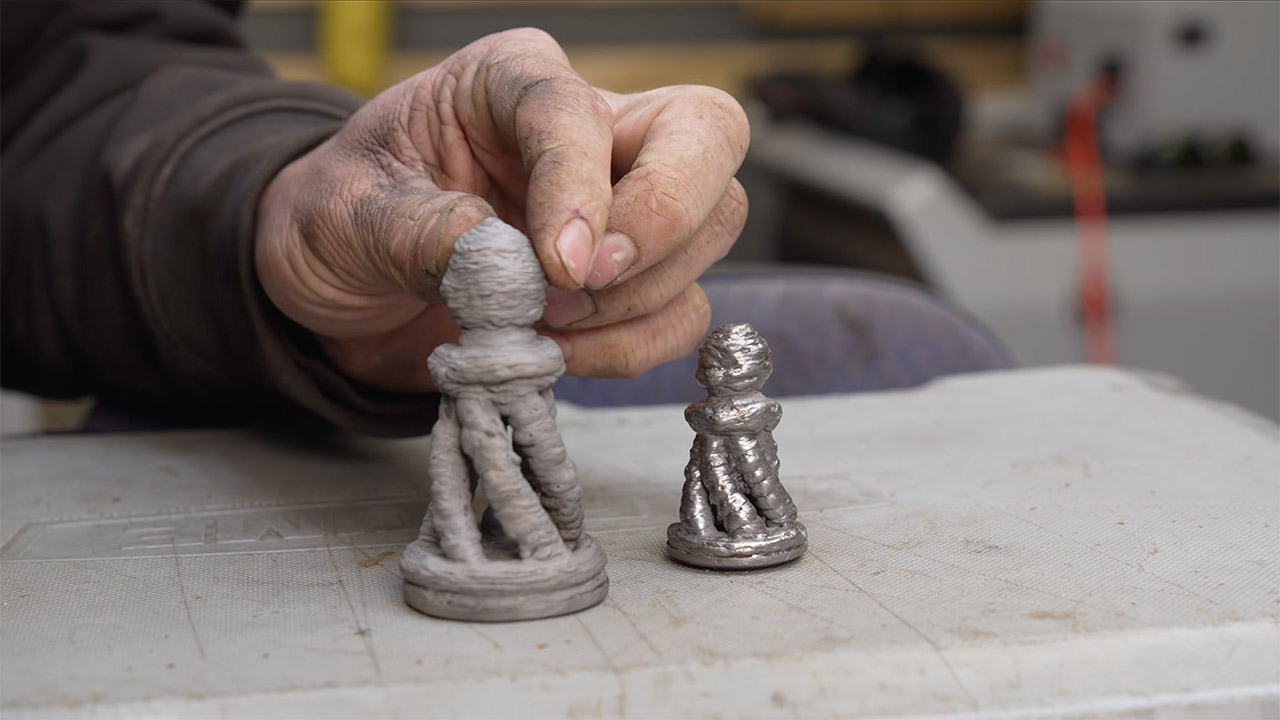
The initial results were a bit of a jumble, with inconsistent fusion and the occasional bead here and there, but as they altered the G-code (randomized layer begins to avoid seams and delays to let the molten pools to form properly), the process began to come together. They soon discovered that they could print more ambitious shapes; a sphere demonstrated the overhang capabilities, and a chess pawn captured some beautiful details in its base and tapering, but the real standout was a vase with smooth flowing sides that had obvious but reasonable layer lines.
[Source]