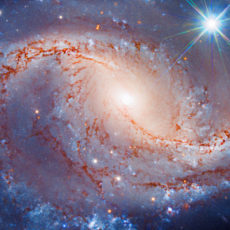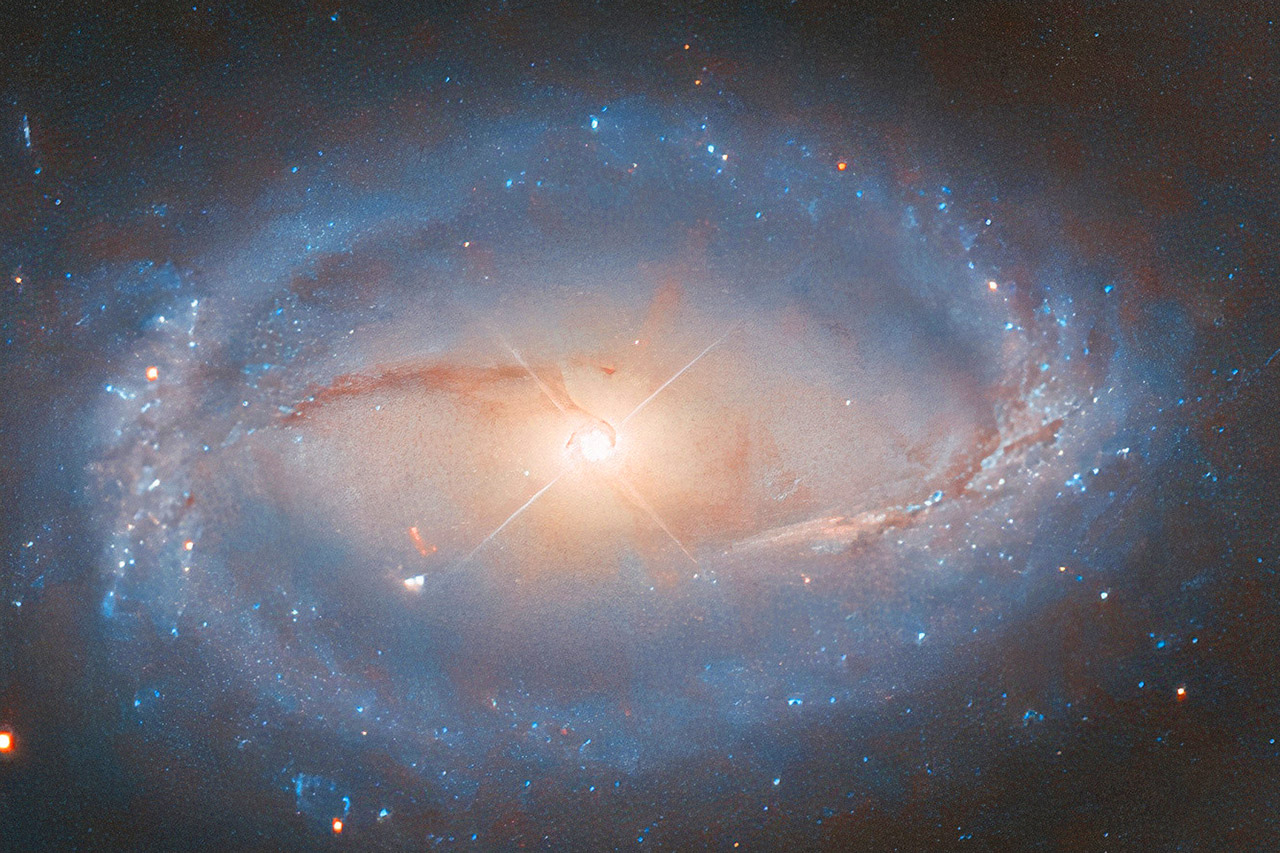
NASA / ESA’s Hubble Space Telescope recently observed a celestial object, classified as Z 229-15, that is basically a Seyfert galaxy containing a quasar, which by definition, hosts an Active Galactic Nucleus (AGN). It’s located approximately 390 million light-years from Earth in the constellation Lyra and the extra luminosity is due to the presence of a supermassive black hole at the galaxy’s core.

By having this black hole at the galaxy’s core, material sucked in doesn’t actually fall directly into it, but rather drawn into a swirling disc. It is then fiercely tugged towards the black hole, which causes the material to get so hot that it releases a large amount of energy across the electromagnetic spectrum, and that’s what makes the AGNs appear so bright.

- Excellent Quality Optics: Astronomical telescope features 500mm(f/7.1) focal length and 70mm aperture, provides stunning views and protects your...
- High Magnification: Our telescope for kids and adults is quipped with two excellent-quality eyepieces (25mm and 10mm) and a 3x Barlow lens.it trebles...
- Portable And Convenient: Comes with a phone adapter and an adjustable aluminum tripod. Wireless remote control and carrying bag make it easier for you...
Quasars are a particular type of AGN; they are typically both extremely bright and extremely distant from Earth — several hundred million light-years is considered nearby for a quasar, making Z 229-15 positively local,” said the European Space Agency.