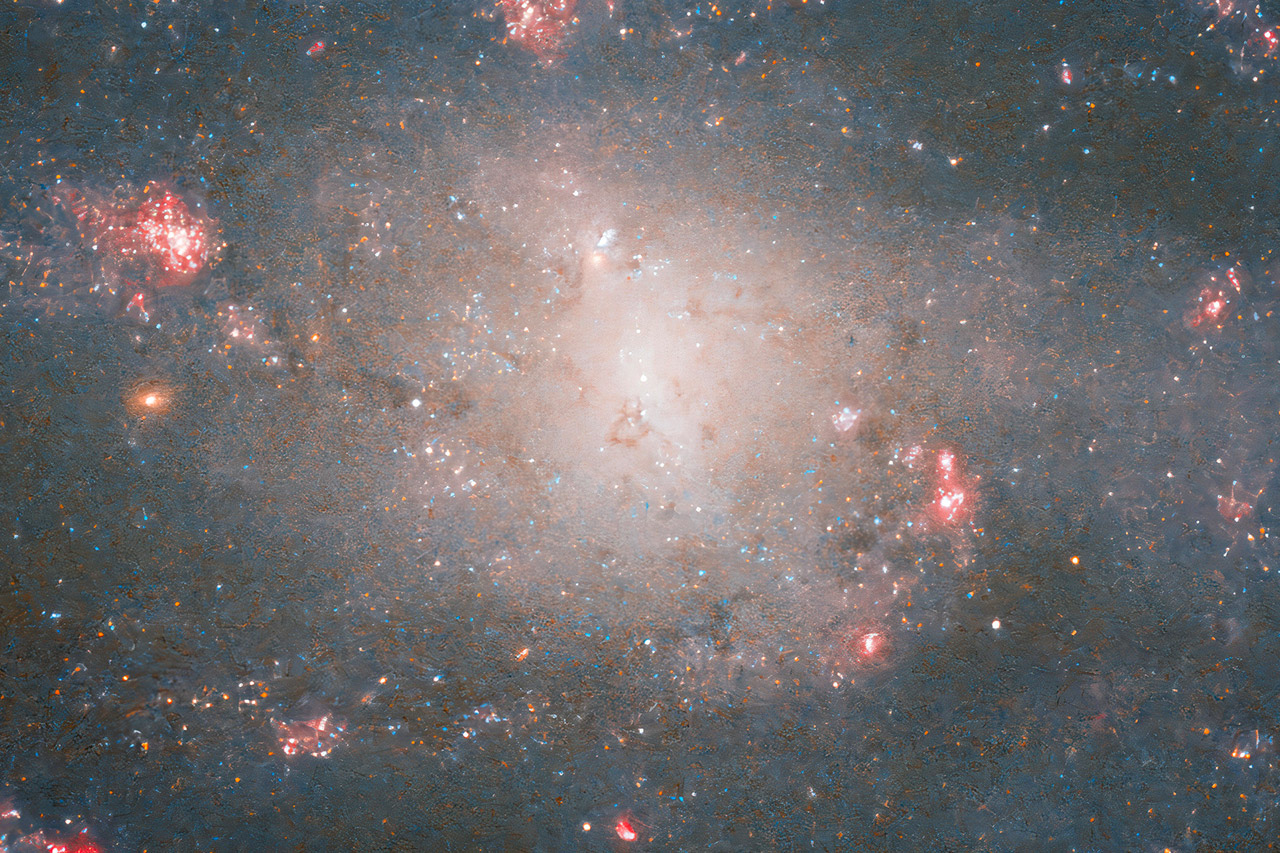
NASA / ESA’s Hubble Space Telescope observes an irregular spiral galaxy, designated as NGC 5486, threaded with ping wisps of star formation that stand out from its bright core. This glowing galaxy lies very close to the larger Pinwheel Galaxy, the latter of which is touted as a grand design spiral galaxy.

NGC 5486 is located approximately 110 million light-years from Earth in the constellation Ursa Major and was discovered in a series of Hubble images that were being studied for the debris left behind by Type II supernovae. This irregular galaxy does not have a distinct regular shape and do not fall into the typical classes of Hubble sequence. They are often chaotic, with neither a spiral arm structure or a nuclear bulge.
- POWERFUL TELESCOPE FOR BEGINNERS: The AstroMaster 70AZ is the perfect entry-level telescope for adults and kids eager to explore the night sky. You...
- HIGH-QUALITY 70MM OPTICS: Enjoy crisp, detailed views through the fully coated 70mm (2.8") achromatic refractor — perfect for observing the Moon...
- VERSATILE DAY & NIGHT USE: Designed for both astronomical and land-based viewing, the AstroMaster 70AZ lets you explore the stars at night and enjoy...
As massive stars reach the end of their lives, they cast off huge amounts of gas and dust before ending their lives in titanic supernova explosions. NGC 5486 hosted a supernova in 2004, and astronomers used the keen vision of Hubble’s Advanced Camera for Surveys to explore the aftermath in the hopes of learning more about these explosive events,” said NASA.