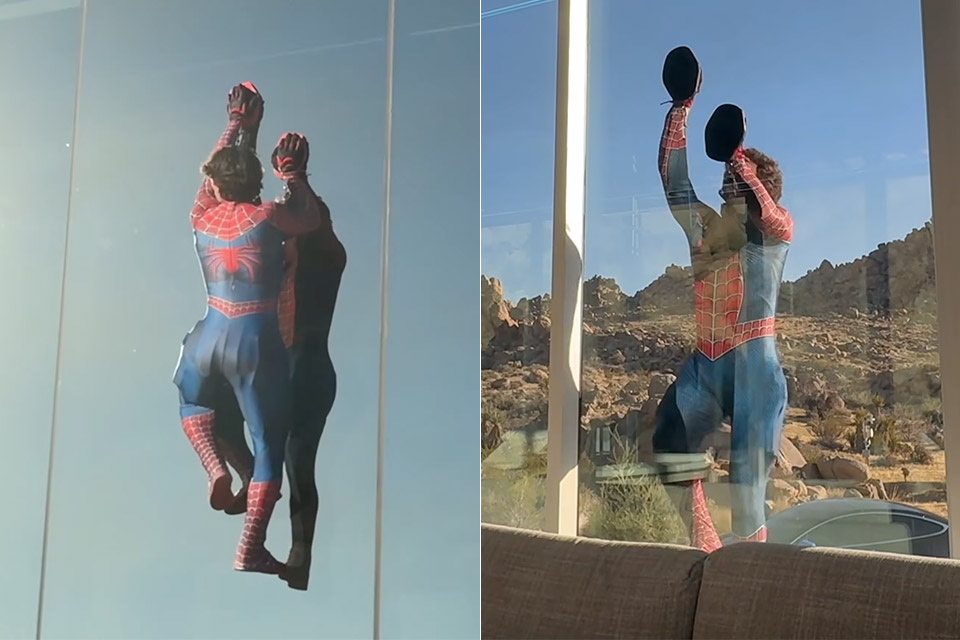
Jake Laser has been trying to stick a person to a building for years. On his JLaservideo channel the earlier versions used compact vacuum pumps, and with those he once raced a Spider-Man stunt double up a glass skyscraper. For the suit in his latest video, he dropped the pumps and copied the foot of a gecko instead.
A gecko’s toe is unusually dry, with hundreds of thousands of hair-like appendages on each pad. Every one of those hairs splits into even tiny tips that reach very close to a glass surface. The strange thing is that the attraction between the molecules at that distance can really keep the animal upright. When you try to pull the gecko’s toe along the surface, the tips bend flat, providing an even stronger grip. When you start peeling it back from one edge, the contact point progressively breaks down, leaving no residue when you pull your foot away.

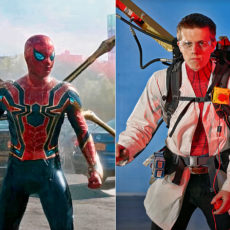
- POSABLE SUPER HERO – Scale up the action with the highly articulated LEGO Marvel Spider-Man Hero Figure (76346) building toy for boys and girls ages...
- COLLECTIBLE LEGO FIGURE – Capture the appearance of the web slinging hero as portrayed in the Spider-Man: Brand New Day movie
- PLAY AND DISPLAY – Whether used for pretend play action or arranged on display, kids can position and pose the dynamic Super Hero and his...
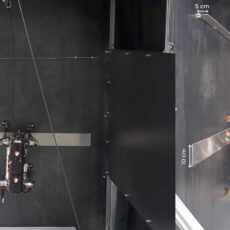
Laser began with a factory sheet of silicone that sells for about a thousand dollars. Plain silicone slides off a window. This sheet stays, because the surface is cut into microscopic wedges that make the same kind of close contact. In a short clip from May he pressed it to a wall and it held. One sheet could not carry a person, and buying enough of the expensive material to cover hands and feet was out of reach.
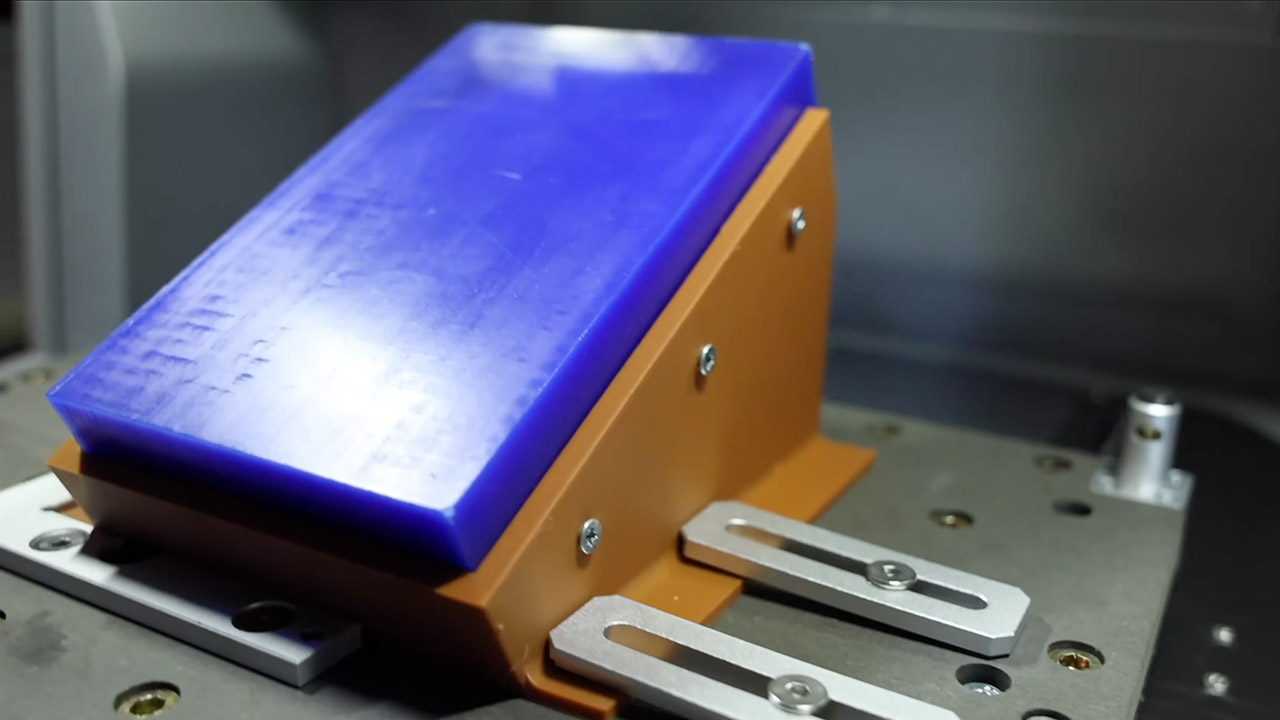
He began creating his own versions with a desktop cutting machine. The first stage was to cut a wax mold with grooves at 60-degree angles spaced 50 micrometers apart, which is nearly half the breadth of a human hair. Then he poured in some Sylgard 170, which came out looking like lizard skin. Unfortunately, the improvised pads still had a few bubbles and uneven wedges, so they never completely covered the surface upon contact. As a result, they were never able to carry substantial weight.
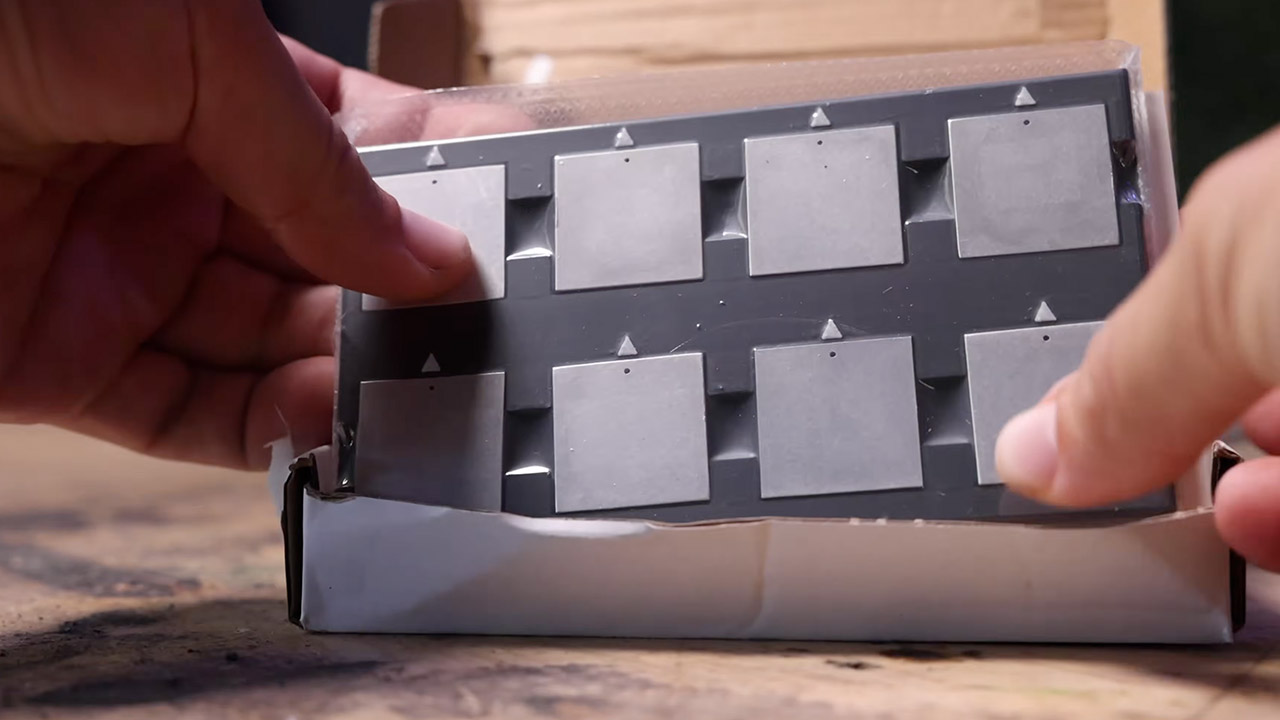
However, once you get your hands on tiles from a company called geCKo Materials, things change. Each one can support between 8 and 20 pounds, and you can acquire a bunch of them for roughly $10,000. He tried fastening the tiles to a hard plate and putting them on actual windows, but there was a weakness in his idea. There was always one high area on the surface that took the entire load, and the remainder of the pad would lose touch and peel off.
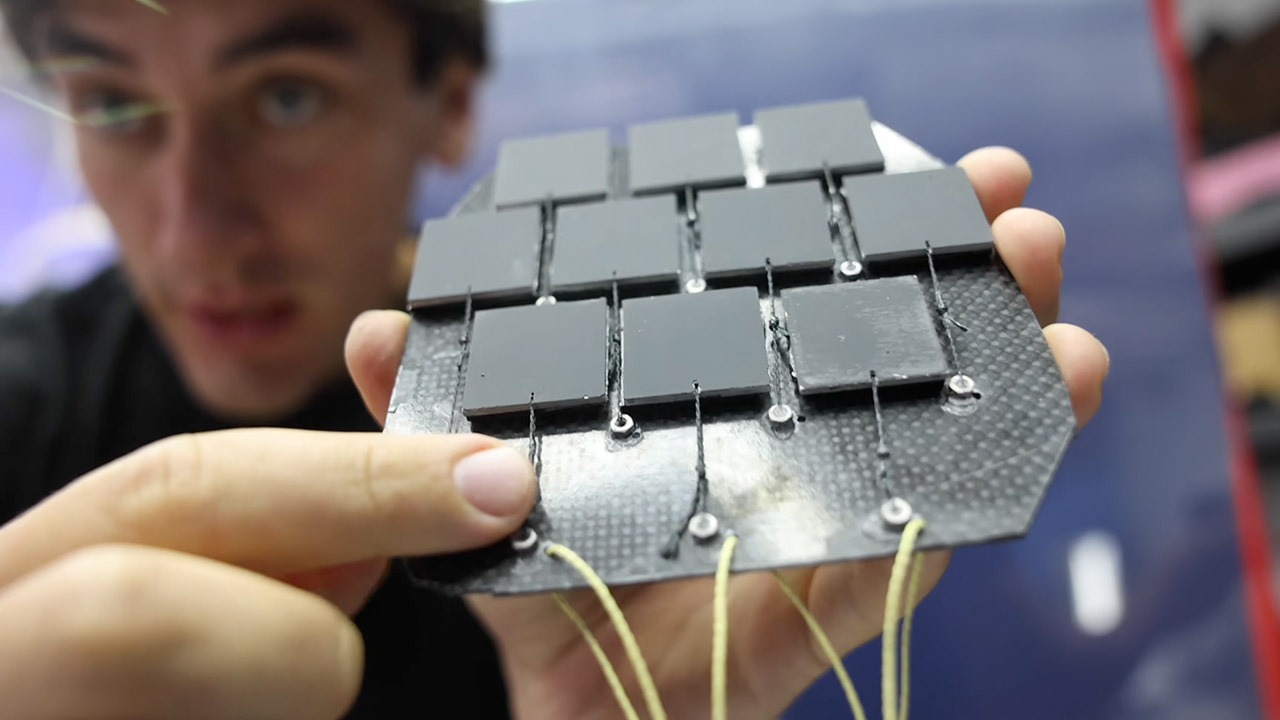
The foam behind the tiles allows each one to move slightly independently. Then there are extremely elastic nitinol wires, a unique form of nickel-titanium alloy that provides a consistent pull even when bent. These wires connect the tiles, distributing the weight rather of focusing on a single location. The wires are then bundled together using carbon fiber. Kevlar cables flowing from the pads into stirrups effectively convert your body weight into a sideways pull over the glass.
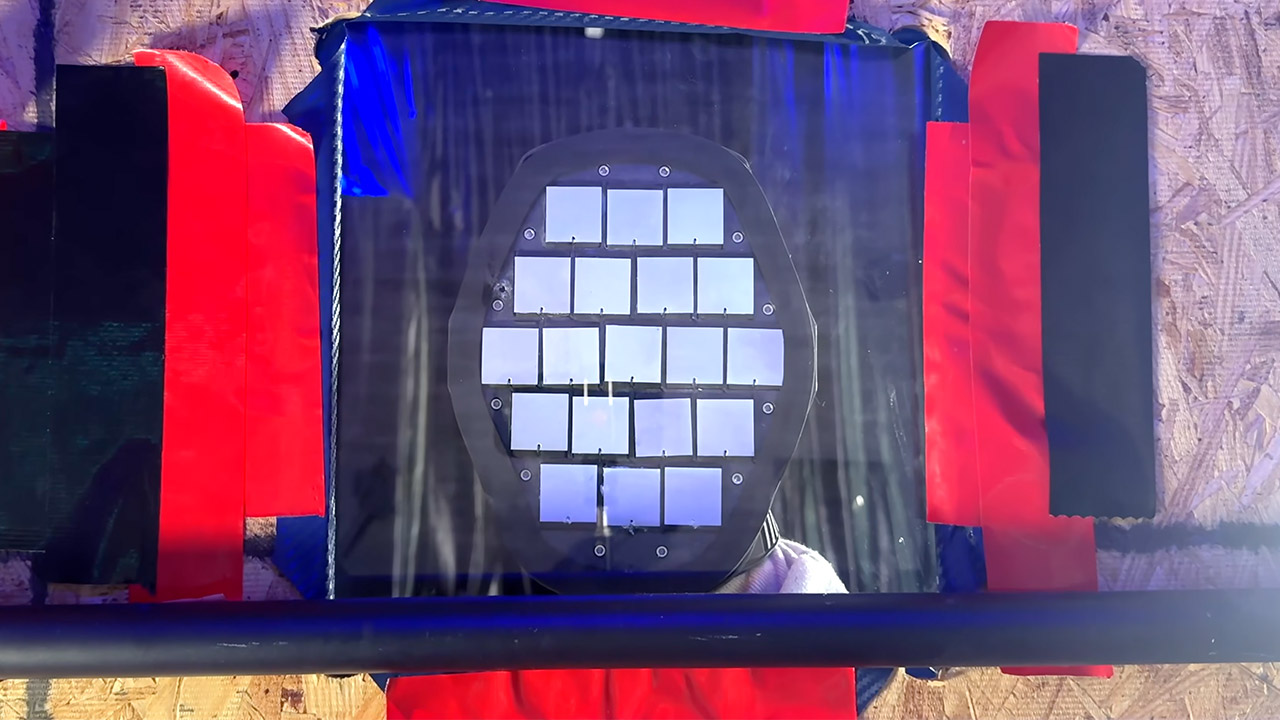
The edges feature perforated micro-suction on them, which prevents the pad from slipping left and right. Plus, applying pressure causes the polymer wedges to flatten down even more, increasing the contact area. Try lifting a corner, and the connection will break smoothly. Finally, he was able to hang from the object with just one hand. On a residential glass tower, with stunt performer Scott Leva on the safety lines, he climbed more than 40 feet. He later took the pads to Tom Holland and the Spider-Man cast and showed them sticking, popping free, and carrying him up the wall.
[Source]