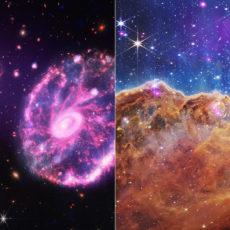

NASA’s James Webb Space Telescope has observed the Pillars of Creation like never before, and then this cosmic eye formed by streaks of gas and dust in nearby galaxies. The researchers are currently studying a diverse sample of 19 spiral galaxies, and in Webb’s first few months of science operations, they include these five targets: M74, NGC 7496, IC 5332, NGC 1365, and NGC 1433.

These images were captured using Webb’s Mid-Infrared Instrument (MIRI) and reveal the presence of a network of highly structured features within these galaxies. The glowing cavities of dust and huge cavernous bubbles of gas that line the spiral arms to regions that appear to be built from both individual as well as overlapping shells and bubbles where young stars are releasing energy.

- BRIGHT, SHARP VIEWS ANYWHERE: Unlike many beginner telescopes, this quality refractor features fully coated glass lenses and a 70mm aperture for...
- PERFECT FIRST TELESCOPE FOR BEGINNERS: Designed for adults and kids to enjoy together, this beginner-friendly telescope sets up in minutes and...
- EASY NO-TOOL SETUP: No complicated assembly or tools needed. The full-height tripod and telescope tube set up in seconds and pack neatly into the...

Thanks to the telescope’s resolution, for the first time we can conduct a complete census of star formation, and take inventories of the interstellar medium bubble structures in nearby galaxies beyond the Local Group. That census will help us understand how star formation and its feedback imprint themselves on the interstellar medium, then give rise to the next generation of stars, or how it actually impedes the next generation of stars from being formed,” said Janice Lee, Gemini Observatory chief scientist at the National Science Foundation’s NOIRLab.