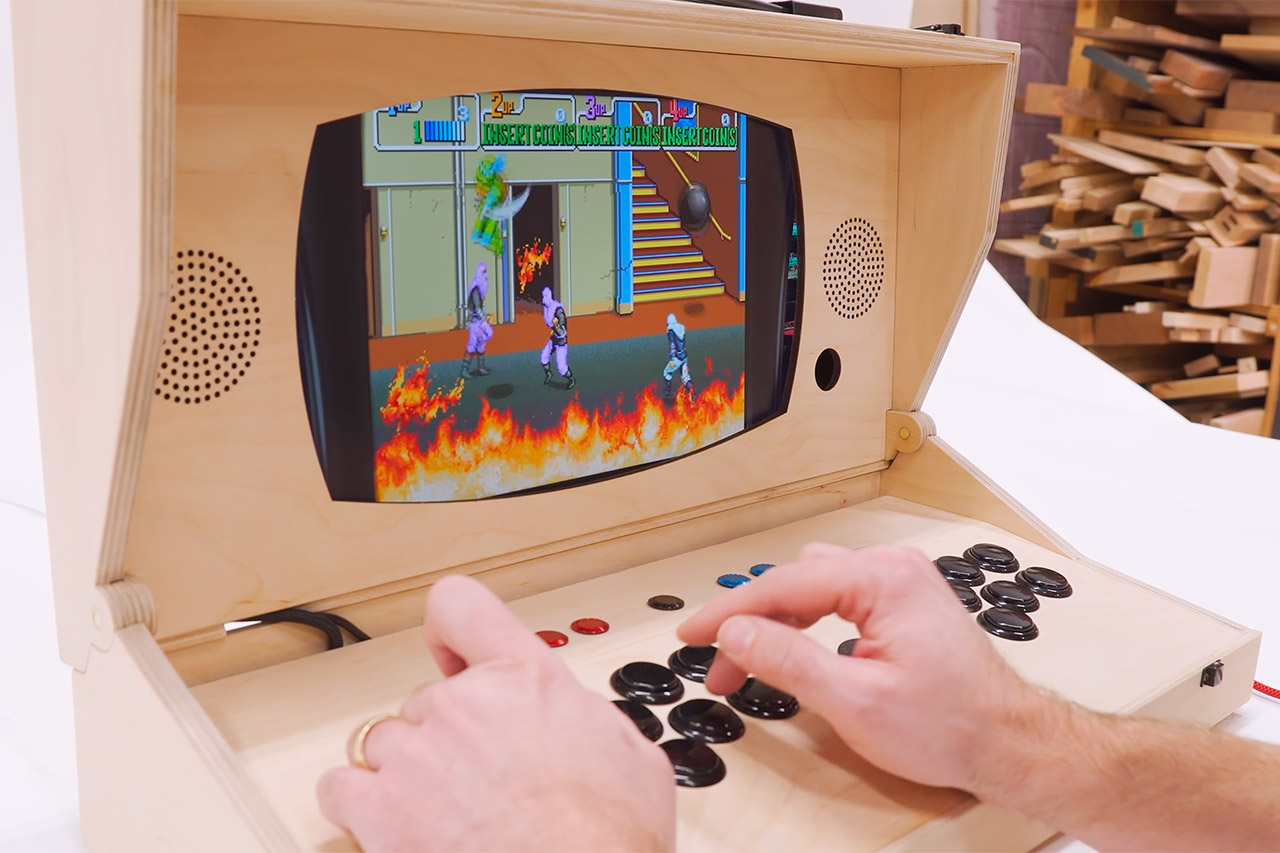
Michael Alm is no stranger to building furniture and shop tools that feel both useful and carefully made. For this project he turned that same approach toward something smaller and more playful: a portable arcade that folds shut like a suitcase and can travel to a friend’s house or a weekend trip. The finished piece is compact enough to carry by a strap handle, yet it opens to reveal a 15.6-inch screen, real Sanwa controls, and a full set of classic games ready to play.
He started with what appeared to be an old-fashioned travel case, a sturdy bag that you could close and grab. The main body panels are made out of laser-cut plywood and some thicker pieces were added to ensure that the controls stayed solid even when whaling away at a high-scoring combo. The hinges are a smart tiny piece of brass tubing that allows the lid to swing open and close effortlessly, and stay that way. In addition, it has a toggle latch and a snap-in handle so it can be carried around without components rattling around inside like a loose-jointed clown vehicle.

- BUILDABLE ARCADE CABINET – Relive the fun of playing an iconic arcade game with the LEGO Donkey Kong Arcade (72051) building set for adults ages...
- AUTHENTIC ARCADE GAME DETAILS – Create a Donkey Kong arcade level featuring Jumpman, Donkey Kong and Lady, including iconic details like the...
- WORKING JUMP AND DODGE PLAY – Pull the lever on the left side of the base to release one barrel at a time, then move Jumpman with the joystick and...
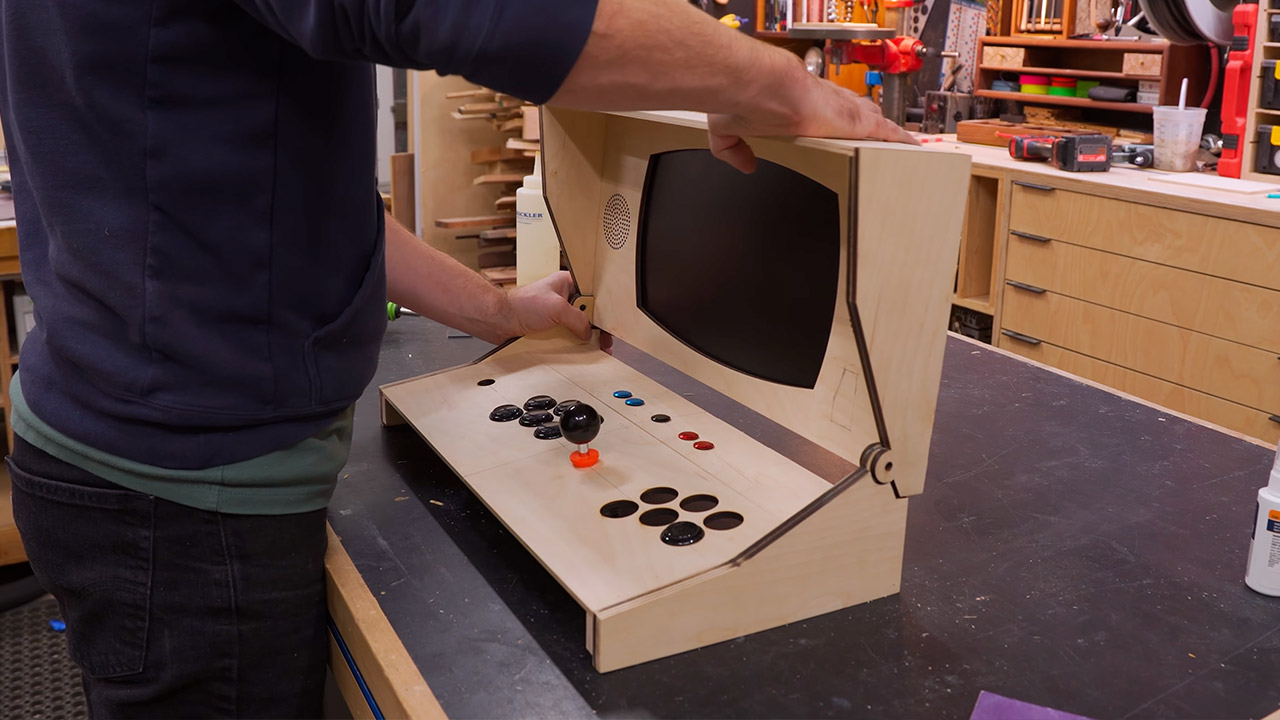
Inside, the layout is designed to allow two players to duke it out without feeling crowded. A lower shelf for the main joysticks and buttons, six buttons in a normal fighter arrangement, is ideal, while the menu controls are located on a raised portion of the panel. It’s all at a comfortable 7.5-degree tilt, so your hands will naturally fall into place. At the center of it all is a Raspberry Pi 3 B+ running Batocera, which allows the screen and controls to operate seamlessly together, as well as a short HDMI cable, I-PAC interface, and everything else. The speakers are concealed inside, and the electronics are protected from overheating by inconspicuous vents. Furthermore, the screen frame can be yanked right out if things become stuck.
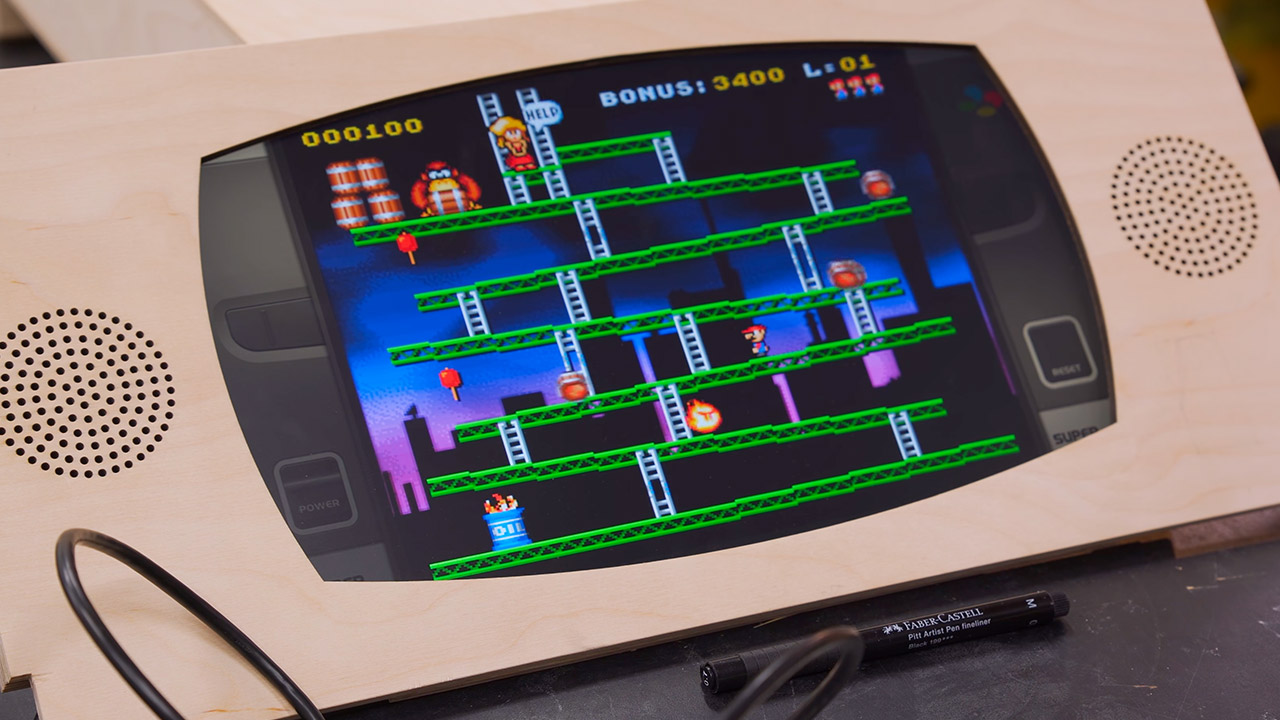
When the wiring was completed and the operating system up and running, the first few tests were straightforward: Donkey Kong, some other old favorites, and a fast check to ensure that all of the controls functioned properly. Early software issues on the controller board revealed their secrets with a few of button combinations, and after that, everything operated like clockwork. This gadget is a true workhorse; it’s compact when stored yet unfolds into a ready-to-play game station in about 2 seconds.
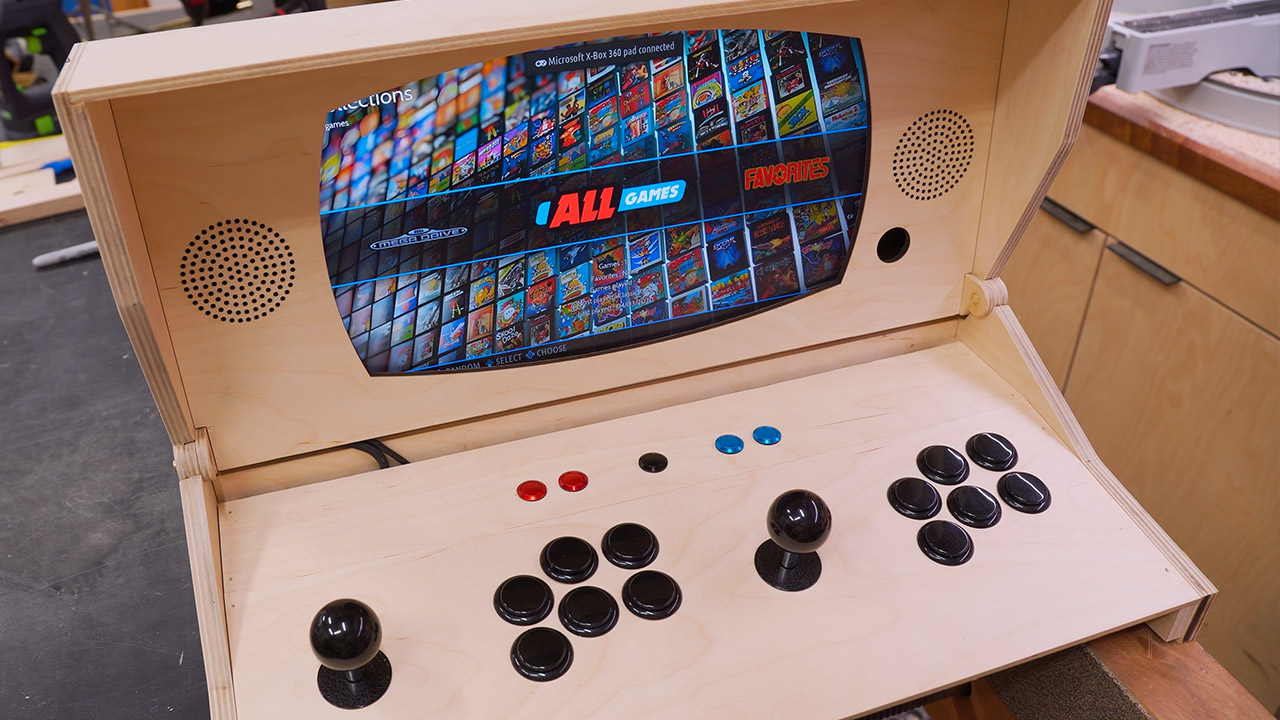
Alm had already mentioned that this is a functioning prototype that still has potential for development. Walnut panels, additional brass work, lathe-turned handles, and the like. For the time being, however, this build serves as a self-contained arcade that you can pack away when you’re short on room and bring out when you need some more retro gaming excitement. If you’re handy, build plans are accessible for anyone who wants to make one for themselves.