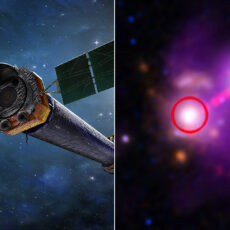
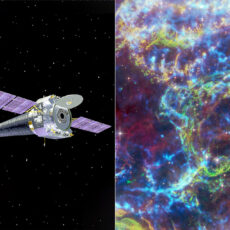
NASA’s Chandra X-ray Observatory has identified a supermassive black hole tearing apart one star and then using its stellar wreckage to destroy another star or smaller black hole.
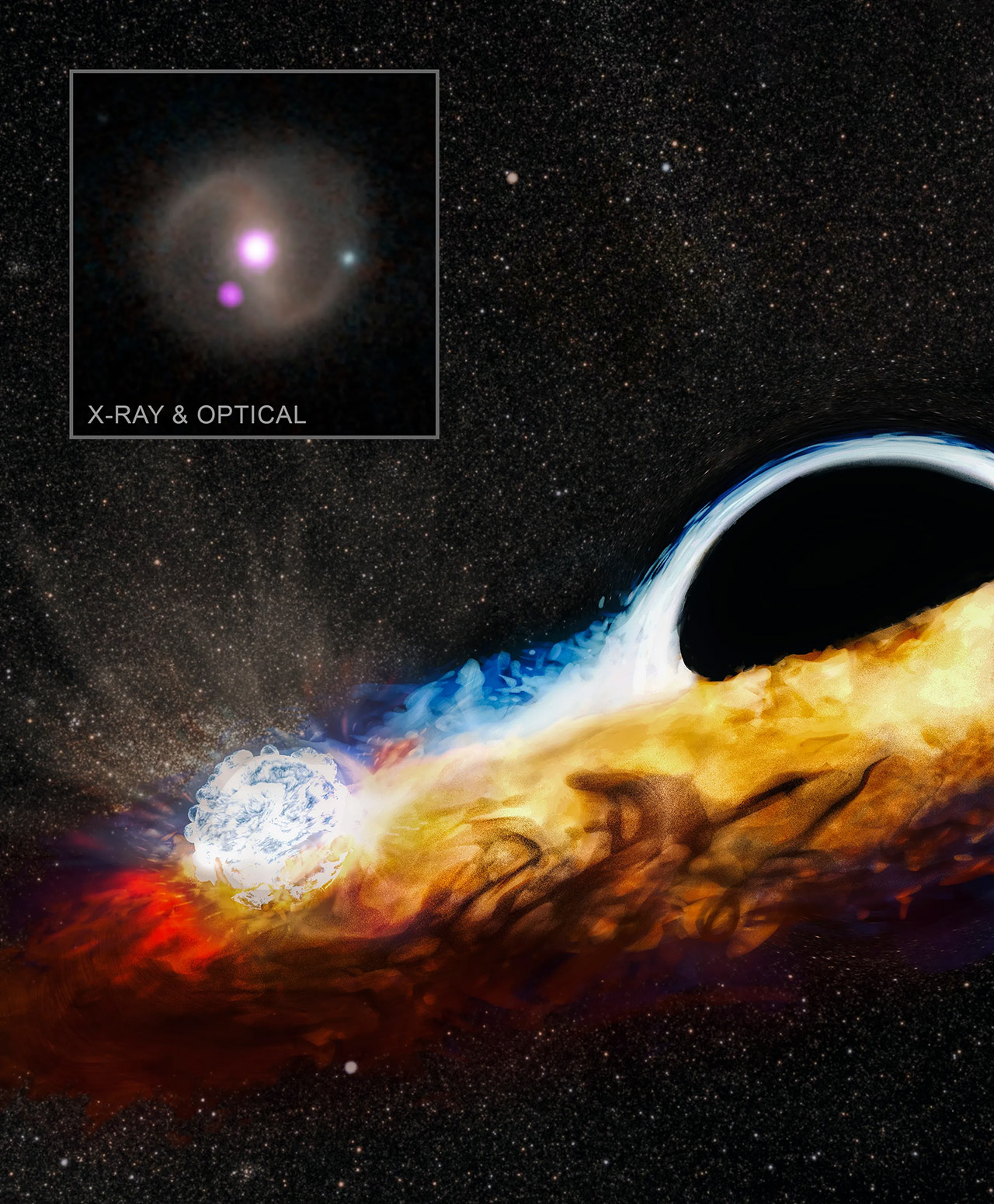
We can see the disk of material (red, orange, and yellow) that was created after a supermassive black hole tore apart a star through intense tidal forces, but over the course of a few years, this disk expanded outward until it intersected with another object. This could either be a star or a small black hole also orbiting around the giant black hole. Each time this object collides with the disk, it sends out a burst of X-rays detected by Chandra.

- Feed a passion for science and technology – Kids can learn more about the challenges of space exploration with this LEGO Technic NASA Mars Rover...
- Conduct a test flight – This advanced building kit for kids ages 10 and up includes a buildable toy version of NASA’s Ingenuity helicopter, which...
- AR brings the mission to life – The accompanying augmented reality app experience lets kids dive into the details of the rover and its mission
This latest study gives scientists evidence that TDEs and QPEs are likely connected. The researchers think that QPEs arise when an object smashes into the disk left behind after the TDE. While there may be other explanations, the authors of the study propose this is the source of at least some QPEs,” said Lee Mohon, NASA Web Editor.