
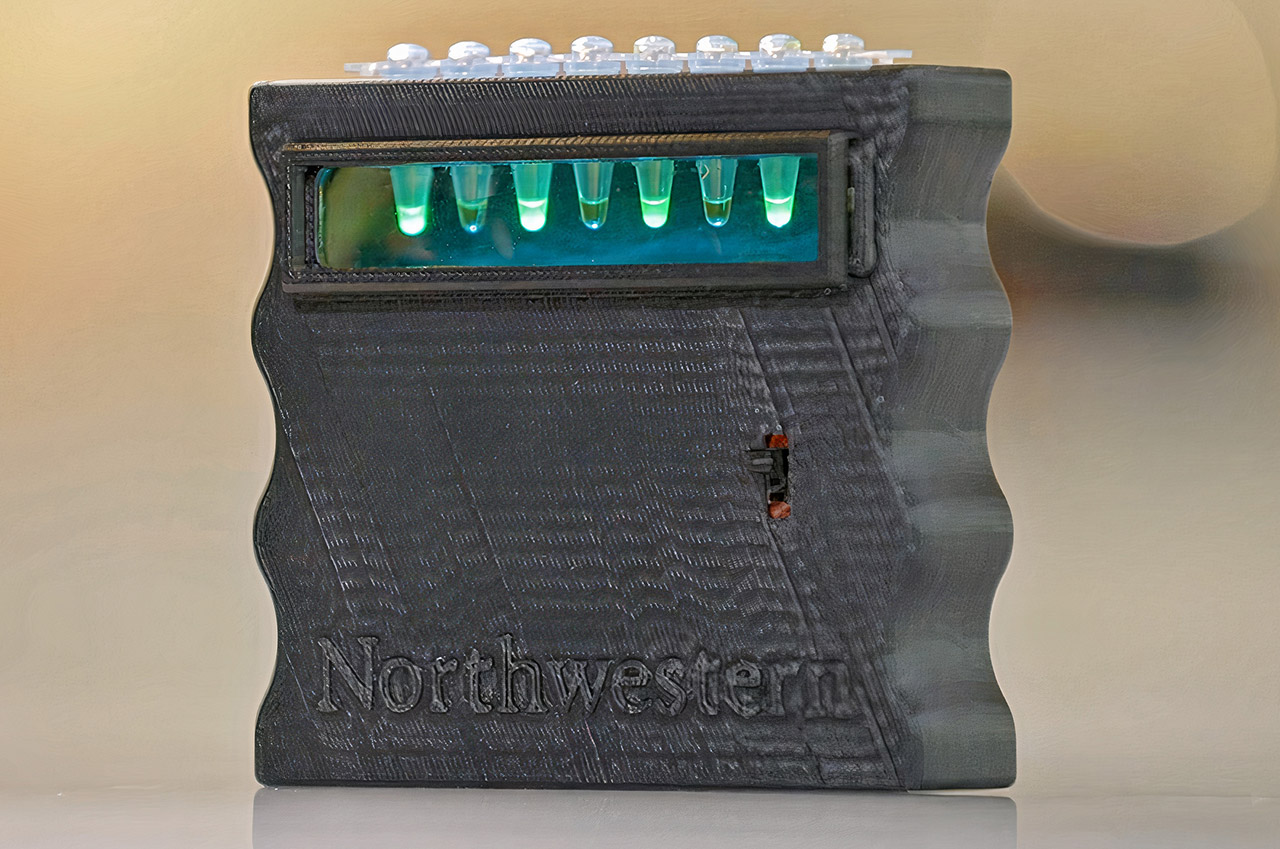

Synthetic biologists from Northwestern University have developed a low-cost, easy-to-use DNA computer of sorts. This hand-held device lets users know if their water is safe to drink in minutes by using powerful and programmable genetic networks, which mimic electronic circuits, to perform a range of logic functions. Among its DNA-based circuits, the researchers managed to engineer cell-free molecules into an analog-to-digital converter (ADC), a universal circuit type found in almost all electronic devices.
This handheld computer is equipped with a series of eight small test tubes, which glow green when it detects a contaminant. The number of tubes that actually glow depend on how much contamination is present, so for example, if only one tube glows, then the water sample has a trace level of contamination. However, if every single one of the tubes glow, then the water is severely contaminated.

- Featuring a fully automatic one-click leveling system, this cutting-edge printer eliminates the need for manual calibration of the Z-axis, ensuring a...
- With a Core XY structure enabling speeds of up to Max 600mm/s and rapid acceleration of up to 20000 mm/s², this printer excels in efficiency and...
- Experience rapid nozzle changes in just 3 seconds with this high-performance 3D printer featuring a high-flow 32mm³/s nozzle for stable high-speed...

We programmed each tube to have a different threshold for contaminations. The tube with the lowest threshold will light up all the time. If all the tubes light up, then there is a big problem. Building circuits and programmable DNA computing opens up many possibilities for other types of smart diagnostics,” said Julius B. Lucks, McCormick School of Engineering lead researcher on the study.
