Boeing’s 777X jetliner took to the skies this past weekend in front of thousands at Paine Field in Everett, Washington, at 10:09 a.m. local time for a successful three hour, 51 minute flight over Washington state before landing at Seattle’s Boeing Field. This new widebody aircraft will deliver 10 percent lower fuel use and emissions and 10 percent lower operating costs than the competition through advanced aerodynamics, thanks to the latest generation carbon-fiber composite wing and the most advanced commercial engine ever built, GE Aviation’s GE9X.

One character you probably wouldn’t expect to see aboard Boeing’s CST-100 Starliner spacecraft is Snoopy, but NASA released a new video today showing just that. This footage was recorded aboard the Starliner’s first Orbital Flight Test (OFT), and despite the December mission not going as planned — a timer error caused the capsule to not dock with the International Space Station — it did successfully achieve a shortened, two-day flight that completed most of Boeing’s major goals. Read more for the video and additional information.

Boeing’s CST-100 Starliner capsule, which will eventually be used to transport astronauts into space, completed a key pad abort test on Monday when it soared for almost a mile before parachuting back into the New Mexico desert. There were no astronauts were onboard, but the abort system will provide a quick escape for three astronauts if there’s an emergency on the Florida pad or in flight. Read more for a video and additional information.

Boeing announced today that it has teamed up with Porsche to develop a flying electric car. They are researching the market for “premium urban air mobility” and plan to design a vehicle using technology from Boeing’s Aurora Flight Sciences division capable of operating from helipad-type ports. There’s no timeline for a possible production vehicle launch, but Porsche Consulting said that this type of transportation is expected to “pick up speed” as soon as 2025.

Boeing has won a $43-million contract with the U.S. Navy to build four Orca Extra-Large Unmanned Undersea Vehicles (XLUUV). These autonomous robotic submarines are based on the Echo Voyager, but “will be modular in construction with the core vehicle providing guidance and control, navigation, autonomy, situational awareness, core communications, power distribution, energy and power, propulsion and maneuvering, and mission sensors,” the Pentagon announcement said.

We have seen the future of fighter jets, and they feature autonomous technology. This aircraft does not require a human pilot, can fly for extended periods, withstand higher g-force and process more data. “The Boeing Airpower Teaming System will provide a disruptive advantage for allied forces’ manned / unmanned missions. With its ability to reconfigure quickly and perform different types of missions in tandem with other aircraft, our newest addition to Boeing’s portfolio will truly be a force multiplier as it protects and projects air power,” said Kristin Robertson, vice president and general manager of Boeing Autonomous Systems.

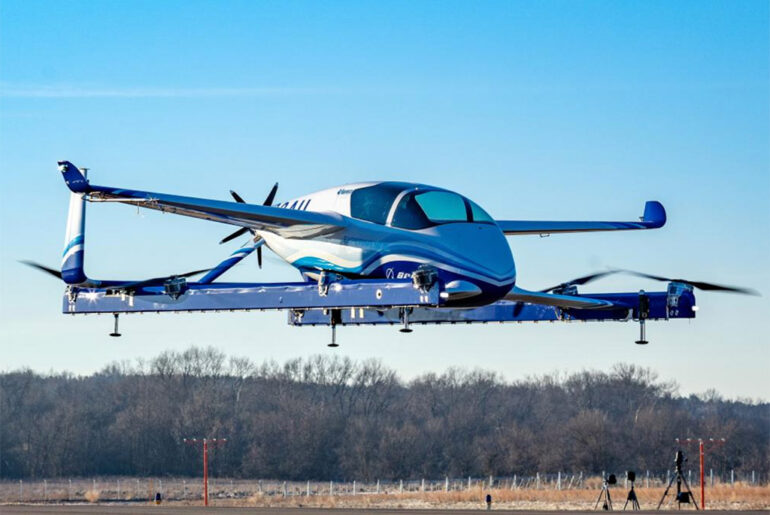
Boeing aims to take on rival Airbus SE and numerous other companies developing small self-flying vehicles capable of vertical takeoff and landing with their own autonomous Passenger Air Vehicle (PAV). Measuring 30-feett-long, this aircraft is part helicopter, part drone and part fixed-wing plane. It successfully lifted a few feet off the ground and made a soft landing after going airborne on Tuesday at an airport in Manassas, Virginia.