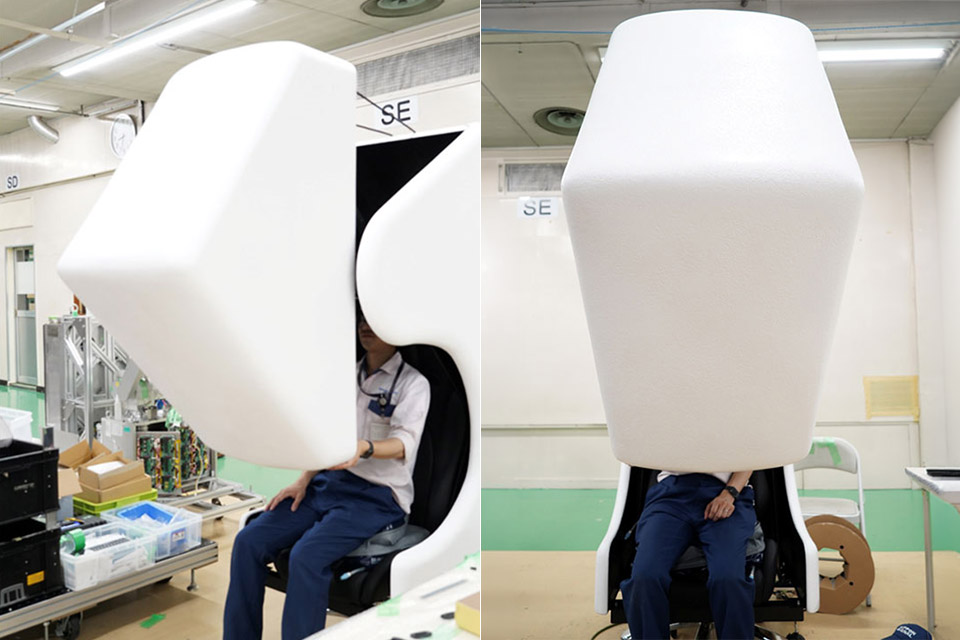
Spending a full day inside a virtual world sounds simple until the hardware starts pressing on your face. Associate Professor Shogo Fukushima at Kyushu University heard that complaint from a student who wanted longer sessions and kept running into the weight of a headset on the head and neck. Fukushima already knew the feeling. Some days he spends more time in virtual scenes than outside them, and he has tried to sleep in one, only to find the goggles made rest nearly impossible. That friction led to a paper at SIGGRAPH Emerging Technologies in 2026, titled Mountless Aerial HMDs, which moves the entire optical assembly off the face and onto a chair.
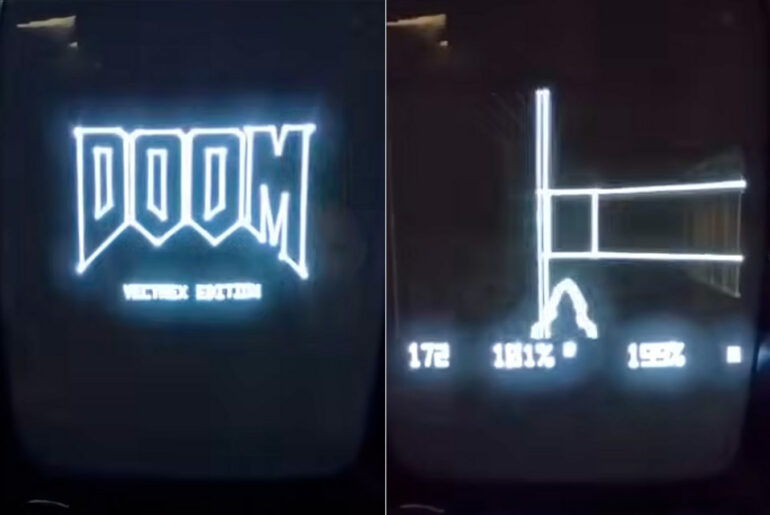
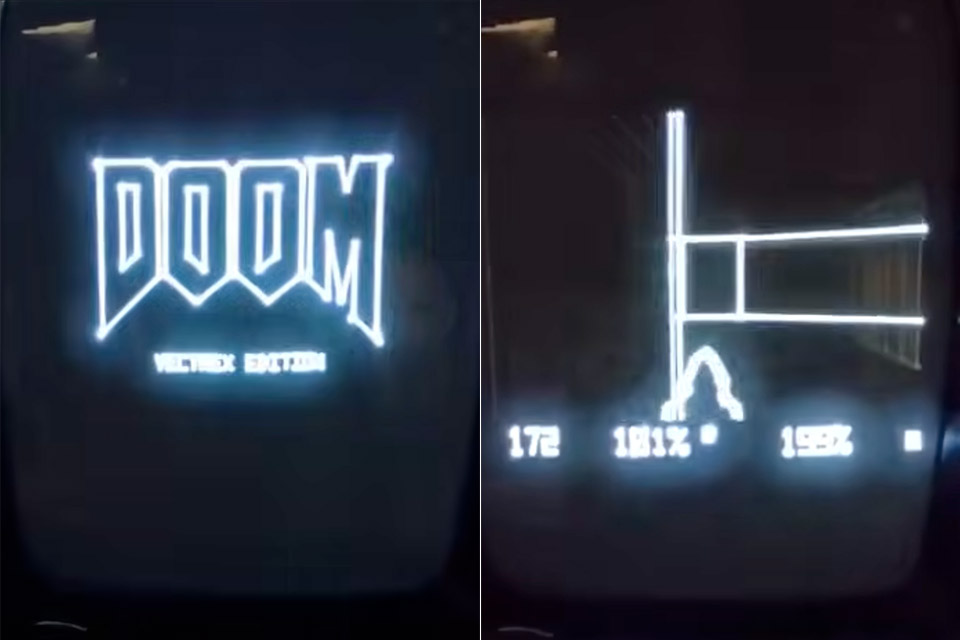
Milton Bradley shipped the Vectrex in 1982 as a complete arcade cabinet small enough for a coffee table. A screen, a speaker, a joystick, and a cartridge slot arrived in one case. Games showed up as bright strokes rather than blocks of color. Mine Storm, the pack-in, looked related to Asteroids because both were drawn the same way: an electron beam steered across phosphor, switched on for a line, switched off for the jump to the next point. Forty-four years later, footage of DOOM running on that same tube has been passing around, and the corridors of the first episode are still recognizable once the walls become thin glowing strokes.

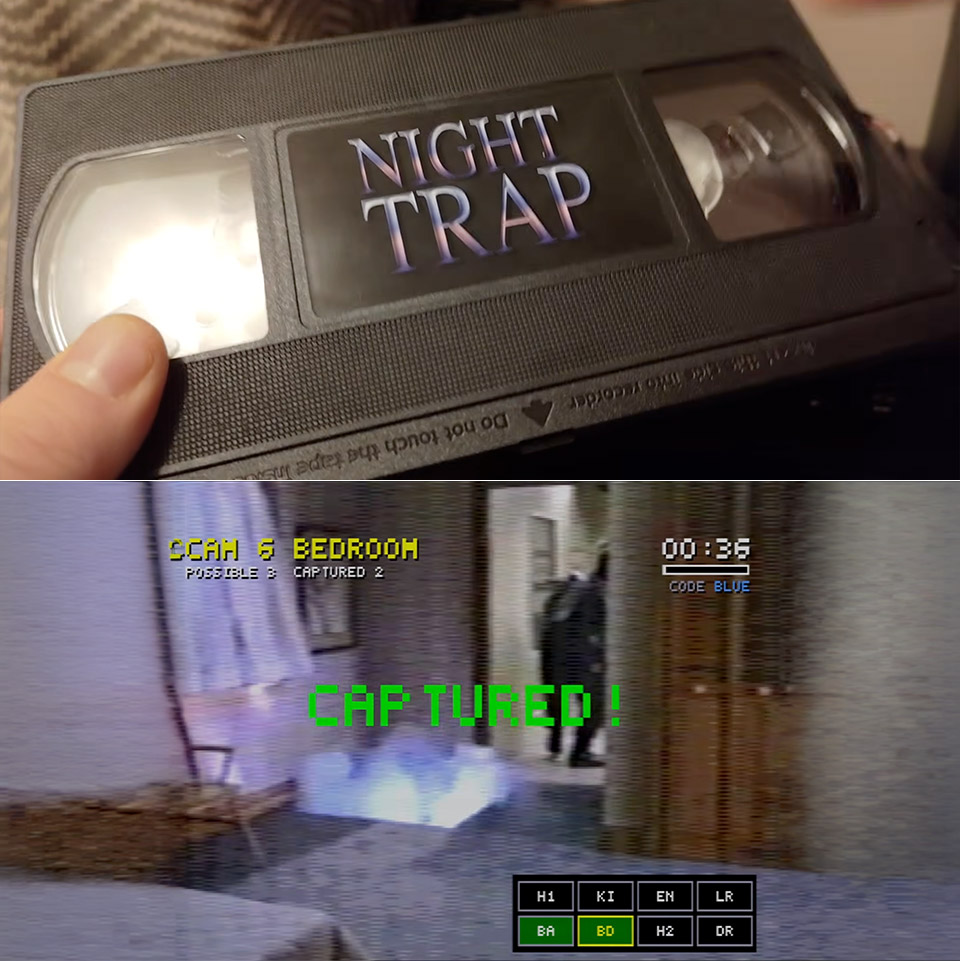
Throaty Mumbo already spent an hour proving a vinyl record can cough up a SEGA game if you are patient enough and a little mean to the format. His follow-up, posted as Can We Port Video Games to VHS?, asks the meaner question. A cassette is linear. A videotape is also linear, except it also carries a moving picture, two audio tracks, and a deck that can be told to wind forward or back. GCVHS is his attempt to turn that mess into a console.

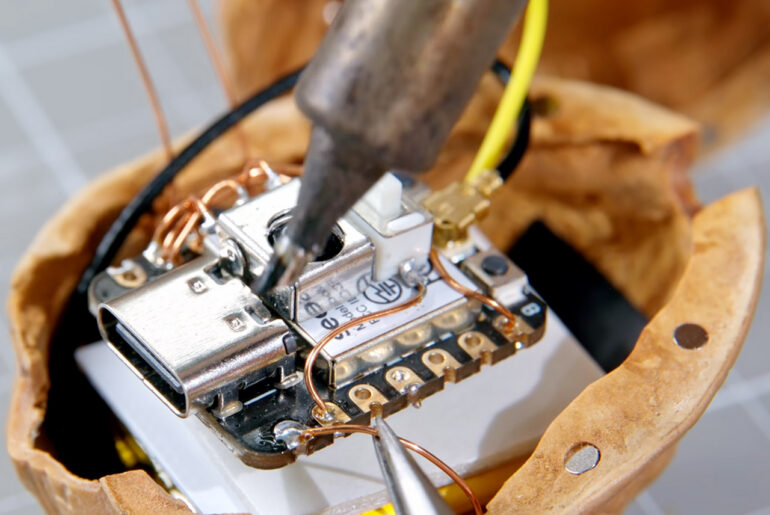
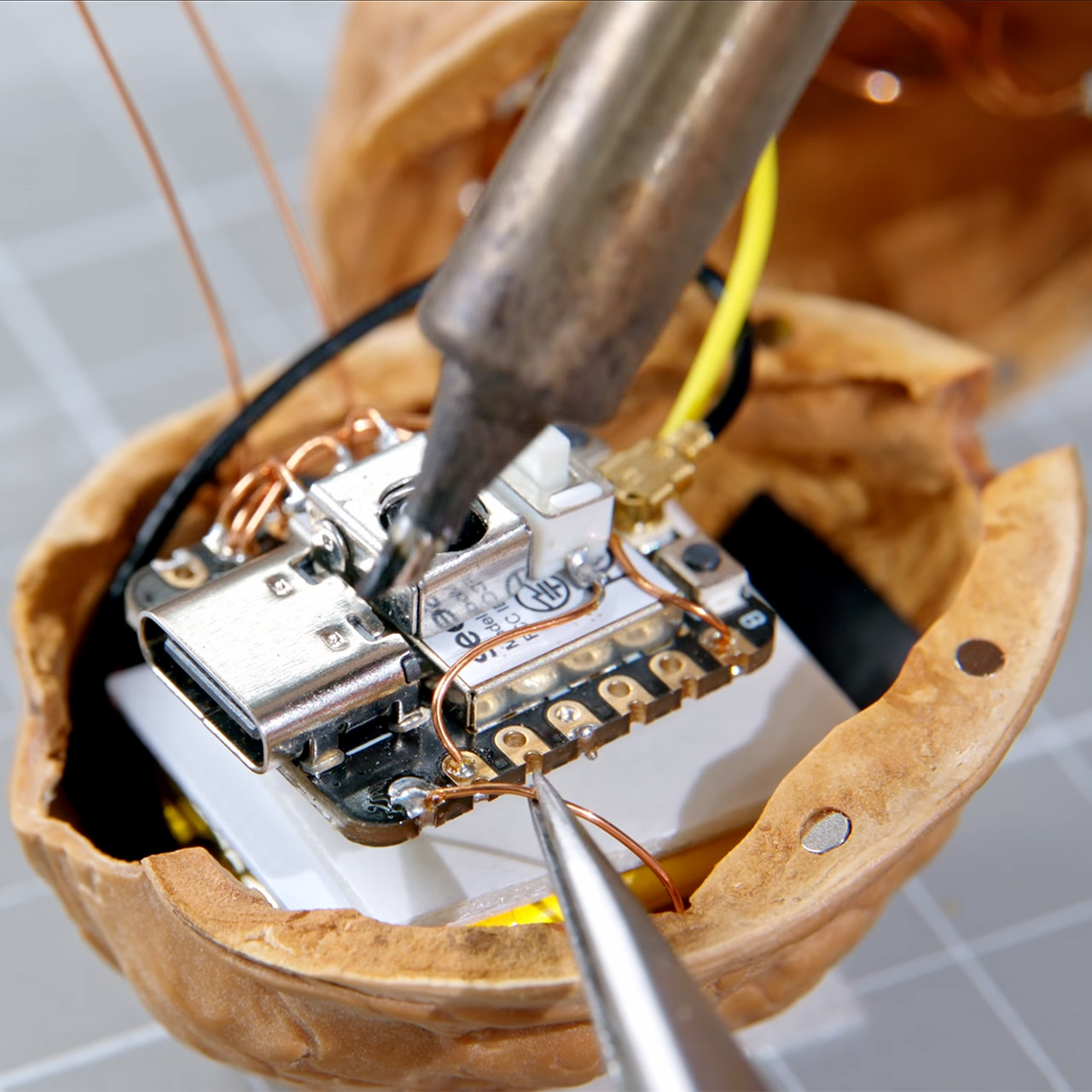
Most snack bowls never see this kind of afterlife. Maker JSK-koubou split a walnut along its natural seam, finished the meat, and then spent at least a few hours of careful shop work turning the empty halves into a living room remote that talks to air conditioners, TVs, lights, and fans.

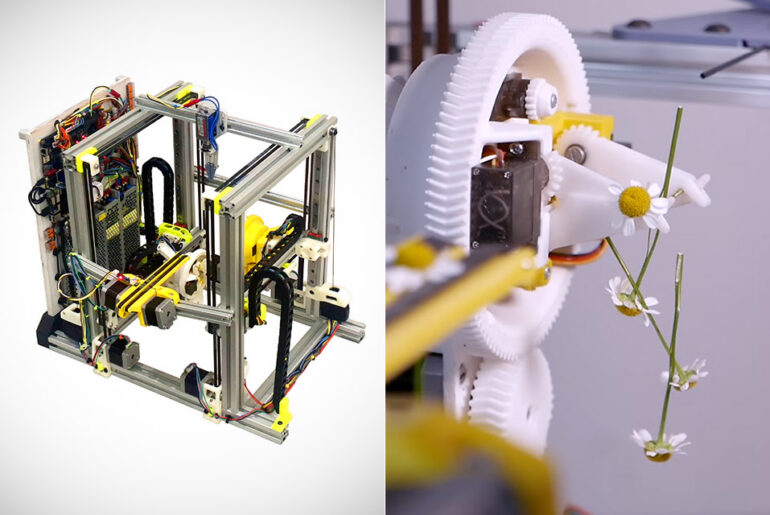
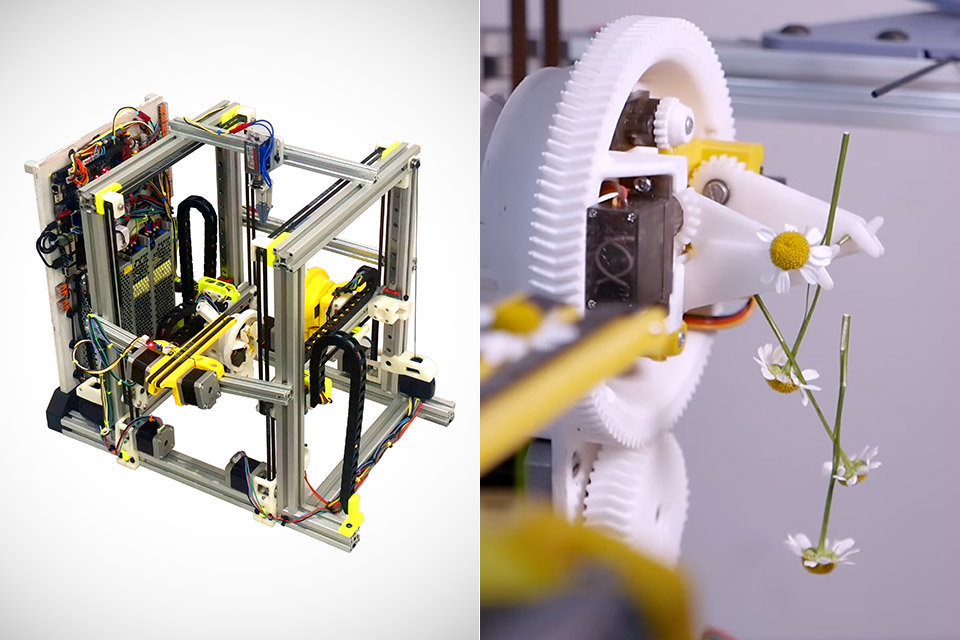
Jude Robinson built Daisy as his final year mechatronics project at the University of Glasgow, finished with first class honors, and took the IET prize for the best manufacturing project on campus. Two upright gantries face each other across a short workspace. Each carries a four joint gripper whose V shaped fingers close on a daisy stem and center it whether the stem is thick or thin.

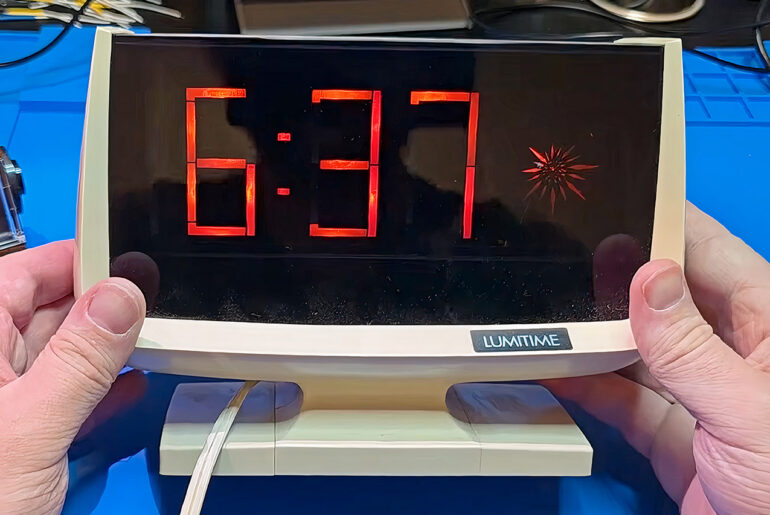
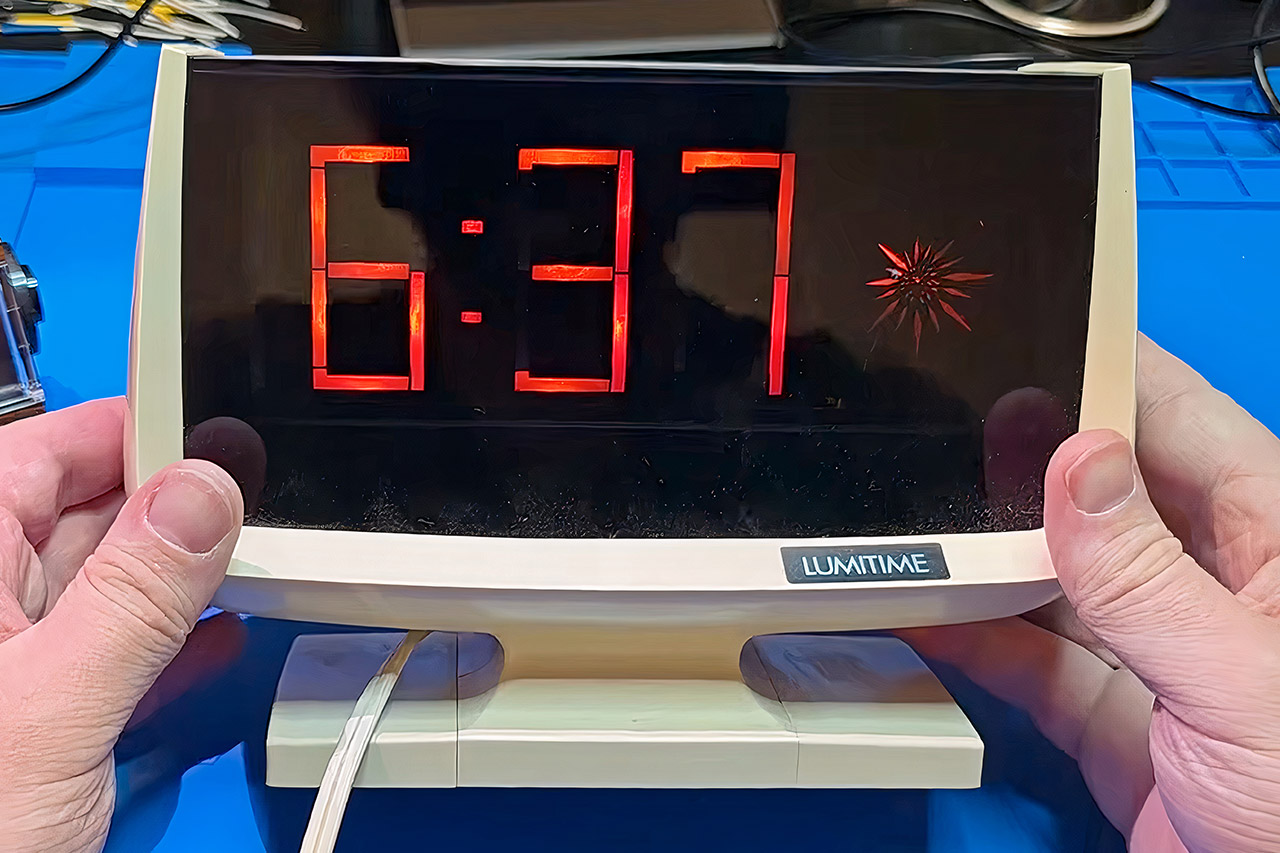
Japanese company Tamura Electric sold the Lumitime as a stylish desk or wall clock throughout the mid to late 1970s, giving buyers the futuristic look of digital numerals when affordable LED and LCD panels were still dim, tiny, or simply not ready for living rooms. Mark Furneaux opened one of these machines and found no counters, no decoder chips, and no real-time clock module. A synchronous motor tied directly to the 60 hertz household line supplies both power and timing, spinning at a fixed rate so the clock stays accurate as long as the grid stays stable.

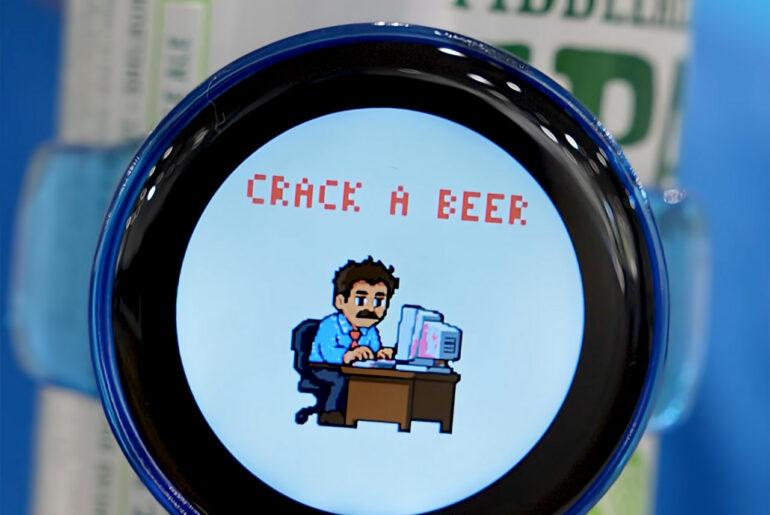
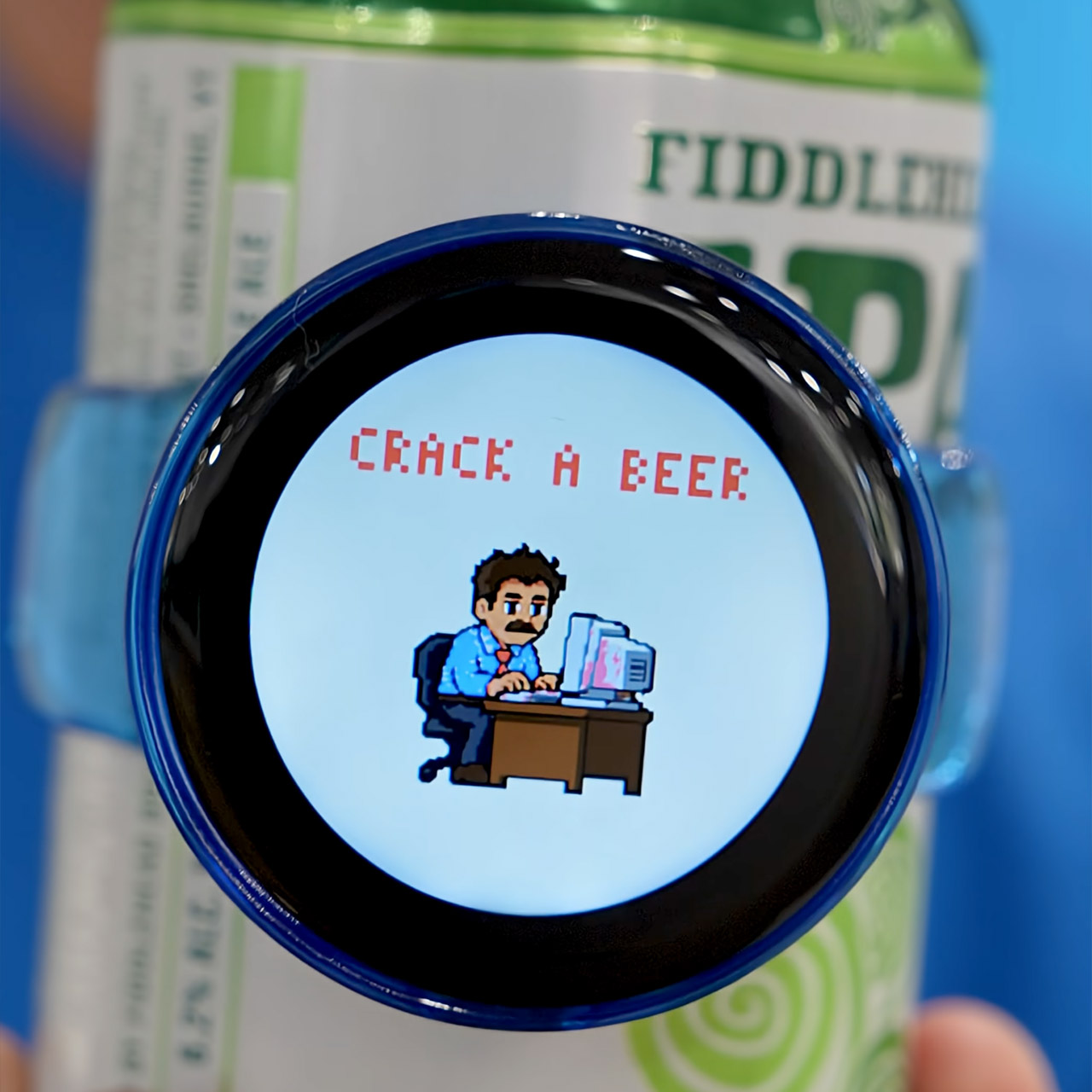
Matty Benedetto of Unnecessary Inventions just found a new way to turn a quiet night with a cold can into something that stares back at you. Out of his Burlington, Vermont studio he just finished invention number 469, a little digital pet he calls the Buzz Buddy that perches on top of any standard beer can and matches you drink for drink. The unit is a compact, egg-shaped screen housing with a pixel character already seated at a tiny desk, waiting. Once you crack the tab the figure stays put until the first tilt.

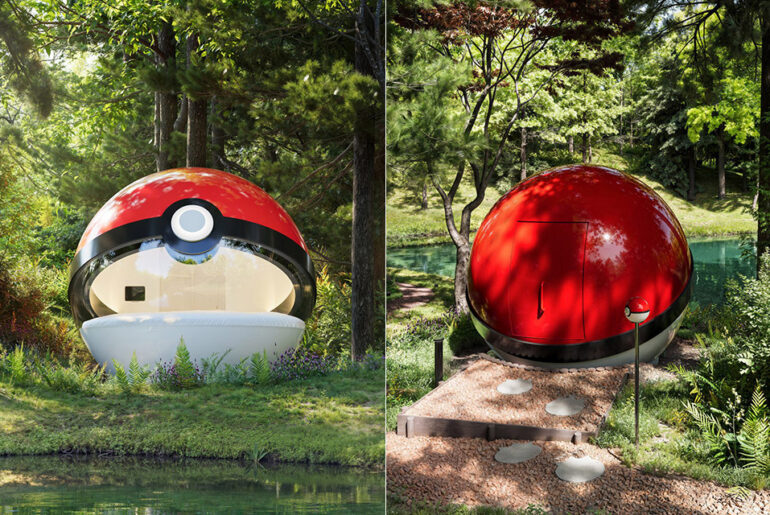
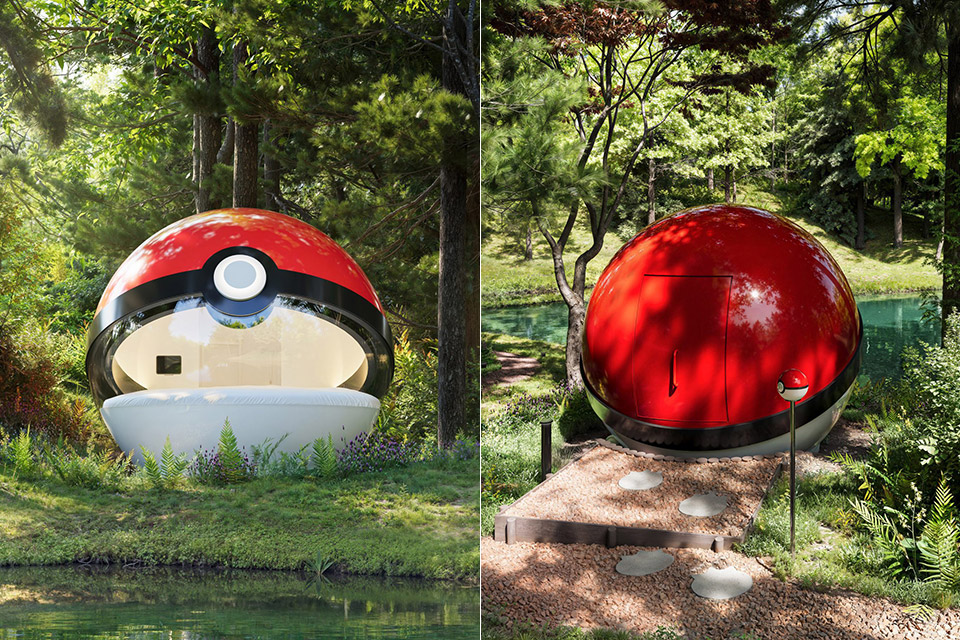
NOT A HOTEL and Pokémon Sleep have set a glossy red and white sphere on a wooded lakeshore in Tomakomai, Hokkaido, about an hour south of Sapporo, and opened it for a short run of overnight stays. The guest room is a three meter sphere, close to ten feet across, formed from two molded acrylic hemispheres so the finished object reads as a life size Poké Ball sitting among trees with lake water just beyond the glass. Promotional nights run in brief windows from October 8 through 18, 2026, timed to the franchise’s 30th year and the third anniversary of the Pokémon Sleep app.

Former NASA engineer Mark Rober filled his CrunchLabs warehouse with blackjack, poker, craps, and a roulette wheel, then invited a room of makers and YouTube builders to play for $10,000 destined for charity. Cheating was allowed. Getting caught was not. If a device showed up on camera or in a pit boss’s hand, it left the floor and the owner had to play straight. Whoever held the most chips at the end of the night took the cash. He called the event Last Cheater Standing, and he staffed it like a real floor: Science Bob as pit boss, a security lead named Bam, and 62 cameras running computer vision over every table.

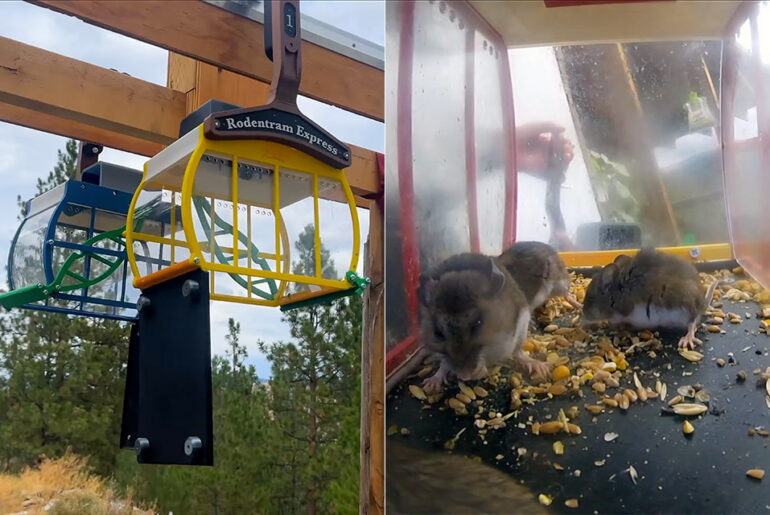
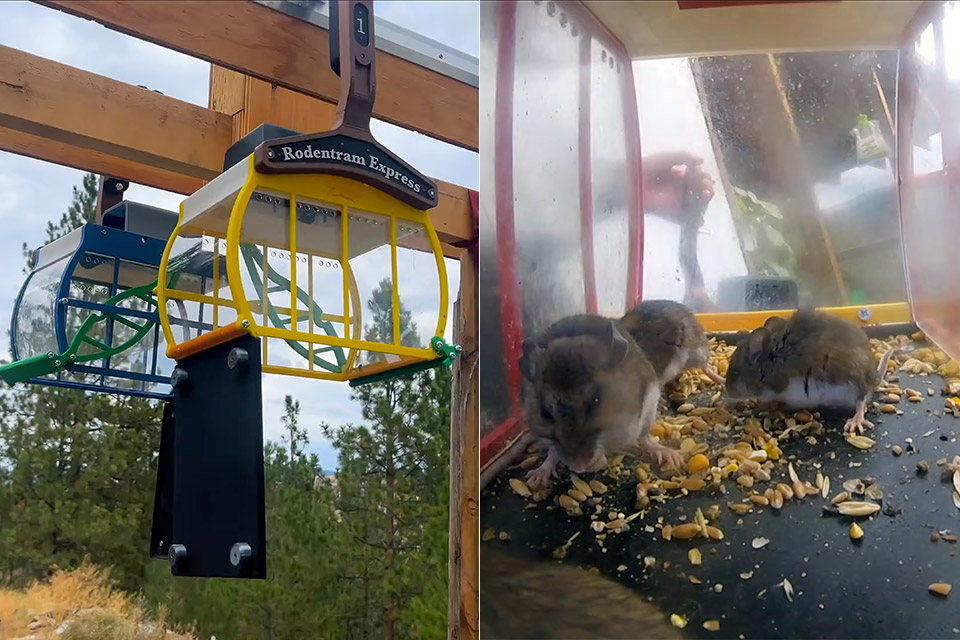
Super Valid Designs spent two months on a ski lift because mice had moved into the chicken coop and ordinary traps only opened a revolving door. Catch one batch and another arrives. Live relocation felt like a better bet than a pile of snap traps, so the plan became a pair of jobs in one machine: baited gondolas that work as traps, then a cable line that carries those cars 250 feet down a hill and dumps the passengers into brush without anyone walking the route every night.