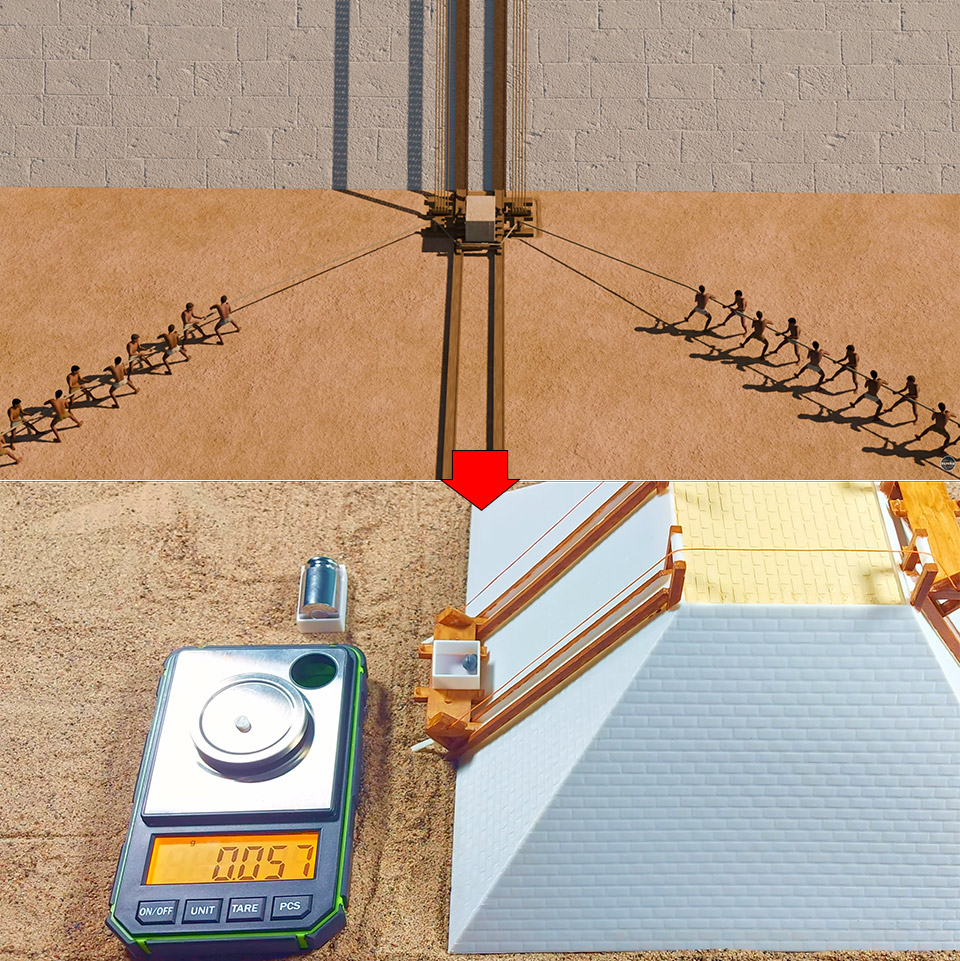
Eureka effect spent time turning a contested idea into a working miniature after online comments dismissed it as impossible. The theory replaces the usual giant ramps with a human counterweight elevator mounted on the pyramid face itself.
Wooden tracks go along the slope, and sliding platforms sit on them. Long ropes connect a platform holding a stone block to another platform holding a counterweight on the opposite side. Fixed wooden posts serve as basic rope redirectors, with no spinning or axles appearing. Workers, sandbags, or water containers form the descending mass that draws the stone upward.
Sale

Bambu Lab A1 mini 3D Printer + LED Lamp Kit, Ready-to-Use for Beginners | Beginner-Friendly Ecosystem...
- A1 mini + LED Lamp Kit for Creative Light Projects: Bring your ideas to life with the included LED Lamp Kit. Simply print compatible lamp models and...
- The Perfect 3D Printer for Beginners: A1 mini 3D Printer is designed to make 3D printing easy from day one with automatic calibration, simple setup...
- Experience the Bambu Lab Ecosystem: Access MakerWorld’s huge library of ready-to-print models, manage prints through the Bambu Handy app, and enjoy...
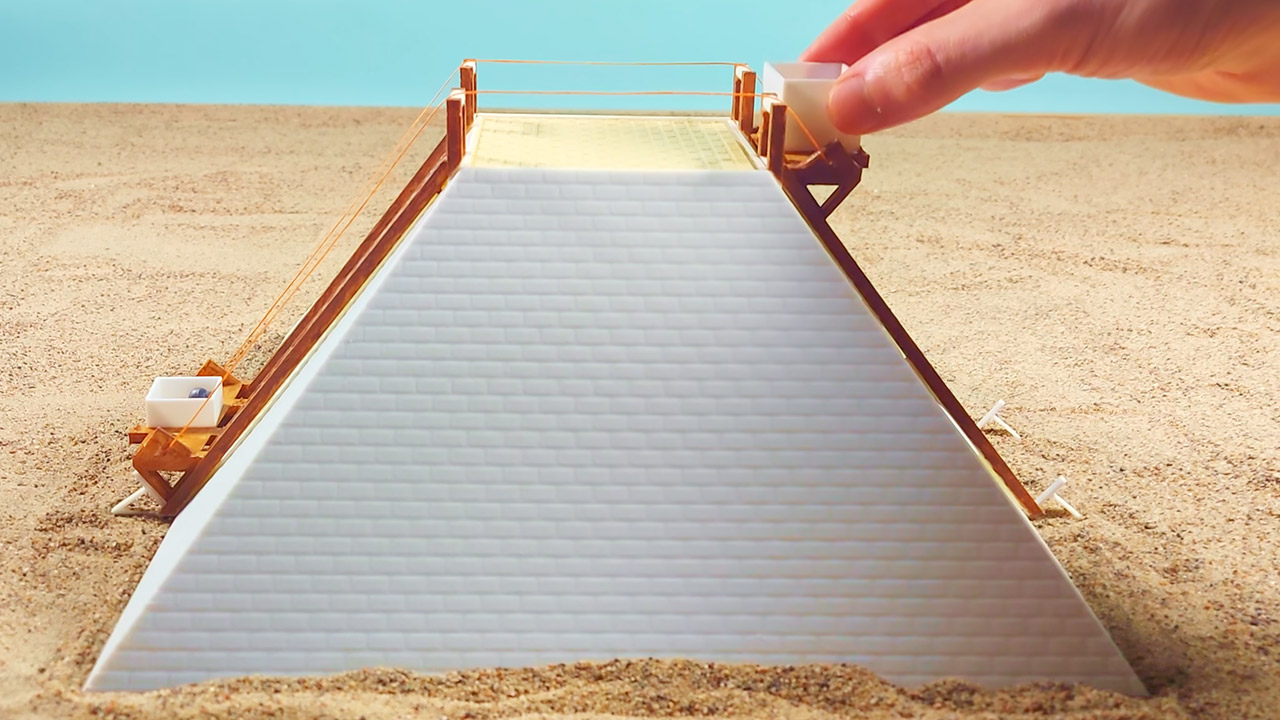
A one-million-to-one scale test model was constructed using a 3D printer. Fifty-ton stones were reduced to 50-gram bits, and two-and-a-half-ton blocks to 2.5 grams. To make it more realistic, they utilized small plastic disks instead of workers weighing only a fraction of a gram. Initially, the prints tipped or were stuck in their tracks. Later versions included overlapping edges and slightly longer sliding surfaces to keep the platforms level as they moved.
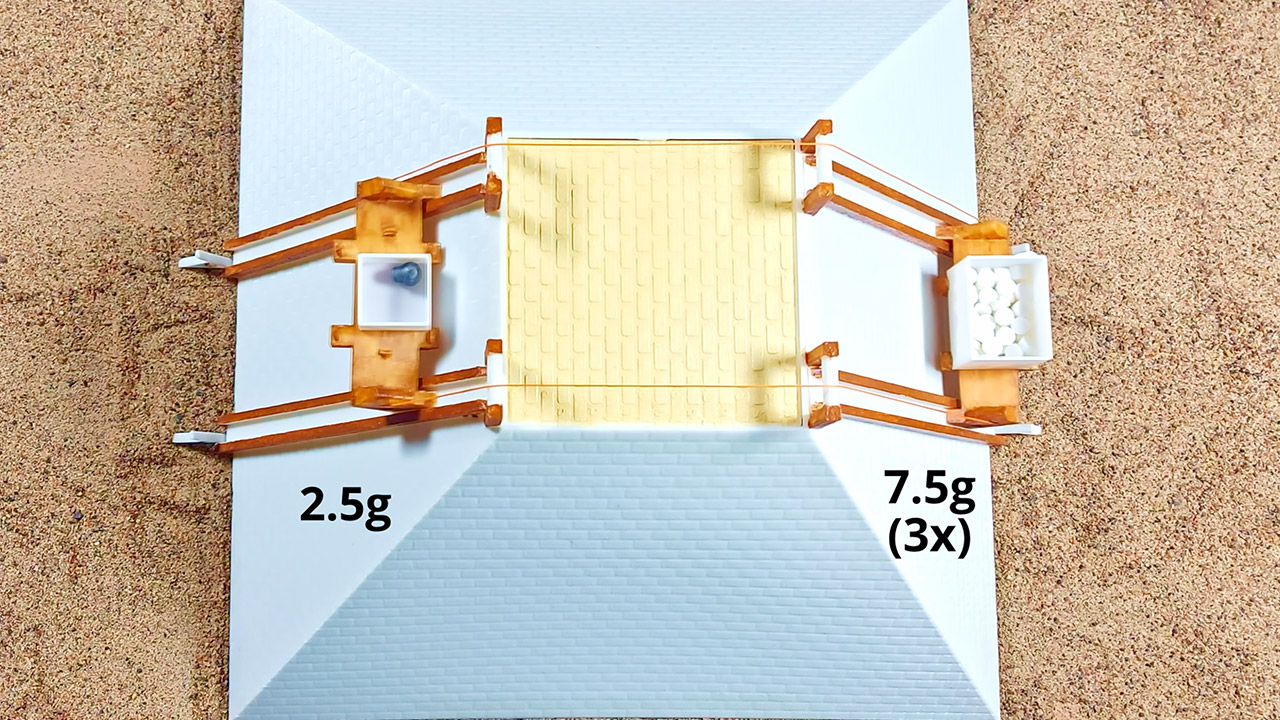
You see, as the counterbalance side gained enough mass, the stone side began to rise. The smaller stones, on the other hand, required a ratio closer to 3:1 after accounting for friction, whilst the heavier ones required a ratio closer to 2:1. To adjust the balance and return the sled to its starting position, they’d simply place an empty sled on the stone platform.
Lebanese cedar supplied the historical timber, with its compressive strength sitting near forty-two megapascals. Even though we’re talking about a gigantic stone weighing 80 tons, it only takes a modest contact area, around the size of a small notebook page, to stay just below the wood’s crushing point. The plan was to employ some very heavy beams, 20 to 30 centimeters wide, combined with several rails to distribute the load.
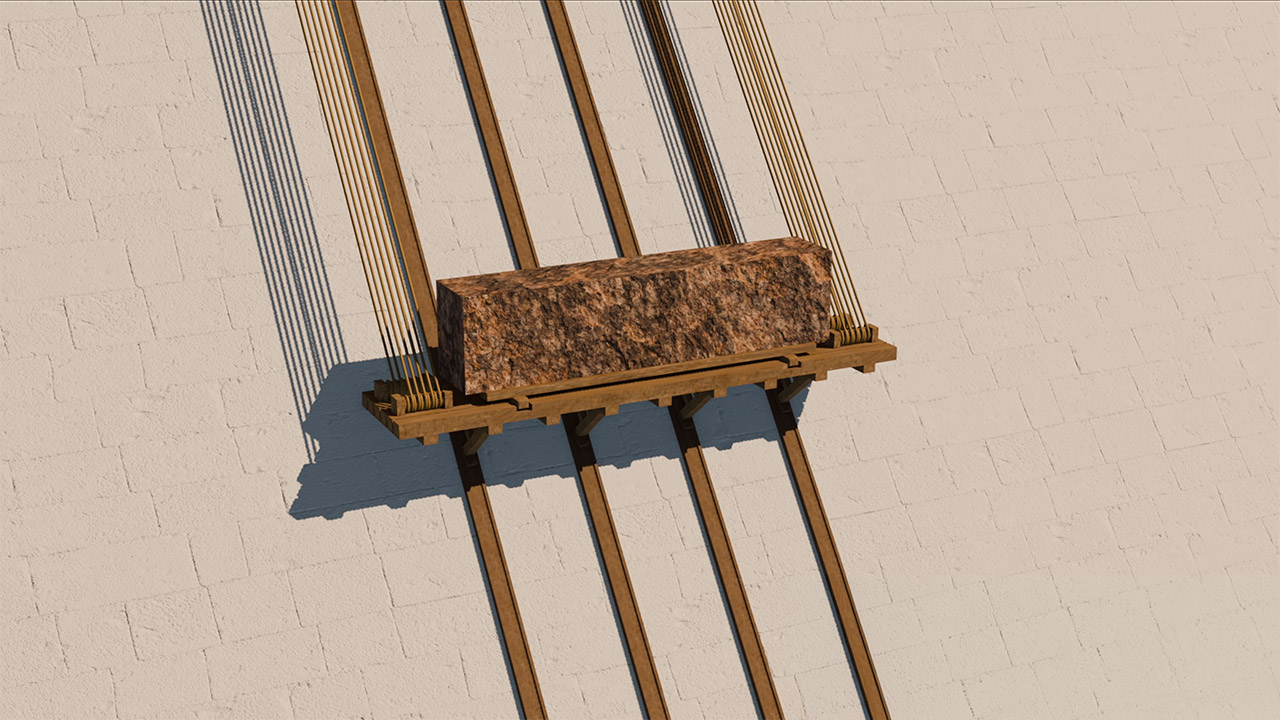
The breaking strengths of 3-inch braided papyrus and palm-fiber ropes ranged between 4 and 6 tons. When you consider that the 80-ton stone would exert a force of 63 tons downward on the Great Pyramid’s 51.8-degree slope, you can understand how adding some wood on wood and rope on wood friction would increase that total to 73 tons. At that point, distributing the load across 20 parallel ropes would result in a load of around 3.65 tons per rope, which is exactly within the measured limit. It’s worth noting that a little animal fat or wax on the sliding surfaces helps to maintain friction low for long-term, frequent use.
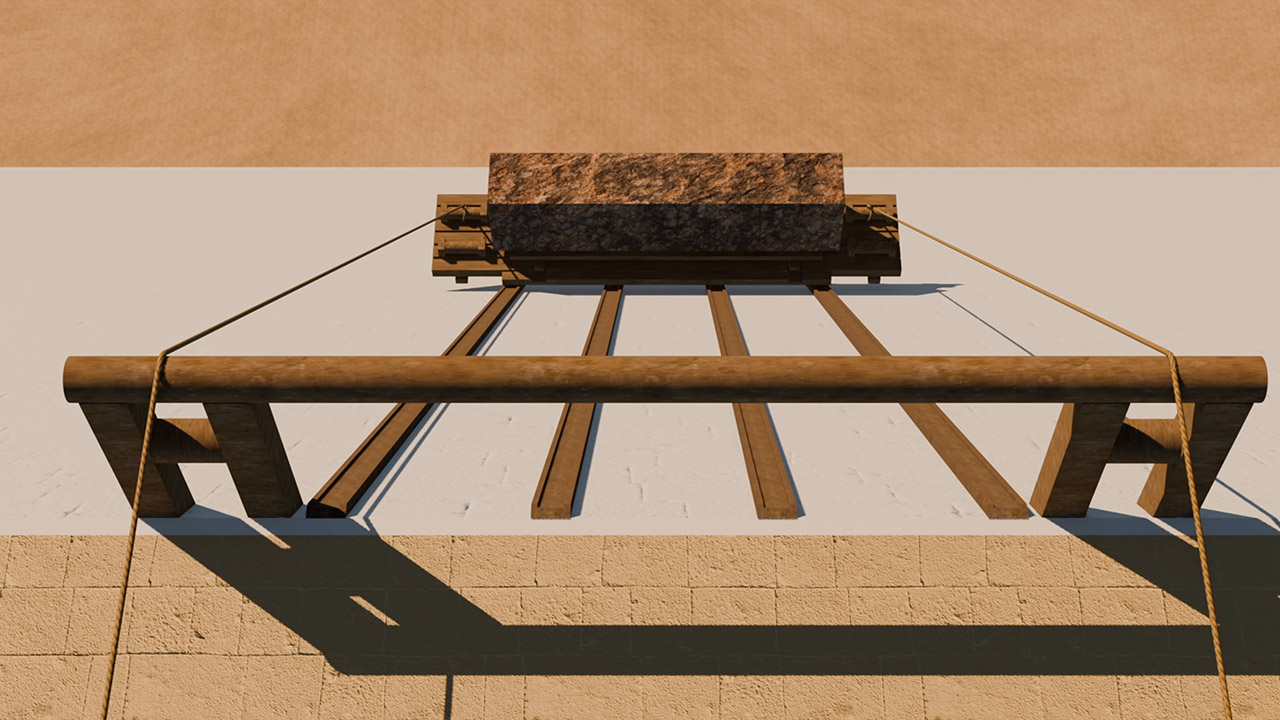
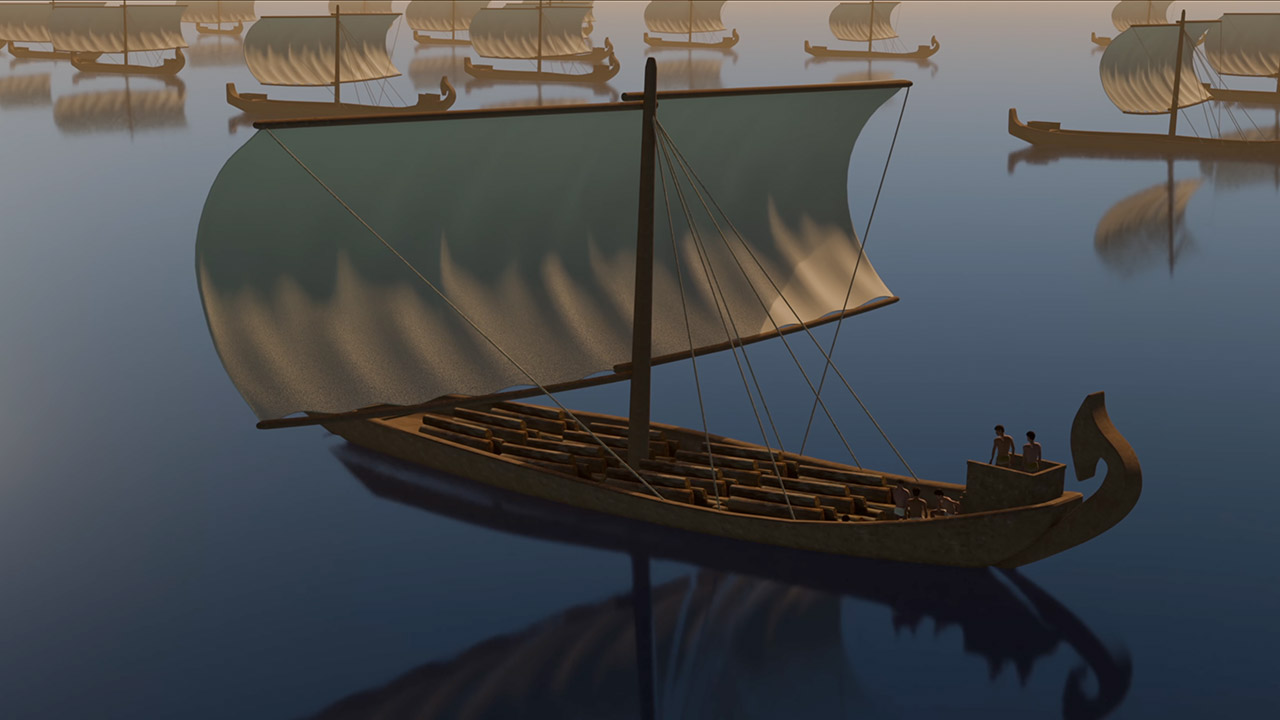
Now it appears that the ancient builders used a similar approach, rather than draping the heavy ropes directly over uneven rock, by drilling a number of post holes to form rows of vertical timber posts to loop over the ropes and gain force. Old Kingdom ship paintings and boat remains record the same practice of wrapping heavy lines around fixed pegs. Survey crews stretched ropes around corner posts to square pyramid bases before construction began.
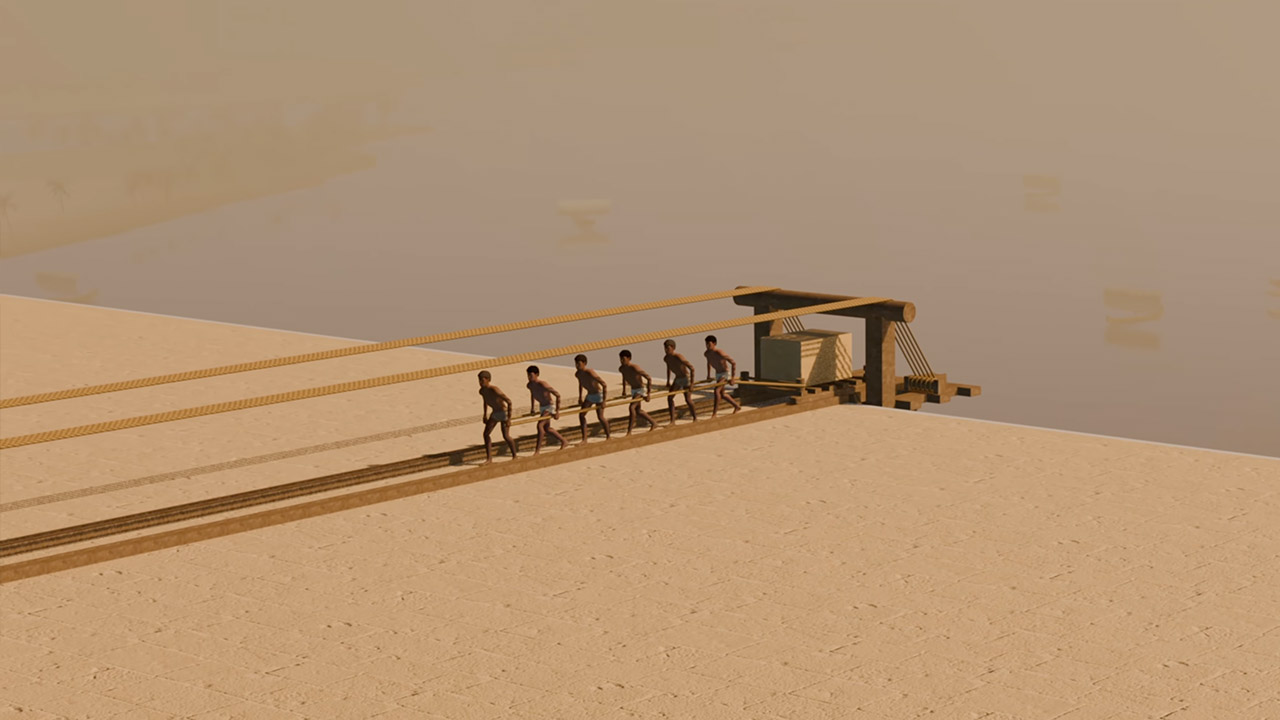
This idea is similar to the fixed redirections that the elevator requires. However, after the permanent casing was installed, they would simply remove the temporary timber, and any mounting marks would be hidden behind the final shine. Furthermore, by running numerous elevator pathways concurrently, you can begin to eliminate the necessity for a single lengthy ramp that must remain steady and clear throughout its height. As an added plus, the apex stone can use the same method all the way to its ultimate seat, eliminating the need to build a specific last-stage ramp.
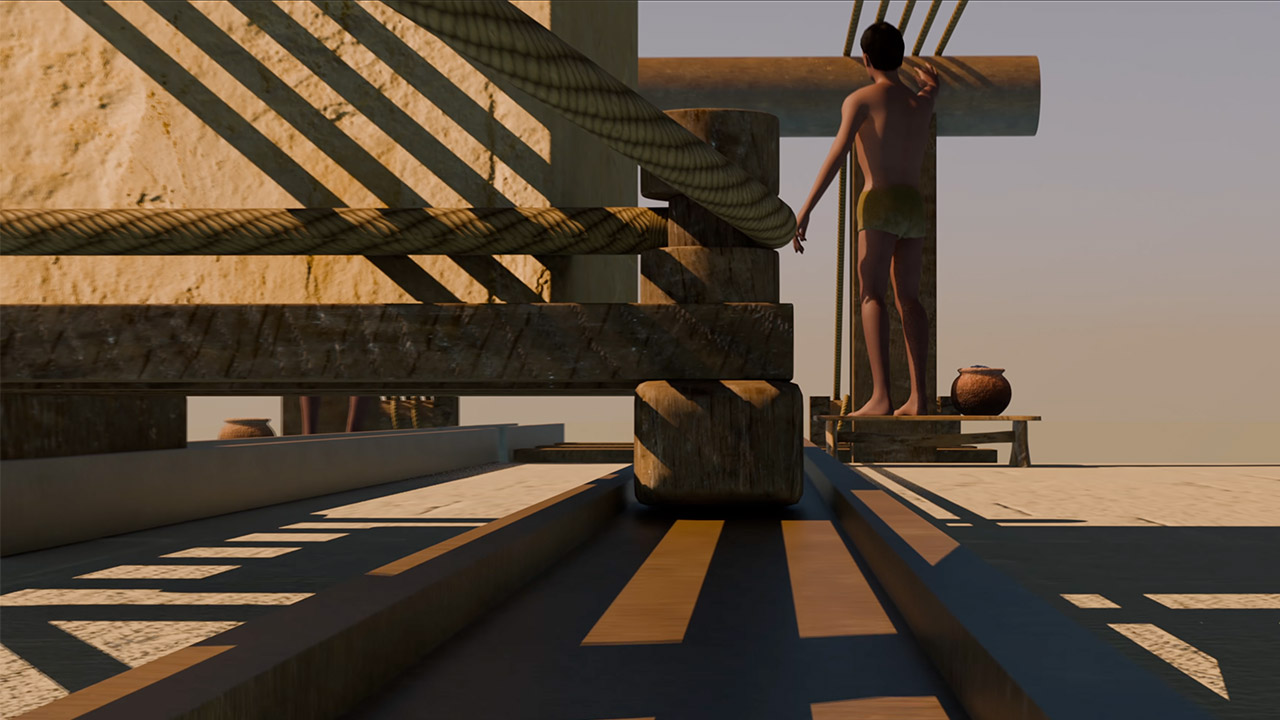
This scale model cannot match the complete mass or true material behavior of the actual materials, thus the channel intends to create a full-size section of the system ten to fifteen feet tall using actual cedar beams, plant-fiber ropes, and one to two ton stone weights. Of course, this is going to be a costly undertaking, with timber, rope, and stone alone costing thousands of dollars, so he’s banking on channel memberships and Patreon contributions to help him out.