
Back in the ‘90s, Magic Eye autostereograms were a cultural fever dream, turning bookstores and living rooms into staring contests where squinting at a chaotic color swirl could unlock a hidden 3D scene. These single-image illusions felt like sorcery, but they were a clever trick of neuroscience and barebones creativity, as a new LGR video from Clint Bas reveals, diving into the DOS-era Stare-EO Workshop that let anyone diving into the DOS-era Stare-EO Workshop that let anyone create these mind-bending visuals on floppy drive-equipped computers.
Autostereograms play on stereopsis—your brain’s knack for fusing slightly different images from each eye into a 3D view. The idea goes back to Charles Wheatstone’s 19th-century stereoscope, but by the ‘70s, Christopher Tyler cracked single-image random dot stereograms, no gear needed. Enter Stare-EO Workshop, a 1991 gem from N.E. Thing Enterprises, which brought this brain-twisting tech to DOS PCs, letting regular fans craft illusions that hooked a generation.

- Purposeful Design: Travel with ease and look great doing it with the Aspire's 3 thin, light design.
- Ready-to-Go Performance: The Aspire 3 is ready-to-go with the latest AMD Ryzen 3 7320U Processor with Radeon Graphics—ideal for the entire family...
- Visibly Stunning: Experience sharp details and crisp colors on the 15.6" Full HD IPS display with 16:9 aspect ratio and narrow bezels.
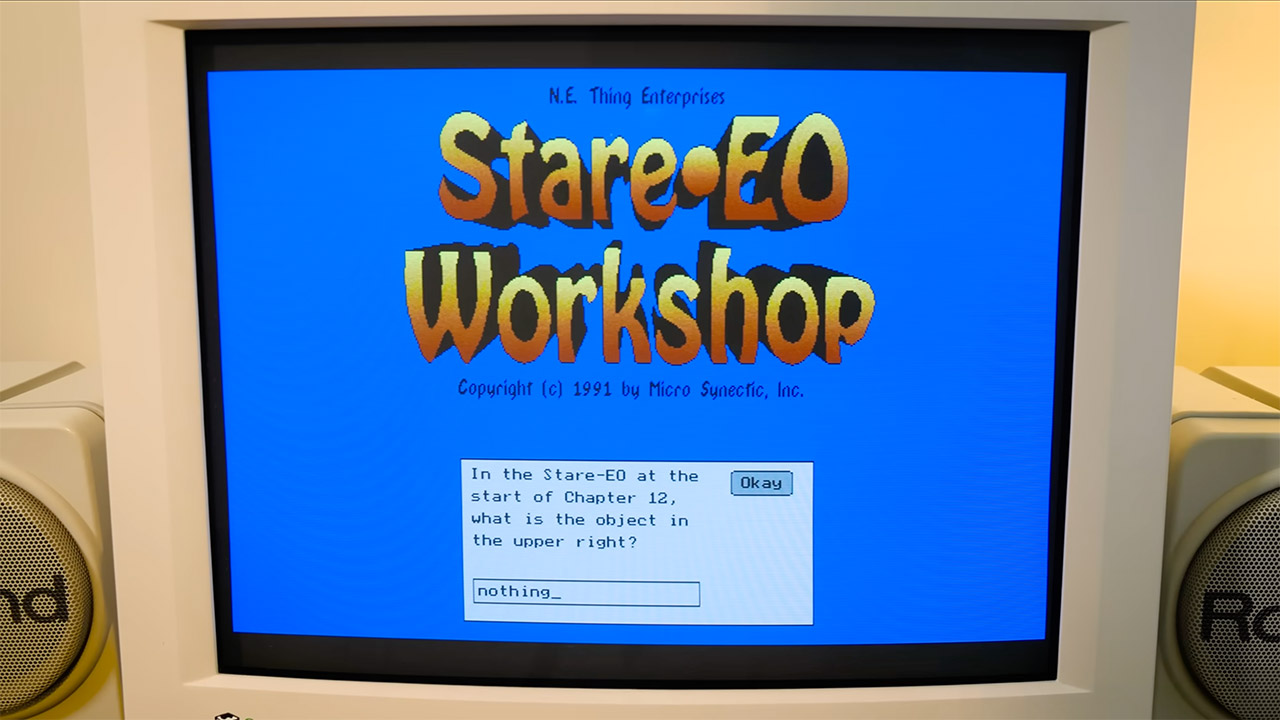
Making a Magic Eye with Stare-EO started with a grayscale depth map—light shades for close objects, dark for far ones. You’d sketch pixel by pixel or toss in a basic bitmap, limited by 16-color EGA graphics. The program slapped on a repeating pattern—think random dots or wild colors—and tweaked spacing based on the map: tight for foreground, loose for background. This tricked your eyes into converging or diverging, making your brain see depth in a flat image. It was like a visual puzzle that demanded you stare just so.

What’s crazy is how this ran on PCs weaker than today’s smartwatches. Stare-EO’s clunky keyboard-driven interface and manual-based copy protection (yep, typing codes from a booklet) screamed ‘90s, but it churned out stereograms in seconds thanks to lean algorithms. The catch? Low-res 16-color limits forced creators to get crafty with bold contrasts to make shapes leap out.
The science is deceptively slick. Stare at a Magic Eye, and your eyes either cross or drift to line up repeating patterns; your brain reads the offset as depth, building a 3D world from nothing. Stare-EO automated the pattern-spacing math, but the magic still needed your eyes to nail the focus. It’s a nostalgic reminder of when simple tech and human quirks could spark a craze.