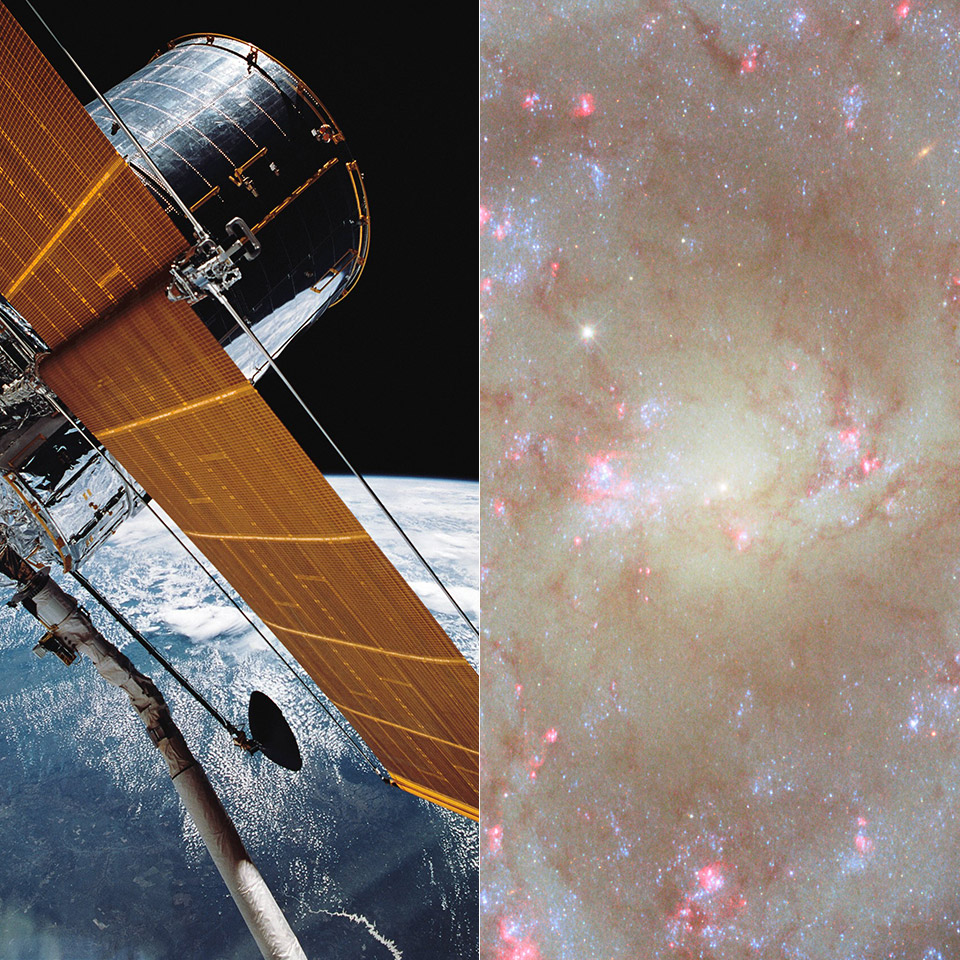
A spiral galaxy 35 million light-years away in the Hydra constellation has caught Hubble’s eye again. NGC 2835 with its yellow center and blue stars along its arms looks like a cosmic pinwheel frozen in time.
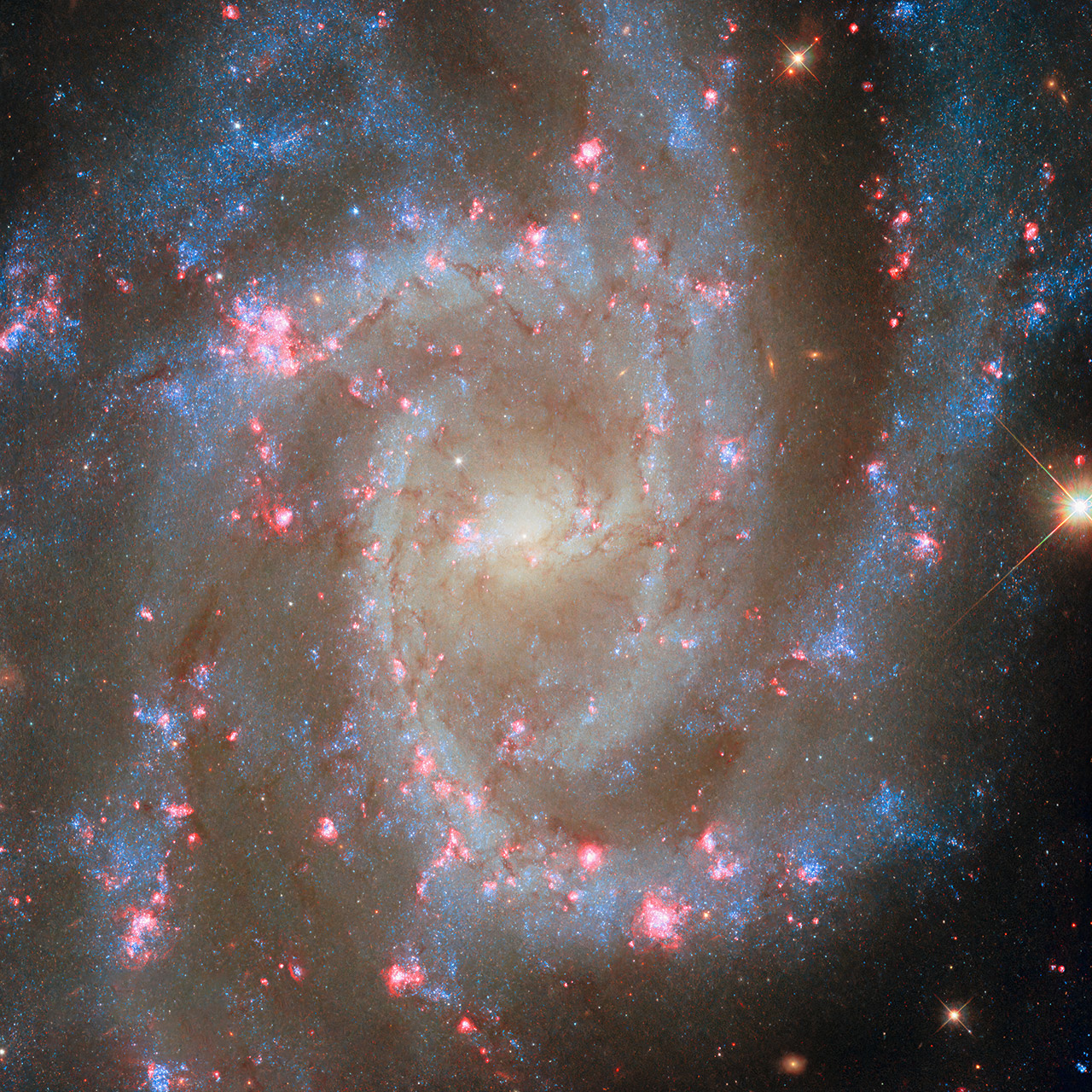
NGC 2835’s spiral arms wrap around an oval core of older stars and are studded with blue giants. The galaxy is sprinkled with pink nebulae that look like flowers blooming. These are the H-alpha regions where stars are born and die. H-alpha is like a cosmic highlighter and in this new image it points out nebulae associated with star life stages like newborn giants in H II regions, supernova remnants and the delicate shells of planetary nebulae left by dying stars.
Sale

Gskyer Telescope, 70mm Aperture 400mm AZ Mount Astronomical Refracting Telescope for Kids Beginners...
- Superior Optics: 400mm(f/5.7) focal length and 70mm aperture, fully coated optics glass lens with high transmission coatings creates stunning images...
- Magnification: Come with two replaceable eyepieces and one 3x Barlow lens.3x Barlow lens trebles the magnifying power of each eyepiece. 5x24 finder...
- Wireless Remote: This refractor telescope includes one smart phone adapter and one Wireless camera remote to explore the nature of the world easily...
Hubble’s new image is special because of the H-alpha focus. Unlike earlier Hubble images, or even Webb’s infrared view, this data zeroes in on the red light that shows where stars are shaping their surroundings. Massive newborn stars carve out H II regions with their intense light and stellar winds creating glowing pockets that pulse with energy. Meanwhile the faint echoes of supernova remnants or planetary nebulae tell of stars that have run their course. By mapping these features across NGC 2835 and 18 other nearby galaxies astronomers hope to catalog over 50,000 nebulae and get a better picture of how stars interact with their cosmic neighborhood.
You can see the dark threads of dust running through the spiral arms contrasting with the blue stars and pink nebulae. Hubble’s Wide Field Camera 3 (WFC3) used multiple filters to capture this scene from ultraviolet at 275 nanometers to optical wavelengths like 657 nanometers for H-alpha. This range lets astronomers see the layers of the galaxy from its star forming regions to its dusty lanes all within a 2.61 by 2.67 arcminute field of view.
NGC 2835 is notable for many reasons including its distance. 35 million light-years is close enough for Hubble to see detail, and far enough to show us the vastness of the universe. Located at RA 09 17 53.09 and Dec -22 21 15.83 in the constellation Hydra the Water Snake which covers the southern sky. Face on with north 173.7 degrees left of vertical makes it a great target to study spiral structure without the distortion of an angled view.