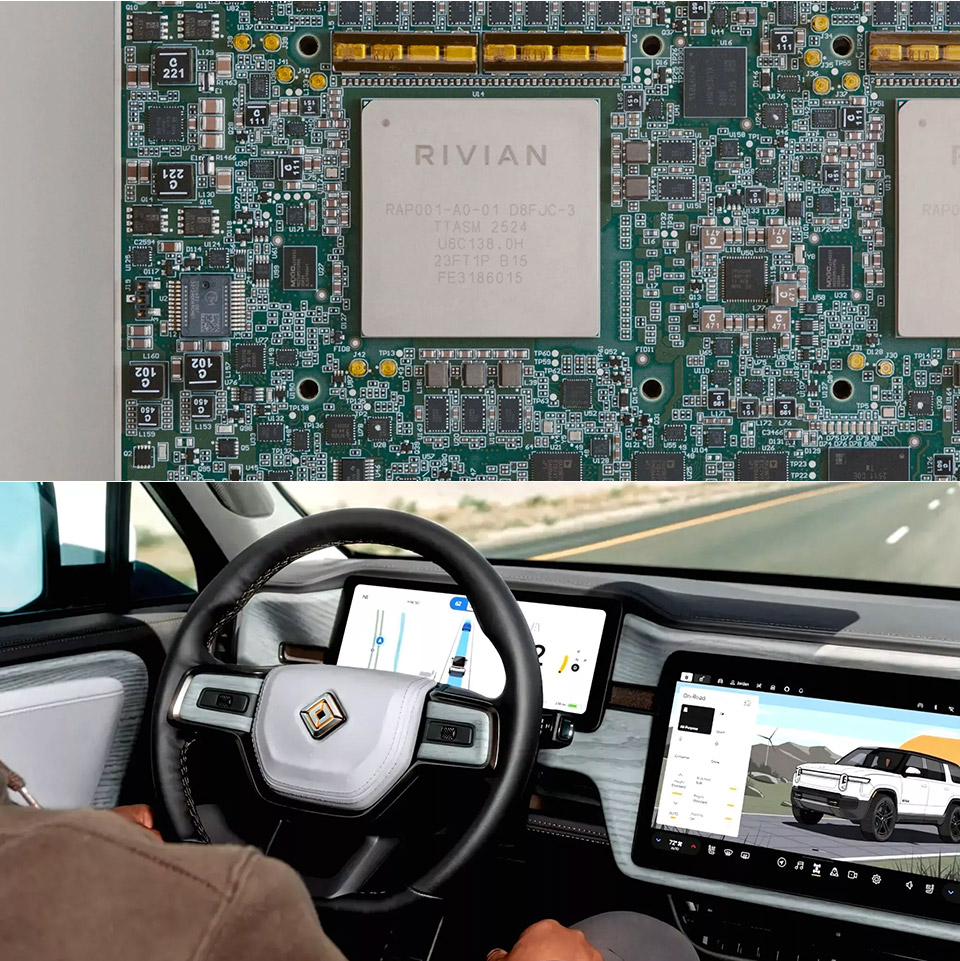
Last week, Rivian assembled a group of engineers, executives, and a few lucky journalists in a Palo Alto conference room. On stage, surrounded by some very slick prototypes, CEO RJ Scaringe steps out to reveal the company’s own made-in-house processor for self-driving systems. This chip is the real deal, ready to take on Tesla’s FSD.
Scaringe takes a quick pause, his voice steady, as he describes what this processor does: it’s a major component of Rivian’s push toward Level 4 autonomy, which is full-fledged self-driving in well defined areas with no human intervention required. What about the chip itself? The Rivian Autonomy Processor, or RAP1 for short, is the heart of this third-generation computer module. It’s the component that collects data from cameras, radar, and, soon, lidar sensors and crunches it all at once. Built on TSMC’s 5nm technology, this gadget packs a big punch: 5 billion pixels per second, which is equivalent to scanning the output of 11 high-resolution cameras in the blink of an eye. Two RAP1s working together can perform 1600 trillion operations per second using 8-bit integers, allowing the machine to sift through sparse data patterns without wasting cycles on empty space.

- 【2-in-1 Police Car & Realistic Design】Step into the future with our cutting-edge cyber-trucks car toys! Crafted from premium Anti collision...
- Stable 2.4GHz Control & Perfect for Cybertruck Toy Fans:This remote control car—ideal for both monster truck toys enthusiasts and cybertruck toy...
- Cool LED Lighting Effects & Easy Kid-Friendly Controls – A Hit for Boys Girls:These remote control car toys—great additions to any monster truck...
The developers on hand explained how this chip works its magic, how it combines all of the sensor inputs to produce a clear picture of what’s going on around the car, detecting a pedestrian making a dash for it across a foggy intersection before a human eye could even notice. Rivian’s unique interconnect, RivLink, connects all of the chips with minimal lag and scales up power when conditions become difficult, such as construction zones or rural backroads. Furthermore, the design is entirely safety-focused, so it fulfills the most demanding automotive requirements and would not consider failing under the stress of constant decision-making.
Then there’s the software, which is effectively the other half of the equation. Rivian has also invested heavily in software, creating a stack that improves with each mile its cars drive. The Large Driving Model is the foundation, trained on the same massive datasets that enable all of the language chatbots you use today. Group-Related Policy Optimization refines things even more, essentially learning the sharpest actions for navigating tight corners on rainy days or merging onto congested highways. Early rollouts of the Universal Hands-Free system will begin next year; this system essentially keeps the car in its lane and adjusts speed without the driver’s constant nudges, covering a vast area of mapped roads across the country, including all backroads with nice clean lane markings.
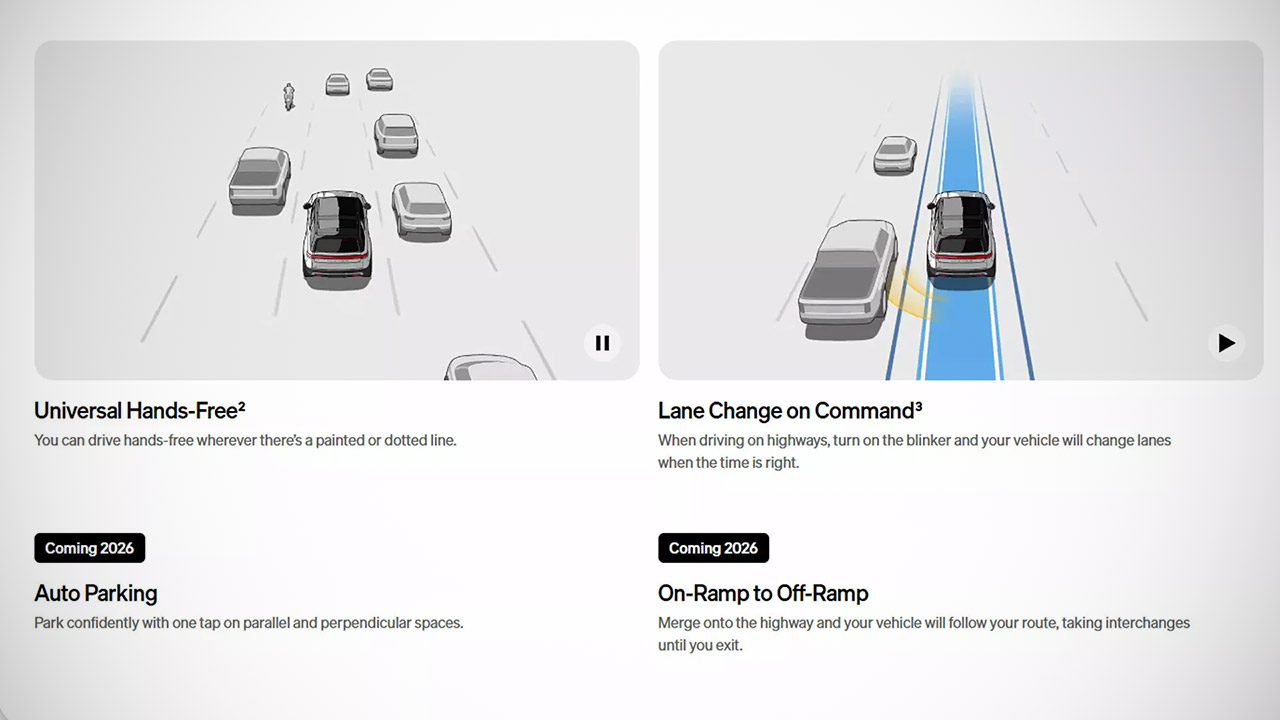
The pricing details also received some attention as the practical aspects of the Autonomy+ service were discussed. The aim is to charge $49.99 per month or a $2,500 flat fee beginning in 2026. Owners of the R1 trucks and SUVs will have priority entry, followed by the more economical R2 crossovers.Things start with basic features like lane changes on demand, automatic parking, and seamless highway merging, but the real draw is what it can be expanded to in the future, which is essentially eyes-off in select zones, allowing passengers to scroll through their email or take a nap while the car navigates itself.
[Source]