
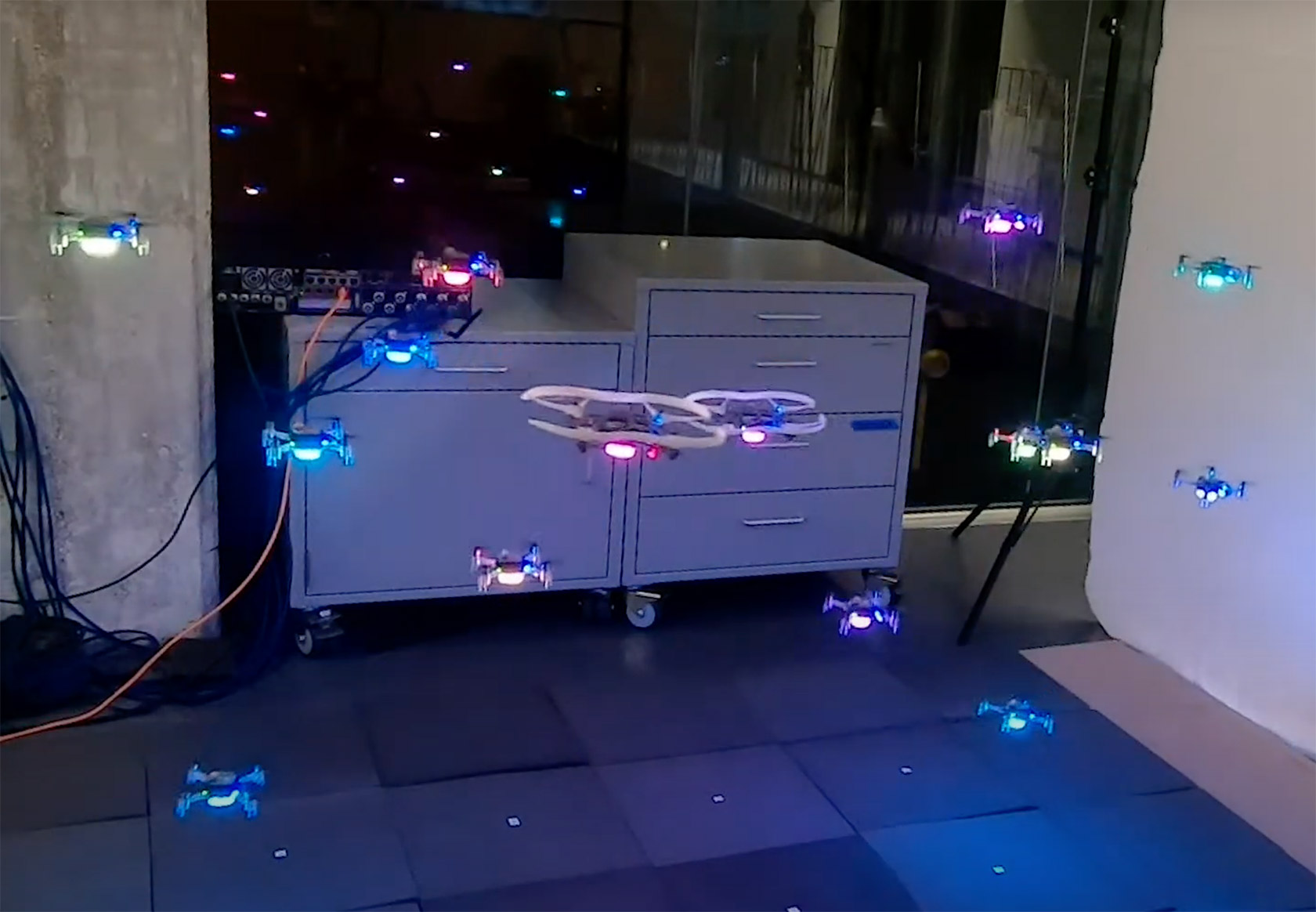

Caltech engineers revealed a new data-driven method to control the movement of multiple drones through cluttered, unfamiliar spaces, so they do not collide with each other. Obstacles that needed to be overcome in new environments include making split-second decisions about their trajectories despite having incomplete data about their future path and how not to run into one another.
So, the team came up with a multi-robot motion-planning algorithm called “Global-to-Local Safe Autonomy Synthesis” (GLAS) that imitates a complete-information planner with only local information, and “Neural-Swarm,” a swarm-tracking controller augmented to learn complex aerodynamic interactions in close-proximity flight.

- 𝗟𝗶𝗴𝗵𝘁𝘄𝗲𝗶𝗴𝗵𝘁 𝗮𝗻𝗱 𝗣𝗼𝗿𝘁𝗮𝗯𝗹𝗲 - The drone is lightweight and compact, weighing...
- 𝗡𝗼 𝗥𝗲𝗴𝗶𝘀𝘁𝗿𝗮𝘁𝗶𝗼𝗻 𝗡𝗲𝗲𝗱𝗲𝗱 - Under 249 g, FAA Registration and Remote ID are not required if...
- 𝗘𝘅𝘁𝗲𝗻𝗱𝗲𝗱 𝗙𝗹𝗶𝗴𝗵𝘁 𝗧𝗶𝗺𝗲 - Enjoy longer flights with DJI Mini 2 SE, which offers a 31-min max flight...
Our work shows some promising results to overcome the safety, robustness, and scalability issues of conventional black-box artificial intelligence (AI) approaches for swarm motion planning with GLAS and close-proximity control for multiple drones using Neural-Swarm,” said Soon-Jo Chung, Bren Professor of Aerospace.
