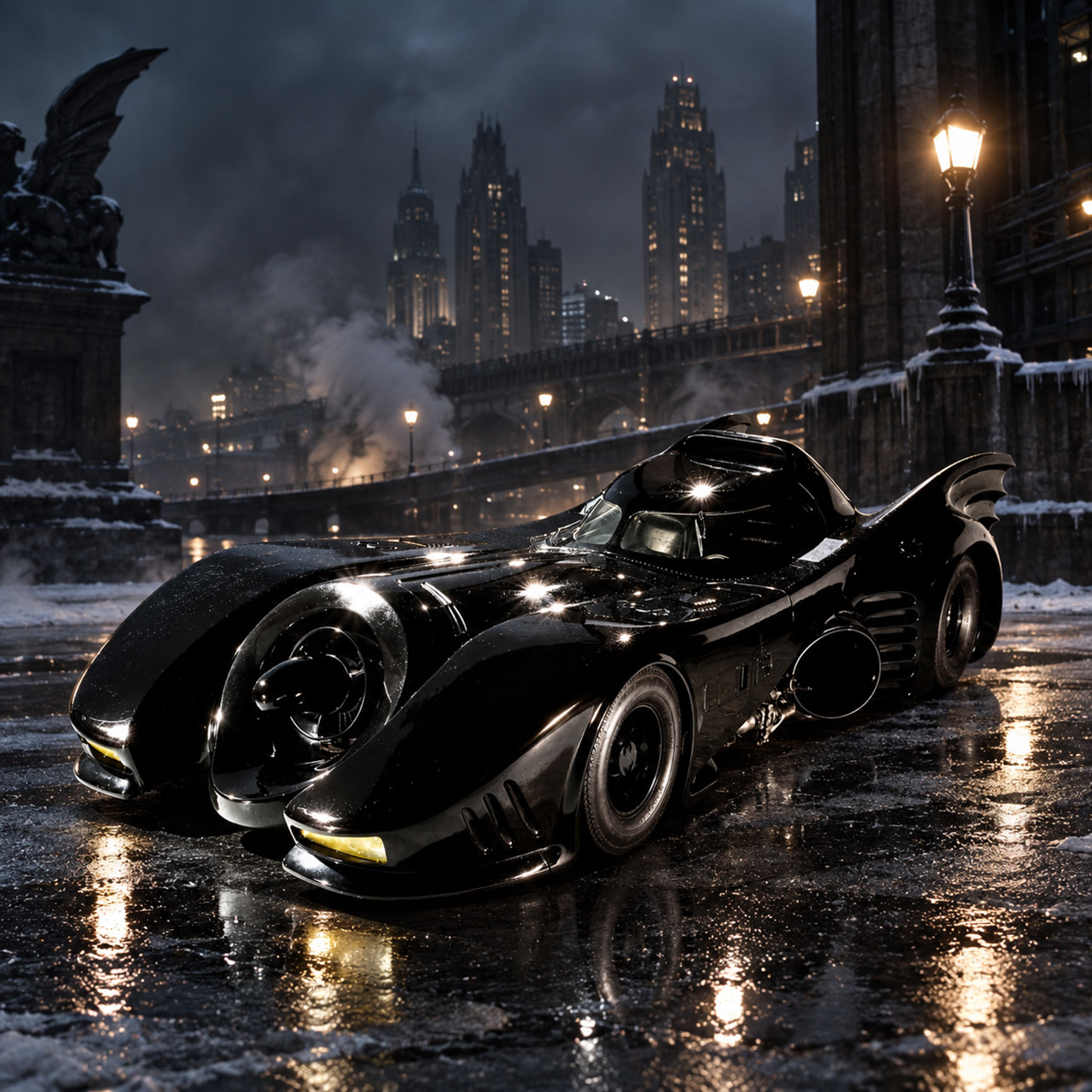
Nineteen feet and eight inches separates the nose of this car from the trailing edge of its rear fins, and almost none of that length came from a single factory chassis. Custom builder Carl Casper and his shop, Hollywood Productions, cut two Chevrolet Impala frames apart and joined them into one long backbone, then wrapped the result in a hand-shaped fiberglass body finished in gloss black. That body still wears the paint it carried when cameras rolled on Tim Burton’s 1992 film Batman Returns. Julien’s Auctions calls this example the number one hero car, screen-matched to most of the driving scenes Michael Keaton shot, and says it has never been offered at auction before.
Julien’s will put the automobile up for auction during The Ultimate Batmobile Auction on Monday, November 23, 2026, live from the Gardena studio and online, with bidding beginning at 10 a.m. Pacific Time. Some top-end expert estimates place the price between $5 million and $7 million, with the lower end beating the auction record for a Batmobile, which is at $4.62 million. That was the price paid in 2013 for the original television Batmobile, a 1966 model constructed by George Barris, and it has remained the top watermark for any Batmobile sale since. Going the other way would also clear the amount paid in 2019 for the Aston Martin DB5 utilized in the Thunderball promotion at Monterey, which sold for $6.38 million.

- Batman collectible gift for adults – This buildable LEGO recreation of The Classic TV Series Batmobile is designed with adult fans of Batman and...
- LEGO Batman vehicle – The car features a molded windshield, rotatable wheels, authentic decorations and an opening trunk containing the Bat-Computer
- Nostalgic building kit – Adult model-builders can lose themselves in this authentically detailed project as they carefully construct this lasting...
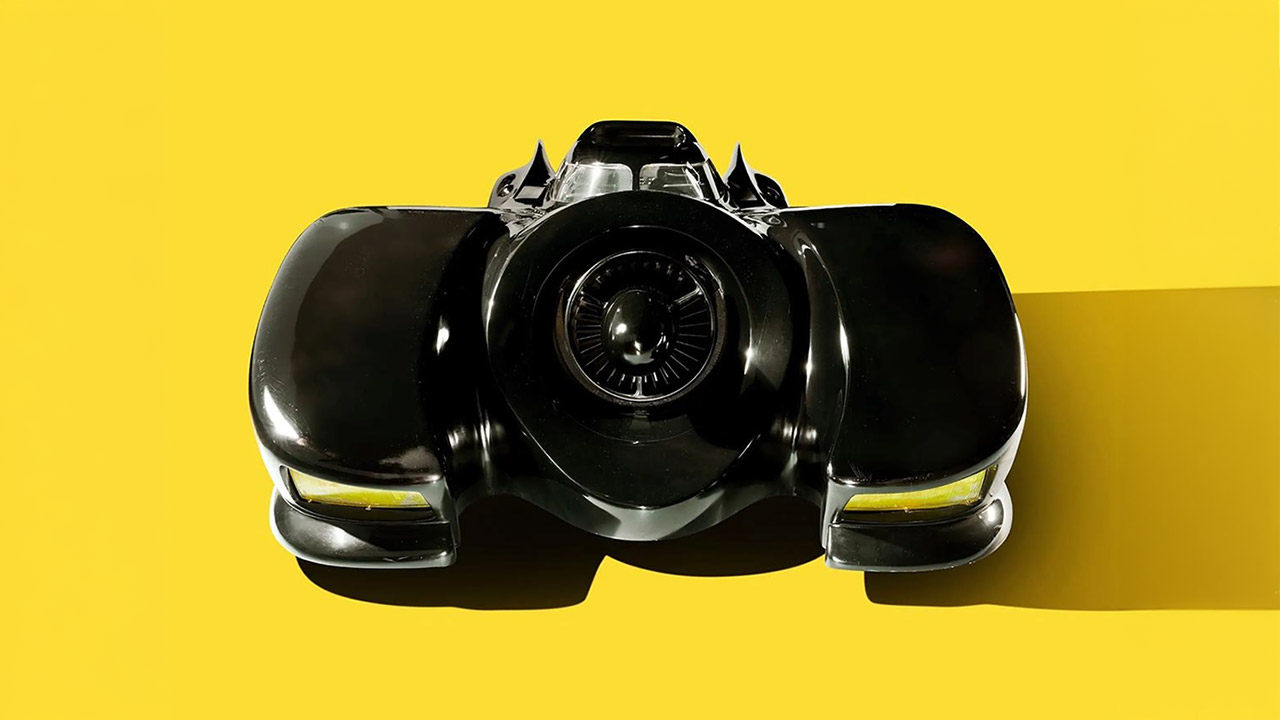
This example has the same lines as those used by the 1989 Batman production crew. Julian Caldow, one of the team’s concept artists, created the design with the production designer, Anton Furst, in mind. Anton Furst wanted a car that looked more like a land speed machine than a flamboyant sports car, so Caldow designed the long body, the turbine-style air intake in the front, and the extremely tall rear fins that, when painted black, resemble bat wings. Casper’s company produced three of these, including the camera car, which captured all of the action pictures. After the shoot, it appeared at the premiere, a Warners backlot party, and then was stored for a time until being shown at the Marconi Automotive Museum in Tustin. According to the auction notes, the car has never been repainted and remains in its original finish since filming wrapped. We do not know who the consignor is.
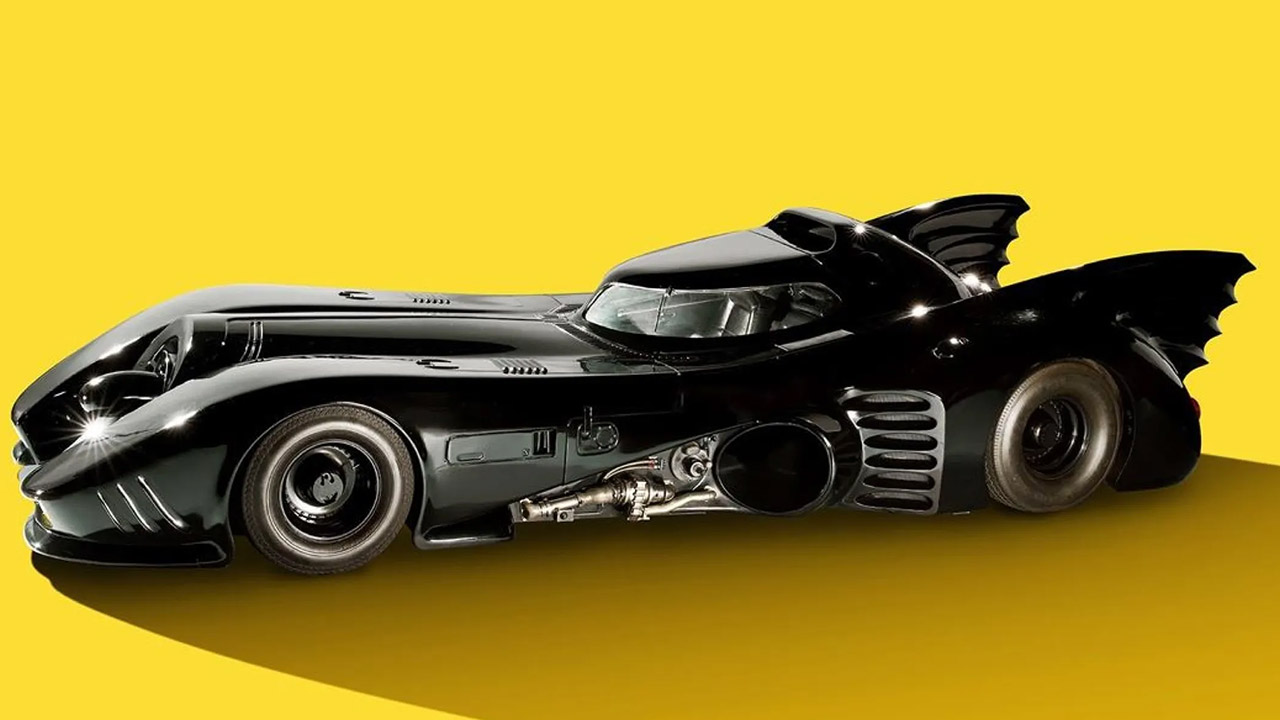
Things are a little more boring underneath the polished veneer. A classic Chevy V8 engine and a three-speed automatic are nestled beneath the single front end, enough to keep it going between filming locations and through the street scenes required for the production. The jet roar you hear in the movie? That was inserted during post-production.
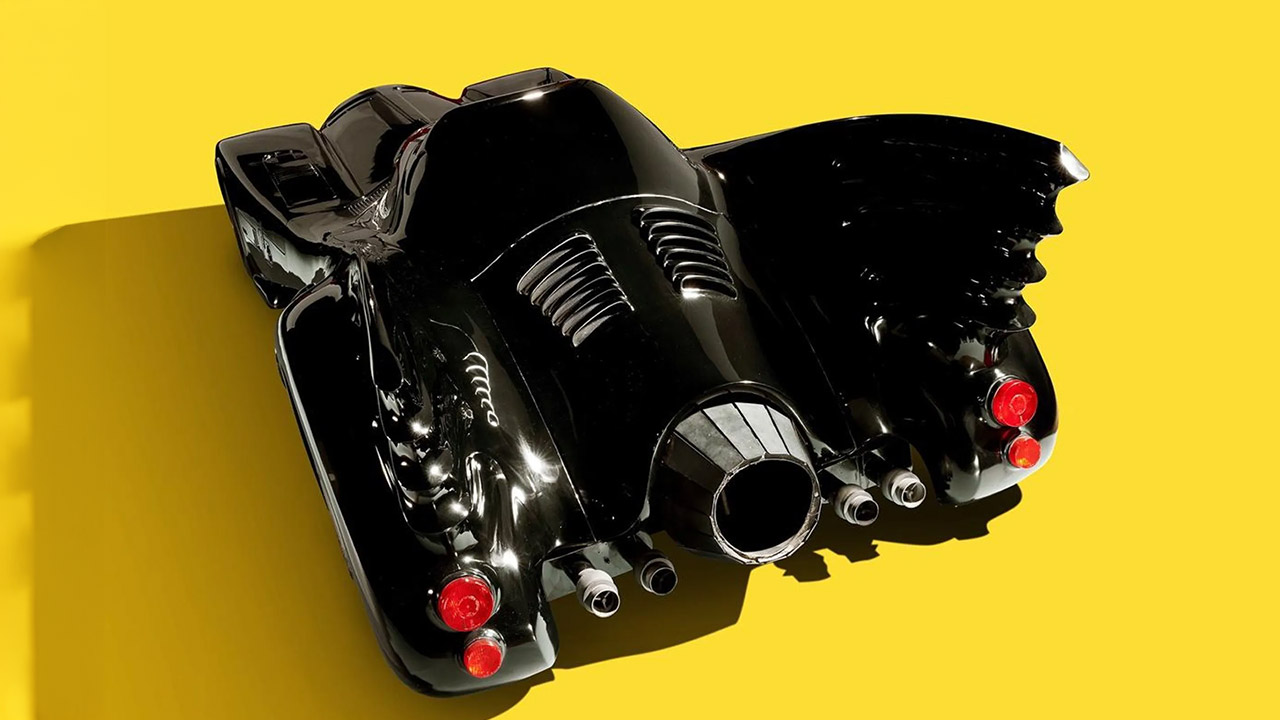
The flames pouring out the back were a separate rig developed by the special effects team that used pressurized air and fuel and was lighted remotely. According to museum notes, the flames reached a height of 20 feet. So that is what distinguishes this car from the other two that Casper made for the film. Inside the cockpit, there’s two seats, as well as all the normal “switches” you’d find on a real plane, and this was done on purpose because, during filming, the Batmobile had to look occupied and ready for action, even though a lot of the hardware was just for display. Check out the auction here.
[Source]