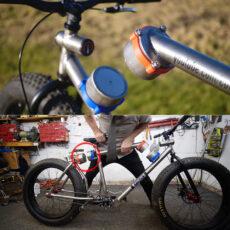
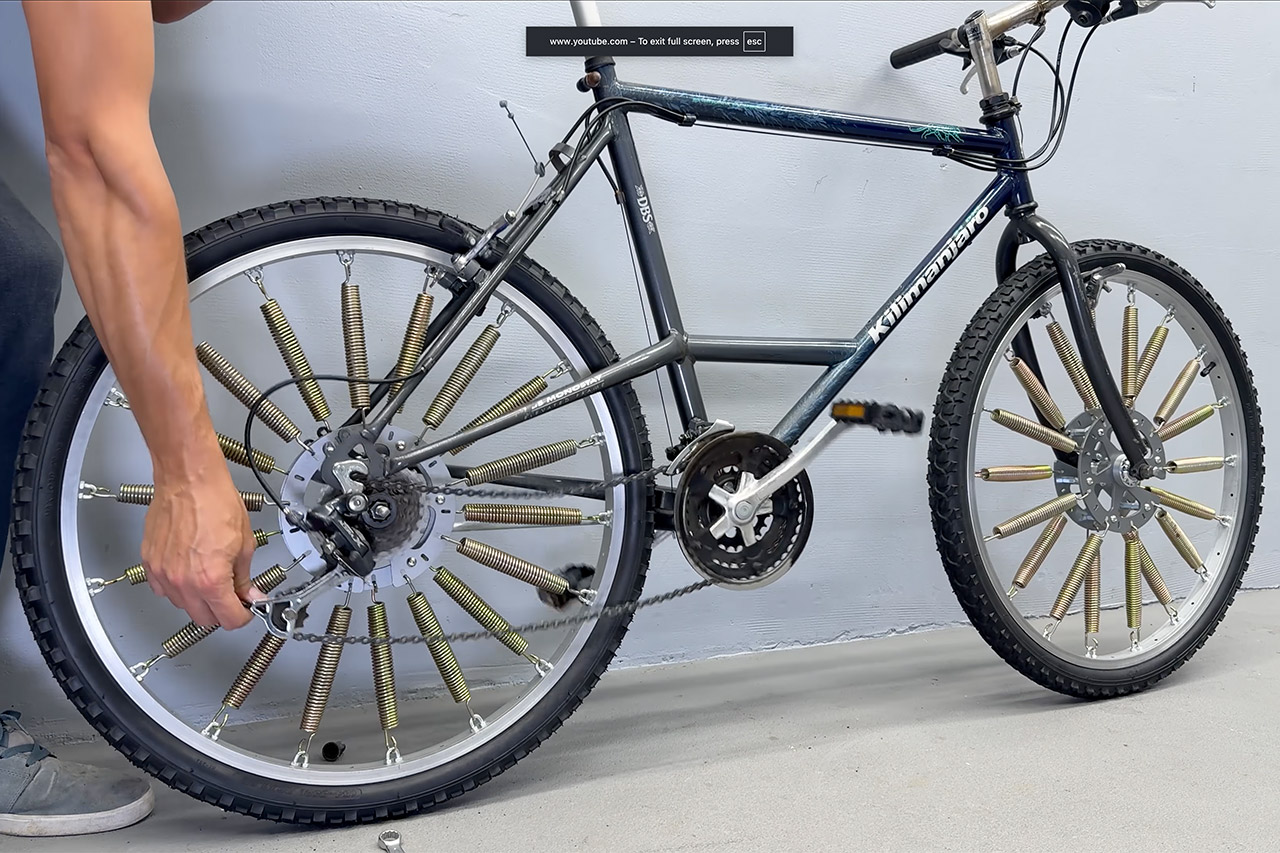
A standard bicycle wheel depends on dozens of thin metal spokes held under high tension. Those spokes keep the rim round, centered, and rigid enough to transfer power and keep the bike tracking straight. Well Done Tips removed every spoke from a pair of wheels and replaced them with ordinary trampoline springs. The finished wheels still rolled, yet the ride changed in ways that felt immediate and hard to ignore.
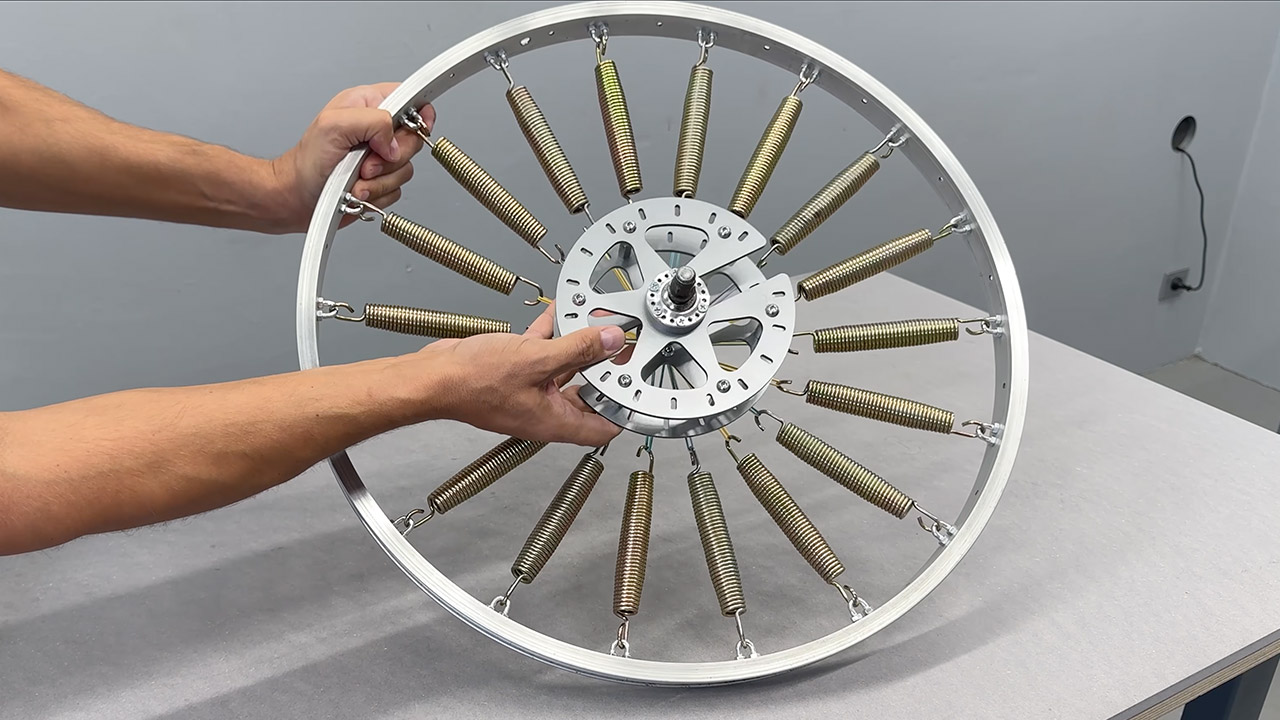
Each wheel was initially outfitted with 36 spokes. They were rebuilt, however, and each wheel now has 18 springs instead. Attaching them was a little more involved than simply slapping on some hooks, as unique brackets are wrapped around the rim, steel plates around the hub, and wire-rope grips and M6 screws keep everything together. Some of the bespoke parts were created using a Bambu Lab 3D printer after several prototype rounds. Drilling, fitting, and finding the metal parts converted what appeared to be a simple exchange into a full-fledged fabrication operation before we ever began installing the springs.

- 【Excellent Motor Performance】This electric bike is equipped with a high-performance 750W rated motor(1500W peak power) with 2 to 3 speed settings...
- 【Upgraded Removable Battery】 Powered by a 48V 15Ah removable battery, the ebike can be fully charged in just 6-7 hours and can ride up to 60 miles...
- 【Comfortable Riding Experience】 This fat tire electric bike is equipped with front and rear suspension system, which absorbs most of the bumps and...
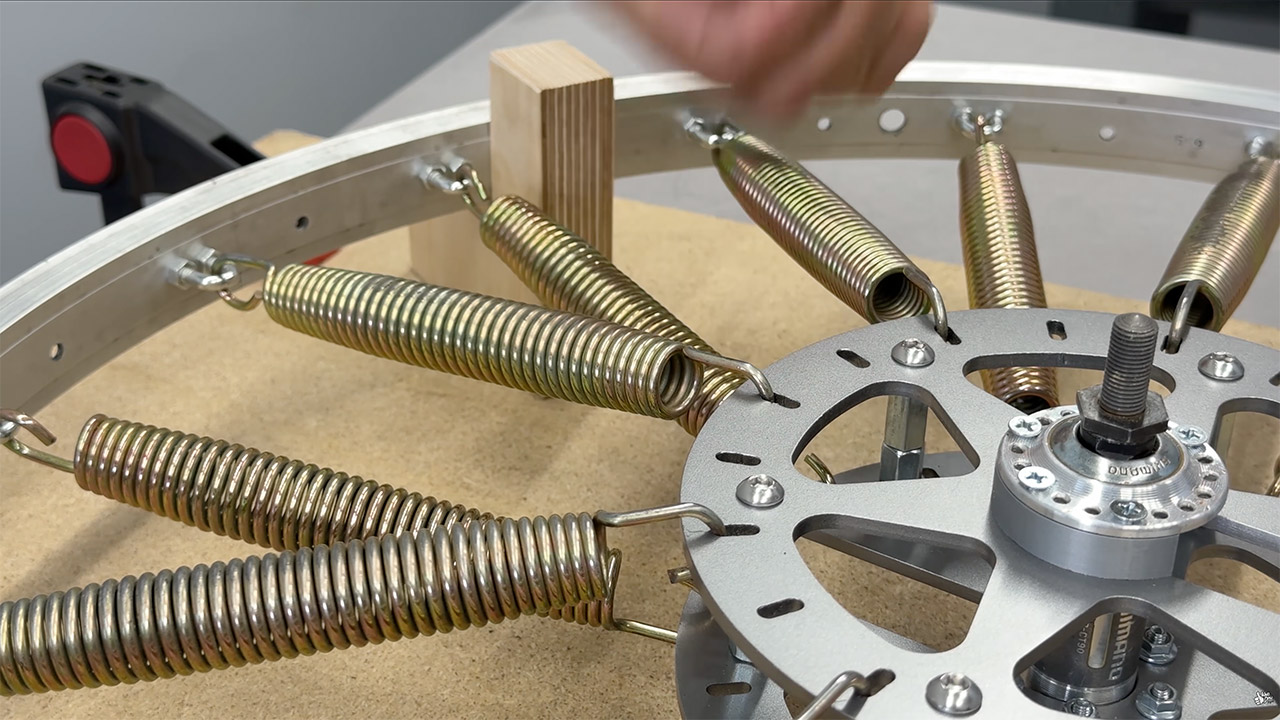
Stretching those springs sufficiently to stretch from the hub to the rim was a pain because they wouldn’t budge by hand, so he set up a jig to keep the wheel steady and let us pull the springs in position. We mounted the tire after installing the springs. Initially, that was a disaster, since the first few efforts resulted in the tube bursting up due to unequal pressure. He was able to get some later tires airtight enough to give it a test ride.
Getting on the bike required extra caution, as the wheels were already shaking all over the place before we started riding. Once we started rolling, the rim would bounce up and down relative to the hub, while the hub itself remained as stable as a rock. Even though it absorbed little bumps in the same way that a hard spoke wheel would, the steering seemed extremely loose and shaky, requiring regular micro changes just to keep on course. The bouncy element became more obvious as the speed increased. Even the builder, as well as everyone we showed the final bike to, thought it looked quite bouncy/unstable and a bit of a white-knuckle ride, but you could still get some use out of it.
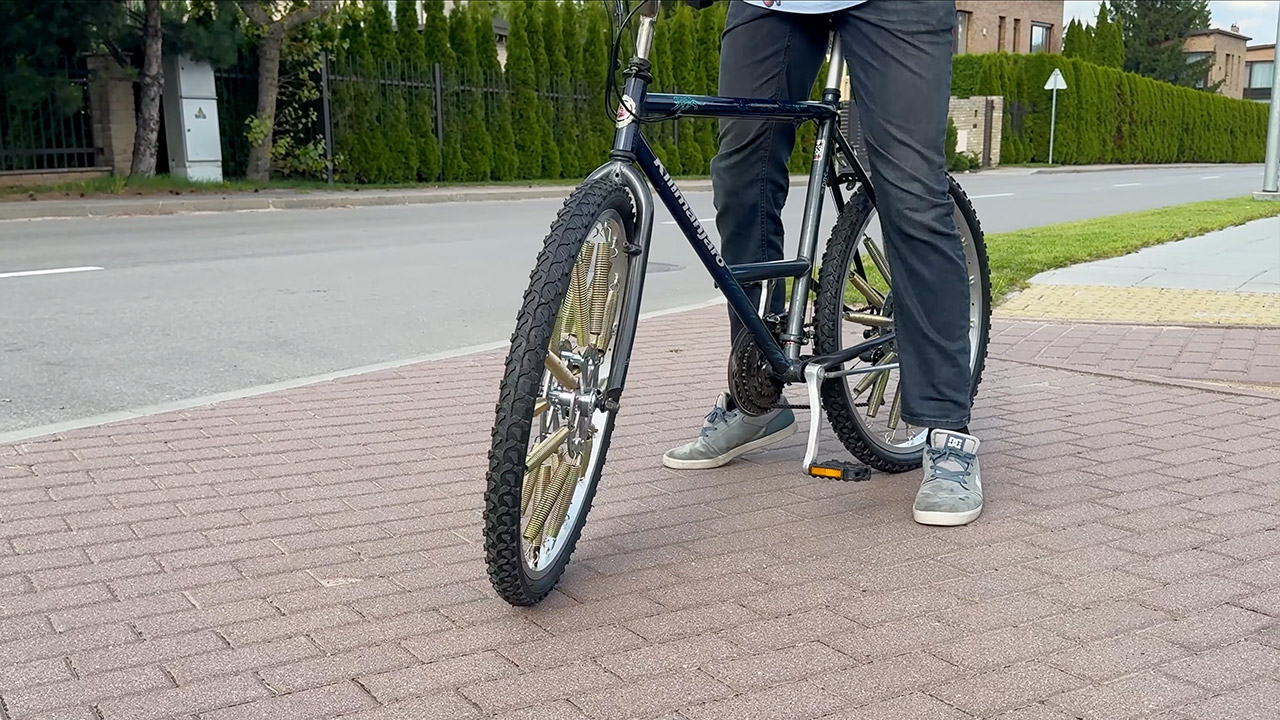
All of the comments he received on the finished design pointed to the same mechanical restrictions, namely that the springs were nearly zero preloaded, resulting in little actual travel. The typical cross-spoke arrangement we were utilizing works perfectly when every component is stiff, but with springs, it just allows the rim to twist under load. We had a couple recommendations to test bigger hubs and shorter springs, as well as springs that only flex one way, but none of these concepts made the final cut.
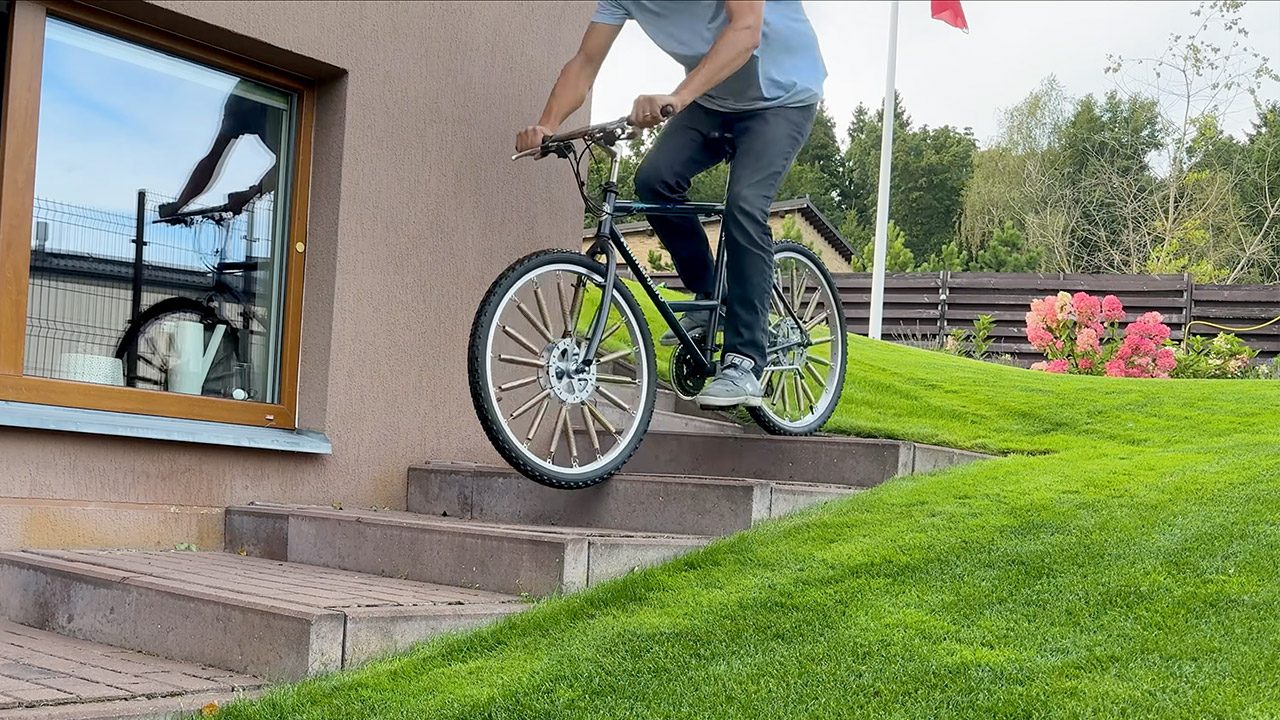
Ordinary bike spokes work by stretching tightly and forming a wall against both radial and lateral stresses; they remain relatively stiff. Replacing them with open-coil springs completely alters the dynamics, resulting in a soft spring rate that flexes in all directions. It’s an excellent way to make the wheel flex and absorb impacts, but it causes the rim to move all over the place. So basically this experiment shows that you can build a wheel on trampoline springs and still get it to ride okay, sort of, but it also shows why traditional spokes are still the practical choice for control and durability, as this thing’d never settle into proper bike behavior, every bump and turn had the springs working overtime.