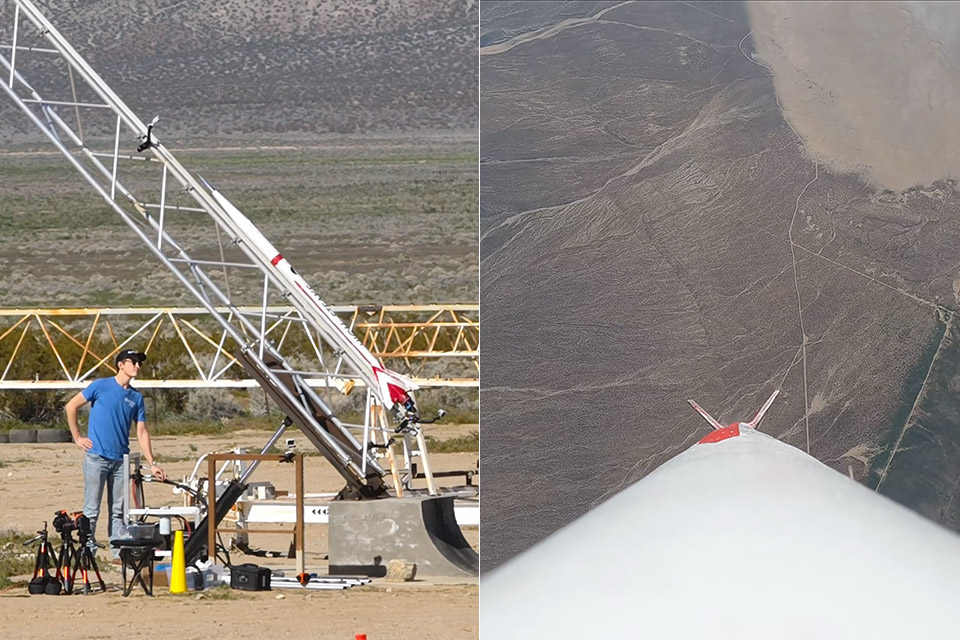
Joe Barnard of BPS.space wanted more than a standard high-altitude rocket flight. He aimed for a rocket that would climb to roughly 30,000 feet while hitting Mach 2, then eject a small camera pod near the top so it could film the drogue parachutes opening from outside the vehicle in slow motion. That third-person view has stayed out of reach for most amateur rocketry work because the timing, forces, and recovery all have to line up after the vehicle has already endured heavy acceleration and vibration.
Barnard made the upper piece from nine layers of fiberglass, which was sufficient to keep it strong even with a large hole for the camera pod to protrude from. The lower booster was a four-inch carbon-fiber tube. He had a decent motor operating, a N2300, loaded with a unique propellant mix he had created. Four carbon fiber fins had servo-driven tabs that the AVA flight computer, which Barnard had first built in 2020, would utilize to steer pitch, yaw, and roll. There was also a separate computer named Fluctus, which basically kept a watch on the speed, pressure, and attitude and decided when to fire the pod and parachutes.

- SMOOTH 3-AXIS VIDEO: Capture steady 4K 60fps footage with mechanical stabilization for vlogging, travel, sports, family moments, and short films.
- FAST FOCUSING: A 50MP 1/1.55-inch CMOS sensor and F2.2 lens help create clear photos and video for beginner and amateur creators.
- POCKETABLE DESIGN: Weighing about 0.45 lb, this handheld camera combines a 2.64-inch touchscreen with 111GB built-in storage for easy everyday...
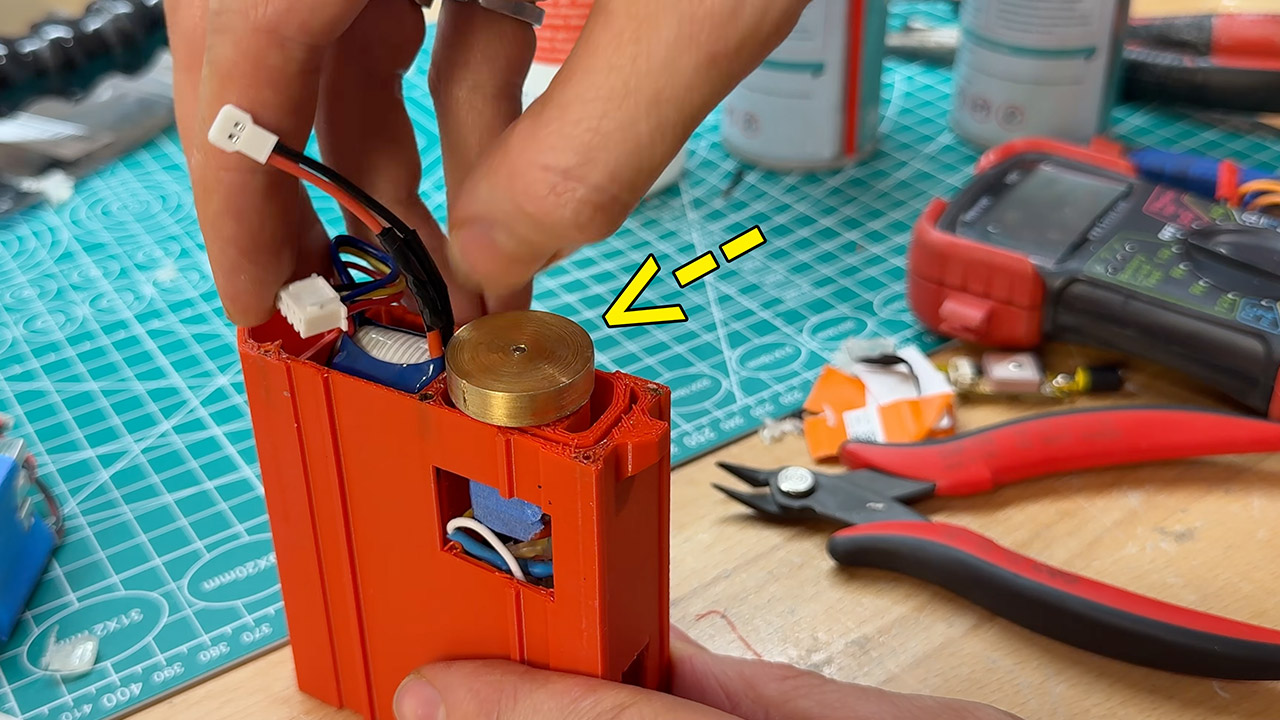
Inside the camera’s 3D printed casing, a GoPro Hero 12 was ripped apart and flipped on its head, ensuring that the lens was in the proper position. Barnard added a sensor cable extension to allow the camera to acquire the necessary view, and he even upgraded the GoPro labs firmware to limit the recording rate to 240 frames per second. A small battery powered the camera, as well as a motor that spun a brass wheel, and a rudimentary gyroscope to maintain the camera facing in the right direction, which is why the pod tends to keep moving in the right direction after leaving the rocket. It only needed a small pin to get it started at liftoff. Then there’s Repris, a streamer and GPS tracker designed to slow the pod down and help locate it once it falls from height.
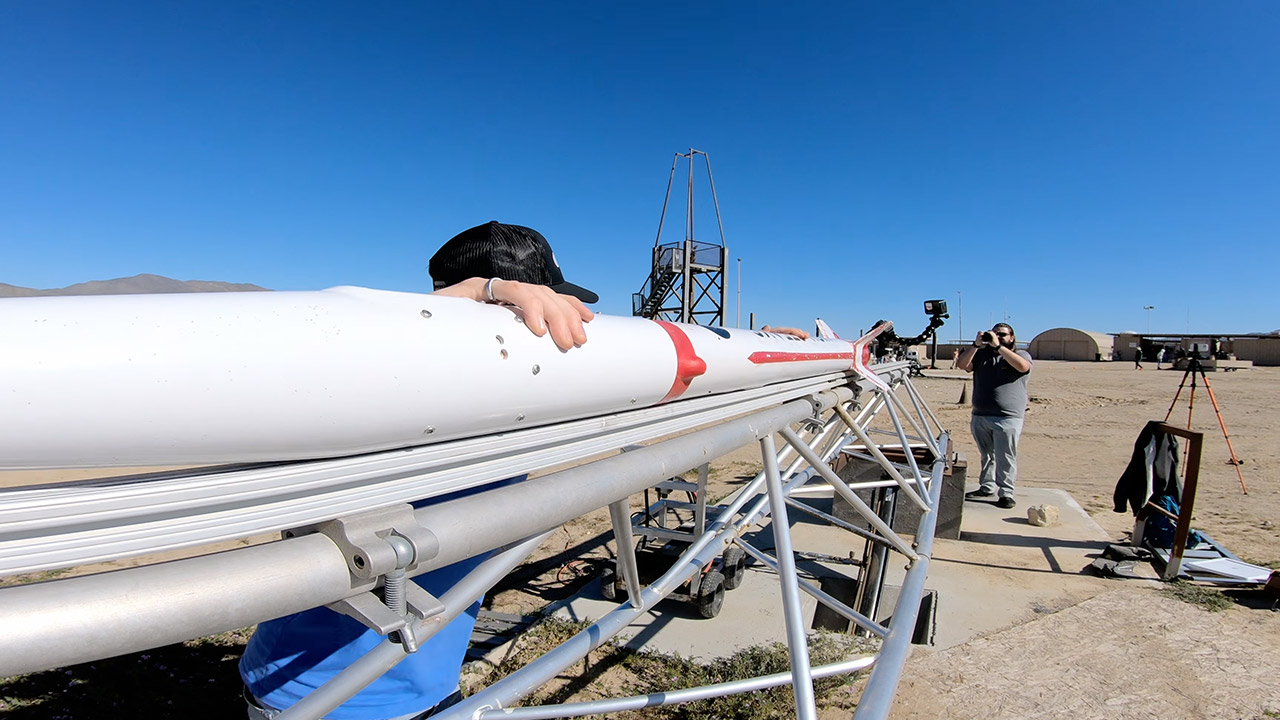
Friends of Amateur Rocketry hosted the launch just outside of Randsburg, California. On the pad, the rocket seemed excellent at first, but then it began to wobble slightly. After studying the flight, it appears that the AVA accelerometer detected some 10 degree drift, possibly from an earlier rough drop test, and the guidance system became confused and guided the thing off course. The post-flight assessment revealed that removing a smoothing filter in the control software allowed the rocket’s natural wobble frequencies to take over and simply get bigger and bigger.
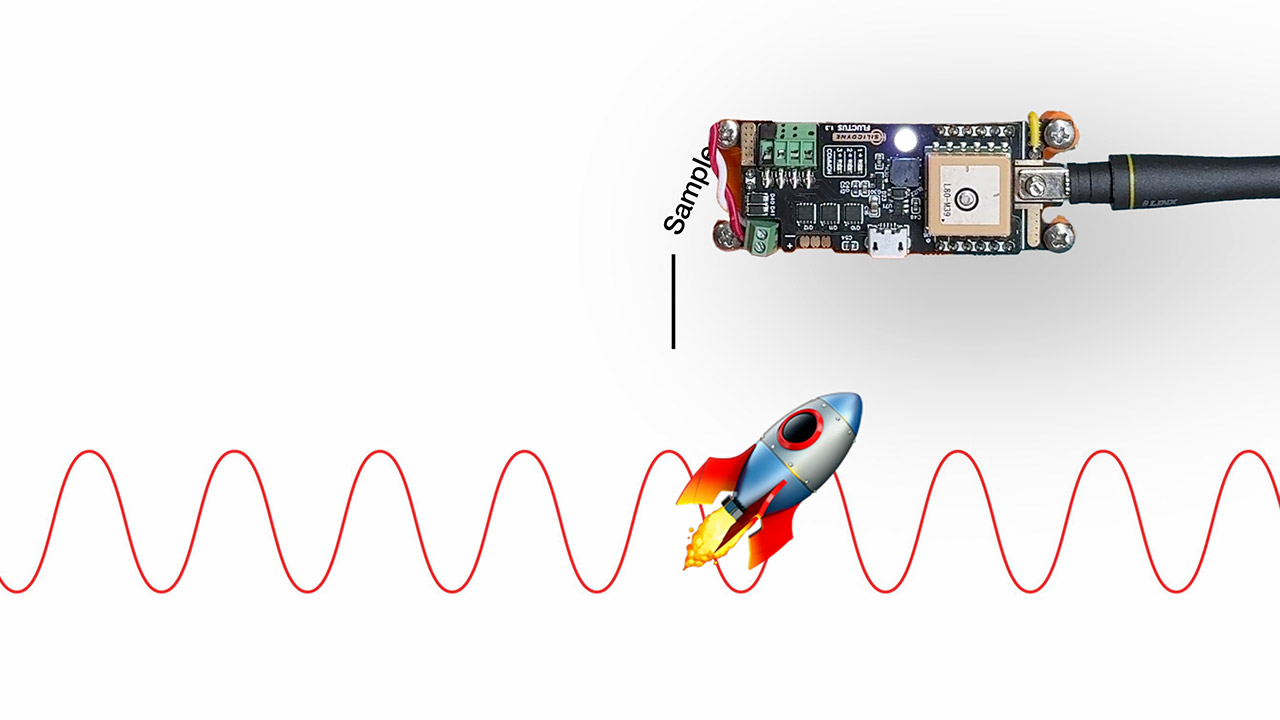
Fluctus encountered a hitch. Its 50-hertz inertial sensors were synced with a terrible vibration in the airframe, resulting in a real disaster, an aliasing fault to be specific. The onboard computer was entirely mislead, believing the rocket had turned over (more than 100 degrees) despite being as stable as a rock. Fluctus’ computer freaked out and went into Emergency Apogee mode, believing the rocket was already beyond recovery. To make matters worse, the computer was fooled by air pressure fluctuations (which you’d normally expect near the speed of sound), and the barometer began calling it a crash. Unfortunately, the camera pod and parachute circuits took the signal and ignited when the rocket was still flying at more than 700 miles per hour.
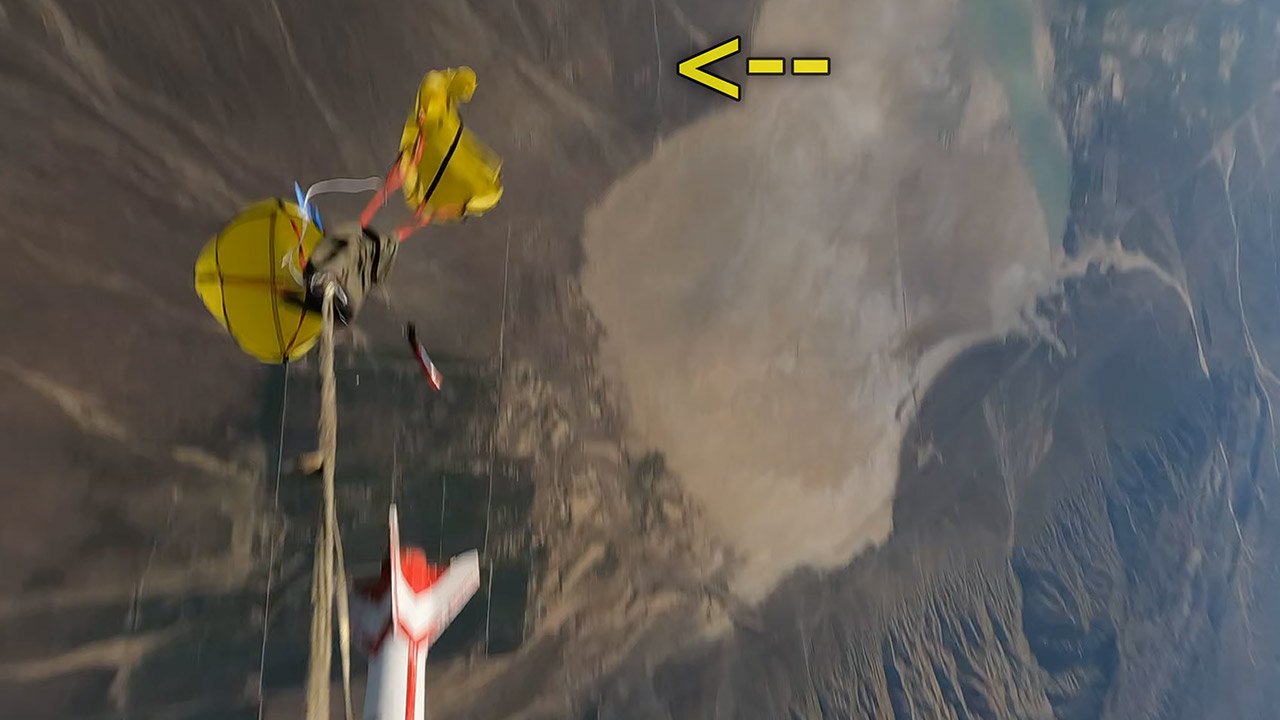
That kind of speed does not allow for a nice touch for the parachute, as the aerodynamic forces ripped it to bits, and the booster tore free from the upper section of the airframe. Any aspirations of getting a good slow-motion shot of the landing are gone. The recovery crew discovered the upper section and the camera pod around 350 meters from the launchpad, and they were pleasantly delighted to find that the camera pod itself was still intact, with just little damage to the streamer. The booster, on the other hand, had a far more dramatic finish, since it landed up a long distance away and severely damaged.
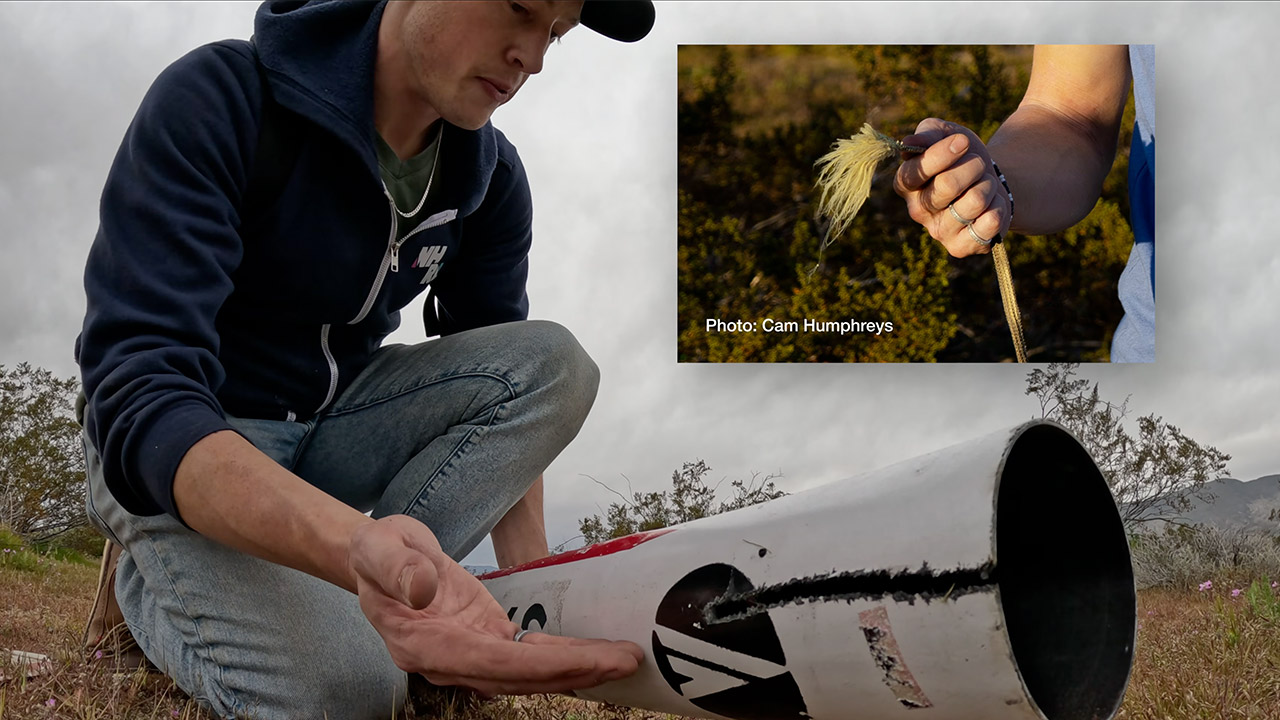
Barnard quickly identified the root cause of the problem, a nasty little dance between the vibration of the aircraft and the sample rate of the inertials, which was easily detected by a GoPro that was gathering data at a greater rate. As a result, firmware changes were implemented to avoid this type of incident from recurring on future flights.
[Source]