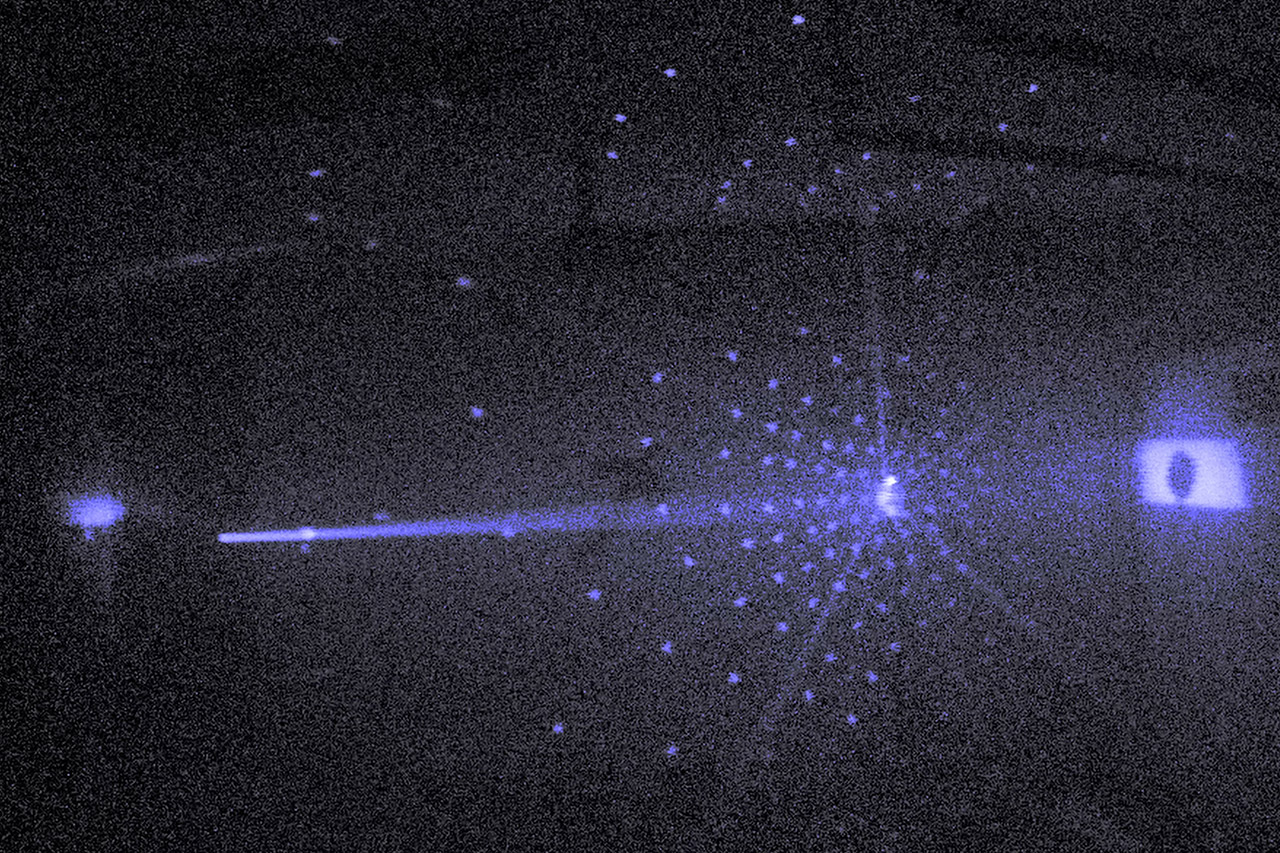
Brian Haidet, aka AlphaPhoenix, has created something truly remarkable in his garage: a camera that records at an astonishing 2 billion frames per second – fast enough to actually capture light as it’s moving.
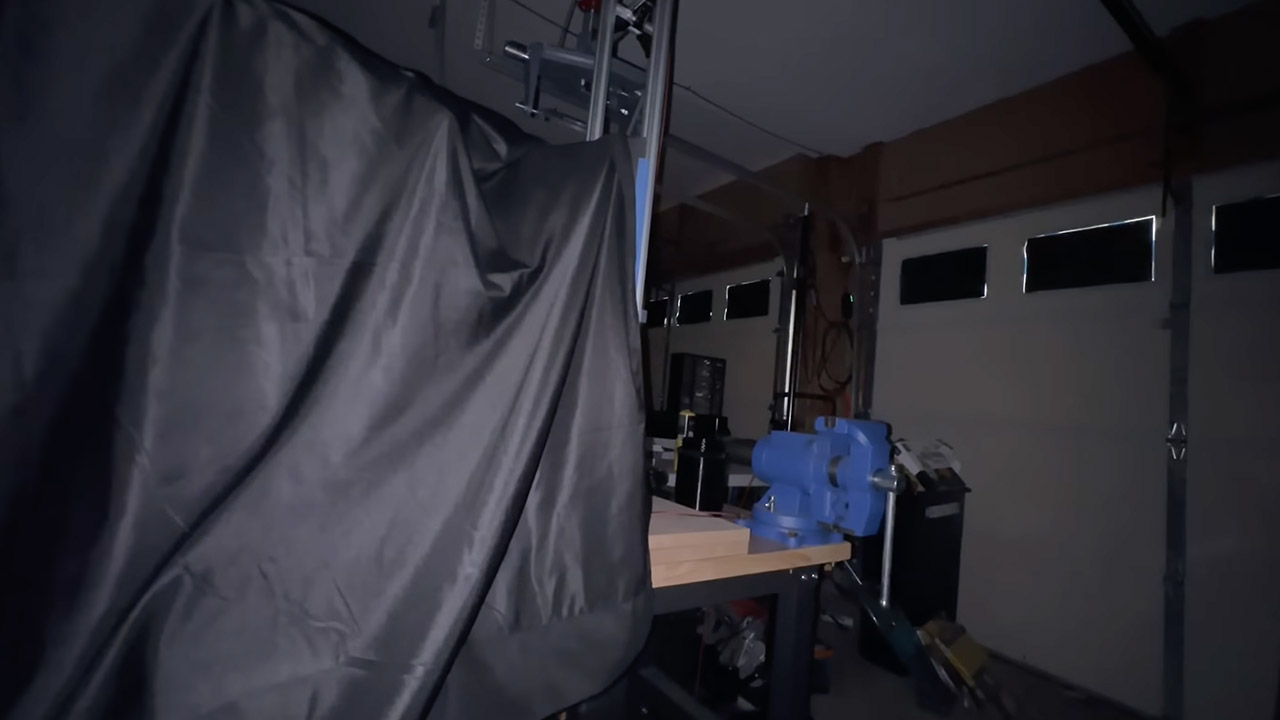
Haidet’s camera rips light into individual frames at a rate that allows you to observe the speed of light (approximately a foot per nanosecond) in action. To put this into perspective, each frame essentially captures a little bit of light in mid-air. The arrangement is deceptively simple: a high-powered laser fires a beam across the garage, bounces it off a mirror, and then sends it zigzagging back and forth between a couple of parallel mirrors before hitting the wall. And it’s the way light interacts with fog particles in the air that makes it visible to the camera; when captured at 2 billion frames per second, the beam transforms into a captivating slow-motion dance that reveals some strange, almost science fiction-like phenomena.

- Big Views, Brilliant Quality - Groundbreaking 1-inch 360° imaging [1] delivers excellent low-light for sharper shots on every adventure. Now with...
- Stunning, Day or Night - Capture every detail with 8K 360° videos and store them effortlessly with 105GB Built-in Storage. Whether you're exploring...
- No Pole, All Action - 1.2m Invisible Selfie Stick turns your Osmo 360 into a cameraman that follows you. Shoot super-smooth 4K/120fps and magical...
To create a camera capable of this, Haidet had to completely rebuild his previous 1 billion frame per second system, which he constructed in 2024. He improved the motors to increase precision, strengthened the optics to produce crisper images, and updated the software to handle data at superhuman rates.
When the camera is directly behind the laser, the light flowing away from it appears to be crawling – while the light rebounding back is almost instantaneous. Now you might think this is some kind of weird effect where light is somehow breaking its own rules – but nope: it’s just the way that the camera is set up. The thing is, when light bounces off a fog particle that’s close to the camera, it gets to the sensor a lot quicker than light that’s bouncing off a particle that’s a bit further away. So when you move the camera to the other end of the garage, you see the exact opposite effect: the light from way off in the distance gets to the sensor with hardly any delay at all, and the beam’s journey looks pretty much instantaneous.
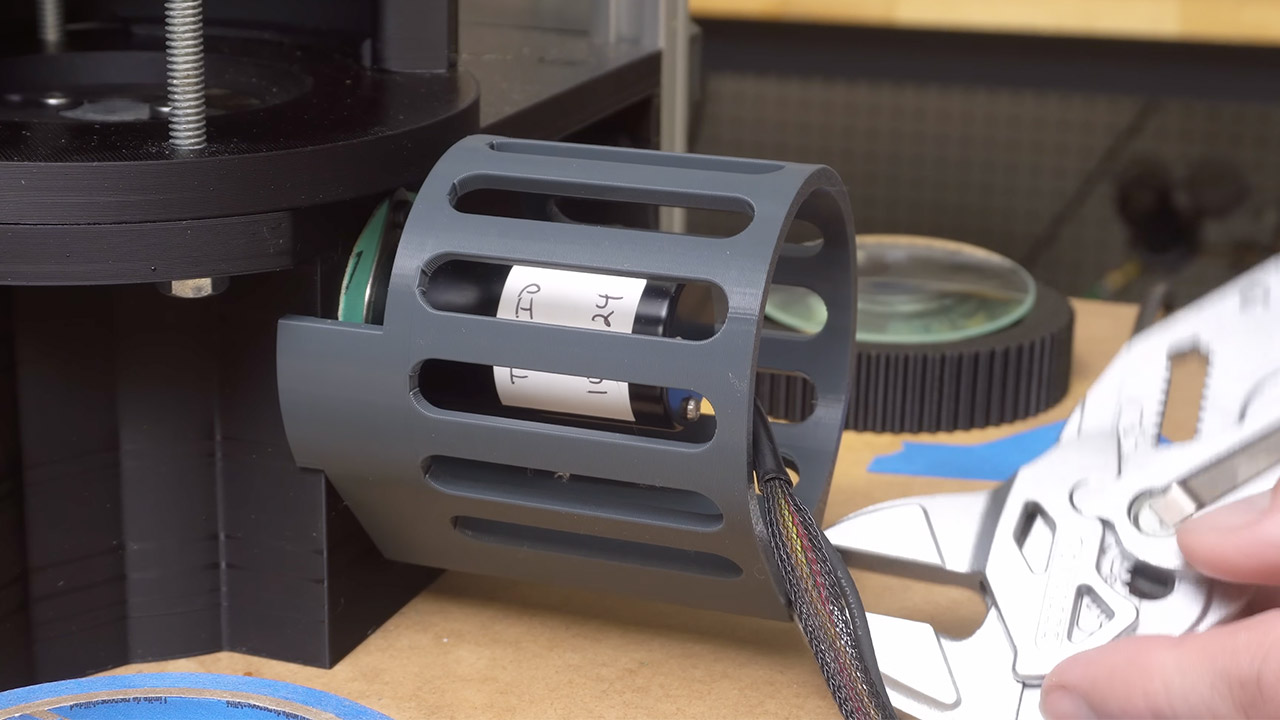
Now, it’s worth noting that you can’t actually record a full image at 2 billion frames per second with off-the-shelf technology – so what Haidet’s camera does is this: a tiny mirror on a gimbal sweeps back and forth across the area, tossing the light from different angles to a single super-sensitive sensor. Each sweep captures a single pixel of video, which is then stitched together to make a complete image. And yeah, it’s a pretty slow way to build an image – but it’s basically like having a million-dollar camera with thousands of sensors all working in perfect sync. Precision is essential here; Haidet replaced clunky hobby servos with high resolution encoders and timing belts, resulting in mirror movements that are exact to a fraction of a degree.
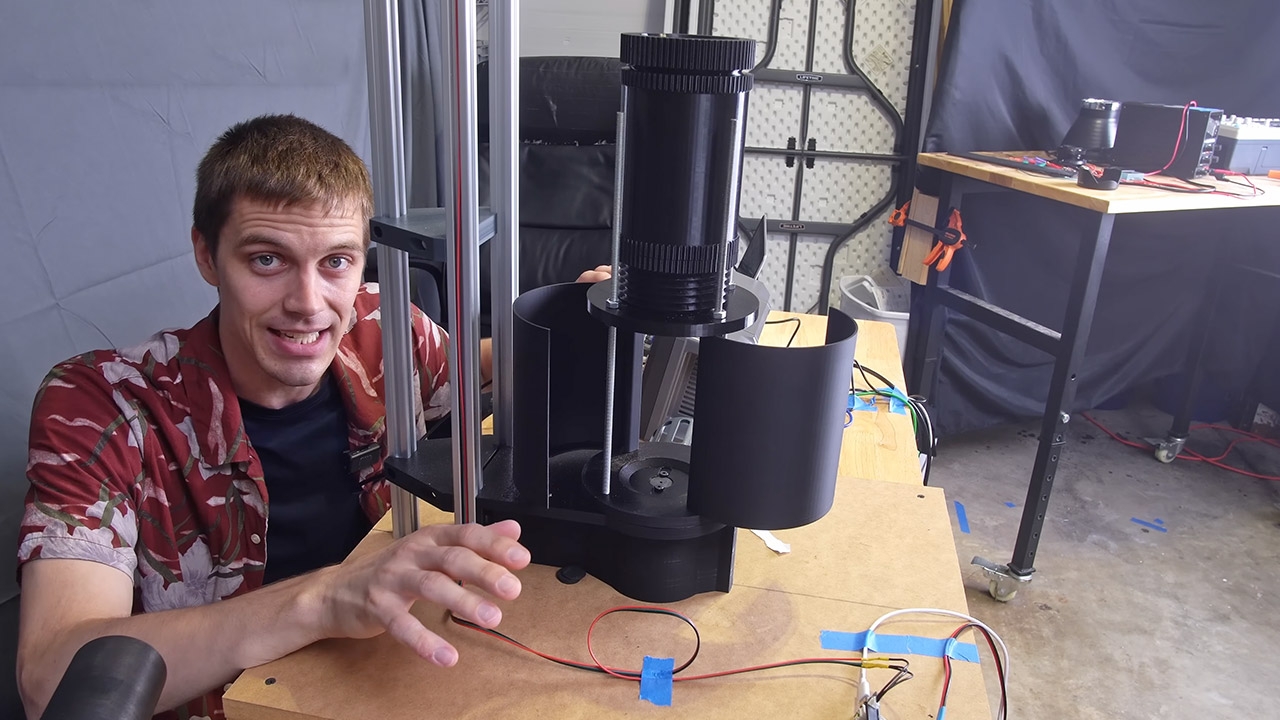
The electronics are as complicated, with a photomultiplier tube (PMT) converting incoming photons into electrical signals that go along coaxial wires to an oscilloscope sampling at 2 billion times per second. Haidet’s genius is in how he manages this data. To eliminate noise, he transmits both the PMT signal and a sync pulse down the same cable, carefully timing them to arrive independently. This system, which sprang from a shower thought and a tangle of cords, ensures that each pixel’s video aligns properly and gives a flawless illusion of a complete frame recording.
[Source]