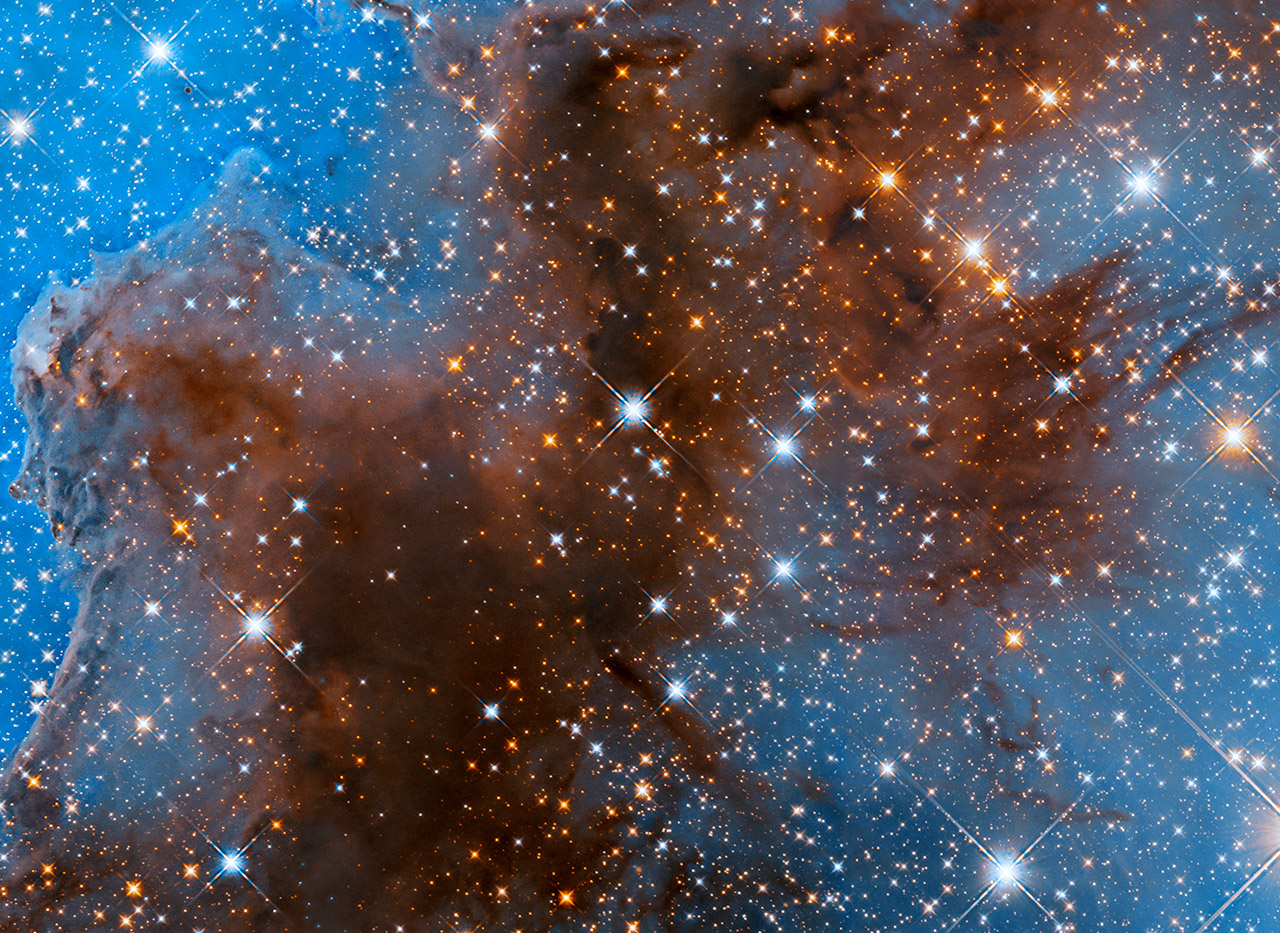
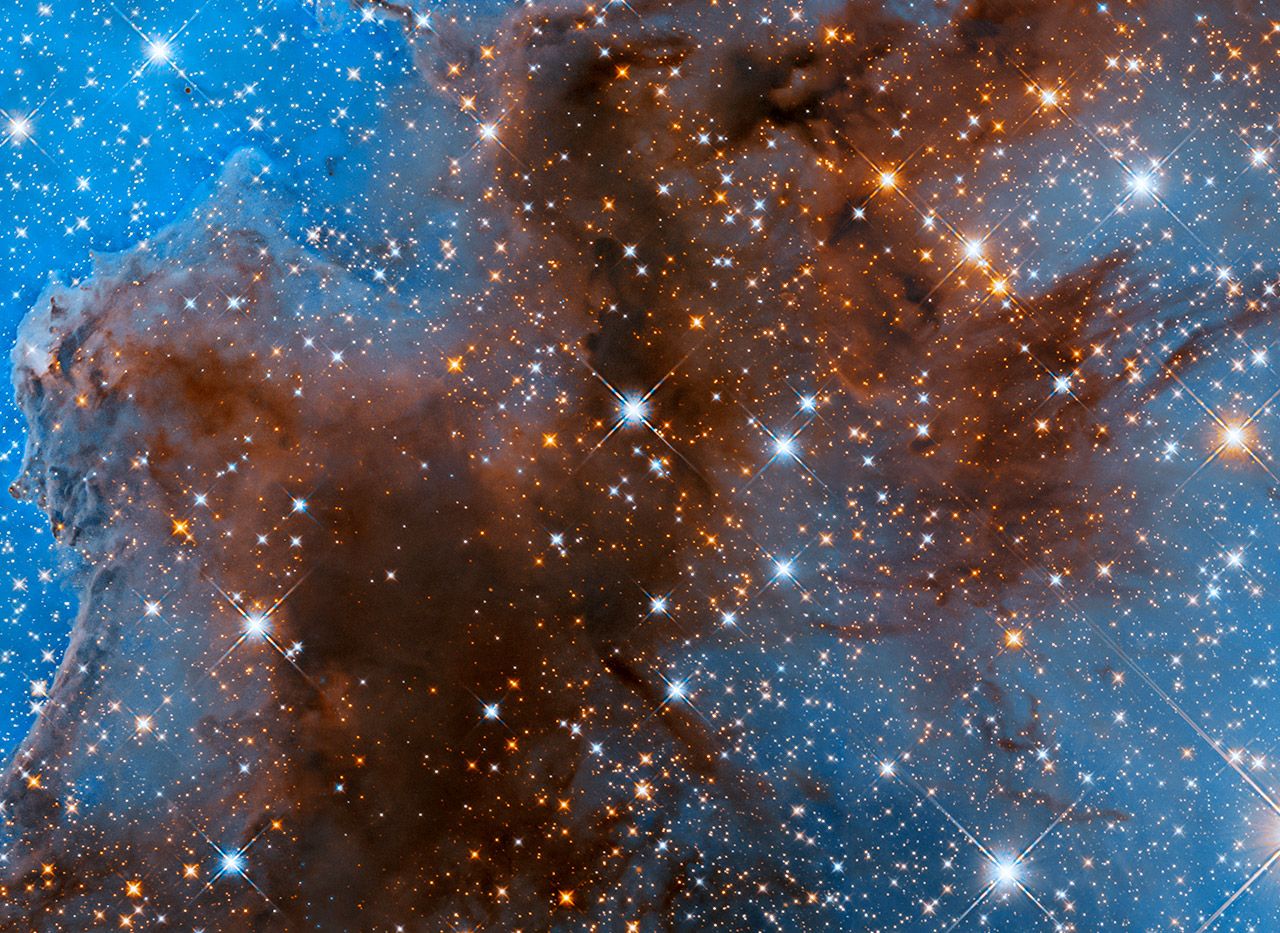
Another day, another incredible Hubble Space Telescope image, and this time it’s of the gigantic sparkling stars in a small section of the Carina Nebula (NGC 3372). This section is composed of a massive cloud of gas and dust, which is home to numerous stars including at least a dozen that are up to 100-times the mass of our Sun.

Since Carina is an emission nebula, the intense radiation from its stars ionizes the gas and causes it to glow. However, that same gas is widely and thinly spread out over a large area, thus also making it a diffuse nebula. This dynamic area of the sky boasts bursts of star formation occurring alongside star death, and as they form and produce ultraviolet radiation, their stellar winds disperse the gas and dust around them, resulting in dark, dusty cloaks.

- COMPUTERIZED STAR LOCATING TELESCOPE: The Celestron NexStar 130SLT is a computerized telescope that offers a database of more than 4,000 stars...
- COMPACT AND PORTABLE: This telescope for adults and kids to be used together is ideal for weekend camping trips or excursions to dark sky sites. Its...
- NEWTONIAN REFLECTOR OPTICAL DESIGN: The NexStar 130SLT is the largest in the SLT family. The 130mm aperture gathers enough light to see our Solar...
To take this image of the Carina Nebula, scientists relied on Hubble’s infrared light imaging capabilities, which detect longer wavelengths of light not scattered by the heavy dust and gas surrounding the stars. This image shows only a small section of the nebula, located near the center in an area with thinner gas,” said NASA.