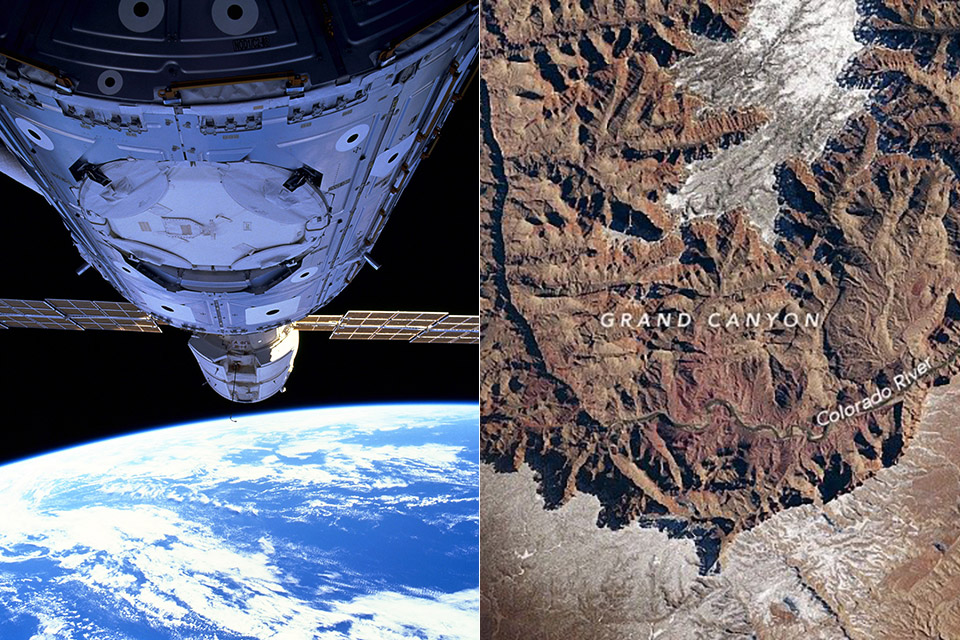
On January 26, 2026, an astronaut on the International Space Station looked earthward and captured a view of the Grand Canyon that few people have ever seen. A fresh layer of snow from a few days of flurries clings to the canyon’s rim, framing the huge abyss in stark white against the deep red-brown rock below. The Colorado Plateau looks like a flat canvas sprinkled with dust, while the canyon itself, carved out by the Colorado River over millions of years, plunges into darkness.
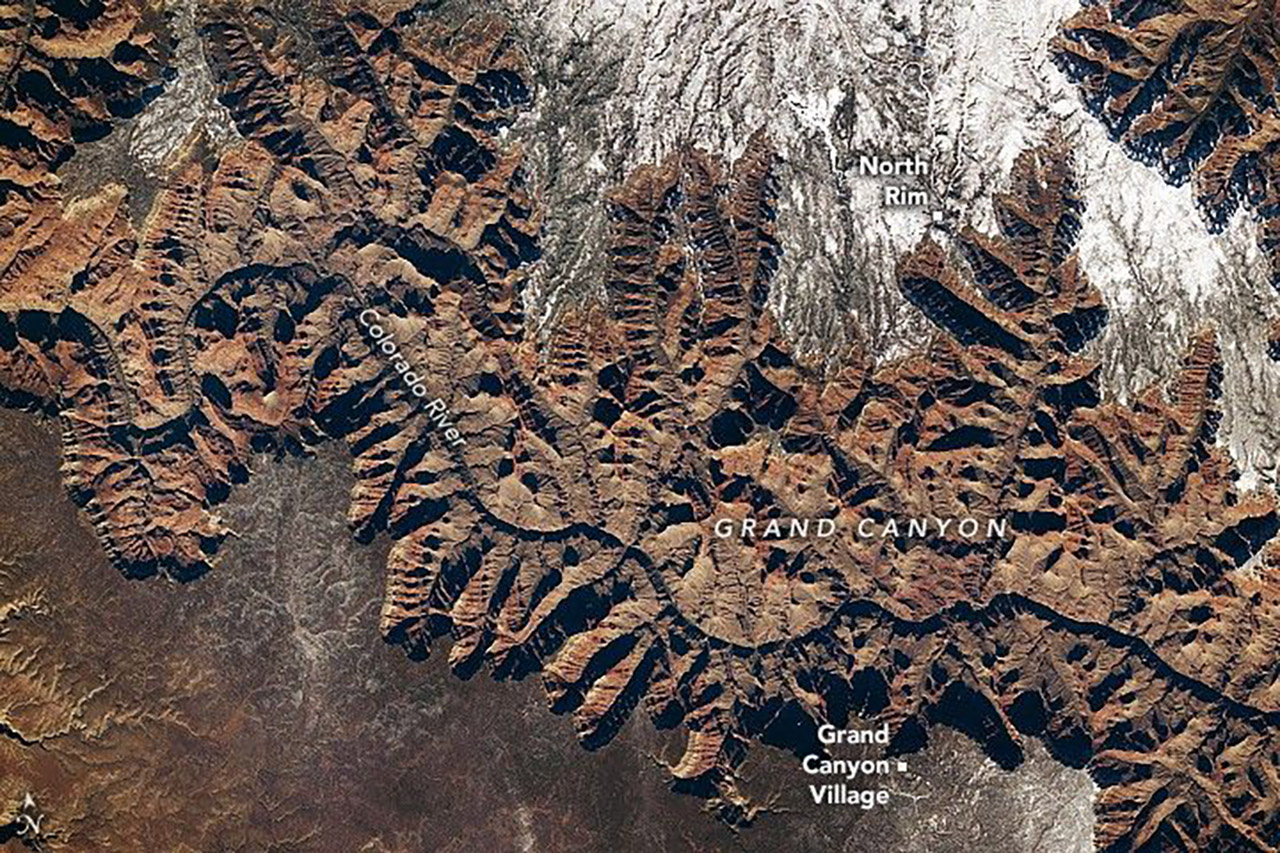
Sunlight floods in from the bottom right, throwing lengthy shadows up the canyon walls. These shadows occasionally play a devious trick on you. Flat plateaus might appear high and almost like mountain peaks because most people believe light enters from above. However, the snow on the higher land puts the record straight, telling your eye that the snowy pieces belong on the higher edges, not the valley level. The South Rim is roughly 7,000 feet tall, whereas the North Rim is much higher at 8,000 feet. And you can notice the contrast in the coating of white that remained after the storm passed.

- BUILD AN OFFICIAL NASA ROCKET – Kids prepare to explore outer space with the LEGO Technic NASA Artemis Space Launch System Rocket (42221) building...
- 3-STAGE ROCKET SEPARATION – Young builders can turn the hand crank to watch the rocket separate in 3 distinct stages: solid rocket boosters, core...
- STEM BUILDING TOY FOR KIDS – This educational rocket kit was created in collaboration with NASA and ESA to showcase the authentic system that will...
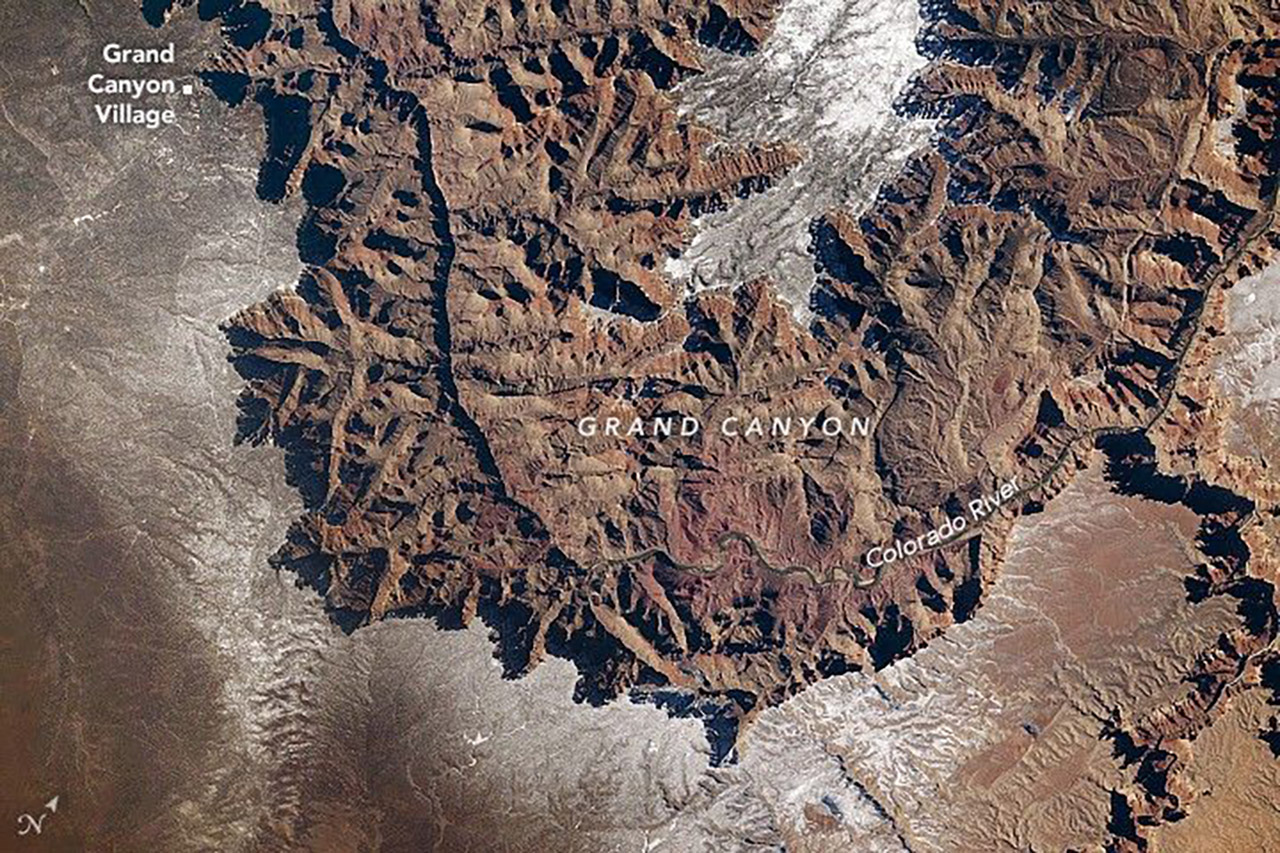
Warmer air at ground level inside the canyon converted the same precipitation to rain. Phantom Ranch received only 0.06 inches, while the canyon’s margins were holding onto several inches of fresh fall. Winter averages are 58 inches on the South Rim and 142 on the North Rim, so a light dusting like this is not unusual. But from up high in orbit, the contrast is everything, as the snow highlights every twist and curve of the canyon margins, transforming a recognizable landmark into something like to a map of its own elevation lines.
The astronauts on Expedition 74 captured this photo with a Nikon Z9 at 400mm as part of routine Earth observation missions from the station. The files were processed at Johnson Space Center, trimmed, and contrast adjusted to bring out the details without getting too fancy. The archives contain two versions of the photograph, both of which are high enough resolution to show the road along Desert View Drive, which was briefly closed owing to ice during the flurry.