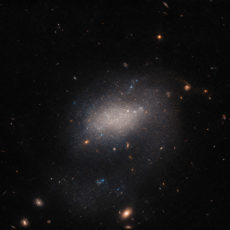
The NASA/ESA Hubble Space Telescope captured a close-up of NGC 3596, a spiral galaxy about 90 million light-years away in the Leo constellation. The picture shows its tidy spiral arms, bright pink areas where stars are born, and young blue stars.
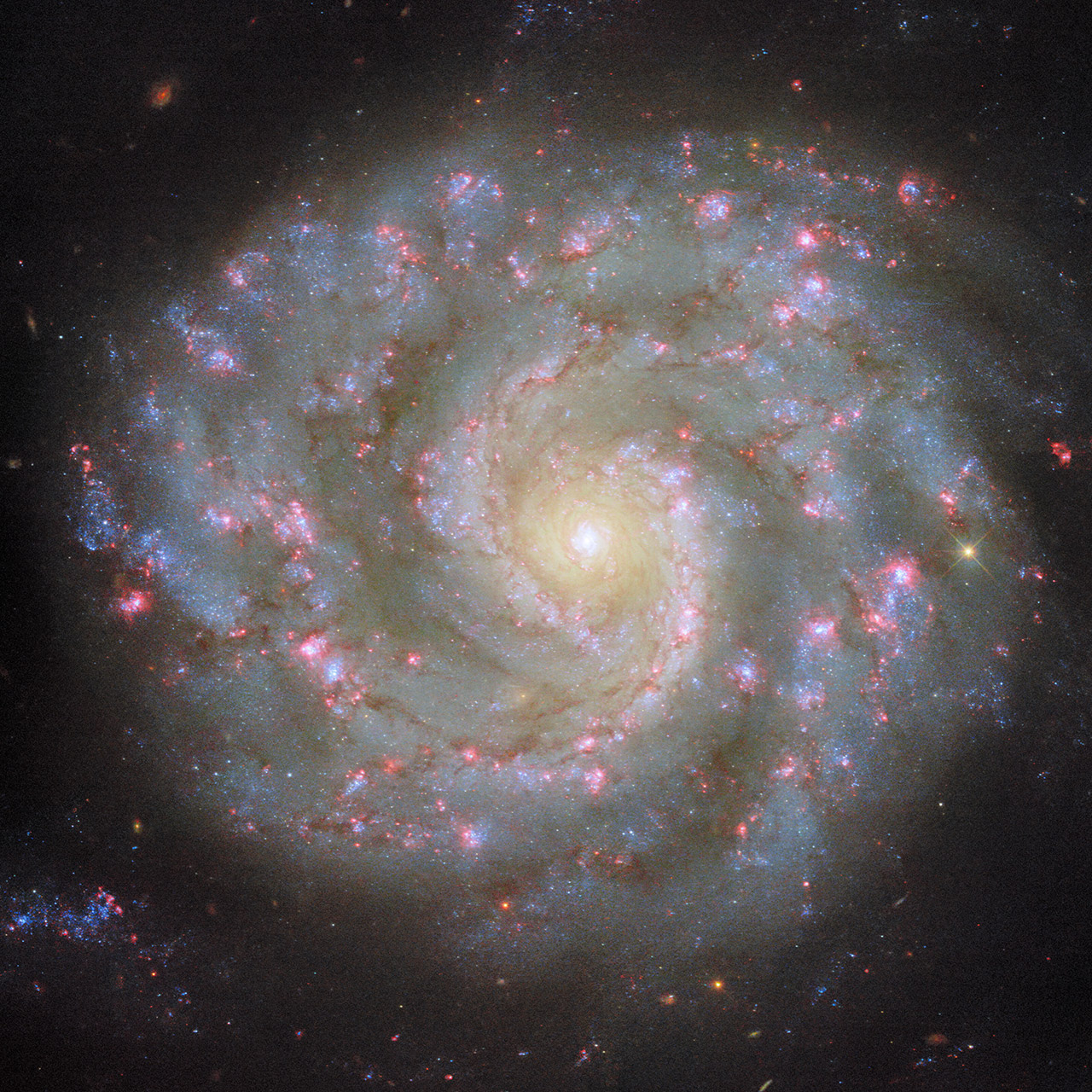
Why is it called a face-on spiral galaxy? Well, it’s because, from Earth, we observe it straight from the top, not from the side or at an angle. This results in its spiral arms looking more clear and spread wide, like a shining cosmic pinwheel of sorts. The face-on view shows off the galaxy’s structure, with bright spiral arms full of stars, gas, and dust, and pink and blue areas where new stars are forming.

LEGO Icons NASA Artemis Space Launch System - DIY Rocket Model Building Set for Adults, Ages 18+ - Gifts...
- NASA rocket model kit – Launch into a creative project with the LEGO Icons NASA Artemis Space Launch System model building project for adult space...
- What’s in the box? – This creative building set includes everything you need to craft a multistage rocket with 2 solid-fuel boosters, an Orion...
- Features and Functions – This NASA-themed rocket model features retractable launch tower umbilicals, rocket support and crew bridge, detachable...
For those who enjoy the specifics, NGC 3596 is an intermediate spiral galaxy, sometimes noted for a weak bar at its center. This bar, less obvious than in other galaxies, draws gas to the core, aiding in the creation of new stars and possibly fueling a supermassive black hole. It’s dotted with H II regions (bright gas clouds) and young star clusters, like cosmic glimmers that shine in the spiral arms and give scientists hints about how stars develop in spiral galaxies.
Discovered by William Herschel in 1784 using his massive reflecting telescope, NGC 3596 has been charming astronomers for over two centuries. Herschel’s observations laid the groundwork for modern studies of galaxies, and Hubble’s recent image brings that legacy into vivid color.