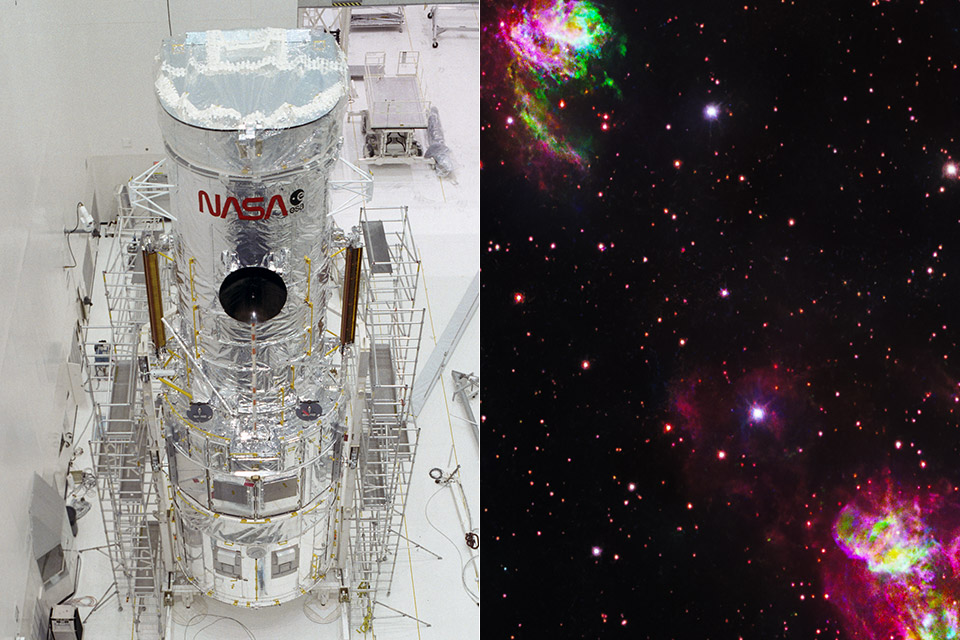
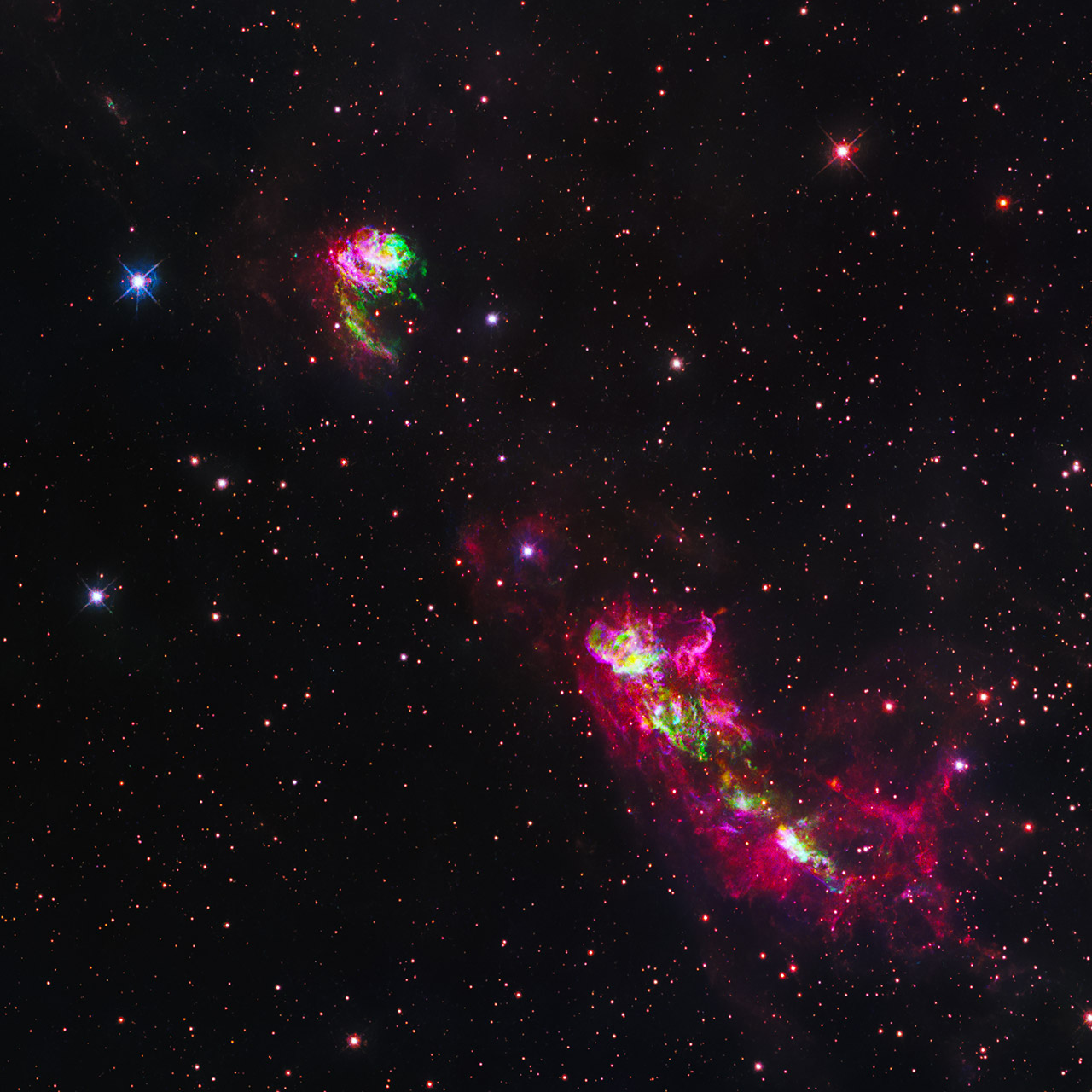
The latest Hubble image released by NASA depicts an incredibly beautiful spectacle taking place in the constellation Sagittarius, just 5,500 light-years away. The Herbig-Haro objects HH 80 & HH 81 are vivid pink and green patches illuminated by jets of ionized plasma streaking diagonally across a dark cosmic background. Stretching a massive 32 light-years across, these vibrant structures are part of the greatest known outflow from a star that is still developing.
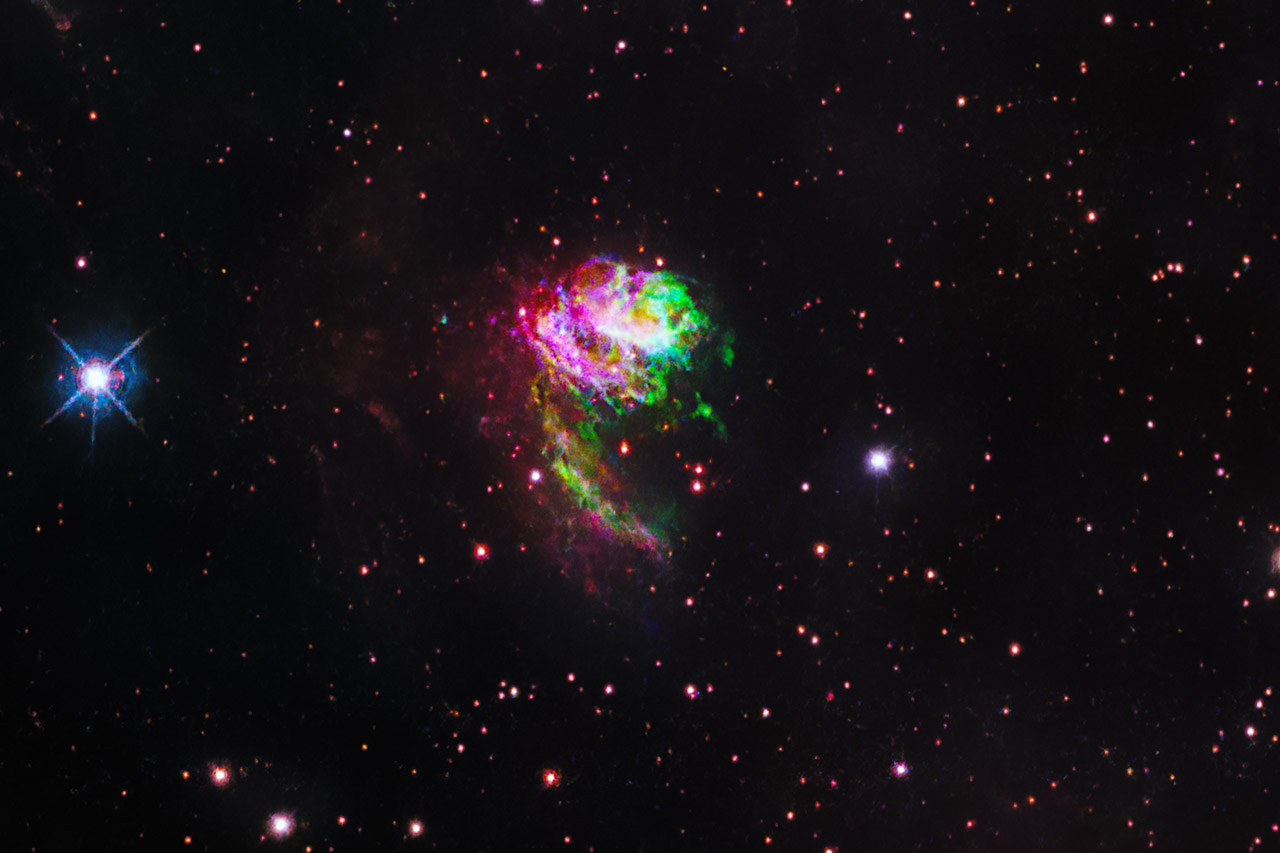
The fine details of this area, which show a variety of motion and structure across time, are captured by astronomers using Hubble’s Wide Field Camera 3. The bottom streak is associated with HH 80, but the upper left patch is associated with HH 81. The colors are caused by the gas’s agitated atoms, which have been heated by numerous violent collisions. That pink and green color is essentially the result of all that fast-moving material colliding with the slower gas that the star had expelled.

- BUILD AN OFFICIAL NASA ROCKET – Kids prepare to explore outer space with the LEGO Technic NASA Artemis Space Launch System Rocket (42221) building...
- 3-STAGE ROCKET SEPARATION – Young builders can turn the hand crank to watch the rocket separate in 3 distinct stages: solid rocket boosters, core...
- STEM BUILDING TOY FOR KIDS – This educational rocket kit was created in collaboration with NASA and ESA to showcase the authentic system that will...
This show is powered by IRAS 18162-2048, a protostar. This monster is the largest protostar in the nearby L291 molecular cloud, with a mass around 20 times that of our Sun. A few narrow, fast-moving jets are created as material from the young star’s accretion disk falls near it and is subsequently directed outward by strong magnetic fields. In certain locations, speeds can surpass 1,000 km/s, which is the fastest outflow from a young star that has been observed in both radio and visible light.
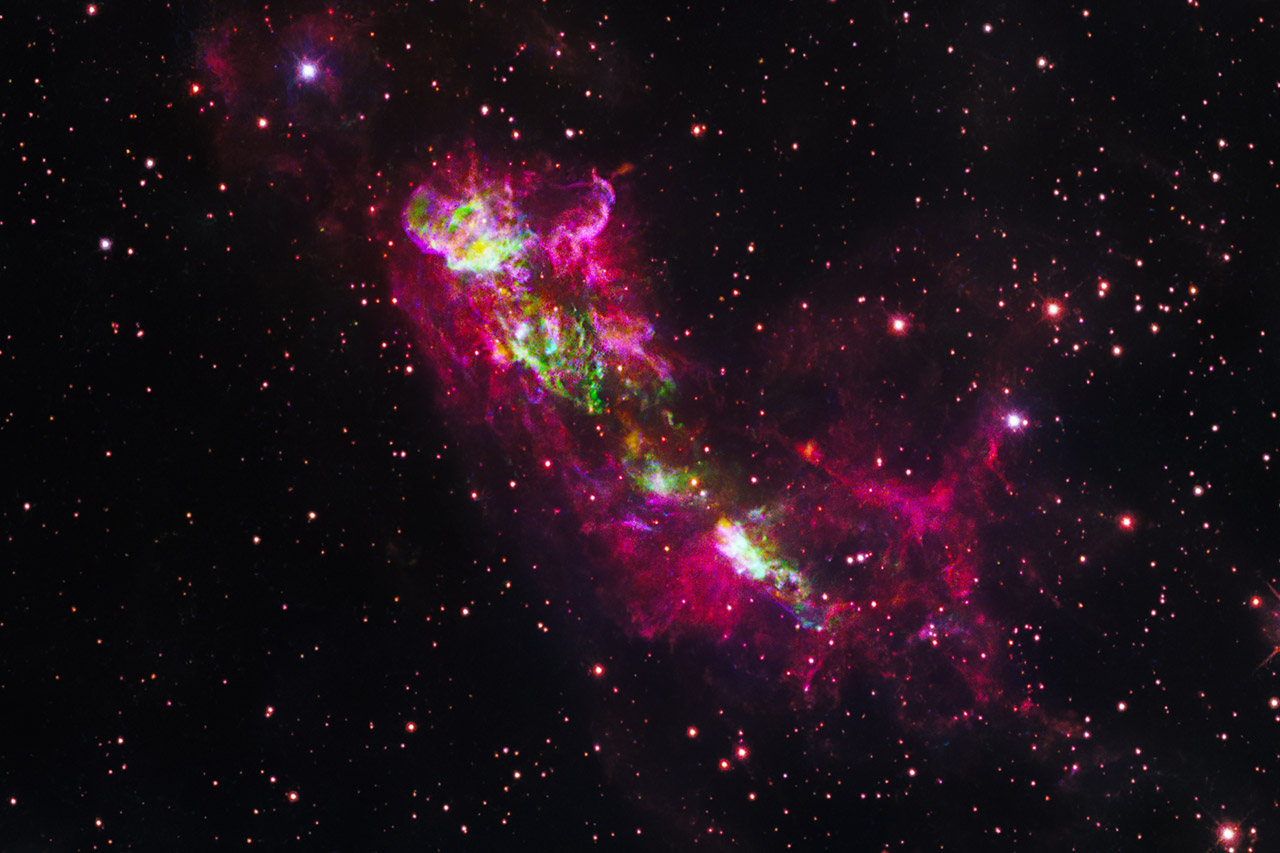
Bow shocks from these encounters heat up the nearby clouds and give them a striking glow. The same pair of HH 80 & 81 had already been detected back in the 1990s, but Hubble’s most recent data set provides us with a considerably clearer picture and indicates some rather subtle alterations. It turns out that these outflows have a significant impact on star formation by clearing space around the protostar and influencing the amount of material it eventually gathers.
We have a fairly good picture of how heavy stars get going in the first place because stars like IRAS 18162-2048, which are fairly massive, produce far more powerful jets than their smaller counterparts. Every new image that Hubble provides just adds to the information we have gathered over the previous few decades, demonstrating the rapid evolution of these fleeting occurrences on cosmic timeframes. It serves as a reminder of what is released when stars first form and is an amazing show of unadulterated energy.