
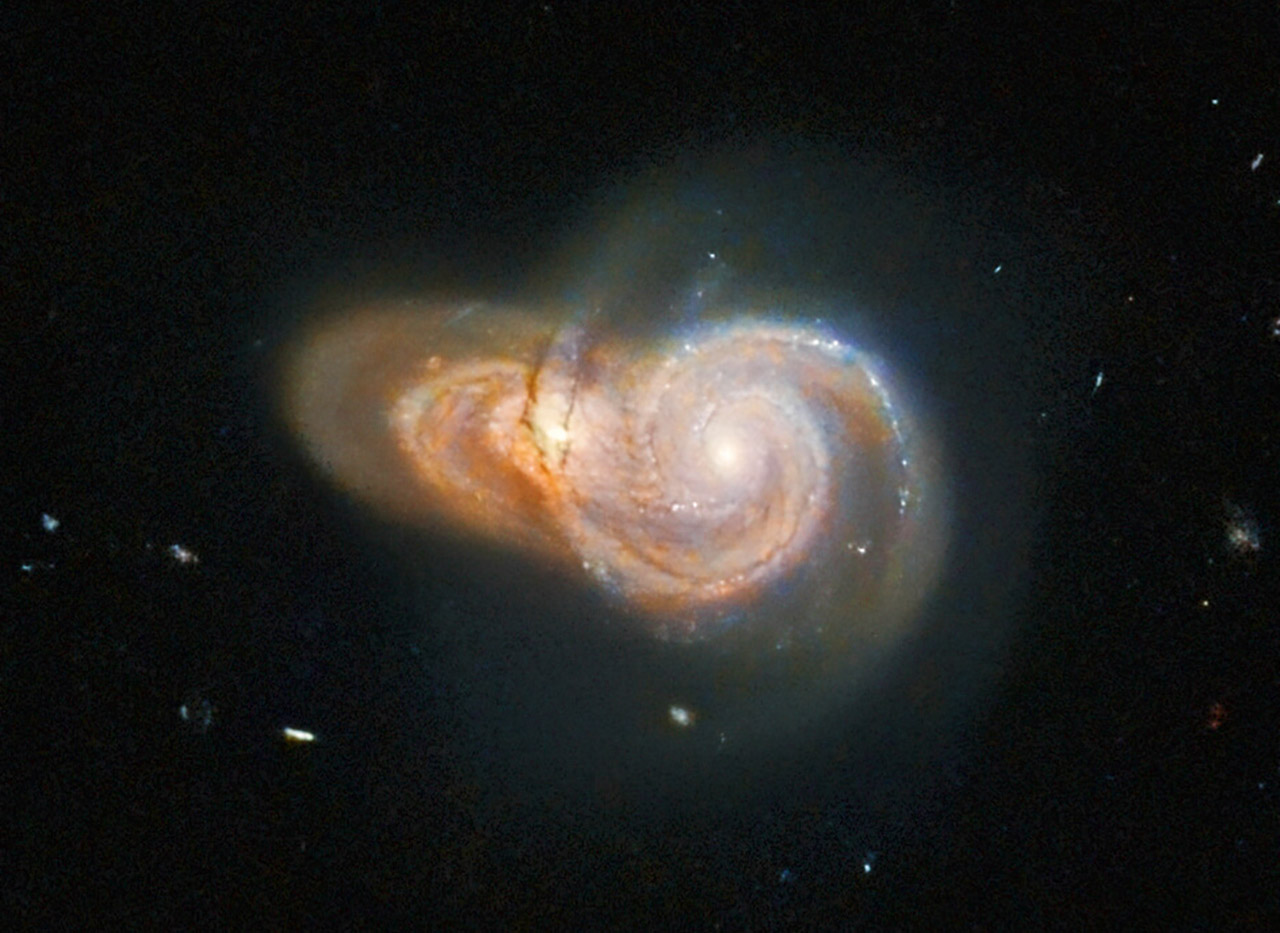

We’ve seen a spiral galaxy in a furnace, but the Hubble Space Telescope has managed to capture an even more dazzling galactic event showing two overlapping spiral galaxies. Called SDSS J115331 and LEDA 2073461, these galaxies are located over 1 billion light-years from Earth and despite it appearing to be a collision, the alignment is purely by chance, as the two are not actually interacting.
The Galaxy Zoo was first established in 2007 and this image is just one of many Hubble images observed by the citizen project. For anyone wondering how spiral galaxies are named, it all comes down to their spiral structures that extend from the center into the galactic disc. Their spiral arms are basically sites of perpetual star formation and are much brighter than the surrounding disc because of the young, hot OB stars that inhabit them.
No products found.

Over the course of the original Galaxy Zoo project, volunteers discovered a menagerie of weird and wonderful galaxies such as unusual 3-armed spiral galaxies and colliding ring galaxies. The astronomers coordinating the project applied for Hubble time to observe the most unusual inhabitants of the Galaxy Zoo — but true to the project’s crowdsourced roots, the list of targets was chosen by a public vote,” said the European Space Agency.