

NASA / ESA’s Hubble Space Telescope observes a collection of interstellar gas and dust in nebula RCW 7, which is located 5,300 light-years from Earth in the constellation Puppis. Due to the massive protostars forming here that give off strongly ionizing radiation and fierce stellar winds, RCW 7 is known as an H II region.
H II regions are basically filled with hydrogen ions, and the ultraviolet radiation from the massive protostars excites the hydrogen, causing it to emit light and giving RCW 7 its soft pinkish glow. In this image, we see the clouds form a flat blue background towards the bottom, becoming more smoky towards the top. They are illuminated on one side by stars in the nebula, while a thick arc of gas and dust reaches around from the top, where it is brightly lit by many stars.

- Superior Optics: 400mm(f/5.7) focal length and 70mm aperture, fully coated optics glass lens with high transmission coatings creates stunning images...
- Magnification: Come with two replaceable eyepieces and one 3x Barlow lens.3x Barlow lens trebles the magnifying power of each eyepiece. 5x24 finder...
- Wireless Remote: This refractor telescope includes one smart phone adapter and one Wireless camera remote to explore the nature of the world easily...
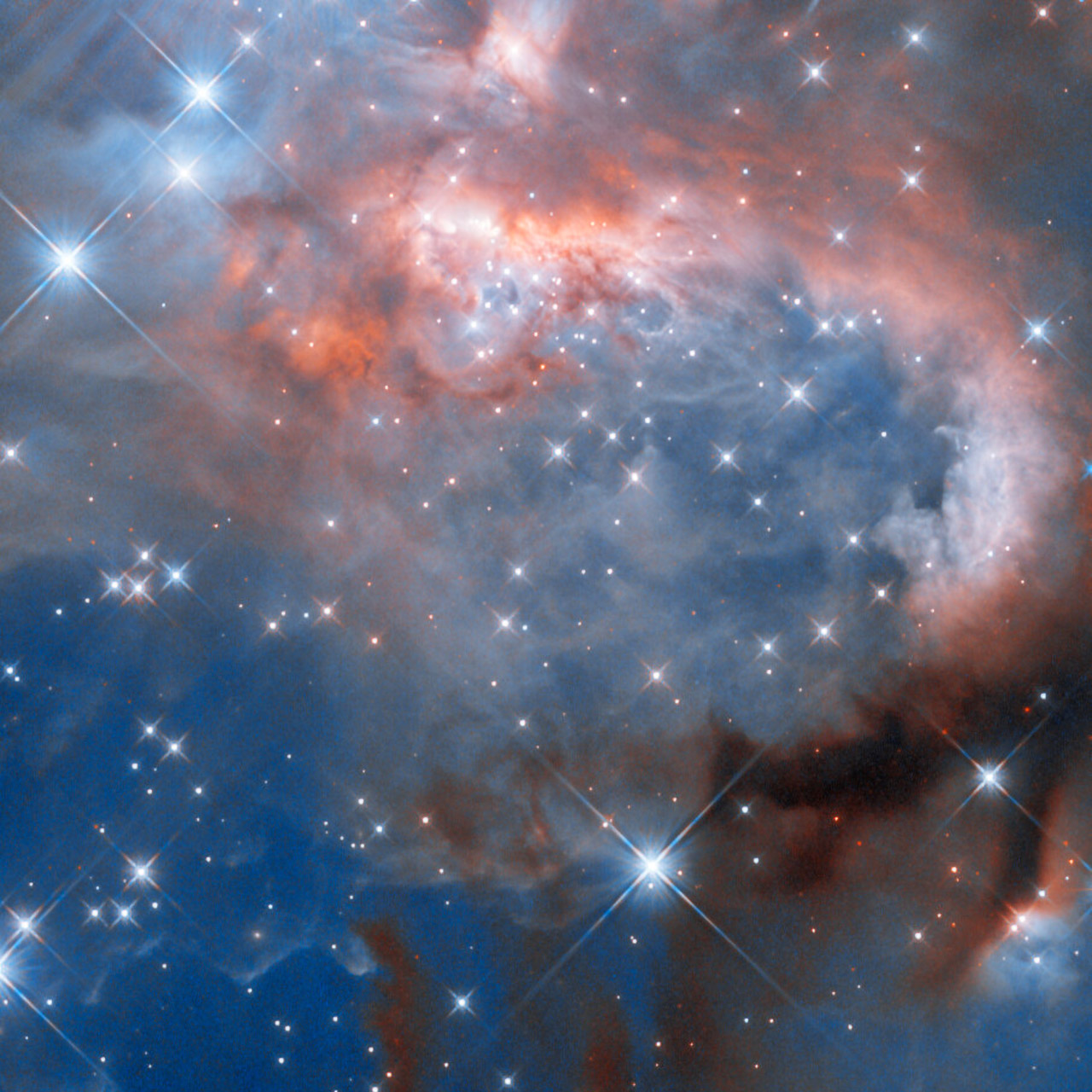
The creation of an H II region marks the beginning of the end for a molecular cloud. Over only a few million years, the radiation and winds from the massive stars gradually disperse the gas — even more so as the most massive stars come to the end of their lives in supernova explosions,” said the ESA.


