Astronomers filed a strange spectrum of the white dwarf HS 0209+0832 in 1999 and left it there. Hubble had recorded roughly 100 chemical features that no catalog of the time could name. The star itself is the bare core of a low-mass sun that burned through its fuel, shed its outer layers, and settled into a compact remnant. At about 35,800 degrees, with a cooling age near five million years, it is still young as white dwarfs go, and still hot enough to strip gas from anything orbiting close in.
Jamie Williams, a PhD candidate at the University of Warwick, returned to that file and opened it with an updated list of data. To his surprise, quite a few of the old mystery signatures matched niobium, which is no surprise given that NASA’s old Far Ultraviolet Spectroscopic Explorer had picked up the same trace. So this wasn’t a one-time occurrence with the instrument itself. Boris Gänsicke, who works with Jamie at Warwick, would tell you that he’s never seen niobium referenced in any other white dwarf studies, making this signature stand out even more. After they confirmed the match, the rest of the data no longer resembled typical planetary debris.

- EXPLORE THE HUBBLE SPACE TELESCOPE – Celebrate one of humanity’s greatest scientific feats while enjoying a relaxing building experience with the...
- REPLICA SPACE MODEL – Recreate the legendary space-based telescope with posable solar arrays and antennas, an opening aperture door and a detailed...
- AUTHENTIC DETAILS – Remove the exterior panels to reveal a detailed instrument bay, which features gyroscopes alongside primary and secondary...
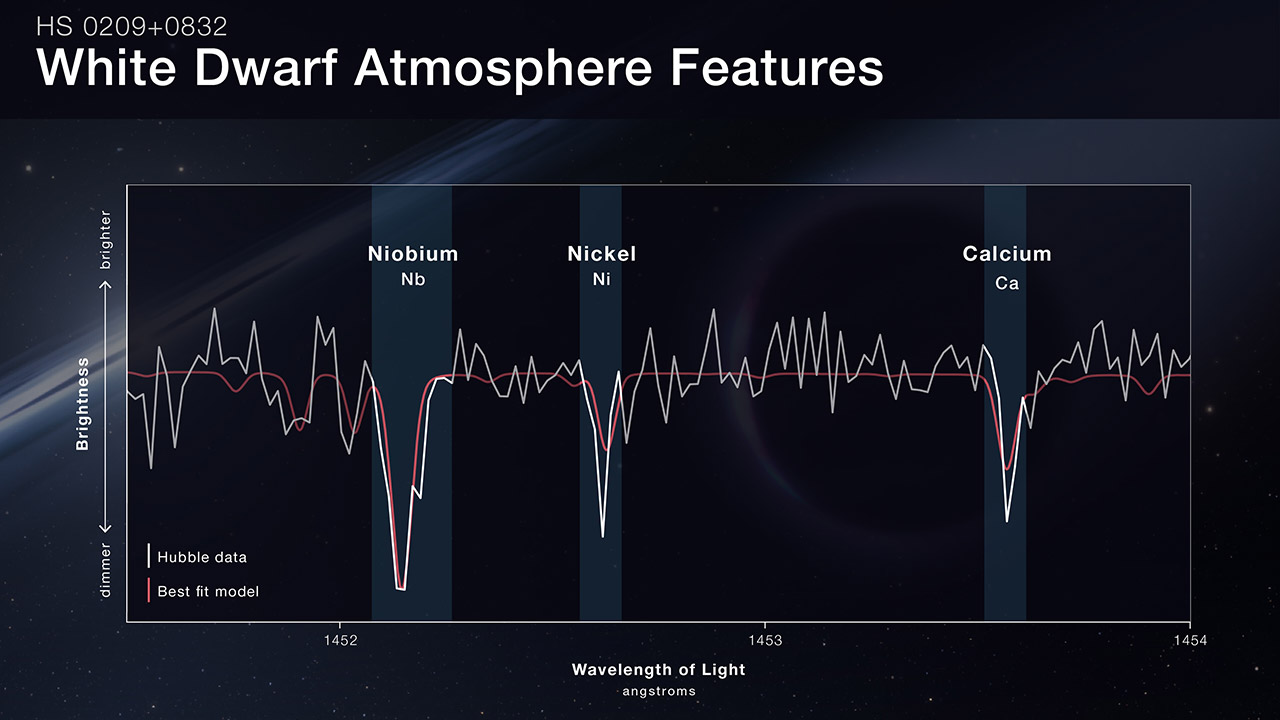
Niobium, zinc, and copper sit past iron on the periodic table. Normal fusion processes in the core of a star cannot produce those components. They develop in the intense, explosive circumstances within a dying star and are ejected into space when the star blows up and loses its outer layers. The atmosphere of the white dwarf HS 0209+0832 is dense with heavy species, with niobium levels thousands of times higher than those found in the sun. Meanwhile, silicon and iron, the traditional building components of rock, are virtually nonexistent. The nickel-to-iron ratio is more than 2, which is significantly higher than what we see on Earth or in meteorites. This material does not match any of the bodies we’ve measured in our own Solar System, but it does appear to be the type of stuff that would be produced as the star’s final bits combine into a new world.
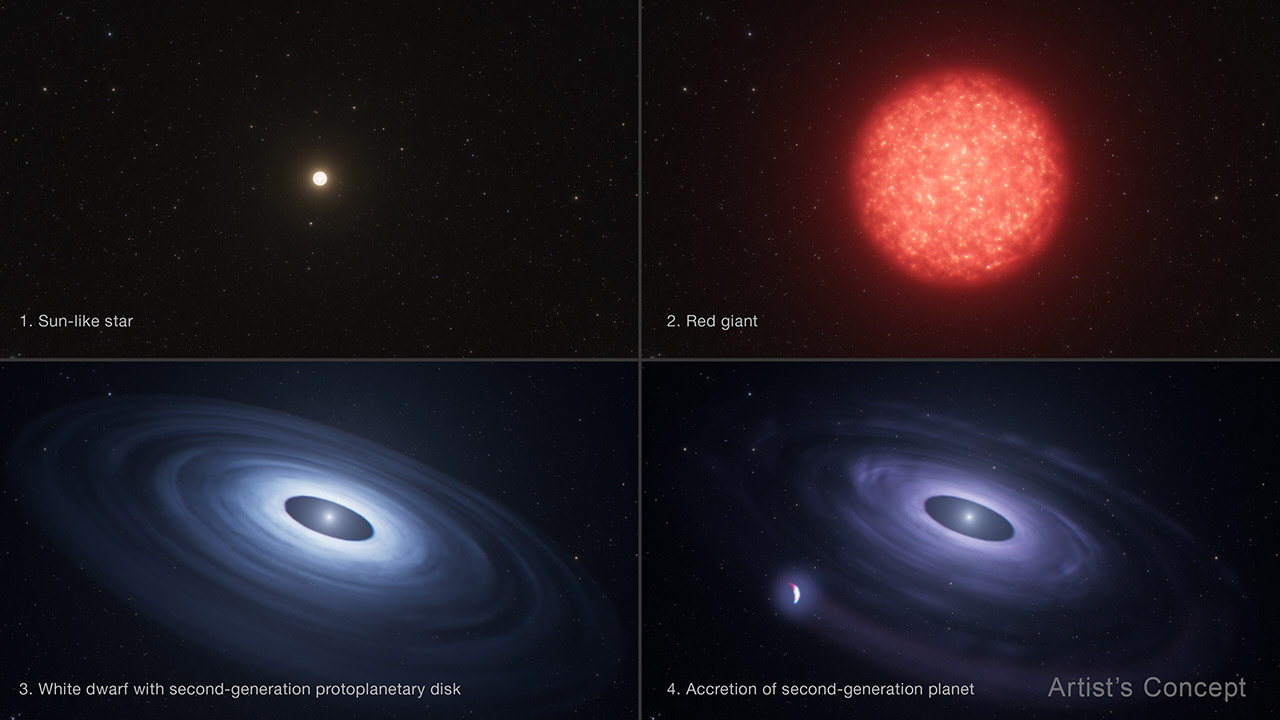
It appears that a gas giant the size of Jupiter is the most likely contender here. The amount of helium in the white dwarf’s atmosphere, along with the absence of rock-forming components, gives the impression that gas boiled off a gas giant, rather than shrapnel from a shattered asteroid. NASA’s Transiting Exoplanet Survey Satellite has been monitoring the star for four months and has detected a periodic brightness fluctuation every 4.399 days, with a swing of approximately 0.12%. That’s a pretty clear indicator of a body in space, and given the time it takes to complete that cycle, it’s probably about 3.7 million miles away. That’s around 6 million kilometers, or less than 0.04 astronomical units, and it’s significantly farther away from the Sun than Mercury ever gets. At that distance, the heat from the white dwarf causes a true gas leak, with part of the gas falling back onto the star and possibly being swept up into a long comet-like tail. According to the models, the gas is blown out at a pace of trillions of grams per second, making the system incredibly dynamic.
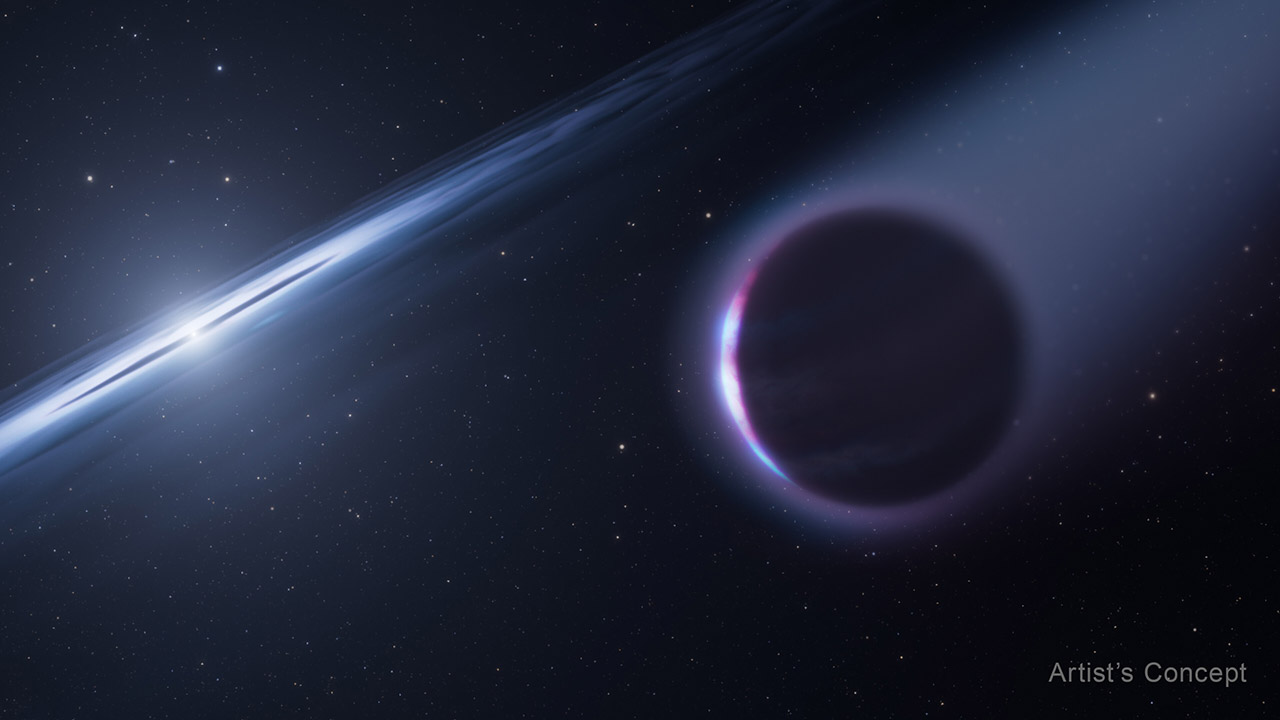
According to Nicholas Stone, a theoretical astrophysicist at the University of Wisconsin-Madison, niobium serves as a marker for the star’s final, explosive convulsions and the release of its contents into space. Williams and Gänsicke argue that there was ample time for all of that material to consolidate into a disk and subsequently form into the planet we see today, despite the fact that the star’s main chapter had ended. The candidate is temporary in the sense that the gas leak is still happening, but it may also have a very long life ahead of it. As the white dwarf cools and settles to a more consistent temperature, the same orbit may become a stable zone for millions of years.