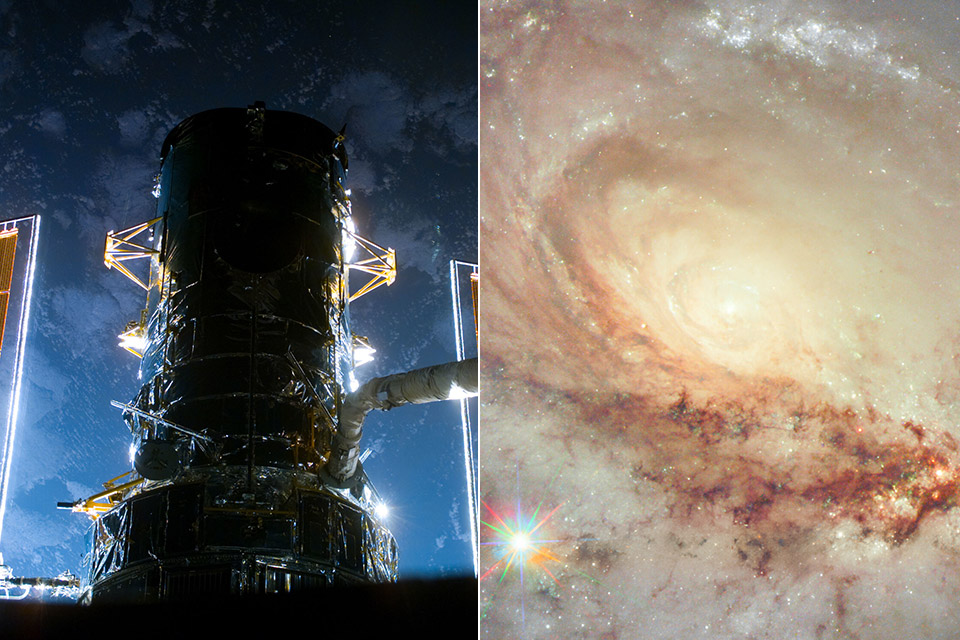
The Hubble Space Telescope, run by NASA and ESA, took a striking picture of the odd-looking spiral galaxy NGC 1961, also called Arp 184, sitting 191 million light-years away in the Camelopardalis constellation. Why’s it so strange? It’s a mix between barred and unbarred spiral galaxies, with a faint or missing central bar of stars.
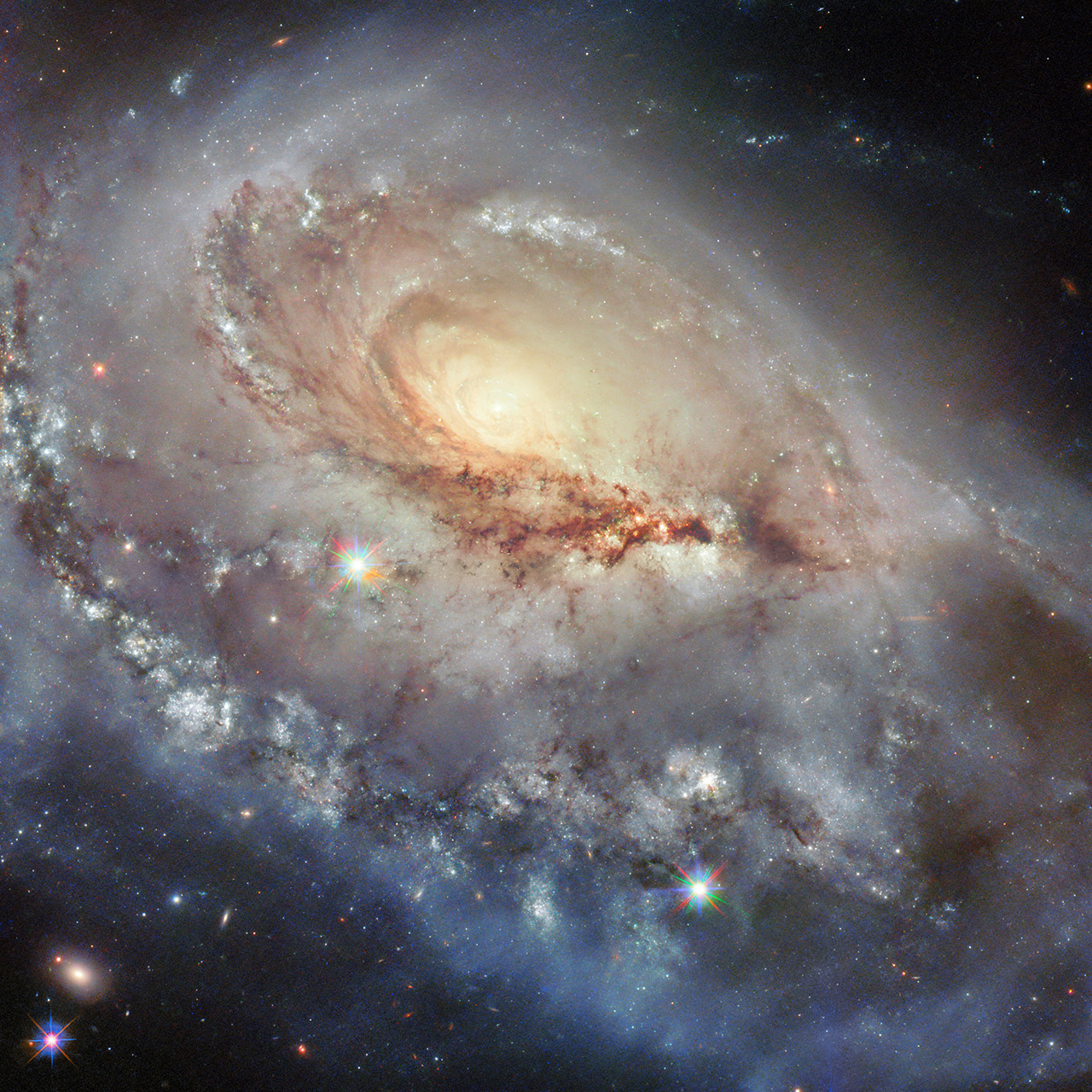
It’s massive, reaching over 220,000 light-years, which is over twice the size of our Milky Way, ranking it among the biggest galaxies in our nearby universe. What you’ll find at the center is an active galactic nucleus (AGN), powered by a supermassive black hole. The galaxy’s spiral arms are very twisted, especially on the northern side, where two long, straight arms or filaments stick out. This odd shape got it listed in Halton Arp’s Atlas of Peculiar Galaxies (1966) as Arp 184, in the group of galaxies with narrow filaments. Arp wrote: “Two long straight arms or filaments tangent to NE side of galaxy.”

- 【Great Telescope for Kids& Beginners!】 The telescope meets all the needs of astronomy beginners, the adults & kids’ astronomical journey begins...
- 【70mm Large Aperture】The telescope equipped with 70mm aperture and 300mm focal length, which provide more lights and clearer images, even...
- 【Wireless Control】This telescope set includes one phone adapter and one Wireless camera remote. Just install your mobile phone on the phone...
This spiral is also a busy star factory, with twinkling blue spots of young, massive stars spread across its spiral arms. These stand out especially in the wide, twisted arm, where H-alpha regions (showing ionized hydrogen) point to active star-making spots. The galaxy’s interaction with nearby gas in its group likely sparks this heavy star creation, as compressed gas clouds collapse to form new stars.
It’s odd that there’s no nearby galaxy or signs of a merger. The main idea is that NGC 1961’s movement through its galaxy group squeezes intergalactic gas, bending its arms. This makes it a rare example where gas movement, not gravitational pulls, might cause its unusual features.